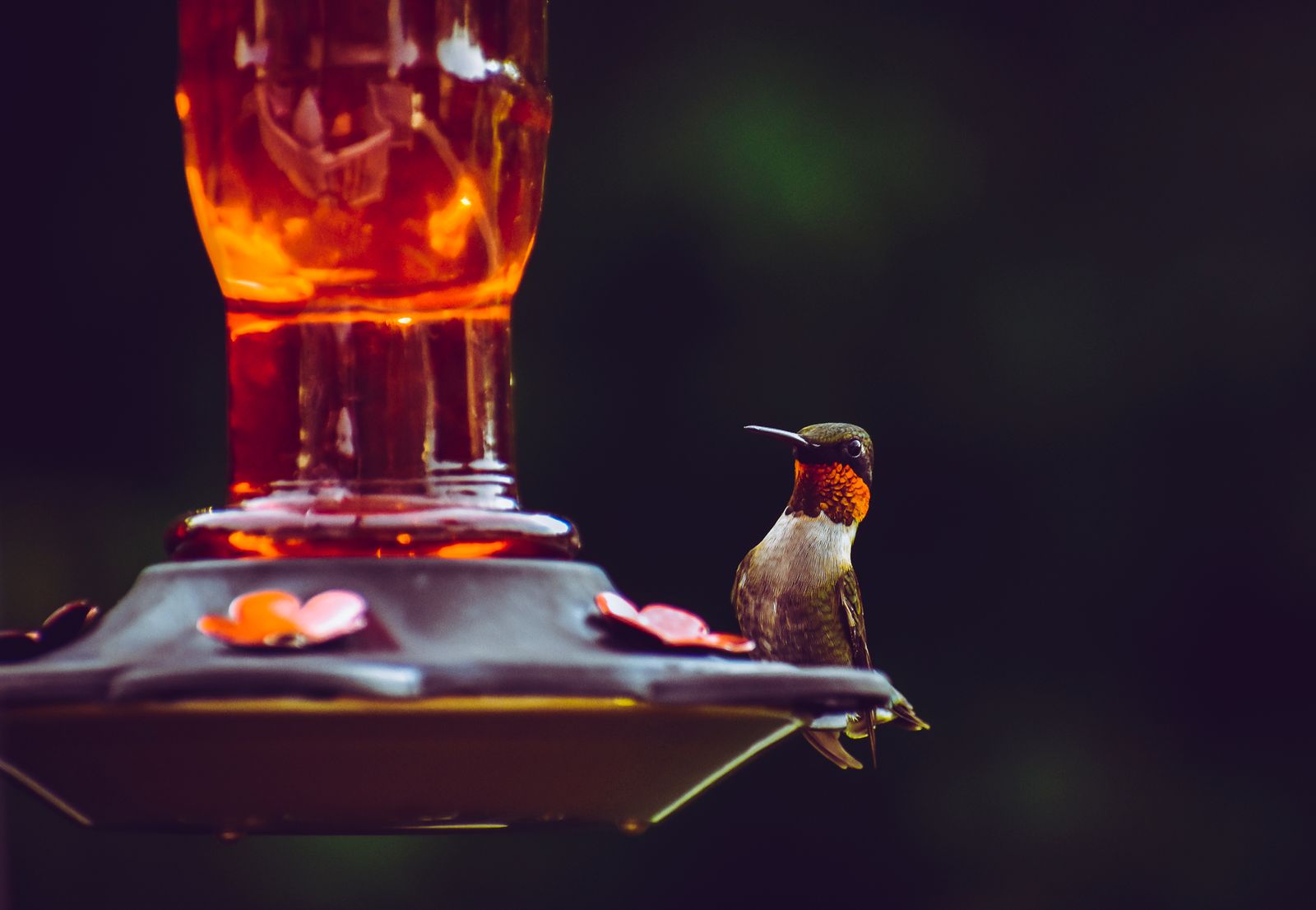
Why Aren't Hummingbirds Coming to Your Feeder in Spring? 5 Quick Fixes
Hummingbirds miss spring feeders primarily due to poor overhead visibility, dark shade hiding the reservoir, or lack of nearby perches (10–15 feet away). Move your feeder to an open sightline 5 feet off the ground, near bright flowers or reflective glass, ensuring safety from predators and direct line-of-sight for migrating scouts.
Diagnostic Flowchart: Is Your Feeder Hidden from Spring Scouts?
- Can migrating scouts see the feeder from 30 feet overhead at a 45° angle? → Yes: Check distance to nearby protective perches.. No: Move feeder out from under deep roof eaves or dense tree canopy into a clear sightline..
- Is protective tree cover or shrubbery located within 10 to 15 feet? → Yes: Inspect nectar freshness and glass reflectivity.. No: Relocate feeder hook closer to natural perch branches so scouts feel safe visiting..
- Is your nectar fresh 4:1 white sugar solution (under 4 days old in spring)? → Yes: Feeder placement is optimal—scouts will discover it within 24 to 72 hours.. No: Flush feeder thoroughly and refill with clean 4:1 clear nectar..
Spring Feeder Troubleshooting Matrix
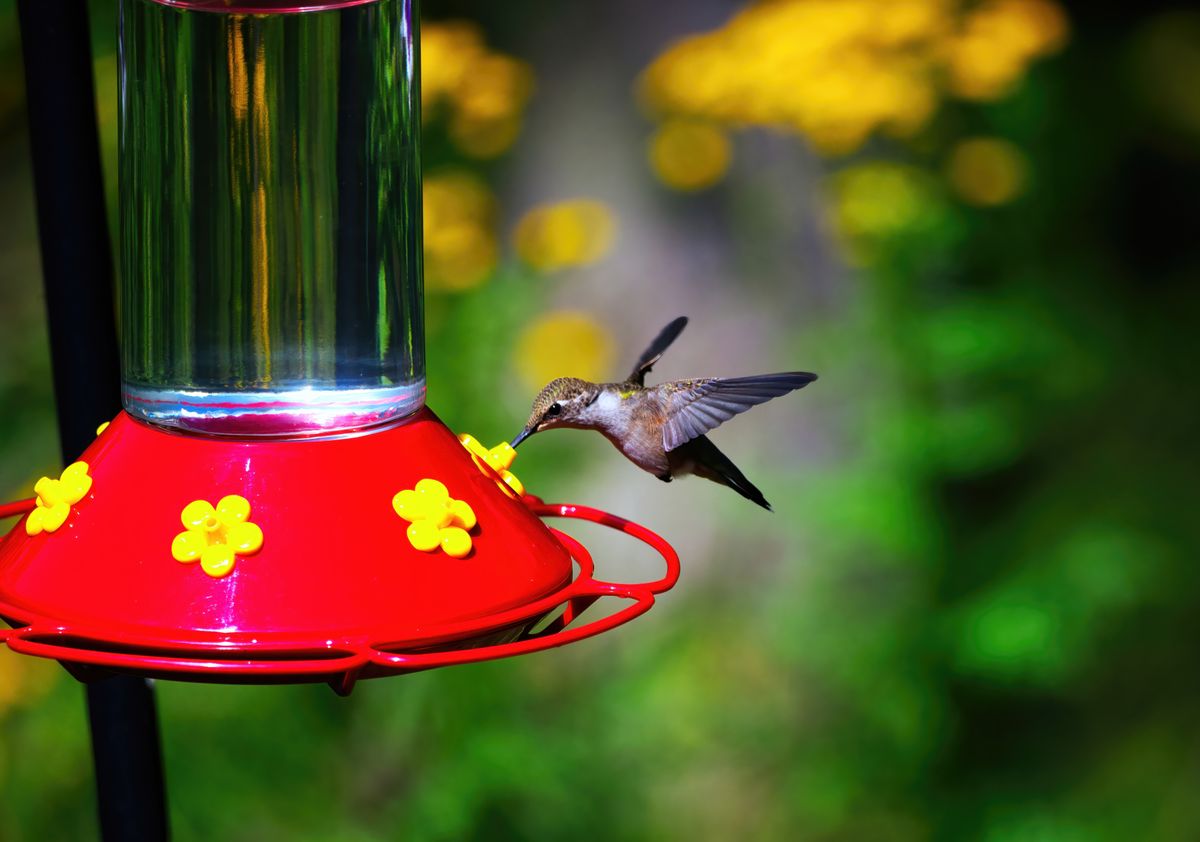
Photo by DANNIEL CORBIT on Pexels
| Garden Scenario / Symptom | Likely Root Cause | Immediate 5-Minute Fix |
| --- | --- | --- |
| | | |
| | | |
| | | |
| | | |
Match your garden's specific scenario with these immediate 5-minute solutions to make your feeder irresistible to arriving spring scouts.
Spring Feeder Placement & Audit Checklist
- [ ] Feeder is hung 5 feet above ground level to deter ground predators.
- [ ] Feeder has clear visual exposure to the sky at a 45-degree angle (visible to overhead scouts).
- [ ] Protective tree cover or shrubs are located 10 to 15 feet away (safe perch distance).
- [ ] Feeder is positioned away from direct wind blasts and predatory cat hiding spots.
- [ ] Nectar is clear 4:1 water-to-sugar solution, changed every 3 to 4 days during cool spring weather.
- [ ] Feeder body features bright colors or light-reflective glass to catch distance vision.
Pro Tip: Using Light Reflection & Radiant Glass to Catch Migration Scouts
Migrating scout hummingbirds rely on ultra-high visual acuity to spot potential food sources while flying dozens of miles per hour hundreds of feet in the air. Standard dull plastic feeders frequently blend into dark porch shadows or brown tree trunks. Handcrafted translucent glass refracts natural sunlight, casting vibrant glints and light patterns across your garden. This acts as a radiant visual beacon that immediately catches the eye of high-altitude travel scouts.
Relocation Decision Tree: Where Should You Move Your Feeder Today?
- Is your current feeder site shaded by a building or thick foliage all day long? → Yes: Move feeder to a dappled sunlight spot near early spring flower beds.. No: Check current hanging height and wind stability.
- Is the feeder hanging lower than 5 feet or higher than 7 feet off the ground? → Yes: Adjust your hanging shepherd's hook or tree branch strap to exactly 5 feet.. No: Evaluate the distance to nearest protective trees or shrubs.
- Is protective cover closer than 5 feet or farther away than 20 feet? → Yes: Reposition hook within the ideal 10-to-15-foot tree shelter perimeter.. No: Your location is optimal! Maintain fresh 4:1 nectar and allow 24–72 hours for scouts to discover it.
Action Plan for the Next 48 Hours
Your decision: Determine if your current feeder location satisfies the 3 essential sightline and safety rules (open top sightline, 10-15 ft shelter, 5 ft elevation).
Do this next: Audit your yard using our 5-point checklist, relocate your feeder to an open sightline near a tree drip line, and replace nectar every 3 days in cool weather.
Related resource: Early Spring Hummingbird Nectar FAQ: Ratios, Cold Weather Care, and Feeder Prep (/blog/spring-hummingbird-nectar-faq)If your current feeder lacks visual pops or clear viewing, consider an artisan handcrafted glass feeder like the LUJII Solar Hummingbird Feeder, which combines translucent color with sun-reflecting hand-blown glass patterns.
Follow these practical steps today to turn your yard into an open, inviting resting stop for migrating hummingbirds.
Key Takeaways for Spring Hummingbird Success
- Overhead sightlines are essential: Spring scout hummingbirds navigate from high altitudes and will miss feeders tucked deep under roof eaves or dense canopies.
- The 10-15 foot shelter rule: Place feeders close enough to shrubs for quick escape from hawks, but far enough from low bushes where cats hide.
- Elevate to 5 feet: Hanging feeders at 5 feet prevents ground predators while keeping nectar within comfortable viewing range.
- Reflective glass outperforms dull plastic: Handcrafted translucent glass refracts natural sunlight, catching the eye of passing scouts miles away.
- Maintain 4:1 fresh nectar: Change simple sugar water every 3–4 days in cool spring weather to prevent micro-fermentation that repels birds.
Printable Spring Feeder Setup Guide
- Height: Hang precisely 5 feet above ground level.
- Sightline: Ensure a 45-degree unobstructed view to the sky.
- Shelter: Place 10 to 15 feet away from protective tree perches.
- Nectar: 4 parts water to 1 part white granulated sugar (no red dye).
- Freshness: Replace nectar every 3-4 days under 60°F, every 2 days over 70°F.
- Visibility Accent: Use sun-reflecting hand-blown glass or bright red ribbons nearby.
Feeder Placement Micro-Zones Compared
| Micro-Zone Location | Overhead Sightlines | Shelter Distance | Weather Protection | Scout Attractiveness |
| --- | --- | --- | --- | --- |
| | | | | |
| | | | | |
| | | | | |
| | | | | |
Evaluating different areas in your yard shows how overhead visibility and nearby cover impact hummingbird traffic.
Ideal Feeder Micro-Zone & Sightline Diagram
This diagram illustrates the visual relationships between tree branches, open sightlines, window placement, and ideal feeder elevation.
Spring Migration Arrival & Placement Helper
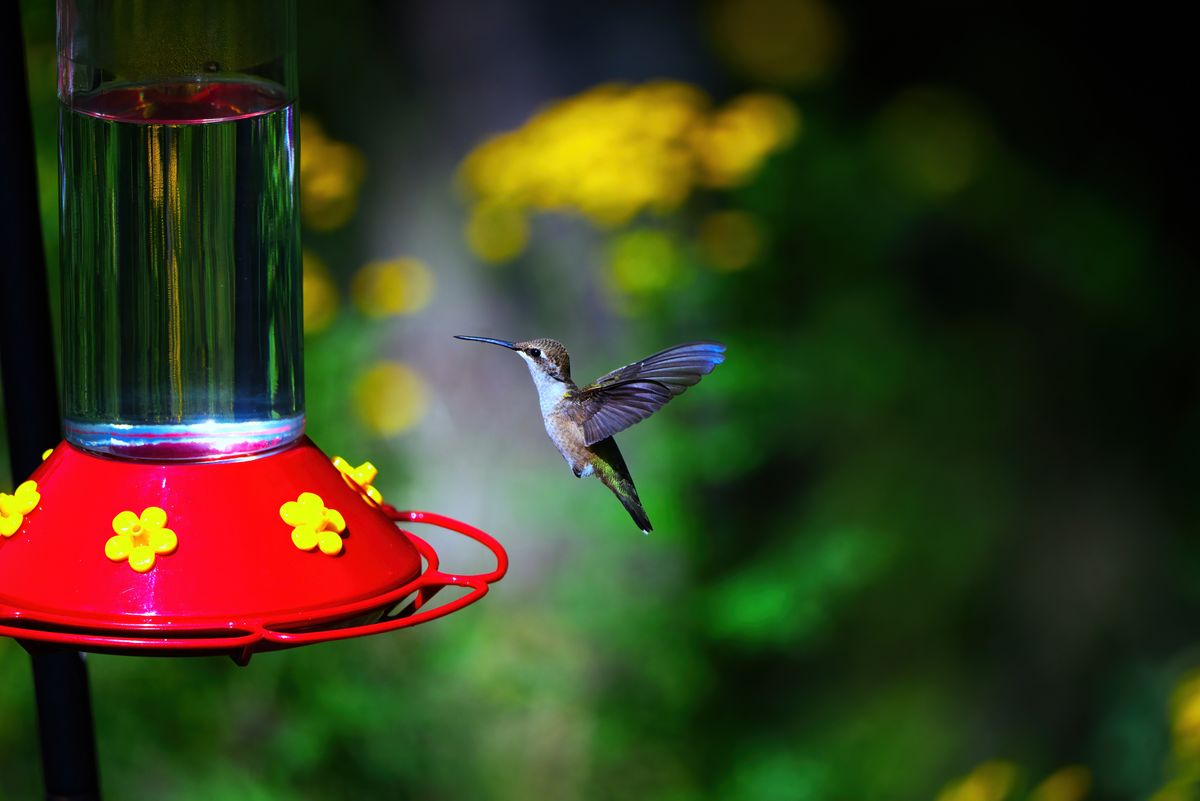
Photo by DANNIEL CORBIT on Pexels
Use this interactive calculator concept to align your feeder setup timing with active migration scouts moving across your region.
5 Step-by-Step Fixes to Make Your Feeder Instantly Visible
If your feeder has been hanging undisturbed for over a week in spring, follow these five sequential steps to correct visibility and placement errors:
4 Common Spring Setup Mistakes That Repel Birds
Avoid these frequent placement and maintenance pitfalls that inadvertently discourage spring hummingbirds from visiting:
- Mistake 1: Leaving Spring Nectar in Direct Sun for Weeks
- Mistake 2: Using Red Dye or Chemical Additives
- Mistake 3: Hanging Feeders Directly Beside Cat Hiding Spots
- Mistake 4: Tucking Feeders Inside Dense Leafy Canopies
Spring Hummingbird Care Resources
- How to Make Safe DIY Hummingbird Nectar: The Ultimate 4:1 Recipe
Frequently Asked Questions About Spring Feeder Troubleshooting
Here are expert answers to common questions about attracting first-scout hummingbirds in early spring.
Handcrafted Glass Feeders Designed for High Spring Visibility
Upgrade your spring garden setup with an artisan-crafted feeder that combines long-distance visual pull, leak-proof engineering, and enchanting evening illumination.
Final Steps: Elevate Your Spring Garden Today
Your decision: Determine if your current feeder location satisfies the 3 essential sightline and safety rules (open top sightline, 10-15 ft shelter, 5 ft elevation).
Do this next: Audit your yard using our 5-point checklist, relocate your feeder to an open sightline near a tree drip line, and replace nectar every 3 days in cool weather.
Related resource: Early Spring Hummingbird Nectar FAQ: Ratios, Cold Weather Care, and Feeder Prep (/blog/spring-hummingbird-nectar-faq)Transform your outdoor space with the LUJII Solar-Powered Hummingbird Feeder—combining sun-catching artisan glass, leak-proof design, and enchanting dusk illumination.
Ready to turn your yard into a sanctuary for migrating hummingbirds? Take action today by optimizing your feeder placement and discovering handcrafted garden decor built to last.