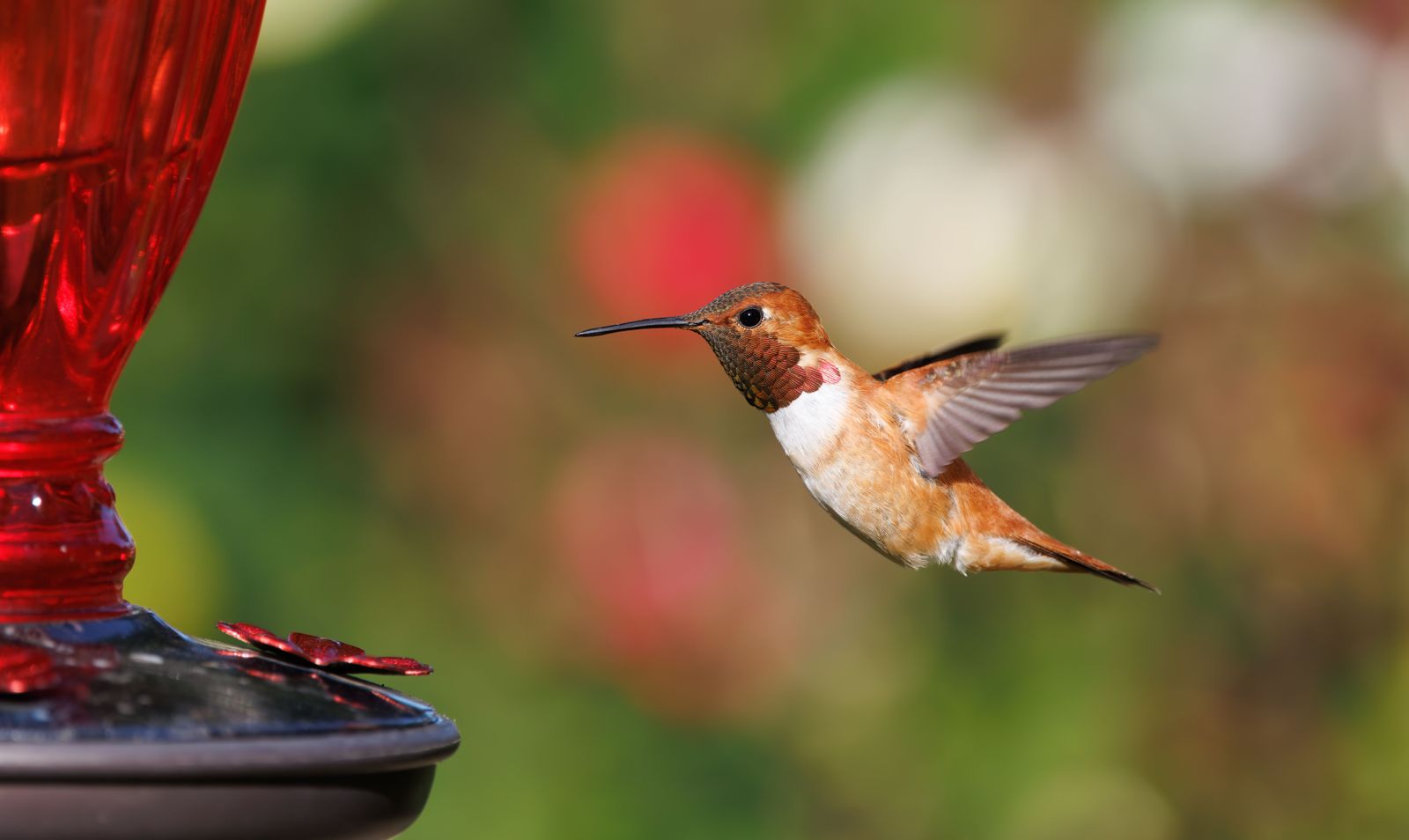
How to Catch the Eye of First-Scout Hummingbirds: Visual Attraction Strategies
To capture high-altitude scout hummingbirds, hang high-visibility light-refracting glass feeders 10 to 14 days before your region's average spring arrival date. Position feeders 5 to 6 feet high in an open, 360-degree clear sightline, ensuring morning light hits the reservoir to signal migrating birds flying at altitudes of 50 to 100 feet.
Key Takeaways: Avian Vision & Early Scout Attraction
- Deploy 10–14 Days Early: Early scouts travel up to 25–45 miles per day. Missing their initial pass means losing territory rights for the season.
- Sightline Elevation Matters: Elevate feeders 5 to 6 feet high clear of deep overhangs so scouts navigating at 50+ feet overhead catch visual glints.
- Refractive Light Signals: Hand-blown, 2,300°F-crafted glass refracts sunlight into ambient flashes that trigger hummingbird double-cone photoreceptors from over 100 feet away.
- Zero Dye, High Contrast: Avoid harmful dyes; rely on vivid red base accents and luminous translucent glass to attract visual attention safely.
- Thermal Stability: High-capacity 32 fl. oz. thick glass reservoirs retain thermal mass, helping delay nectar freezing during early-spring morning cold snaps down to 28°F.
Spring Scout Arrival Timeline & Setup Window
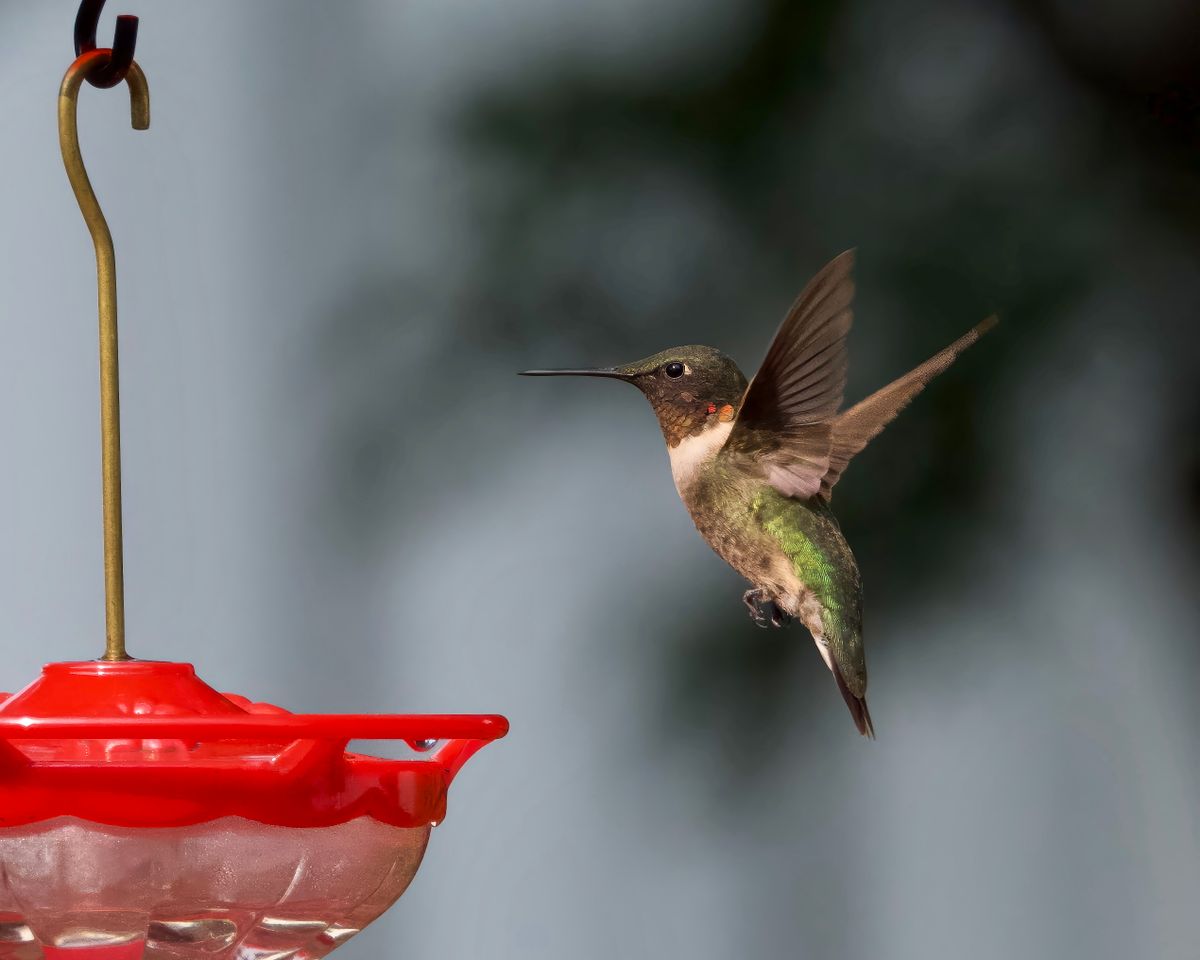
Photo by A. G. Rosales on Pexels
- 14 Days Before Expected Arrival — Inspect hanging hardware, clean shepherd's hooks, and select an open yard spot with 360-degree sky exposure.
- 10 Days Before Expected Arrival — Sterilize hand-blown glass feeder with warm water and white vinegar; verify anti-rust metal base seal and solar cap battery charge.
- 7 Days Before Expected Arrival — Boil 4:1 white refined sugar nectar, let cool to room temperature, fill 32 fl. oz. glass reservoir, and mount feeder 5–6 feet high.
- Target Arrival Day (Day 0) — Monitor morning flight activity between dawn and 9:00 AM; observe high-flying scouts dipping down to inspect glass light glints.
- 7 Days After First Sighting — Clean and refill nectar every 4–5 days during cool spring weather (below 60°F) to maintain peak freshness for arriving females.
Early-Season Nectar & Feeder Maintenance Schedule
- Daily (At Dawn) — Check solar cap operation and verify nectar is completely liquid following overnight freezing temperatures.
- Every 4 to 5 Days (Below 60°F) — Discard remaining nectar, rinse glass reservoir with warm water, and refill with fresh 4:1 boiled sugar water.
- Every 2 Days (60°F to 75°F) — Perform quick water wash to prevent early mold formation on feeding ports and sealed base threads.
- Bi-Weekly — Wipe glass exterior with a microfiber cloth to clean dirt or pollen and restore 100% light refraction efficiency.
5 Mistakes That Make Your Yard Invisible to First Scouts
Avoid these critical setup errors that prevent migrating hummingbirds from spotting your yard from above:
Pro Tip: Leveraging Refractive Light & Solar Contrast
> Avian Vision Insight: Hummingbirds possess tetrachromatic vision, including specialized visual receptors sensitive to ultraviolet (UV) wavelengths and intense light movement. Hand-blown glass created at 2,300°F features organic surface curves and interior color swirls that catch direct sunlight, creating dynamic shimmering flashes as the sun moves across the sky. To maximize this visual signal, align your shepherd's hook so morning sunlight strikes the southern or eastern face of the glass reservoir. This projects optical glints up to 120 feet skyward—acting as a beacon for migrating scouts.
Diagram: High-Altitude Scout Sightline Layout
Proper feeder positioning relies on unobstructed sightlines, vertical elevation, and maximum solar light exposure.
US Regional Spring Scout Arrival Roadmap
| US Geographic Zone | Target Feeder Setup Date | Average First Scout Sighting | Regional Weather & Sightline Strategy |
| --- | --- | --- | --- |
| Zone 1: Gulf Coast & Deep South (FL, GA, AL, MS, LA, TX) | February 15 | March 1 – March 10 | Position in open yards clear of heavy live oak canopy; protect from high spring humidity. |
| Zone 2: Mid-Atlantic & Midwest (VA, NC, OH, IN, IL, MO) | March 15 | April 1 – April 10 | Mount 6 feet high on lawn shepherd's hook; maximize morning sun exposure for optical shine. |
| Zone 3: Northern Tier & Mountain West (NY, PA, MI, WI, MN, CO) | April 15 | May 1 – May 10 | Use heavy 32 oz glass for freeze resistance; bring indoors on sub-28°F frost nights. |
| Zone 4: Pacific Northwest (WA, OR, Northern CA) | February 1 (Anna's) / March 15 (Rufous) | March 1 (Rufous Migrants) | Place under light weather shield; ensure solar cap receives direct sky access for battery recharge. |
Track regional migration waves across the United States to align your feeder setup 10 to 14 days ahead of scout arrival.
High-Visibility Beacons for Early Spring Scouts
Transform your yard into an early-season sanctuary with handcrafted, solar-illuminated glass feeders engineered to capture avian vision day and night.
Next Steps: Preparing Your Yard Before Scout Arrival
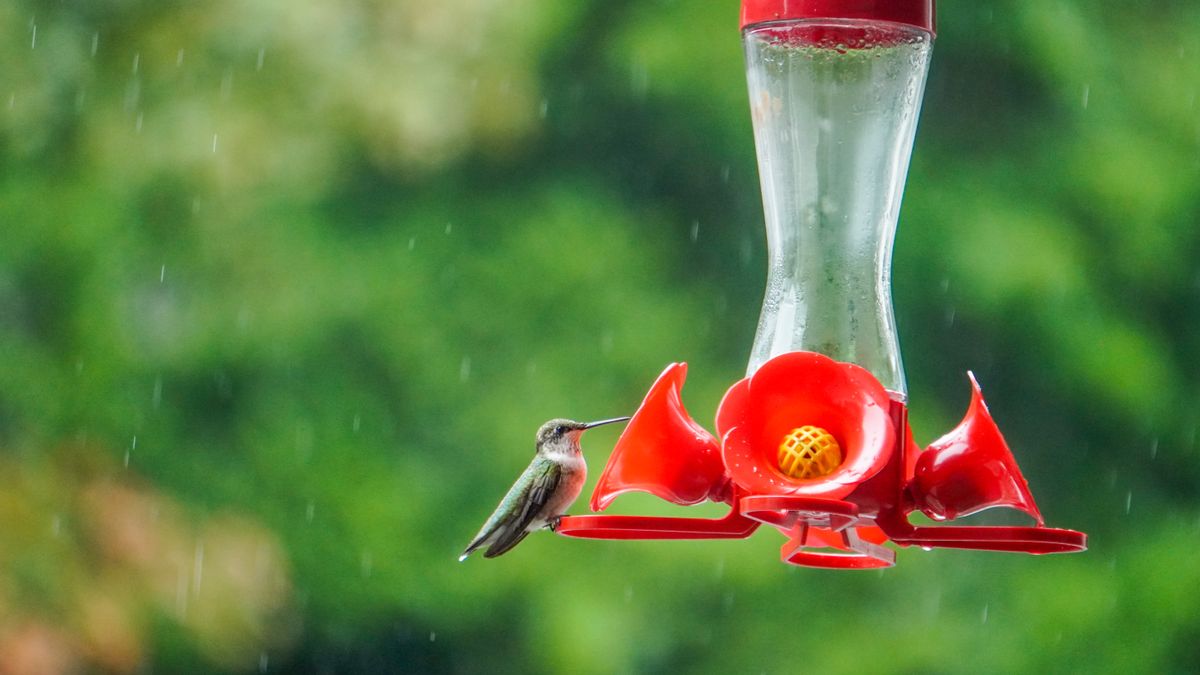
Photo by Koushalya Karthikeyan on Pexels
Your decision: Determine your region's 10-to-14 day pre-arrival window and select a high-visibility, light-reflecting glass feeder.
Do this next: Mount a 6-foot shepherd hook in an unobstructed garden location and prepare fresh 4:1 sugar nectar.
Related resource: Download our Printable Early-Spring Migration Setup Checklist.LUJII Hand-Blown Glass Solar Hummingbird Feeder (32 oz) - acts as a daylight prism and dawn solar beacon.
Take these simple steps today to ensure your garden becomes the primary stopover for returning spring hummingbirds.
Cold-Snap & Frost Management for Early Scouts
Spring migration frequently coincides with unpredictable weather fronts and overnight freezing temperatures. Understanding how to manage nectar liquid states ensures returning scouts find instant nourishment during early morning hours.
Managing Sub-Freezing Spring Dawns
- Thermal Mass Advantage: A full 32 fl. oz. glass feeder holds a larger volume of sugar liquid, which resists freezing significantly longer than small 8 oz plastic units. Nectar made at a standard 4:1 ratio has a slightly lower freezing point (approx. 27°F) than pure water.
- The Dusk-to-Dawn Rotation: On nights forecasted below 28°F, bring the feeder inside your home at dusk after scouts have roosted. Rehang the feeder 30 minutes before first light so warm, liquid nectar is ready when scouts awaken.
- Adjusting Cold Snap Ratios: During severe early-spring cold snaps, you can temporarily adjust your nectar ratio to 3.5 parts water to 1 part white sugar. This provides elevated calories for energy-depleted scouts without causing digestive dehydration.
Printable Spring Scout Visual Setup Checklist
- [ ] Calculate target setup date (10-14 days prior to regional average arrival)
- [ ] Select an open yard location with a 360-degree overhead sky view
- [ ] Hang shepherd hook at 5 to 6 feet height, clear of hidden eaves
- [ ] Clean glass reservoir with warm water and vinegar solution
- [ ] Boil 4:1 water-to-refined-white-sugar nectar; cool completely before filling
- [ ] Position hand-blown glass feeder to capture morning southern/eastern sunlight
- [ ] Verify solar cap charges during daylight to deliver soft ambient illumination at dawn
Early Scout Hummingbird Visual FAQ
Answers to common reader questions about early spring arrivals, visual cues, and feeder placement.
Explore Related Spring Arrival Guides
- How to Make Safe DIY Hummingbird Nectar: The Ultimate 4:1 Recipe
Ready to Welcome First Scouts to Your Garden?
Your decision: Choose artisan hand-blown glass solar feeders over plastic to maximize optical reach and seasonal durability.
Do this next: Order your LUJII Solar Hummingbird Feeder 2 weeks before your target setup date to prepare for spring arrival.
- Read next: Why a Solar-Powered Lighted Hummingbird Feeder is the Ultimate Thoughtful Gift
🌟 LUJII Hand-Blown Solar Hummingbird Feeder 🌟
Don't let migrating scouts fly past your yard this spring. Hang a high-visibility, light-refracting feeder early and create an enchanting oasis for nature's smallest travelers.
Cover photo by Veronika Andrews on Pexels.