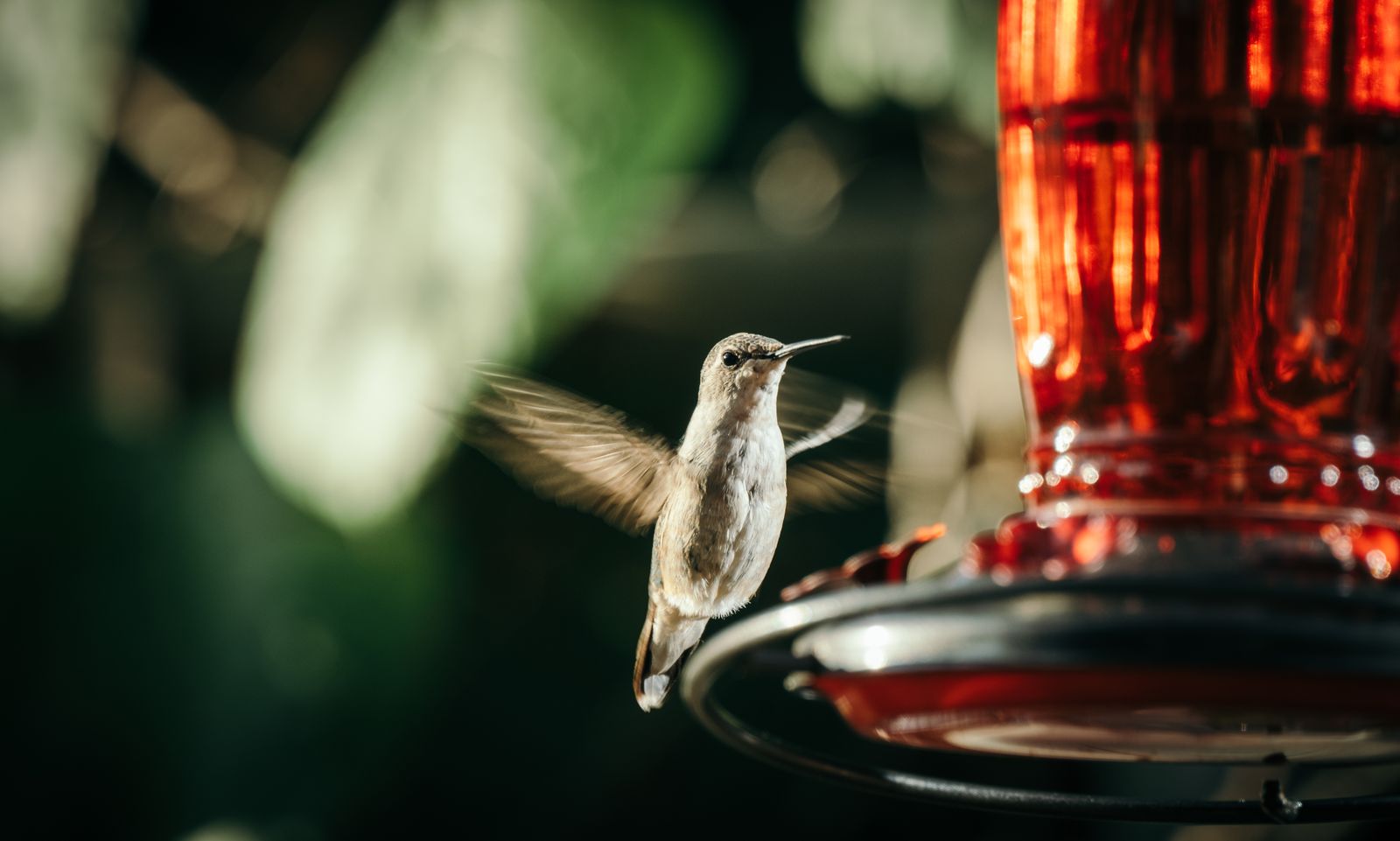
How to Keep Bees Away From a Hummingbird Feeder Without Harming Them
To keep bees away from your hummingbird feeder without harm, switch to a leak-proof sealed glass feeder, maintain a strict 4:1 water-to-sugar ratio, relocate the feeder 10–15 feet into afternoon shade, and eliminate yellow accent ports. Bees cannot reach nectar positioned deeper than 0.75 inches or penetrate sealed anti-drip hardware.
Bee & Wasp Deterrent Strategy Finder
- Are droplets or sticky residue visible on the exterior glass or base? → Yes: Wash exterior with warm water & vinegar. Relocate feeder to full afternoon shade to prevent thermal gas expansion leaks.. No: Examine feeding port geometry and accent colors..
- Do the feeding ports feature bright yellow plastic flowers or accents? → Yes: Remove yellow flower inserts or paint/cover them with non-toxic red paint. Insects are intensely attracted to yellow wavelengths.. No: Check sugar concentration and port depth..
- Is your nectar ratio sweeter than 4 parts water to 1 part white sugar? → Yes: Dilute immediately to a strict 4:1 ratio. High sugar concentrations (>25%) trigger honeybee recruit dances.. No: Install Nectar-Guard flexible membrane tips or upgrade to a deep-reservoir saucer feeder or sealed metal-base glass feeder..
Troubleshooting Nectar Theft: Symptoms vs. Solutions
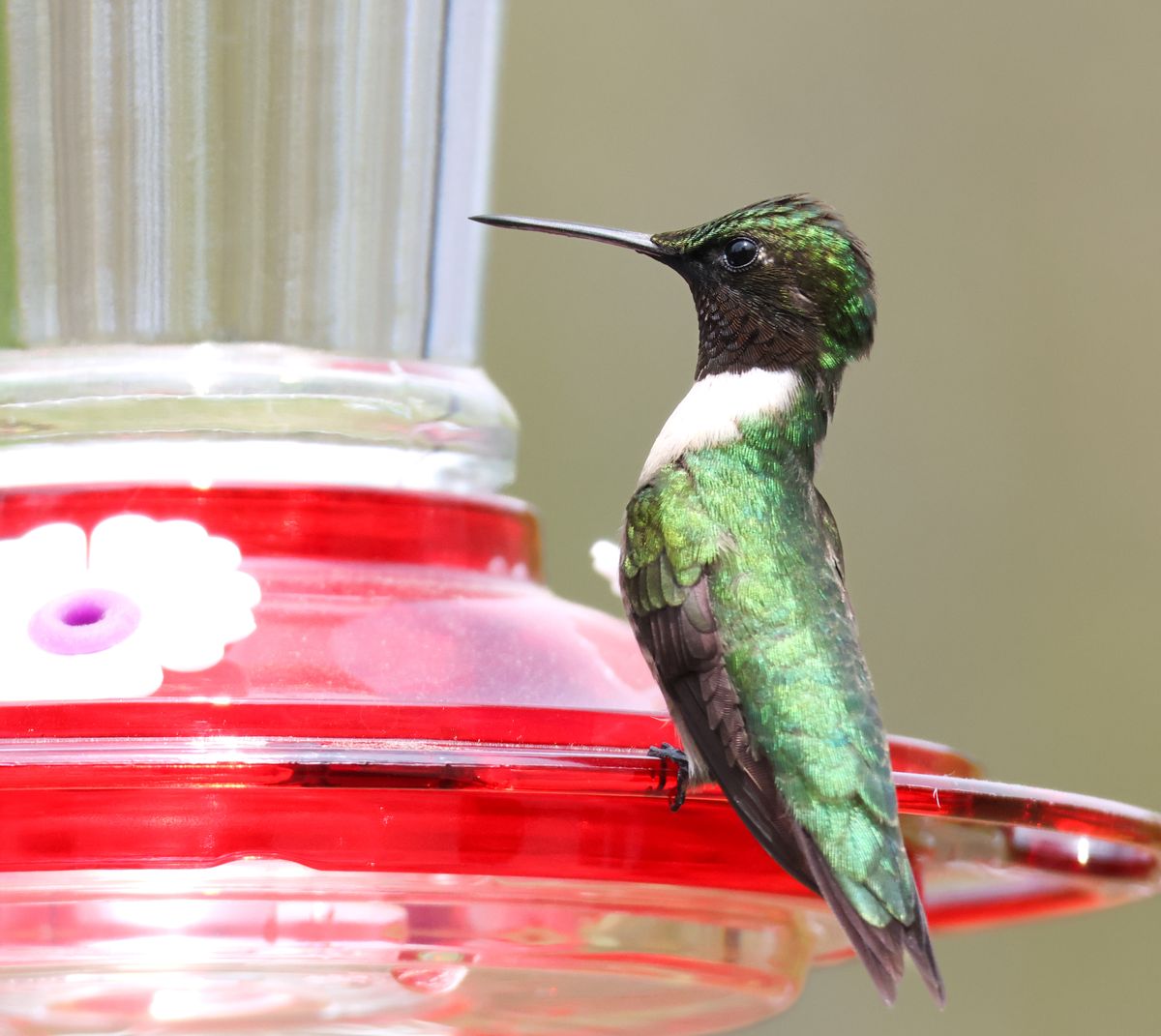
Photo by Catherine Dempsey on Pexels
| Observed Scenario / Symptom | Primary Insect Trigger | Immediate Corrective Action | Long-Term Hardware Fix |
| --- | --- | --- | --- |
| | | | |
| | | | |
| | | | |
| | | | |
Identify the insect behavior taking over your garden and execute the corresponding physical or environmental adjustment.
Anatomy of Bee Prevention: Saucer vs. Vacuum Bottle Mechanics
Understanding insect mouthparts reveals why feeder engineering makes or breaks your backyard hummingbird sanctuary.
5-Step Emergency Bee-Deterrent Action Plan
- [ ] Wipe down feeder exterior with warm water to eliminate sticky nectar residue.
- [ ] Move feeder into afternoon shade to minimize air expansion and thermal leaking.
- [ ] Check nectar ratio: keep strictly at 4:1 water-to-sugar (do not over-sweeten).
- [ ] Remove red dye and red tape/yellow port flowers that draw unwanted insect attention.
- [ ] Place a distraction water dish with floating corks 20 feet away from the bird feeder.
Choosing Your Deterrent Method Based on Insect Type
- Are your uninvited guests European Honeybees or Native Bumblebees? → Yes: Honeybees prioritize sugar concentration (>20%) and surface leaks. Keep ratio strictly 4:1, eliminate drips, and shade the bottle.. No: Evaluate for predatory wasps or yellow jackets.
- Are you dealing with Paper Wasps or Yellow Jackets? → Yes: Wasps seek protein and high-energy sugar, attracted to yellow colors. Remove yellow port rings, add Nectar-Guards, and hang a decoy wasp nest nearby.. No: Re-check exterior for hidden sticky sugar drips or ant trails.
Immediate Next Steps for a Pest-Free Sanctuary
Your decision: Determine whether your current feeder leaks due to thermal expansion or yellow accents attracting bees.
Do this next: Clean all exterior nectar spills immediately, move the feeder into full shade, and verify nectar is mixed strictly at 4 parts water to 1 part refined white sugar.
- Read next: How to Clean and Maintain Your Hand-Blown Solar Hummingbird Feeder
- Read next: How Hummingbirds See Color: The Secret Science Behind Glass & Light Attraction
LUJII Hand-Blown Solar Hummingbird Feeder with anti-rust sealed metal base.
Take action today to restore peace to your garden bird feeding station.
Key Takeaways: Bee & Wasp Management
- Anatomy dictates access: Honeybees have a ~6mm proboscis, while hummingbirds extend their tongue up to 20mm past their beak tip.
- Drips are the #1 cause of bee swarms: Thermal air expansion in inverted glass bottles forces nectar out when sun hits the air pocket.
- Yellow attracts insects; Red attracts birds: Wasps and bees navigate toward yellow wavelengths, while hummingbirds home in on vibrant red translucent glass.
- Never use sticky or chemical repellents: Petroleum jelly, cooking sprays, and insecticides coat feathers and prove fatal to hummingbirds.
- Decoys preserve garden peace: Setting up a 1:1 sugar water bowl 25 feet away diverts honeybees while leaving your bird feeder undisturbed.
Selecting the Right Feeder Hardware & Accessories
To prevent bees without harming them, prioritize feeders with deep nectar basins (where nectar sits >0.75 inches below the port) or fully sealed anti-drip hardware over inverted gravity plastic bottles.
Best choice for
- Bottom-reservoir saucer or sealed anti-rust metal base glass feeder — Prevents air thermal expansion from forcing nectar out of ports where bees can reach it.
- Nectar-Guard flexible membrane tips — Allows long hummingbird beaks to push through while blocking shorter wasp mouthparts.
- Feeders with bright yellow plastic flower accents around port openings.
- Cheap plastic inverted vacuum bottles that warp under heat and drip onto the ground.
- Applying cooking oil, petroleum jelly, or insecticides anywhere near feeding ports.
- Dedicated pollinator water/sugar station — Distracts bees by giving them an easier, shallow water source 20+ feet away from bird feeders.
Recommended Leak-Proof & Sealed Feeder Hardware
Invest in handcrafted glass art designed with precision engineering to keep nectar secure and insects at bay.
Feeder Type Comparison: Bee Vulnerability & Leak Risk
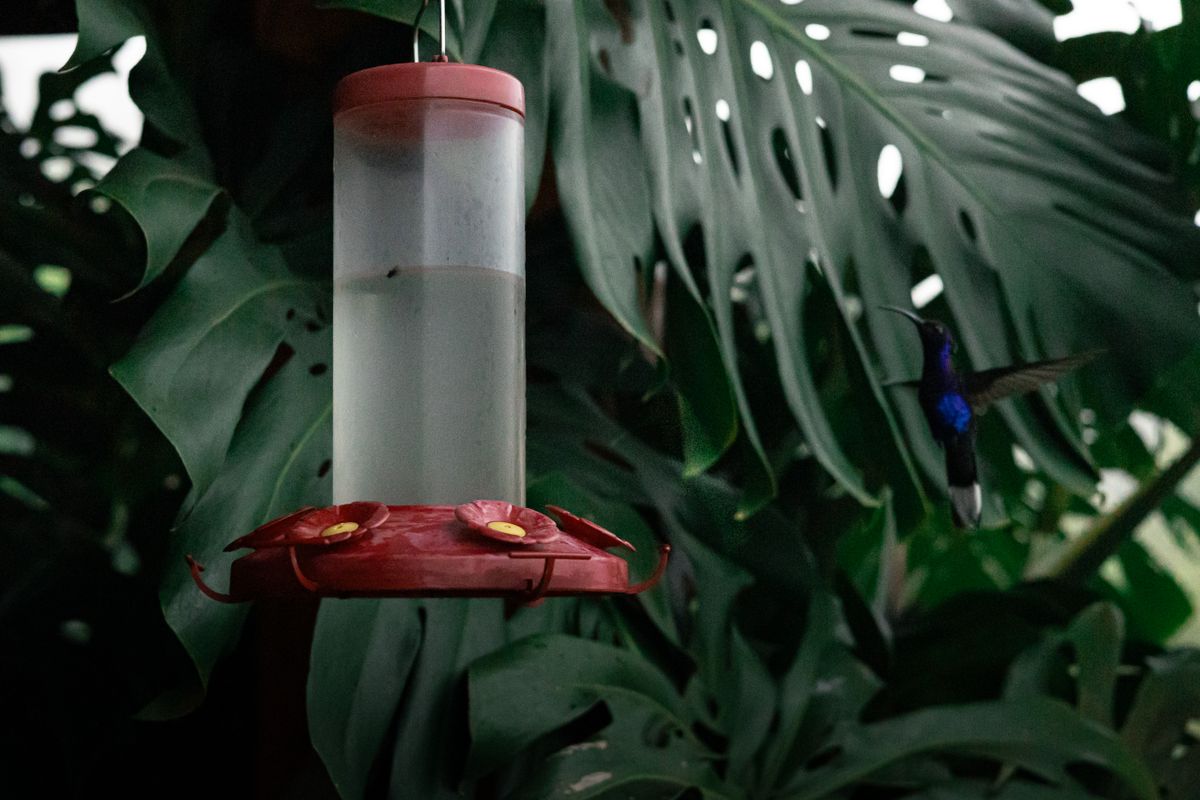
Photo by Dante Muñoz on Pexels
| Feeder Design Scenario | Leak Risk Level | Bee Access Barrier | Thermal Expansion Sensitivity | Recommended Action |
| --- | --- | --- | --- | --- |
| | | | | |
| | | | | |
| | | | | |
| | | | | |
Evaluate how different feeder designs perform under summer weather conditions.
Step-by-Step Guide: How to Safely Clear Bees From Your Yard
Follow these sequential steps to redirect bees away from your bird feeding station without using harmful pesticides.
Step 1: Remove the Feeder and Deep-Clean the Exterior
Take down your feeder immediately when a swarm takes over. Wash the entire exterior glass reservoir and metal base with a 1:1 solution of warm water and white distilled vinegar. This neutralizes the chemical scout pheromones that bees deposit to guide their hive mates back to the sweet reward.Step 2: Calibrate Your Nectar Ratio strictly to 4:1
Never make your summer nectar sweeter than 4 parts water to 1 part pure refined white sugar. While hummingbirds thrive on this 20% sugar concentration, honeybees significantly prefer richer food sources (>25–30%). Over-sweetening your solution acts as a beacon for honeybee recruitment dances.Step 3: Move the Feeder 10 to 15 Feet Away into Afternoon Shade
Bees depend on visual landmark navigation. Moving your feeder just 10 to 15 feet away—preferably into deep afternoon shade—confuses foraging bees while tiny hummingbirds effortlessly spot the vibrant red glass. Shading the reservoir also prevents thermal gas expansion from pushing nectar out through the port threads.Step 4: Install a Decoy Polinator Station
Place a shallow dish filled with a 1:1 sugar water solution and floating wooden corks (to prevent bee drowning) 25 feet away in a sunny corner of your yard. Bees naturally prefer the easily accessible shallow station, leaving the deep bird feeder ports to your hummingbirds.Step 5: Upgrade to Anti-Drip Glass Hardware
If inverted plastic bottles continue dripping, upgrade to a heavy hand-blown art glass feeder featuring a sealed anti-rust metal base. The thick glass insulates nectar against rapid temperature swings, preserving vacuum pressure and eliminating sticky surface drips.Dangerous Mistakes to Avoid (That Hurt Birds)
Well-meaning gardeners sometimes resort to internet 'hacks' that inadvertently harm tiny hummingbirds. Avoid these hazardous traps:
Explore Related Hummingbird Care Guides
Expand your backyard wildlife knowledge with these complementary care resources:
- How to Clean and Maintain Your Hand-Blown Solar Hummingbird Feeder — Complete hygiene protocols to prevent mold and bacterial growth.
- How Hummingbirds See Color: The Secret Science Behind Glass & Light Attraction — Discover how UV spectrum vision guides avian foraging.
- Hand-Blown Glass vs. Plastic Hummingbird Feeders — A deep dive into durability, thermal dynamics, and garden aesthetics.
Frequently Asked Questions About Bees and Hummingbird Feeders
Clear up common misconceptions regarding insect deterrence and feeder maintenance.
Final Summary & Action Plan
Your decision: Choose leak-proof, handcrafted art glass feeder hardware to end bee swarms for good.
Do this next: Switch to clear 4:1 nectar, shade your feeder, and upgrade to a sealed metal-base solar glass feeder.
- Read next: The Ultimate Guide to Attracting & Welcoming Hummingbirds to Your Yard
🌟 LUJII Solar-Powered Hummingbird Feeder 🌟
Transform your garden into a serene, leak-proof haven for hummingbirds tonight.
Cover photo by Chris F on Pexels.