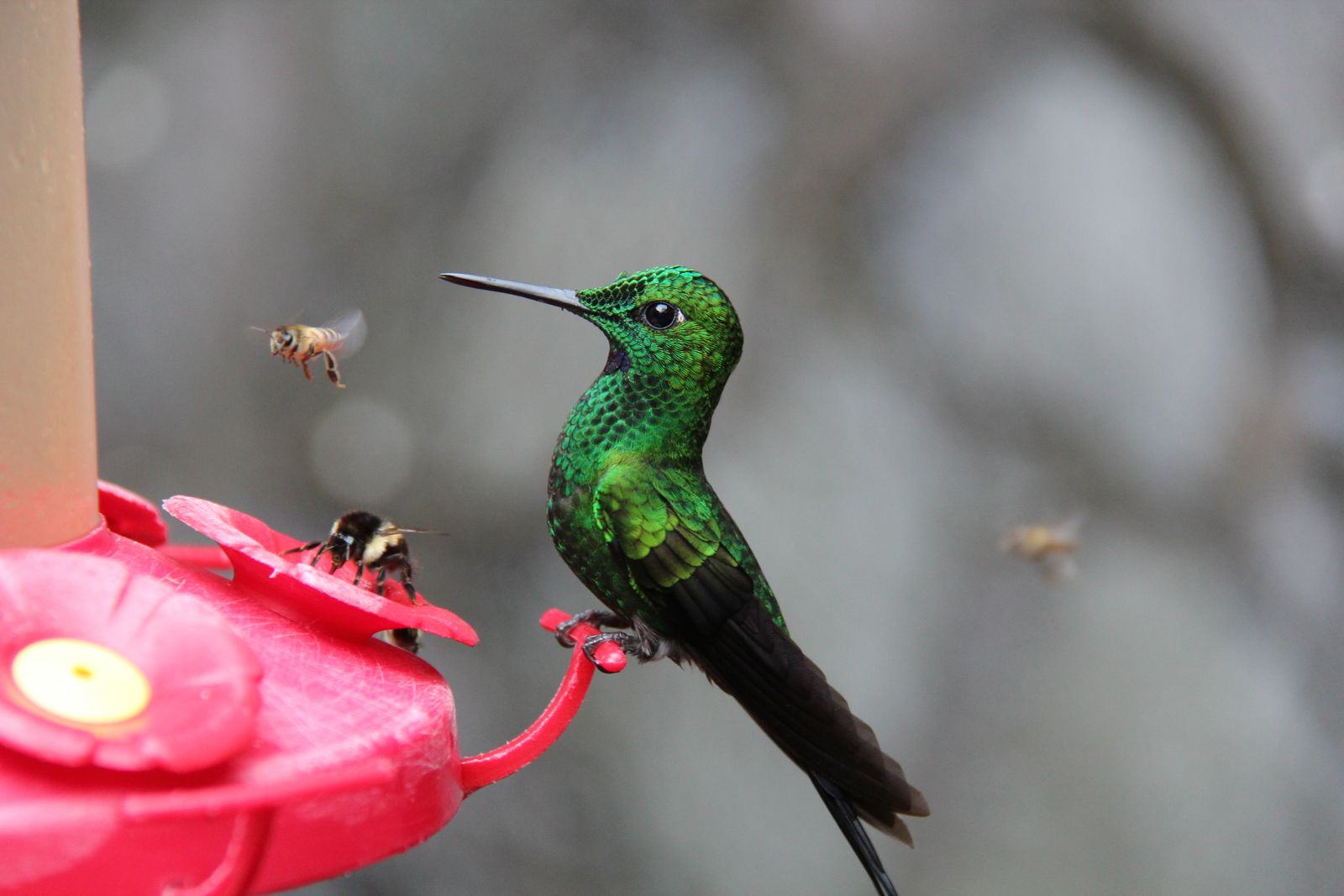
Why Are Bees at My Hummingbird Feeder? 5 Placement Fixes
Bees, wasps, and ants swarm hummingbird feeders because direct sun heat expands nectar, causing drips through feeding ports or sticky residue on the feeder base. To eliminate pests immediately, move your feeder to complete afternoon shade, wash away exterior syrup with warm water, install a water-filled ant moat, and use a drip-proof feeder base.
Pest Diagnostic Flowchart: Trace the Root Cause
- Are the swarming pests flying insects (bees/wasps) or crawling insects (ants)? → Yes: Flying pests present -> Check if nectar is dripping or port flowers are yellow.. No: Crawling pests present -> Inspect hanging wire and pole for missing water barrier..
- Is the feeder exposed to direct afternoon sun for more than 2 hours? → Yes: Thermal expansion cause -> Relocate feeder to full shade canopy immediately.. No: Clean exterior residue and verify sugar concentration is exactly 1:4 ratio..
Pest Troubleshooting Matrix: Insect vs. Root Cause vs. Safe Fix
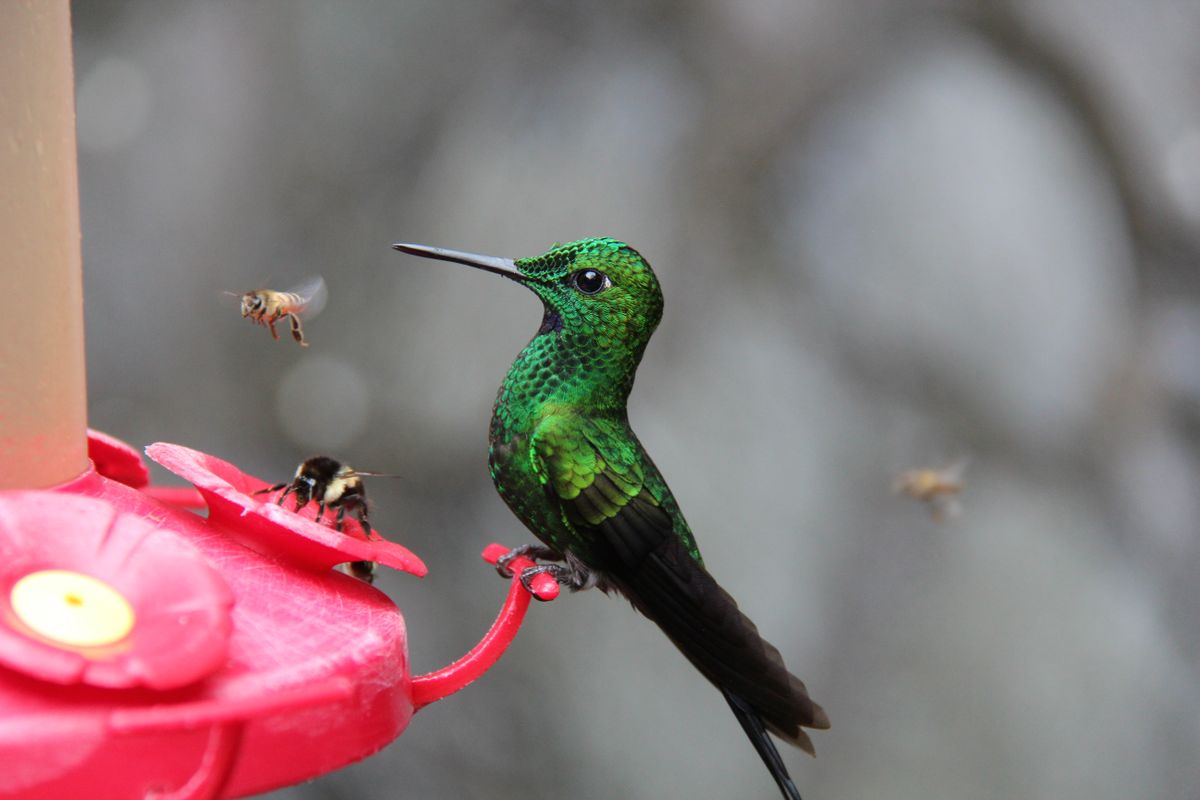
Photo by Dick Scholten on Pexels
| Insect Scenario | Primary Trigger | Root Cause Analysis | Immediate Bird-Safe Fix |
| --- | --- | --- | --- |
| Honeybees crowding feeding ports | Warm solar heat & yellow accents | Direct sunlight causes nectar expansion, forcing droplets onto outer port rims; bees are drawn to sweet surface moisture and bright yellow flower rings. | Move feeder to 100% shade, wipe base clean, and cover or remove yellow decorative accents. |
| Aggressive Yellowjackets / Wasps blocking hummingbirds | Fermenting or high-concentration nectar | High summer temperatures ferment exposed nectar drops, releasing strong aromatic cues that attract aggressive wasps and hornets. | Lower nectar ratio strictly to 1:4 plain white sugar to water, flush base daily, and hang feeder in cooler dense shade. |
| Sugar Ants forming dense trails up hanging hooks | Unprotected entry path from tree branches or wall | Ants scout vertical paths and follow chemical trails to access exposed sugar reservoirs. | Install a 2-inch deep water ant moat above the hanging loop; clean line with plain dish soap and water. |
| Nocturnal moths surrounding feeder at dusk | Unshielded high-UV white artificial lighting | Standard high-UV solar lights draw nocturnal insects directly toward feeding openings after sunset. | Use soft RGB ambient lighting that does not emit high-UV heat signatures, or switch solar lighting off during peak moth emergence. |
Identify your specific garden pest below to apply the appropriate non-toxic fix without harming pollinators or birds.
Pro Tip: Strategic Shade & Microclimate Placement
Placement is your single most powerful weapon against yellowjackets and honeybees. Hanging a feeder under a dense leafy tree canopy lowers local ambient temperatures by 5°F to 10°F. This prevents air pockets inside the reservoir from expanding and pushing liquid out of the ports. Furthermore, hummingbirds possess superior color vision and easily spot shaded red feeders, whereas bees rely heavily on UV light in sunny open spots to locate food sources.
Feeder Insect Defense Audit Checklist
- [ ] Check that feeder is hung in 100% afternoon shade to prevent thermal drip.
- [ ] Inspect feeding ports for yellow accents or decorative flowers that attract bees.
- [ ] Verify water level in top hanging ant moat.
- [ ] Wipe down feeder base with clean water to eliminate dried sugar trails.
- [ ] Ensure metal base gasket is tightly sealed against the glass reservoir.
Decision Tree: Choosing the Right Physical Barrier Strategy
- Are ants crawling down the hanging wire? → Yes: Install top-mounted water ant moat above the hanging loop.. No: Proceed to evaluate flying insect attractants.
- Are bees gathering around port openings without dripping nectar? → Yes: Switch to red-only port guards and lower nectar sugar concentration to 1:4.. No: Relocate feeder to full shade to eliminate heat-induced expansion drips.
Immediate Placement Adjustments to Take Today
Your decision: Identify whether pests are driven by thermal dripping (bees/wasps) or physical crawling access (ants).
Do this next: Relocate feeder to full afternoon shade, rinse base with warm water, fill ant moat, and switch to a leak-proof glass feeder.
Related resource: Download our printable garden checklist for seasonal bird care.
Upgrade to the LUJII Hand-Blown Glass Solar Hummingbird Feeder with a heavy, precision-sealed metal base that resists heat expansion.
Take these three immediate steps to clear swarms from your feeding area right now.
Key Takeaways: Keeping Nectar Safe and Bird-Friendly
- Heat causes nectar expansion; shade is essential to prevent sweet drips.
- Bees are naturally attracted to yellow; choose red-accented feeding ports.
- Water-based ant moats provide a 100% effective non-toxic crawling barrier.
- Never use petroleum jelly, oils, or chemical insecticides on feeder hooks or poles.
- Hand-blown glass reservoirs with rubber gaskets eliminate seam leaks.
Printable Pocket Guide: Feeder Pest Defense
- Nectar Ratio: 1 part refined white sugar to 4 parts water (no food dye or honey).
- Placement Rule: Hang 5 feet above ground, 10 feet from dense foliage, in total shade.
- Ant Defense: Keep top moat filled with clean water; flush debris weekly.
- Cleaning Cycle: Wash base every 2-3 days in summer using warm water and white vinegar.
- Sun Protection: Position under tree canopy to avoid internal pressure build-up.
Comparing Insect Barriers: Moats vs. Guards vs. Relocation
| Deterrent Strategy | Target Pest | Maintenance Level | Bird Safety Rating | Effectiveness |
| --- | --- | --- | --- | --- |
| Water Ant Moat | Sugar Ants & Crawling Insects | Low (Refill water weekly) | 100% Safe (Chemical-Free) | Extremely High (Creates physical water barrier) |
| Shade Relocation | Honeybees & Yellowjackets | Zero (One-time setup) | 100% Safe | High (Prevents thermal drip & lowers scent profile) |
| Nectar Guards / Mesh Ports | Wasps & Large Bees | Low (Rinse during cleaning) | 100% Safe | High (Prevents insect mouthparts from reaching liquid) |
| Distraction Feeding Station | Yellowjackets & Honeybees | Medium (Refill secondary station) | Safe (If placed 30+ feet away) | Moderate (Diverts heavy insect activity away from birds) |
Evaluate physical deterrent methods based on target pest, maintenance effort, and safety.
Hummingbird Feeder Placement & Defense Blueprint
Refer to this spatial layout diagram to position your feeder for maximum visibility to birds and minimum exposure to heat and insect pathways.
Feeder Insect Risk & Placement Assessment Tool Brief
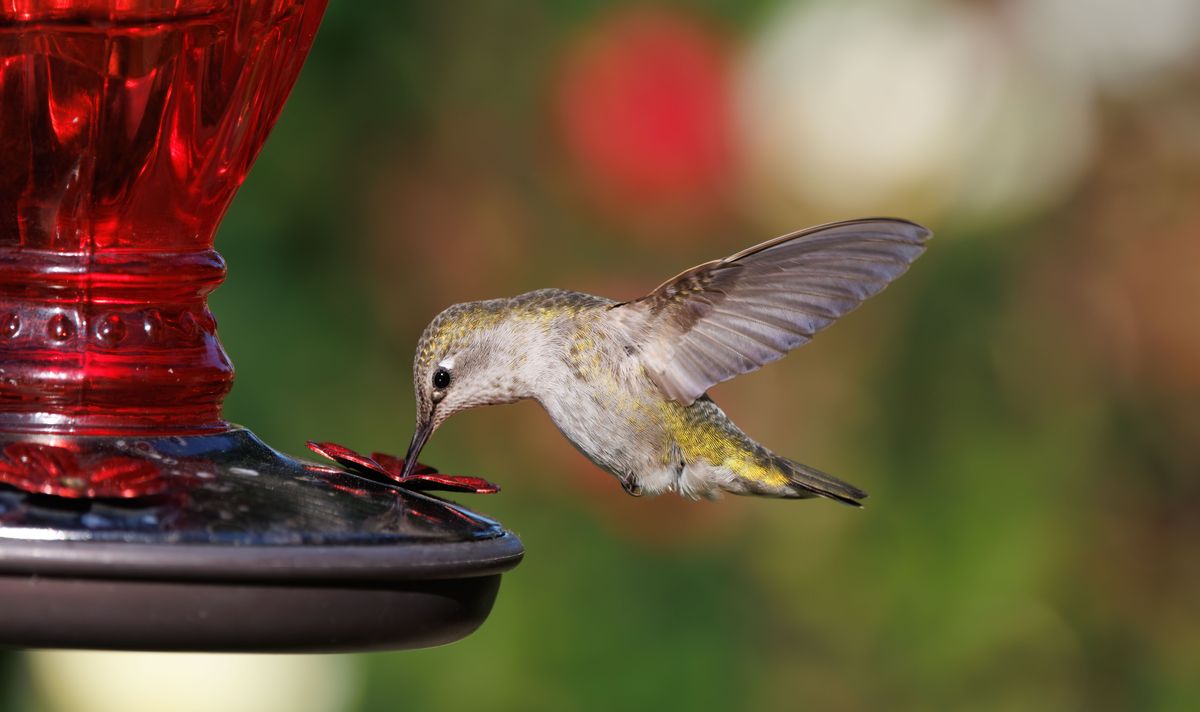
Photo by Veronika Andrews on Pexels
Use this self-assessment logic to estimate insect attraction risks based on your garden conditions.
Step-by-Step Instructions to Reset and Pest-Proof Your Feeder
Follow these simple steps to eliminate sticky residues and re-establish a pest-free sanctuary.
Top 5 Placement & Maintenance Mistakes That Attract Swarms
Avoid these hazardous habits that put hummingbirds at risk while inviting swarms.
Related Pest-Free Feeding Guides
- Why Are Bees Swarming Your Hummingbird Feeder? Troubleshooting Leaks, Thermal Drips, and Placement
- Why Isn't My Solar Hummingbird Feeder Lighting Up? Troubleshooting & Placement Fixes
- Why Is My Hummingbird Feeder Leaking? 5 Quick Causes & Fixes
Frequently Asked Questions
Answers to common questions regarding feeder maintenance, pest control, and hand-blown glass care.
Recommended Pest-Resistant Feeder Upgrades
Upgrade your garden sanctuary with durable, hand-crafted feeders designed to resist leaks and keep pests away naturally.
Your Action Plan for a Pest-Free Garden Sanctuary
Your decision: Determine if your pest issue is driven by thermal nectar dripping (bees/wasps) or direct crawling access (ants).
Do this next: Relocate your feeder to a shaded spot, wash the glass reservoir with warm water to remove sweet exterior residue, install a water-based ant moat above the hanging loop, and switch to a heavy sealed glass feeder.
Related resource: Download our printable Feeder Pest Defense Checklist for seasonal garden prep.
Upgrade to the LUJII Hand-Blown Glass Solar Hummingbird Feeder featuring a heavy, precision-sealed metal base that resists heat expansion and prevents nectar leakage.
Follow this simple plan to restore peace and joy to your hummingbird feeding station.
Cover photo by Dick Scholten on Pexels.