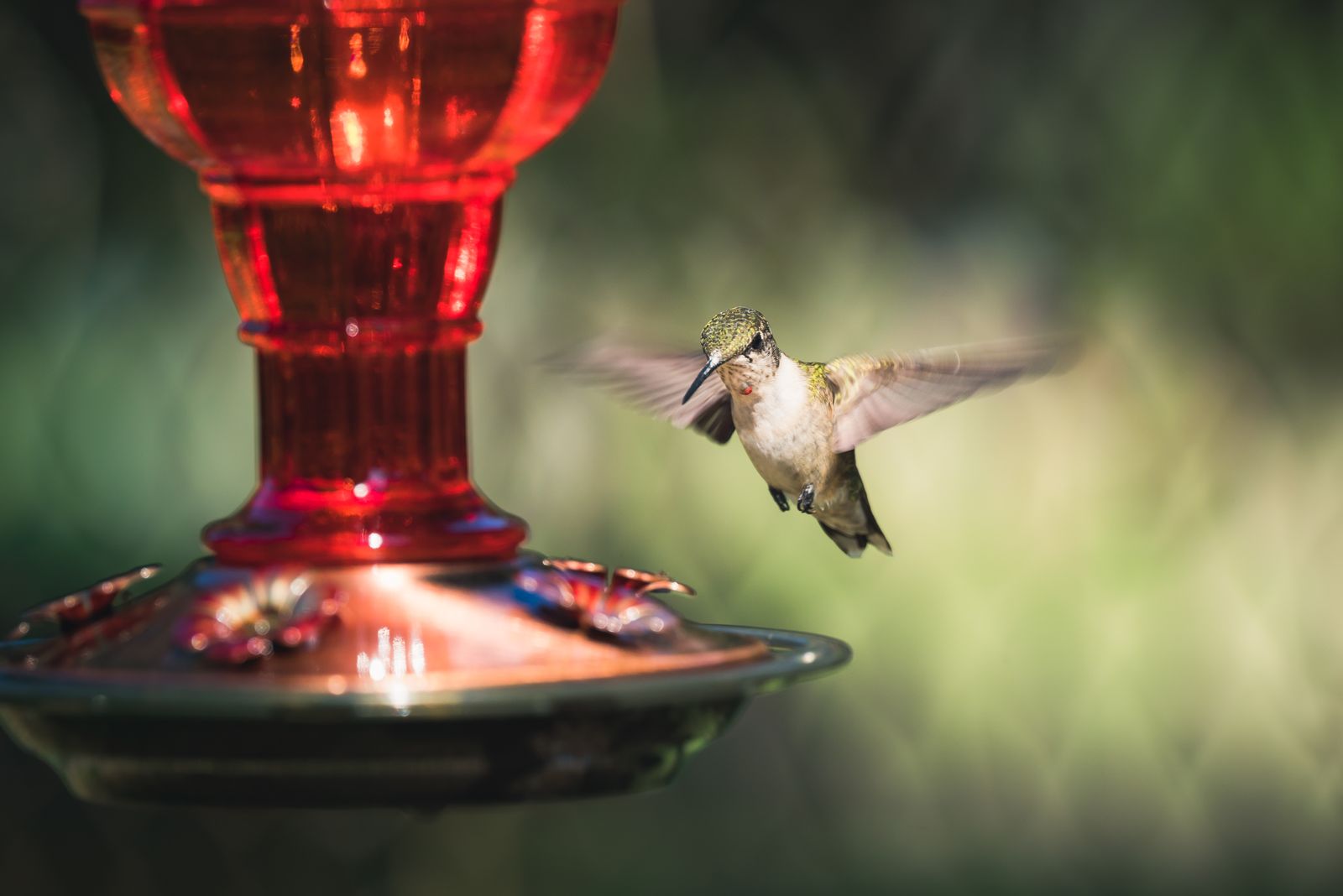
Why Are Bees Swarming Your Hummingbird Feeder? Troubleshooting Leaks, Thermal Drips, and Placement
Bees swarm hummingbird feeders primarily due to external nectar drips caused by thermal air expansion, bright yellow feeding ports, or overly concentrated nectar ratios. To eliminate them immediately, fix leaky base seals, relocate the feeder to shade, install flexible insect guards, and maintain a strict 4:1 water-to-sugar ratio.
Visual Diagnostic: Bee Deterrence Troubleshooting Flowchart
- Are there wet drops or sticky residue on the outside of the feeder base? → Yes: Check base seal gasket and move feeder to direct afternoon shade to prevent thermal leaks.. No: Examine feeding port appearance and nectar concentration..
- Do the feeding ports feature bright yellow accents or flowers? → Yes: Replace ports with red-only alternatives or cover yellow accents, as yellow strongly attracts bees.. No: Check your nectar recipe formula..
- Is your nectar recipe richer than 4 parts water to 1 part white sugar? → Yes: Dilute nectar to exactly 4:1 (or 5:1 in heatwaves) to lower sugar scent cues below bee attraction thresholds.. No: Install flexible silicone Nectar Guard tips and set up a decoy feeding station 30 feet away..
Diagnostic Matrix: Match Your Feeder Symptoms to the Cause & Fix
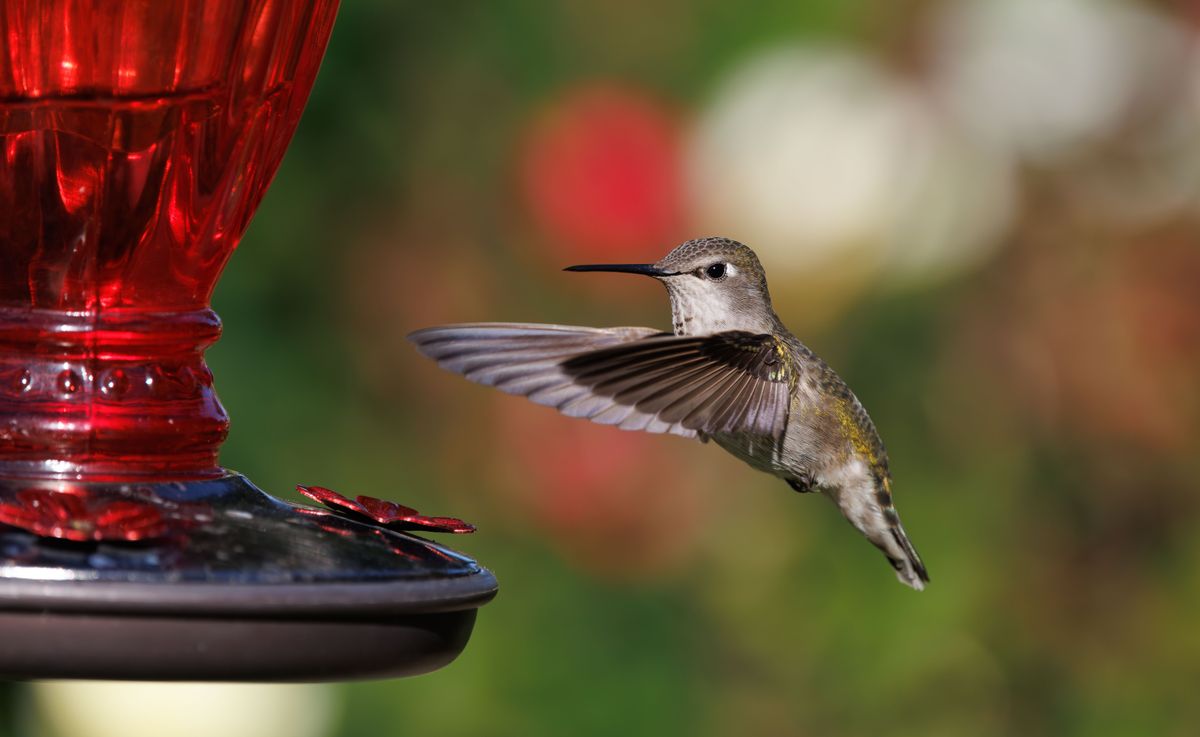
Photo by Veronika Andrews on Pexels
| Symptom / Scenario | Underlying Cause | Immediate Fix | Long-Term Solution |
| --- | --- | --- | --- |
| Bees clustering around port openings without visible drops | Yellow port accents or nectar recipe sugar ratio is too high (>4:1) | Wipe ports clean with hot water and add red port covers | Switch to red-only port designs and strictly maintain a 4:1 water-to-sugar ratio |
| Nectar dripping steadily from bottom seams during warm afternoons | Thermal air expansion in inverted bottle creating positive internal pressure | Move feeder to deep afternoon shade immediately | Upgrade to a heavy bottom-sealed glass basin feeder that prevents pressure drips |
| Large yellowjackets aggressively chasing hummingbirds away | Exposed nectar level accessible to short insect mouthparts | Install flexible silicone Nectar Guard tips inside port tubes | Use deep-well feeding ports where nectar sits 1+ inches below port entry |
| Micro-leaks along threaded bottle caps and rubber gaskets | Degraded rubber O-ring or sugar crust preventing tight seal | Disassemble, wash thread lines, and re-seat O-ring cleanly | Replace worn gaskets or upgrade to anti-rust metal threaded bases |
Identify your specific feeder scenario below to implement instant, non-toxic solutions.
The Physics of Thermal Air Expansion in Inverted Feeders
Heavy hand-blown glass resists ambient thermal shifts far better than thin plastic. In inverted plastic feeders, direct sunlight rapidly heats the air trapped above the nectar. As that air expands, it builds internal pressure, forcing liquid down and out through the feeding ports. Switching to a heavy, bottom-sealed glass basin isolates the reservoir fluid level, keeping nectar safely below the port threshold regardless of temperature spikes.
Pest Identification & Corrective Action Tree
- Are the invading insects Honeybees or Bumblebees? → Yes: Move feeder to shade, eliminate yellow port trim, and maintain 4:1 ratio.. No: Check for Yellowjackets or Paper Wasps.
- Are the insects Yellowjackets or Paper Wasps? → Yes: Install physical silicone Nectar Guard barriers and lower nectar level slightly.. No: Check for Crawling Ants.
- Are crawling ants invading via hanging wire? → Yes: Install a water-filled ant moat above the feeder and coat wire with plumber's grease.. No: Clean external surfaces with hot water to remove micro-drips.
Essential Rules for Insect-Free Nectar Stations
- Strictly follow the 4:1 water-to-white-sugar ratio; higher concentrations act as bee magnets.
- Eliminate yellow components from your feeder; red ports attract hummingbirds while being invisible to bees.
- Position feeders in afternoon shade to stop thermal air expansion from pushing nectar out of base ports.
- Upgrade to heavy hand-blown glass with sealed metal bases to eliminate internal vacuum leaks.
- Never use essential oils, vaseline, or pesticides near feeding ports—they ruin feathers and poison birds.
Printable Summer Pest-Free Feeder Cheat Sheet
- Morning Inspection: Check port rims and base seam for sticky nectar residue.
- Shade Protocol: Ensure feeder is shaded from 12:00 PM to 5:00 PM during solar peak.
- Recipe Check: Mix 4 cups boiling water with 1 cup pure white cane sugar. Never add food dye.
- Sanitation Wash: Flush reservoir with hot water every 2 days during heatwaves above 85°F.
- Decoy Strategy: Place 5:1 sugar water bowl 30 feet away if honeybee swarms persist.
Inverted Vacuum Feeders vs. Bottom-Sealed Glass Basin Feeders
| Feature / Design Factor | Inverted Plastic Vacuum Feeder | Bottom-Sealed Hand-Blown Glass Feeder |
| --- | --- | --- |
| Thermal Expansion Drip Risk | High — ambient heat expands trapped top air, driving leaks | Zero — stable fluid basin prevents thermal siphoning |
| Bee Resistance | Poor — drips coat outer base and attract foragers | Excellent — recessed ports keep nectar out of insect reach |
| Port Color Profile | Often includes yellow plastic flower accents | 100% Red accents / translucent colored art glass |
| Cleaning & Maintenance | Prone to thread crusting and seal degradation | Wide-mouth glass reservoir with removable anti-rust base |
| Nighttime Garden Aesthetics | None (standard functional plastic) | Built-in solar cap with vibrant RGB light modes |
Comparing structural feeder designs side-by-side illustrates why certain styles are inherently bee-resistant.
Anatomy of a Feeder Leak: Structural Comparison
Understanding how air expansion forces liquid out of inverted bottles helps explain why bottom-sealed basins remain drip-free.
Interactive Tool: Bee Risk & Leak Diagnostic Calculator
Evaluate your current setup's vulnerability to insect swarms based on local weather, feeder style, and nectar concentration.
Step-by-Step Protocol to Safely Deter Bees Without Harming Birds
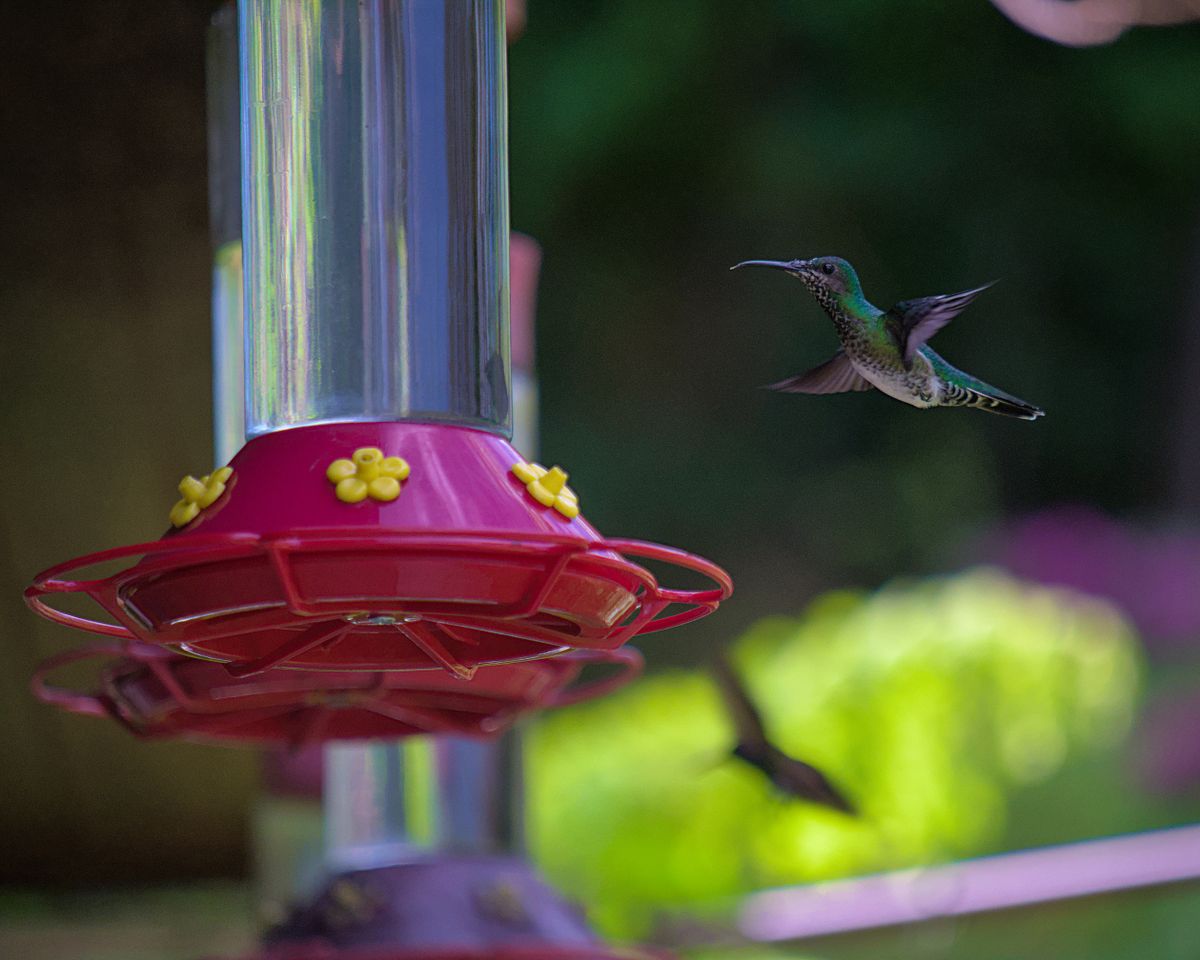
Photo by Heru Vision on Pexels
Follow this step-by-step cleaning and repositioning protocol to clear insects from your feeder within 24 hours:
5 Dangerous Mistakes That Invite Yellowjackets and Wasps
Avoid these dangerous practices that can harm hummingbirds or exacerbate insect swarms.
Frequently Asked Questions
Got questions about managing bees near your hummingbird station? Here are answers to common concerns.
Recommended Leak-Proof Solar Glass Feeder Upgrade
If your current feeder suffers from constant thermal leaks or degraded plastic threads, upgrade to an artisan glass feeder designed for durability and pest control.
Next Steps to Keep Your Garden Pest-Free
Your decision: Determine if your current feeder can be fixed with cleaning, shade, and insect guards, or if structural leaks require a design upgrade.
Do this next: Move your feeder to full afternoon shade immediately, wash off all external drips with hot water, and verify an exact 4:1 water-to-refined white sugar nectar ratio.
Related resource: Download our Printable Summer Pest-Free Feeder Cheat Sheet.
For a guaranteed leak-proof, hand-blown glass design with vibrant red accents and zero yellow ports, explore the LUJII Hand-Blown Glass Solar Hummingbird Feeder.
Take these immediate steps to restore peace to your backyard feeding station today.