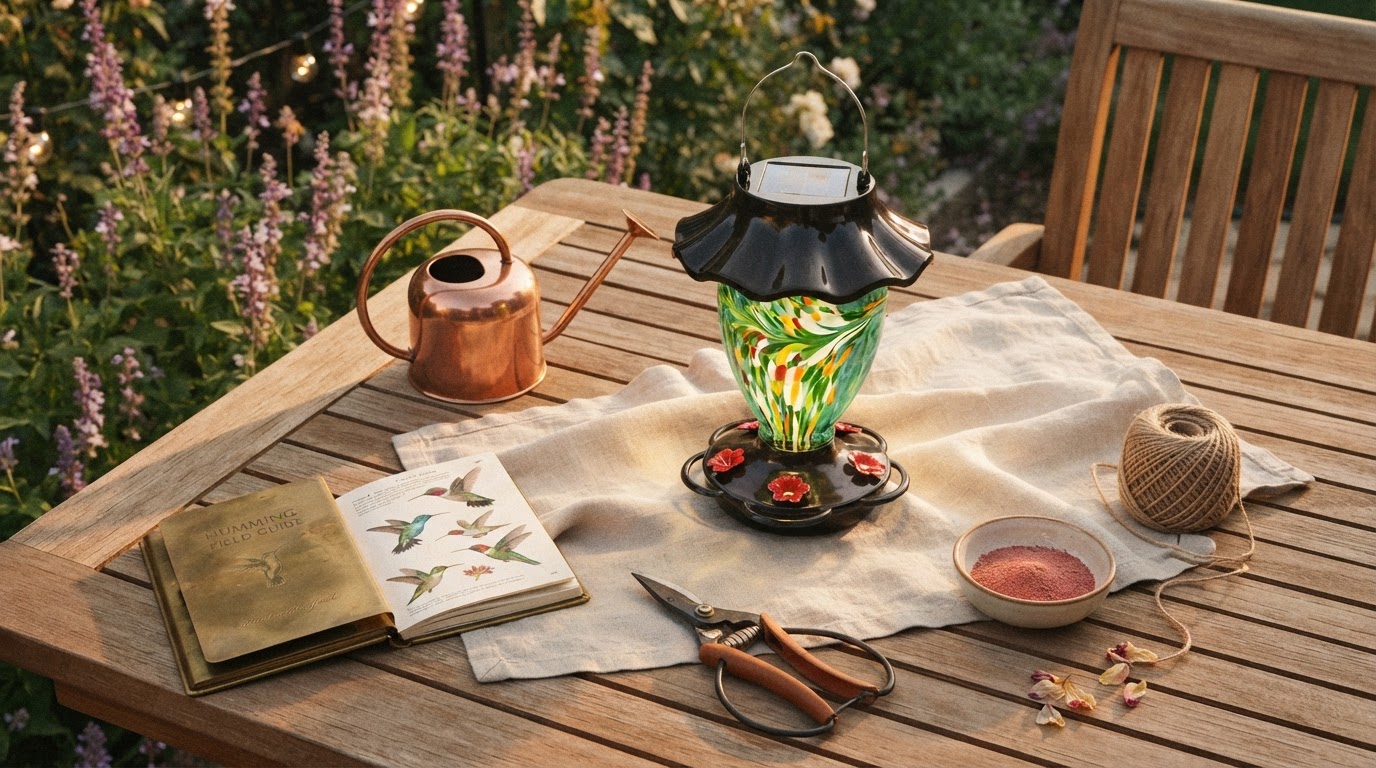
Selecting a Glass Solar Hummingbird Feeder for Your Garden
 Priya RamanSenior Analyst
September 17, 2026. This analysis details the technical and aesthetic requirements for selecting a high-quality glass solar hummingbird feeder. It is designed for homeowners and birding enthusiasts seeking a balance between functional avian nutrition and nocturnal garden illumination.
Evaluating these garden fixtures requires a structured approach. Think of it as a matrix of durability and visibility. When selecting a feeder, two axes matter here: the structural integrity of the glass reservoir and the efficiency of the integrated solar cell. By analyzing these variables, consumers can distinguish between decorative ornaments and functional birding tools that support the high metabolic needs of hummingbirds while providing ambient light after dusk.
The Limitations of Standard Hummingbird Feeders
Traditional plastic feeders often suffer from rapid UV degradation, leading to clouding, cracking, and potential chemical leaching into the nectar. Glass reservoirs are the preferred alternative for serious hobbyists because they maintain structural clarity and are easier to sanitize. However, the addition of solar components introduces new complexities. According to The Birdhouse Chick, high-quality solar glass hummingbird feeders often include specific features like perches and no-drip spouts to ensure the nectar remains accessible and the unit remains clean. Without these specialized design elements, a glass feeder may look attractive but fail to serve its primary purpose: feeding birds safely.
Furthermore, the placement of standard feeders is often dictated by human visibility during daylight hours. Once the sun sets, these areas become dark voids in the landscape. The integration of solar technology seeks to solve this by utilizing the energy collected during the day to power LED modules at night. This transformation from a feeding station to a light source requires the glass to be more than just a container; it must act as a diffuser. Many consumers searching for a hanging solar bird feeder for outdoors find that lower-end models use thin, painted glass that chips over time, whereas hand-blown or thick-pressed glass offers superior longevity. The challenge lies in finding a unit that protects the nectar from fermenting under solar heat while ensuring the electronics are sufficiently shielded from moisture.
The Solar Hummingbird Feeder Design Framework
Solar Hummingbird Feeder addresses these challenges by prioritizing thick-walled glass and weather-sealed solar components. Unlike generic alternatives, these units are engineered to withstand the dual demands of avian visitation and environmental exposure. The glass used in these feeders is specifically chosen for its refractive properties, ensuring that the internal LED creates a soft glow rather than a harsh glare. This is particularly important when considering waterproof solar bird feeder lights, as the seal between the glass reservoir and the solar lid must be airtight to prevent rain from contaminating the nectar or shorting the battery.
Capacity and thermal regulation are also central to the Solar Hummingbird Feeder design. A glass reservoir provides a natural thermal mass that helps stabilize nectar temperatures compared to thin plastic. For those interested in specific finishes, such as a copper solar hummingbird feeder, the glass serves as the core vessel, ensuring that the nectar only touches non-reactive surfaces. The solar panels integrated into the top of these units are high-efficiency monocrystalline cells, designed to charge even in partial shade, providing a consistent 6 to 8 hours of illumination. This dual-purpose functionality ensures the feeder remains a focal point of the garden 24 hours a day, bridging the gap between a solar powered glass hummingbird feeder and a decorative landscape light.
Technical Criteria for Feeder Selection
Once you see it this way, the selection process becomes a matter of checking specific technical boxes rather than just choosing a color. The decision rule: prioritize the health of the birds first, and the quality of the light second. A beautiful light that makes birds sick due to poor cleaning access is a failure of design. Data from Nature's Way Birds indicates that top-fill designs and handblown glass are highly rated by users for their ease of maintenance and ambient lighting quality. When evaluating a potential purchase, use the following framework to ensure the product meets long-term reliability standards.
- Material Density: Ensure the glass is thick enough to resist cracking during temperature fluctuations; hand-blown glass is often superior for this.
- Nectar Protection: The solar element should be positioned so it does not radiate heat directly into the nectar reservoir, which could accelerate fermentation.
- Accessibility: Look for feeders that can be fully disassembled. A solar powered glass hummingbird feeder must be cleaned every 3 to 5 days to prevent mold.
- Lumen Output: The LED should provide soft ambient light (typically under 10 lumens) to avoid disrupting the natural sleep cycles of local wildlife.
- Weatherproofing: Verify that the solar housing has an IP44 or higher rating to ensure it can withstand rain and irrigation systems.
Shop Solar Hummingbird Feeder here
Sources
- LunaLite Hummingbird Feeders - EchoValley.com
- Spring Rain Illuminated Handblown Glass Top-Fill Hummingbird Feeder
- Hummingbird Feeders | Decorative Glass Feeders & Sets | Duncraft