The Ultimate Guide to Solar Hummingbird Feeders: Placement, Lighting, and Care
The Ultimate Guide to Solar Hummingbird Feeders
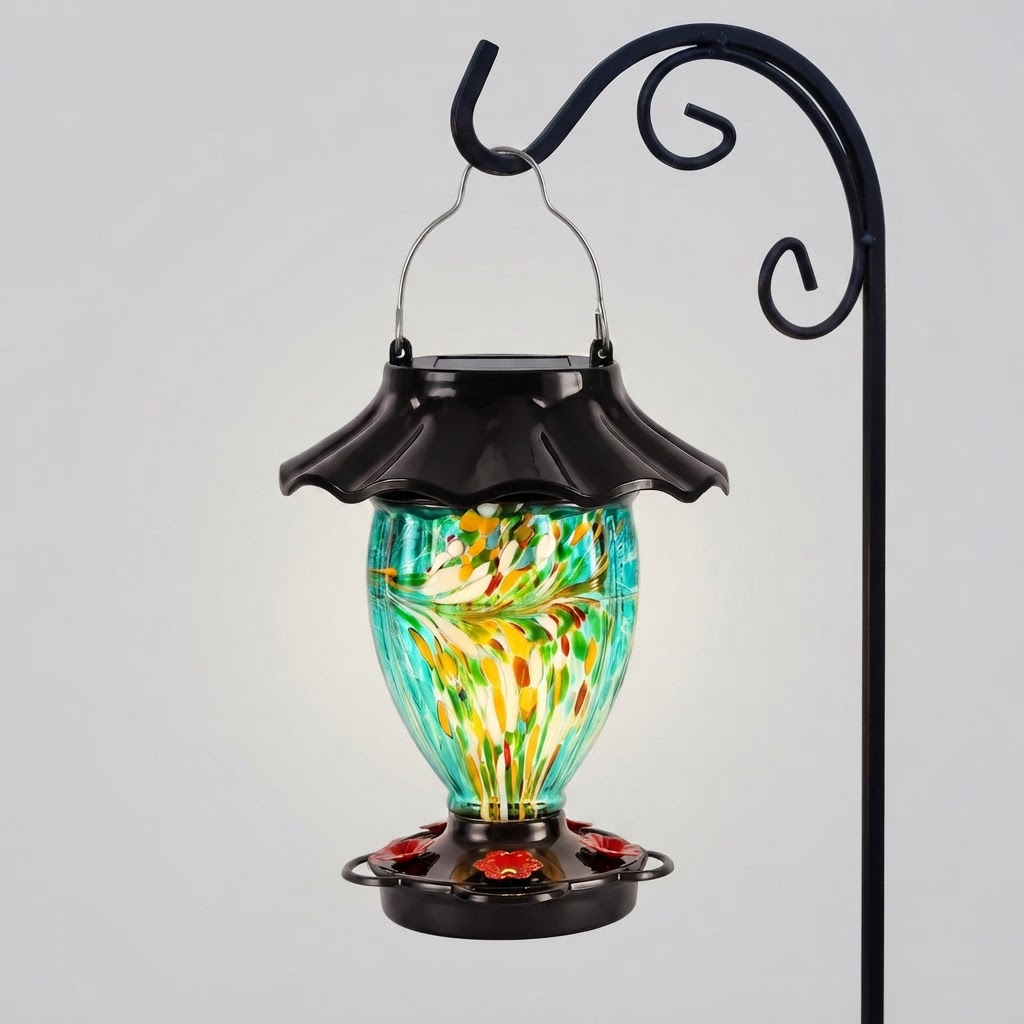
Attracting hummingbirds to your outdoor space brings endless joy, vibrant colors, and motion to any backyard or patio. While traditional feeders satisfy nectar needs during daylight hours, modern innovation has introduced decorative illuminated options. A solar hummingbird feeder combines functional feeding ports with solar-powered RGB lighting, turning your garden into an enchanting sanctuary long after sunset.
In this comprehensive guide, we will explore everything you need to know about setting up, placing, and caring for your solar hummingbird feeder to ensure local birds thrive while your outdoor landscape shines.
Key Features: Hand-Blown Glass and Solar RGB Illumination
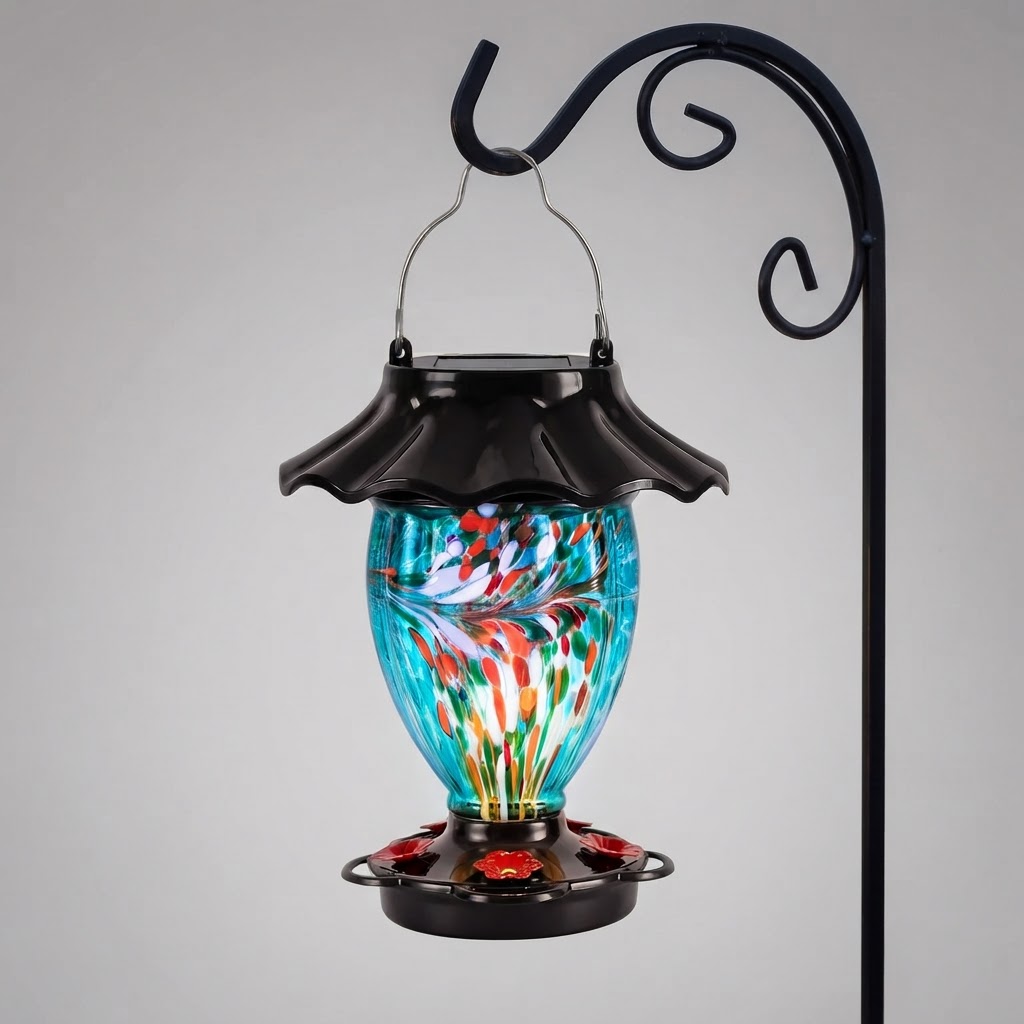
Unlike mass-produced plastic alternatives, high-quality decorative feeders feature handcrafted glass reservoirs. Glass artists shape the curves and patterns at extreme temperatures to produce translucent, colorful vessels. This transparent design makes monitoring nectar levels simple while adding an artistic centerpiece to your garden.
Atop the reservoir, an integrated solar panel converts daytime sunlight into nighttime illumination. The feeder automatically lights up at night for up to LIGHTING_RUNTIME_HOURS after a full daylight charge. Featuring multiple RGB color-changing modes, these feeders softly illuminate your landscape without disrupting local wildlife. One point deserves stating early, because it affects how the product should be used. There is no evidence that coloured light attracts hummingbirds, and the birds are not active at night. Hummingbirds feed by day and roost after dusk, so the illumination is a garden ornament for human enjoyment rather than a feeding aid.
That is a perfectly good reason to own one, but it does mean the lighting should not influence where the feeder goes. Placement should be decided entirely on what suits the birds, and the light treated as a bonus after dark.
On the glass itself, the practical advantages over plastic are that it does not scratch, so it stays clear and is easier to clean thoroughly, and it does not retain odours or stains from old nectar. The disadvantages are weight, which matters for how you hang it, and the obvious fragility in frost, since sugar solution left to freeze expands and can crack a glass reservoir.
Ideal Placement and Recommended Hanging Height
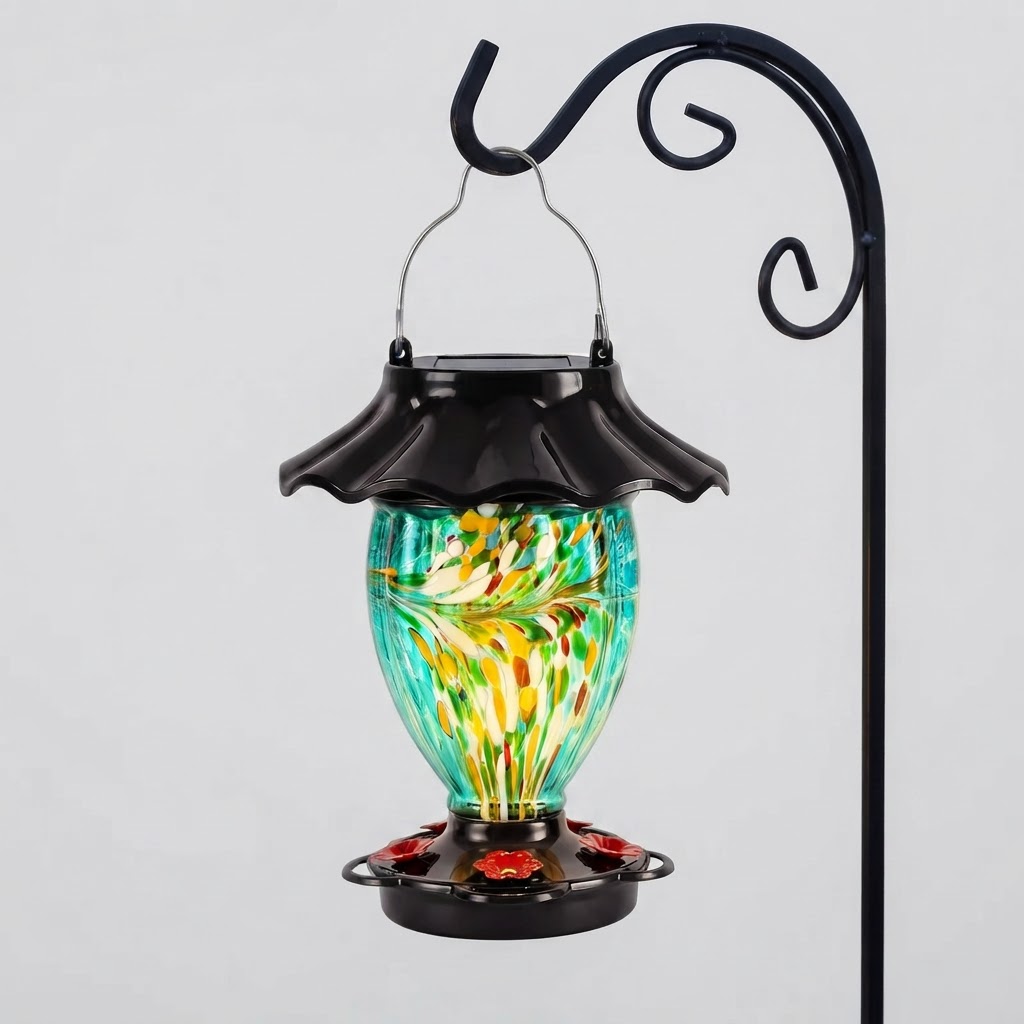
To ensure hummingbirds feel safe and comfortable visiting your yard, strategic positioning is critical. Hummingbirds prefer feeders placed near shelter, such as small trees or shrubs, so they can rest between feedings.
- Hanging Height: The RECOMMENDED_HANGING_HEIGHT provides optimal visibility for observers while protecting the birds from ground predators.
- Observation Distance: Position seating or viewing areas approximately DISTANCE_FEET_FROM_FEEDER to enjoy clear views without disturbing feeding sessions.
- Sun Exposure: Ensure the solar top receives direct sunlight for at least Up to 8 hours hours daily to guarantee maximum evening lighting.
Partial shade is better than full sun. Nectar spoils considerably faster in direct heat, and in hot weather a feeder in full sun can need changing every day or two rather than every few days.
Height of roughly one and a half to two metres works well: high enough to be out of reach of cats, low enough to refill without a ladder, which matters because you will be doing it often.
Cover nearby is important. Hummingbirds prefer to perch and survey before feeding, so a shrub or small tree within a few metres makes a feeder much more attractive than one hanging in open space.
Two cautions. Keep it away from windows or use window markers, since collisions are a real hazard. And if you run more than one feeder, place them out of sight of each other; hummingbirds are territorial and a dominant bird will guard a single feeder against all comers, whereas separated feeders let several birds feed at once.
Proper Cleaning and Leak Prevention
Maintaining clean nectar is vital to hummingbird health. High temperatures can cause sugar water to ferment quickly, making routine maintenance essential.
The schedule depends on temperature. In hot weather, every one to two days. In mild weather, every three to four days. If the solution looks cloudy or you can see any black specks, it needed changing before now.
Clean with hot water and a bottle brush. Avoid detergent, which leaves residue, and avoid bleach unless heavily diluted and very thoroughly rinsed. Pay attention to the feeding ports, where mould establishes first and where a brush often does not reach; a cotton bud or a dedicated port brush is worth having.
On nectar, the standard is four parts water to one part ordinary white sugar, dissolved and cooled. Do not use honey, which ferments rapidly and promotes a fungal infection dangerous to the birds. Do not use brown sugar or artificial sweeteners. And red dye is unnecessary and best avoided, since the feeder itself provides the visual cue.
Leaks are usually a seal or an overfilled reservoir, and they matter because dripping nectar attracts ants and wasps. Filling only two-thirds full, and checking the seal seats cleanly, resolves most of it.
Seasonal Care and Weather Protection
Although built with durable metal bases and weather-resistant tops, extreme winter weather requires extra precaution. During heavy freezing temperatures, bring glass feeders indoors to prevent cracking. Store the unit in a dry location with a full battery charge to preserve solar cell longevity.
Frost is the main hazard for a glass feeder. Sugar solution expands as it freezes, and a full reservoir left out through a hard frost can crack. In cold weather, bring it in overnight, or empty it, or accept the risk.
On when to take feeders down at the end of the season, the long-standing worry that leaving them up delays migration is not supported by the evidence. Migration is triggered by day length rather than food availability, and a feeder left up in autumn mainly helps late or straggling birds that need the calories. Leaving it up until a week or two after the last sighting is the usual advice.
Storage matters more than people expect. Clean it thoroughly before putting it away, since dried nectar residue is far harder to remove after months and can leave a permanent film. Store the glass somewhere it will not be knocked, and if the solar unit's battery is removable, take it out and store it partly charged rather than flat.
One routine worth adopting in spring: check the seals before the first fill. Rubber and silicone harden over a winter, and a seal that leaked slightly last year will leak worse this year.
Related in this cluster
- How Solar Hummingbird Feeders Work: Technology and Mechanics Explained
- How to Hang a Solar Hummingbird Feeder: Step-by-Step Installation
- Hand-Blown Glass vs Plastic Hummingbird Feeders: Which Is Best?
- 5 Beautiful Backyard Decor Ideas Using Solar Hummingbird Feeders
- Why the Solar Hummingbird Feeder Is the Ultimate Garden Gift
- Solar Hummingbird Feeder FAQ: Top Questions Answered