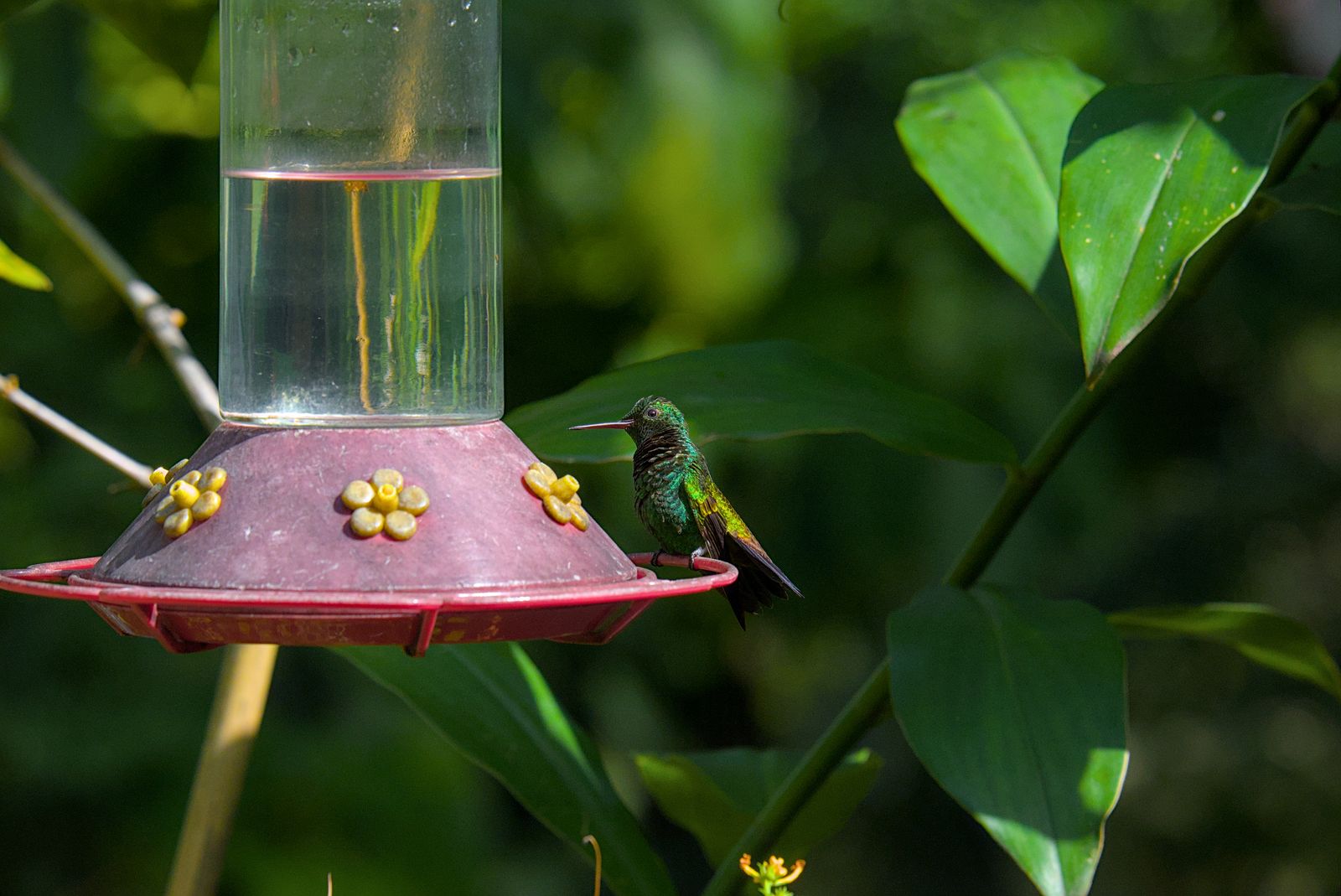
Stop Summer Hummingbird Feeder Leaks & Nectar Spoilage (Step-by-Step)
In summer, hummingbird feeders leak when rising temperatures cause trapped air inside inverted reservoirs to expand, pushing nectar out through ports. To stop leaks instantly, fill reservoirs completely to eliminate air pockets, tighten rubber seals to maintain the vacuum, and move feeders into afternoon shade.
Diagnostic Flowchart: Isolate Your Feeder Leak Source
- Is nectar actively dripping during peak afternoon heat (12 PM – 4 PM)? → Yes: Thermal Expansion Leak. The air pocket inside the inverted bottle is heating up and expanding, pushing nectar out.. No: Proceed to mechanical inspection..
- Is liquid pooling around the threaded base even when the weather is cool? → Yes: Worn or Missing O-Ring Gasket. The vacuum seal has failed at the base interface.. No: Proceed to structural check..
- Are feeding ports dripping continuously regardless of temperature or nectar level? → Yes: Thread Warping or Micro-Fissure. Thin plastic threads or cracked glass are letting outside air equalize internal pressure.. No: Nectar level sloshing caused by strong winds or active bird perching..
Summer Feeder Leak & Spoilage Matrix
| Scenario / Symptom | Root Cause (Physics / Mechanical) | Immediate Fix | Long-Term Prevention |
| --- | --- | --- | --- |
| Dripping from ports during hot afternoons (85°F+) | Trapped air expansion forces liquid downward past port openings as internal pressure exceeds ambient atmospheric pressure. | Chilled liquid refill filled to the absolute top rim; relocate to deep shade. | Upgrade to thick artisan glass with high thermal mass and a protective solar cap shroud. |
| Sticky nectar pooling under threaded base connection | Degraded rubber gasket or misaligned plastic threads breaking airtight vacuum seal. | Remove base, clean sugar crust from threads, reseat rubber O-ring evenly. | Use rust-resistant metal bases with heavy-duty silicone seal rings. |
| Bees and wasps clustering at feeding ports | Micro-drips from thermal sloshing leaving sweet residue on port exteriors. | Wash exterior base with warm water; wipe dry thoroughly. | Hang in shaded area protected from wind; maintain 100% full liquid levels. |
| Nectar turns cloudy or develops black specs in 48 hours | Rapid ambient heat yeast fermentation accelerated by direct solar exposure. | Discard nectar, sanitize bottle with 1:10 white vinegar solution, rinse completely. | Follow strict temperature-based refill schedule and position feeder in afternoon shade. |
Identify your specific feeder symptom below to pinpoint the underlying thermal or mechanical cause and apply the correct fix.
Featured Solution: Hand-Blown Glass & Sealed Rubber Bases
If lightweight plastic feeders continue to warp and leak under harsh summer sun, consider upgrading to the LUJII Solar-Powered Hummingbird Feeder. Handcrafted at 2,300°F from dense art glass, its heavy 32 fl. oz. reservoir insulates nectar against rapid thermal spikes while an anti-rust metal base with a precision silicone O-ring maintains an airtight vacuum seal.
At sunset, the integrated top solar housing automatically illuminates the translucent glass with vibrant RGB ambient light for up to 8 hours without warming the nectar reservoir below.
Pro Tip: The Cold-Nectar Refill Protocol
Always chill your fresh sugar-water syrup in the refrigerator before filling your feeder. When cold liquid (around 40°F–45°F) enters an inverted reservoir, it contracts the remaining air pocket. As the feeder gradually warms to ambient temperature outdoors, the vacuum pressure inside the bottle strengthens rather than pushes outward, instantly eliminating midday drips.
Summer Nectar Freshness & Temperature Thresholds Checklist
- [ ] Under 70°F: Change nectar every 5–7 days.
- [ ] 70°F – 80°F: Change nectar every 3–4 days.
- [ ] 81°F – 89°F: Change nectar every 2 days.
- [ ] 90°F and above: Change nectar daily without exception.
- [ ] Inspect ports daily for white film, cloudiness, or black mold specs.
- [ ] Ensure feeder is in full shade during peak heat hours (12 PM – 4 PM).
Anatomy of Thermal Expansion & Vacuum Seals
This cross-sectional diagram illustrates how solar radiant heat expands trapped internal air pockets in inverted glass reservoirs, pushing nectar downward through feeding ports when vacuum seal integrity is compromised.
Decision Tree: Should You Fix, Relocate, or Replace Your Feeder?
- Does your feeder bottle have visible hairline cracks or stripped plastic threads? → Yes: Replace Feeder. Structural compromise prevents airtight vacuum formation.. No: Check feeder placement.
- Is the feeder currently exposed to direct midday sun or hanging over hot brick/concrete? → Yes: Relocate Feeder. Move to a shaded tree canopy or shaded porch beam to lower ambient temperature.. No: Check seal components.
- Is the rubber O-ring seal intact, clean, and properly seated inside the base? → Yes: Apply Cold-Nectar Protocol. Fill 100% to the brim to eliminate air pockets.. No: Fix Base Seal. Clean sugar crust or replace worn rubber O-ring gasket.
Next Steps for a Leak-Free Summer Garden
Your decision: Determine if your current feeder is leaking due to partial air filling, lack of shade, or heat-warped base seals.
Do this next: Flush and refill your feeder with cool nectar to the brim, check the base rubber O-ring seal, and relocate the feeder to afternoon shade.
- Read next: Hot Weather Nectar Ratios: How to Keep Hummingbird Food Fresh in Summer
- Read next: Best Ant Moats for Hummingbird Feeders: Built-In vs. Hanging Hooks
If your current plastic feeder has warped threads, consider upgrading to the LUJII Solar Hand-Blown Glass Hummingbird Feeder with a leak-proof metal/rubber sealed base.
Take these immediate actions to secure your hummingbird sanctuary against drips, ants, and spoiled sugar syrup.
Key Takeaways for Summer Hummingbird Feeder Care
- Thermal air expansion inside inverted bottles is the #1 cause of summer feeder leaks.
- Filling reservoirs completely to the top rim leaves no air pocket to expand under heat.
- Chilling fresh nectar before hanging creates a stronger internal vacuum lock.
- Thick hand-blown glass and anti-rust metal bases resist thermal warping far better than thin plastic.
- Nectar must be changed every 24–48 hours when outdoor temperatures exceed 85°F to prevent yeast fermentation.
Choosing the Right Summer Feeder Design
When choosing a summer feeder, select non-warping thick glass with rubber gasket seals over thin plastic, especially in climates exceeding 85°F.
Best choice for
- Heavy Hand-Blown Glass Feeders with Rubber O-Ring Gaskets — Thick artisan glass insulates nectar against rapid heat spikes and resists warping that breaks vacuum seals.
- Sealed Metal-Base Feeders with 32 oz Capacity — Weighty bases stay stable on hooks, preventing liquid from sloshing out port openings.
- Thin snap-together plastic feeders used in direct sunlight (plastic warps under heat, breaking the vacuum seal)
- Feeder placement directly above unshaded brick or concrete patios (radiant heat amplifies thermal expansion)
- Dish/Saucer Style Feeders — Nectar sits below ports so expansion cannot force liquid out, though capacity is typically smaller.
Recommended Leak-Proof Solar Feeders
Photo by Skyler Ewing on Pexels
Enhance your outdoor sanctuary with a handcrafted solar feeder engineered for beauty, durability, and leak prevention.
Comparison: Standard Plastic Inverted vs. Hand-Blown Glass Solar Feeders
| Scenario / Environment | Standard Thin Plastic Inverted Feeder | LUJII Sealed Hand-Blown Glass Solar Feeder | Winner & Key Reason |
| --- | --- | --- | --- |
| Midday Heat Exposure (90°F+) | Plastic expands and threads distort, leading to vacuum loss and port dripping. | Thick hand-blown glass maintains rigidity; solar top cap creates protective shade shroud. | LUJII Glass (Superior thermal mass and dimensional stability) |
| Airtight Seal Reliability | Plastic-on-plastic threads strip easily over repeated refilling cycles. | Precision metal base with flexible silicone O-ring locks vacuum tight. | LUJII Glass (Durable silicone seal prevents thread leakage) |
| Nectar Level Visibility | Plastic clouds and yellows after exposure to solar UV rays. | Translucent hand-blown art glass remains crystal clear permanently. | LUJII Glass (Easy visual checking without opening feeder) |
| Evening Garden Aesthetics | Functional only during daylight hours; invisible at dusk. | Integrated solar RGB core automatically lights up for 8 hours with glowing patterns. | LUJII Glass (Dual-purpose bird feeder and evening art illumination) |
Compare structural performance and thermal stability between standard plastic models and artisan glass solar feeders.
5 Steps to Restore a Complete Vacuum Seal
Follow these practical maintenance steps every time you clean and refill your inverted hummingbird feeder.
4 Summer Feeder Mistakes That Accelerate Leaks & Spoilage
Avoid these common setup errors that compromise feeder vacuum pressure and expose nectar to heat degradation.
Related Summer & Seasonal Care Guides
- Summer Hummingbird Feeder Care: Keep Nectar Fresh & Stop Leaks
- Summer Hummingbird Nectar Ratio & Temperature Freshness Guide
- Summer Hummingbird Nectar Safety: Sun Exposure, Spoilage Timelines, and Shading Hacks
Frequently Asked Questions
How do I clean sticky nectar residue off my solar panel top without damaging the RGB lighting core?
Use a soft microfiber cloth dampened with warm water only. Gently wipe the top plastic solar housing to remove sugar spots or dust. Avoid immersing the upper solar cap unit directly in water, and never use harsh chemical sprays, glass cleaners, or abrasive scrubbing pads that could scratch the solar collector or degrade the moisture-resistant seals.
Does the nighttime LED light from a solar feeder attract bugs or warm up the nectar?
No. The integrated RGB LED lights operate at extremely low voltage and produce negligible thermal energy, meaning they will not warm the liquid sugar reservoir or accelerate fermentation. While nocturnal insects like moths may occasionally flutter around ambient outdoor lighting, the airtight sealed base and enclosed port structure prevent insects from reaching or contaminating the internal nectar supply.
What is the best way to keep ants out of my feeder if nectar has already spilled on the ground?
First, thoroughly hose down the ground and surrounding foliage beneath the hanging location with plain water to wash away sugar scent trails that attract ant scouts. Next, install an inline water-filled ant moat on the hanging hook above the feeder. Finally, wipe down the feeder base with warm water and ensure the base gasket is screwed tight to stop ongoing drips.
Get expert answers to common questions about solar feeder maintenance, insect protection, and lighting.
Start Enjoying a Leak-Free Summer Sanctuary
Your decision: Determine if your current feeder is leaking due to partial air filling, lack of shade, or heat-warped base seals.
Do this next: Flush and refill your feeder with cool nectar to the brim, check the base rubber O-ring seal, and relocate the feeder to afternoon shade.
- Read next: Hot Weather Nectar Ratios: How to Keep Hummingbird Food Fresh in Summer
- Read next: Best Ant Moats for Hummingbird Feeders: Built-In vs. Hanging Hooks
If your current plastic feeder has warped threads, consider upgrading to the LUJII Solar Hand-Blown Glass Hummingbird Feeder with a leak-proof metal/rubber sealed base.
Ready to eliminate sticky spills and invite vibrant wildlife into your yard? Upgrade to a leak-proof, handcrafted feeder designed for durability and night art illumination.
Cover photo by Heru Vision on Pexels.