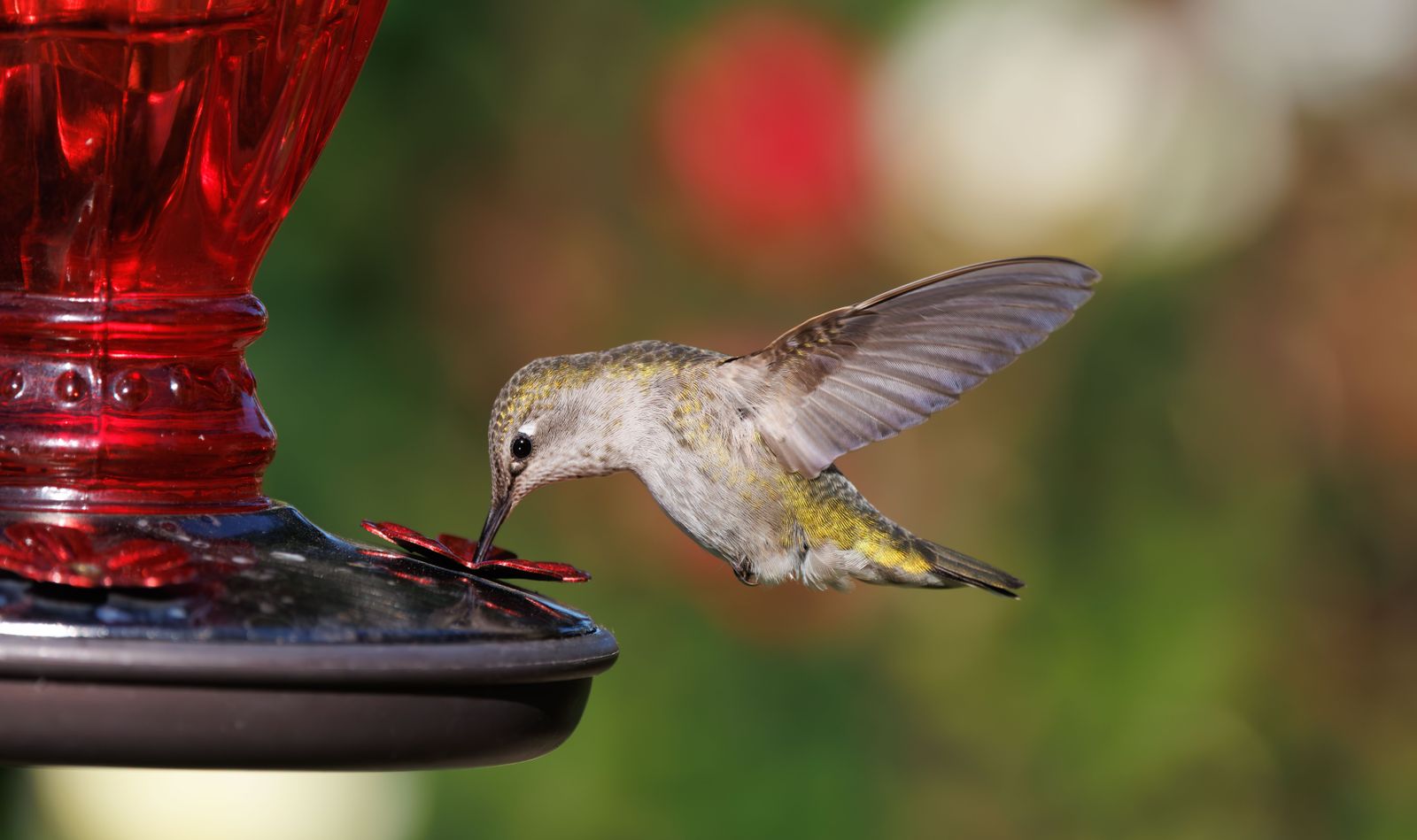
Hummingbird Feeder Setup & Care FAQ: Safe Nectar, Strategic Placement, and Solar Night Lights
Contrary to the persistent myth that night lights disorient hummingbirds, soft ambient solar LED lights do not disrupt their sleep. Hummingbirds enter a state of deep torpor in sheltered tree branches at night. For optimal setup, mix 1 part pure white refined table sugar with 4 parts plain water (never use red dye or organic sugars). Hang your feeder 5 to 6 feet above ground, in partial afternoon shade, 10 to 15 feet from tree perches, and either within 3 feet or beyond 30 feet from glass windows to eliminate collision hazards.
Feeder Placement Decision Guide: Selecting Your Garden Location
Prioritize a location that offers partial afternoon shade to preserve nectar freshness, direct sky access for the solar cap, and nearby protective cover for birds.
Best choice for
- Shepherd's Hook in Morning Sun / Afternoon Shade — Allows the top solar panel to charge during peak daytime hours while keeping the 32 oz glass nectar reservoir cool during scorching afternoon heat.
- Wall Bracket < 3 Feet from Window — Offers intimate bird watching while ensuring that if a hummingbird is startled, it cannot reach sufficient flight speed to suffer a fatal window collision.
- Heavy-Duty Hook with Ant Moat near Dense Shrubbery — Dense foliage acts as a windbreak to prevent nectar dripping from the flower ports while providing shelter from sharp-shinned hawks.
- Direct all-day sun in climates exceeding 90°F (accelerates nectar fermentation within 24 hours).
- Hanging 4 to 10 feet from large clear window panes (creates a deadly strike collision zone).
- Directly above outdoor furniture or light-colored patio stones without drip trays.
- Multiple Separated Feeders — If aggressive Rufous or Ruby-throated males guard a single feeder, space additional feeders 15-20 feet apart out of direct line of sight.
Featured Garden Highlight: LUJII Solar-Powered Hand-Blown Glass Feeder
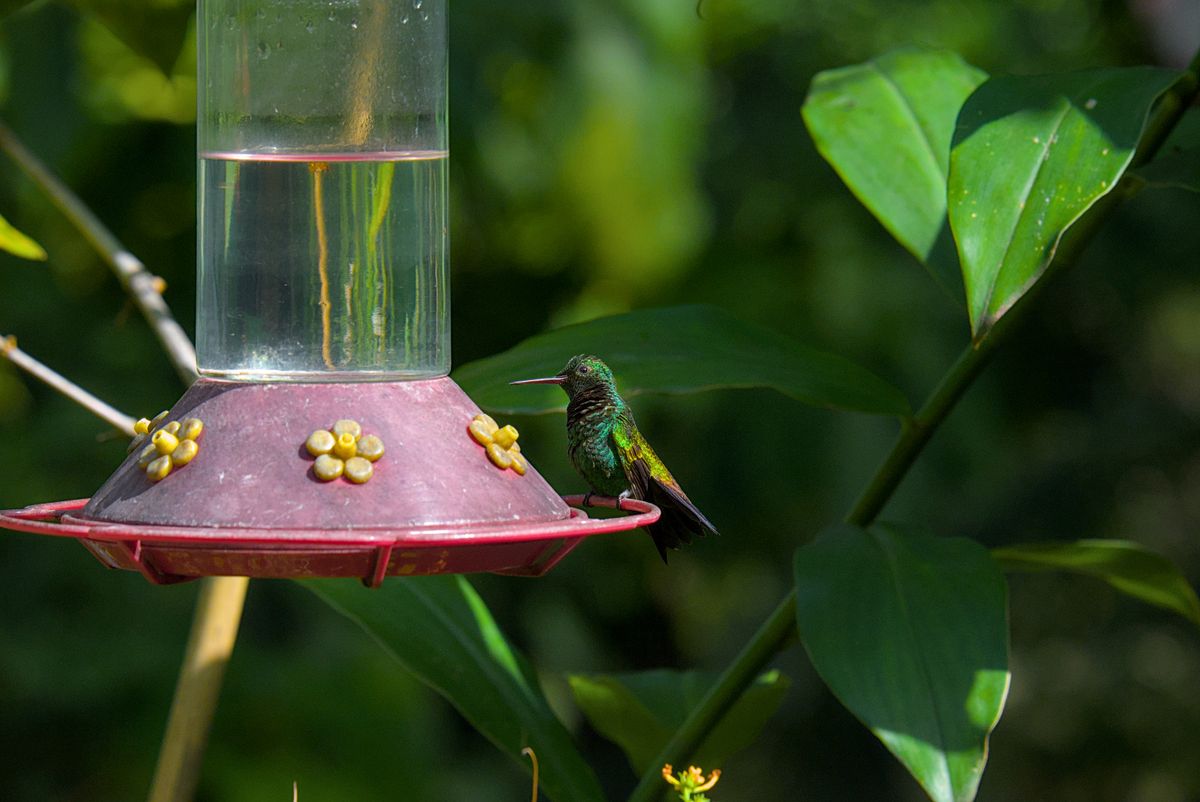
Photo by Heru Vision on Pexels
Elevate your garden aesthetic while giving local hummingbirds an artisanal retreat. The LUJII Solar-Powered Hummingbird Feeder pairs hand-blown glass art with intelligent outdoor solar illumination.
Temperature-Driven Nectar Maintenance Schedule
- Under 70°F (21°C) — Change nectar and rinse feeder every 5 to 7 days. Inspect solar cap for water droplets.
- 70°F to 80°F (21°C - 27°C) — Change nectar every 3 to 4 days. Rinse reservoir thoroughly with hot water.
- 81°F to 90°F (27°C - 32°C) — Change nectar every 2 days. Flush flower feeding ports using a soft bottle brush.
- Above 90°F (32°C+) — Change nectar daily. Wash feeder with a 1:10 white vinegar solution; fill only with cold nectar.
Feeding Station Troubleshooting Matrix
| Symptom / Problem | Primary Cause | Immediate Corrective Action |
| --- | --- | --- |
| Nectar dripping from flower ports | Thermal expansion due to direct heat or wind rocking | Move feeder to dappled shade; fill reservoir completely to equalize internal air pressure; ensure metal base gasket is hand-tightened. |
| Ants crawling into nectar ports | Lack of a physical water barrier | Install a dedicated hanging ant moat above the solar cap. Fill moat with water; never apply petroleum jelly or oil to hanging wires. |
| Yellow jackets / Bees swarming ports | Sugar drips on exterior base or high sugar concentration | Wipe down exterior with clean water. Verify nectar ratio is strictly 4:1 water-to-sugar. Move feeder 10 feet to reset insect foraging patterns. |
| Solar RGB lights fail to illuminate at night | Depleted solar battery, switch off, or ambient porch light interference | Ensure switch under solar cap is 'ON'. Clean solar panel cap with microfiber cloth. Move away from bright artificial porch lights that trigger the off sensor. |
| Dominant male chasing all other birds away | Territorial instinct over a single food source | Hang a second feeder 15-20 feet away around a house corner or behind garden shrubbery to break line of sight. |
Diagnose and resolve common operational, pest, and environmental challenges with your solar glass hummingbird feeder.
Your Backyard Sanctuary Action Plan
Your decision: Position your hand-blown glass feeder on a heavy-duty shepherd's hook in dappled shade, 5-6 feet off the ground and 10 feet from protective foliage.
Do this next: Mix a fresh 4:1 water-to-white-sugar nectar batch (no dye), fill the 32 oz LUJII reservoir, turn on the solar cap toggle, and hang your feeder to charge under partial daytime sky.
- Read next: How to Clean and Maintain Your Hand-Blown Solar Hummingbird Feeder
- Read next: Artisanal Glass in the Garden: FAQs on Crafts, Lighting, and Wildlife
Bring artful elegance and evening glow to your sanctuary with the LUJII Solar-Powered Hand-Blown Glass Feeder (32 oz capacity, anti-rust metal base, multi-mode RGB night lighting).
Follow these practical steps to install your hand-blown solar glass feeder and create a safe, glowing bird haven.
Key Takeaways for a Safe & Vibrant Feeding Station
- Nectar Formula: Stick strictly to a 4:1 water to refined white table sugar ratio. Never use red dye, honey, brown sugar, or artificial sweeteners.
- Nighttime Lighting Safety: Ambient solar RGB lights illuminate garden decor without disturbing hummingbirds, as birds roost in trees during dark hours.
- Collision Safety Zone: Place feeders either under 3 feet from window glass or further than 30 feet away to prevent fatal collision speeds.
- Temperature Vigilance: Replace nectar every 24-48 hours when summer temperatures cross 85°F to prevent hazardous mold growth.
- Pest Prevention: Protect nectar using clean water moats rather than harmful sticky oils or chemical insecticides.
Printable Feeding Station Quick-Reference Card
- RECIPE: 4 Cups Tap/Filtered Water + 1 Cup Pure White Granulated Sugar. Boil water, dissolve sugar, cool completely.
- CLEANING: Rinse with hot tap water at every refill. Scrub ports weekly with soft pipe cleaners. Vinegar soak for mineral spots.
- SOLAR CARE: Wipe the top solar panel glass weekly with a moist microfiber cloth to clear pollen and dust.
- PLACEMENT: 5-6 feet high | 10-15 feet from tree perches | Afternoon shade | Direct sky exposure for solar cap.
- WARNINGS: No Red Dye #40 | No Honey | No Petroleum Jelly on Wires | No Bleach on Hand-Blown Art Glass.
Summer Nectar Spoilage & Cleaning Matrix
| Garden Microclimate Scenario | Max Nectar Lifespan | Solar Charge Yield | Recommended Maintenance Routine |
| --- | --- | --- | --- |
| Full Afternoon Shade (Dappled Canopy) | 4 to 5 Days (Moderate) | 6 to 8 Hours (Full RGB Night Runtime) | Standard twice-weekly hot water rinse and fresh nectar refill. |
| Direct Morning Sun / Afternoon Shade | 2 to 3 Days (Fast) | 8+ Hours (Maximum Runtime) | Change nectar every 48 hours; check ant moat water level every 2 days. |
| Unshaded Metal Patio / High Heat (>90°F) | 24 Hours (Critical) | 8+ Hours (Maximum Runtime) | Daily nectar change with ice-chilled nectar batch; daily vinegar port flush. |
| Covered Porch / Deep Roof Overhang | 5 to 7 Days (Slow) | 1 to 3 Hours (Reduced Night Glow) | Relocate feeder outward 3 feet onto a shepherd's hook to improve solar panel sky exposure. |
How microclimate variations impact nectar shelf-life, solar charging efficiency, and cleaning requirements across common garden scenarios.
Ideal Hummingbird Feeding Station Layout Diagram
A visual guide illustrating proper elevation, foliage clearance, window collision safety zones, and solar exposure angles.
Interactive Nectar Batch & Spoilage Calculator
Specifying an interactive tool to calculate exact sugar and water recipes while estimating nectar shelf-life based on outdoor weather conditions.
5 Critical Hummingbird Feeder Setup Mistakes to Avoid
Avoid these common setup traps that risk harming visiting hummingbirds or damaging artisanal solar glassware.
Continue Building Your Whimsical Sanctuary
Explore additional expert guides on outdoor artisanal glass decor, wildlife care, and evening solar garden illumination:
Frequently Asked Questions: Nectar, Placement & Solar Night Lights
Detailed answers to common questions about operating hand-blown solar glass hummingbird feeders.
Cover photo by Veronika Andrews on Pexels.