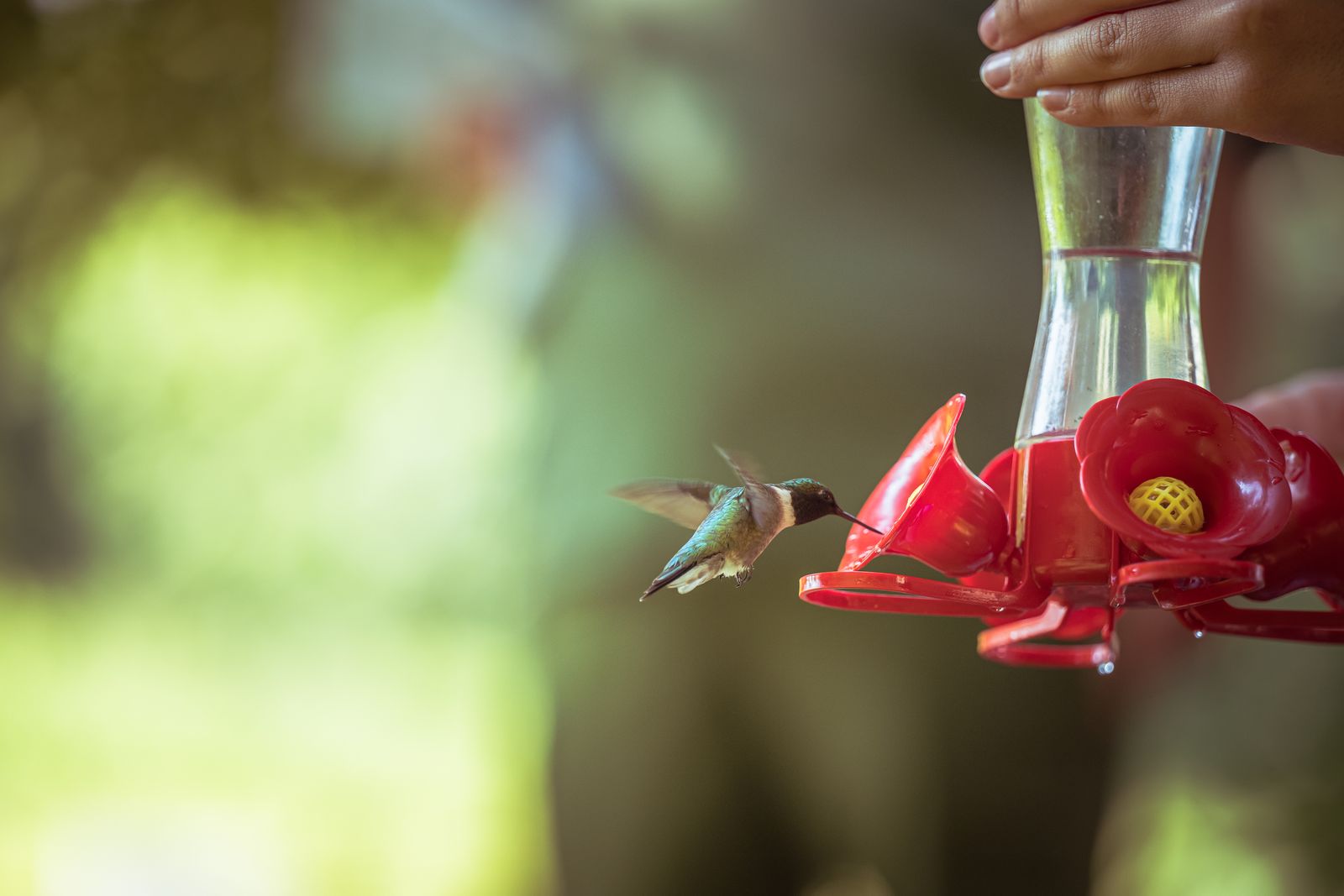
Fall Hummingbird Feeding Guide: Migration, Nectar & Solar Feeder Care
Apply the 14-day rule: keep your hummingbird feeder clean and filled for exactly 14 days after observing your last migrant bird. Maintain a standard 4:1 water-to-sugar ratio (4 parts water, 1 part white refined sugar). As autumn temperatures fall below 60°F, adjust your cleaning schedule from every 2 days to every 5–7 days. If overnight forecasts predict temperatures dropping below 28°F, bring hand-blown glass reservoirs indoors at dusk to prevent cracking.
Essential Fall Feeding & Migration Facts at a Glance
- 14-Day Takedown Rule: Leave feeders hanging for 2 full weeks after your last hummingbird sighting to support late-migrating stragglers.
- 4:1 Nectar Ratio: Stick strictly to 4 parts water to 1 part pure cane sugar; stronger mixtures do not prevent freezing and can cause dehydration.
- 60°F Temperature Shift: Cooler ambient fall temperatures slow bacterial fermentation, allowing you to stretch cleaning intervals to 5–7 days.
- 28°F Glass Threshold: Fluid expands as it freezes; bring 32 oz artisan glass feeders inside overnight when temps dip below 28°F.
- 8-Hour Dusk Illumination: Solar-powered RGB lights illuminate twilight hyperphagia feeding sessions without disturbing nocturnal roosting habits.
Autumn Migration Departure & Feeder Takedown Estimator
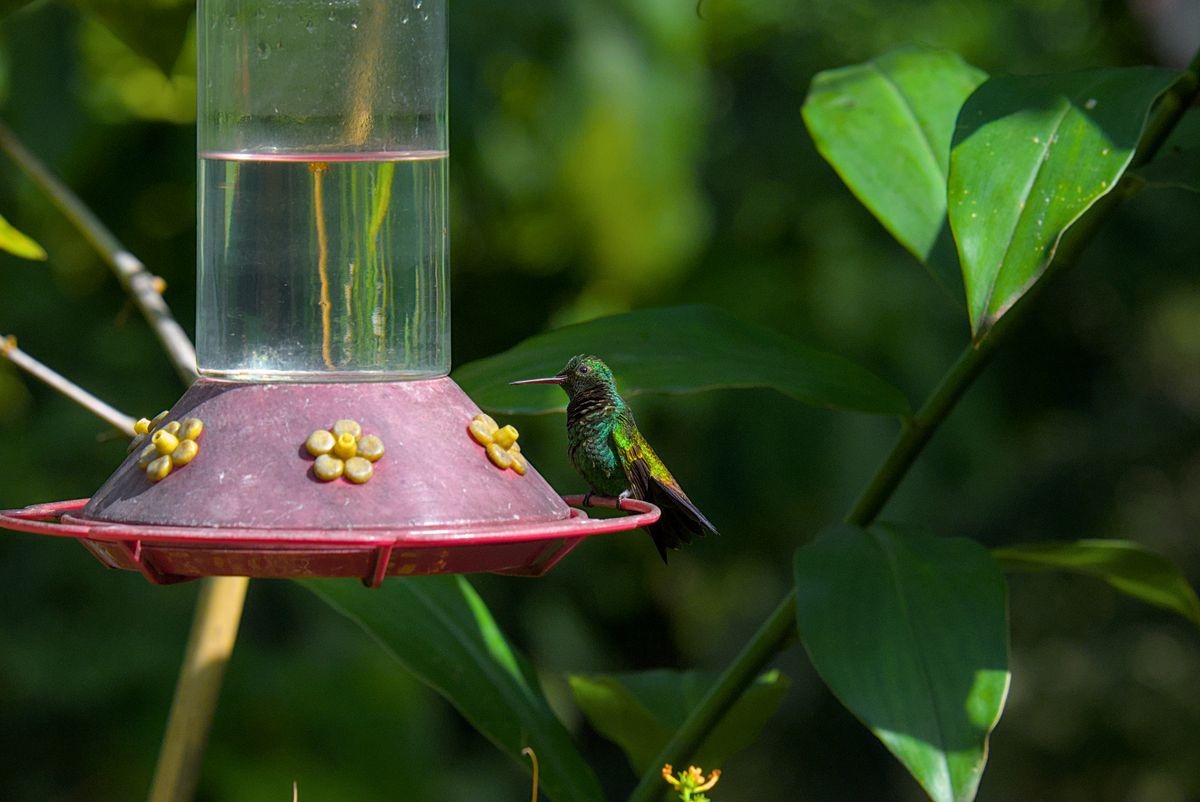
Photo by Heru Vision on Pexels
- August 15 – September 15 (Hyperphagia Peak) — Birds double their body mass by consuming fuel constantly. Keep 32 oz reservoirs filled to capacity with fresh 4:1 nectar.
- September 15 – October 15 (Primary Migration Wave) — Northern populations move south. Wipe down solar panels daily to ensure full 8-hour RGB twilight illumination for dusk feeders.
- October 15 – November 15 (Late Stragglers & Frost Alerts) — Observe local sightings daily. Inspect anti-rust metal bases and extend cleaning cycles to 5–7 days as temps drop below 60°F.
- 14 Days After Last Sighting (Final Winterization) — Perform end-of-season deep cleaning with a 1:4 vinegar solution, power off solar caps, and store hand-blown glass indoors.
Fall Nectar Maintenance Matrix: Temperature vs. Cleaning Frequency
- 75°F and Above (Late Summer / Early Fall) — Clean feeder and replace 4:1 nectar every 2 days. Inspect sealed base for drips caused by high heat expansion.
- 60°F to 74°F (Mild Autumn Days) — Clean feeder and replace nectar every 3 to 4 days. Solar panels charge efficiently under clear autumn skies.
- 45°F to 59°F (Crisp Late Fall) — Clean feeder and replace nectar every 5 to 7 days. Bacteria growth is minimal; keep ports clear of fallen leaves.
- Below 45°F (Early Cold Snaps / Hard Freezes) — Inspect nectar for ice crystals daily. Bring glass feeders inside if overnight lows breach 28°F; rehang at dawn.
Expert Advice: Leveraging 8-Hour Solar RGB Illumination for Twilight Feeders
During fall migration, hummingbirds undergo hyperphagia—a state of intense feeding where they gain up to 25–40% of their body weight. As autumn days shorten, birds frequently feed into late twilight.
A solar-powered feeder equipped with an integrated top cap recharges under afternoon sunlight to provide up to 8 hours of soft RGB lighting at dusk. This subtle glow makes the translucent, 2,300°F hand-blown glass reservoir easily visible to tired travelers flying late into the evening. Because hummingbirds do not feed in total darkness, the light serves as a beacon during twilight without disrupting their night roosting sleep cycles.
5 Critical Fall Feeding Myths & Mistakes to Avoid
Avoid these common errors to keep your local hummingbird population safe and your handcrafted glass feeders intact through the season.
Regional Autumn Migration Guidelines Across US Climate Zones
- Northern US (USDA Zones 3–5: New England, Midwest, Northern Rockies) — Peak migration occurs from late August through mid-September. Most Ruby-throated hummingbirds depart by October 1. Plan final feeder takedown for mid-to-late October using the 14-day rule.
- Central US (USDA Zones 6–7: Mid-Atlantic, Ohio Valley, Central Plains) — Active feeding continues heavily through late September and early October. Rufous and Ruby-throated migrants rely on feeders into late October. Keep feeders operational until early November.
- Southern US & Gulf Coast (USDA Zones 8–10: Southeast, Texas, Desert Southwest) — Many birds winter along the Gulf Coast and Southern California. Keep solar glass feeders clean and filled 365 days a year to support overwintering populations.
- Pacific Northwest & West Coast (USDA Zones 7–9) — Anna's Hummingbirds reside year-round in coastal areas. Maintain 4:1 nectar straight through fall and winter, taking cold-snap precautions when frost hits.
US Autumn Hummingbird Migration & Feeder Takedown Calendar
| US Region | Peak Migration Window | First Frost Risk | Recommended Feeder Takedown |
| --- | --- | --- | --- |
| Zone 3–4 (Far North) | Aug 15 – Sept 20 | Late Sept / Early Oct | Mid to Late October |
| Zone 5–6 (Midwest / Northeast) | Sept 1 – Oct 10 | Mid to Late October | Early November |
| Zone 7–8 (Mid-South / Transition) | Sept 15 – Oct 25 | November | Late Nov / Year-Round |
| Zone 9–10 (Sunbelt / Gulf Coast) | Oct 1 – Nov 30 | December / Rarely | Maintain Year-Round |
Use this seasonal calendar to align your yard care with peak migration waves across key geographic zones.
Recommended Gear for Autumn Garden Resilience
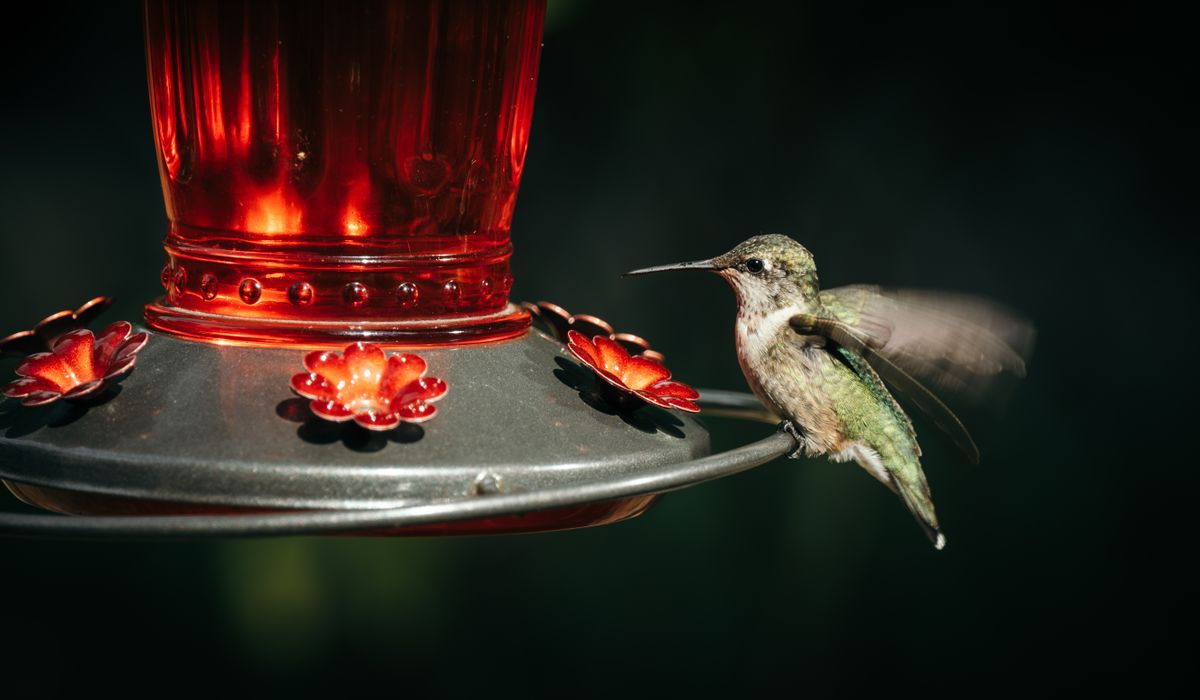
Late fall weather requires durable, weather-sealed feeding stations that can withstand high winds, rain, and low temperatures while remaining easy to monitor.
Adding durable, artisan-crafted solar feeders to your yard ensures late-migrating birds find high-energy nectar during crucial dusk feeding hours. Extend your garden's beauty into late autumn with LUJII's handcrafted, solar-illuminated glass feeders—built with anti-rust metal bases, leak-proof seals, and 8-hour RGB solar caps to support late migrants tonight.
Cold-Snap Protection & Freeze Prevention for Hand-Blown Glass
Water expands by approximately 9% when freezing. While artisan glass blown at 2,300°F offers exceptional structural integrity, liquid freezing solid inside a closed 32 oz glass vessel will cause severe stress or cracking.
3-Step Cold Snap Protocol:
End-of-Season Solar Glass Feeder Winterization Checklist
- [ ] Wait 14 full days after seeing your last hummingbird before beginning disassembly.
- [ ] Unscrew the solar lighting cap, separate the hand-blown glass reservoir, and detach the metal base.
- [ ] Soak the glass reservoir in a solution of 1 part distilled white vinegar to 4 parts warm water for 30 minutes.
- [ ] Scrub all feeding ports with a tiny bottle brush; rinse thoroughly with clean warm water and air dry completely.
- [ ] Wipe down the solar cap's top panel with a soft microfiber cloth and turn the power switch to OFF to protect battery cycles.
- [ ] Store the dry glass reservoir and solar cap in a dry, interior temperature-controlled closet above freezing.
Frequently Asked Questions About Autumn Hummingbird Care
Get quick, authoritative answers to common questions about fall migration and solar feeder care.
Your Autumn Action Plan & Next Seasonal Steps
Your decision: Determine your local migration end-date using the 14-day rule and evaluate overnight frost forecasts.
Do this next: Adjust nectar maintenance to a 5–7 day cycle as temperatures drop below 60°F, wipe down solar caps daily, and keep feeders filled through late autumn.
- Read next: Nighttime Garden Safety for Roosting Hummingbirds: Autumn Twilight Feeding Tips
- Read next: Sustainable Backyard Decor for Fall: Blending Heritage Glass with Solar Illumination
LUJII Hand-Blown Glass Solar Hummingbird Feeder (32 oz capacity, anti-rust metal base) for heavy-duty late-autumn weather resistance.
Take immediate steps to safeguard your local autumn migrants and protect your garden investment.