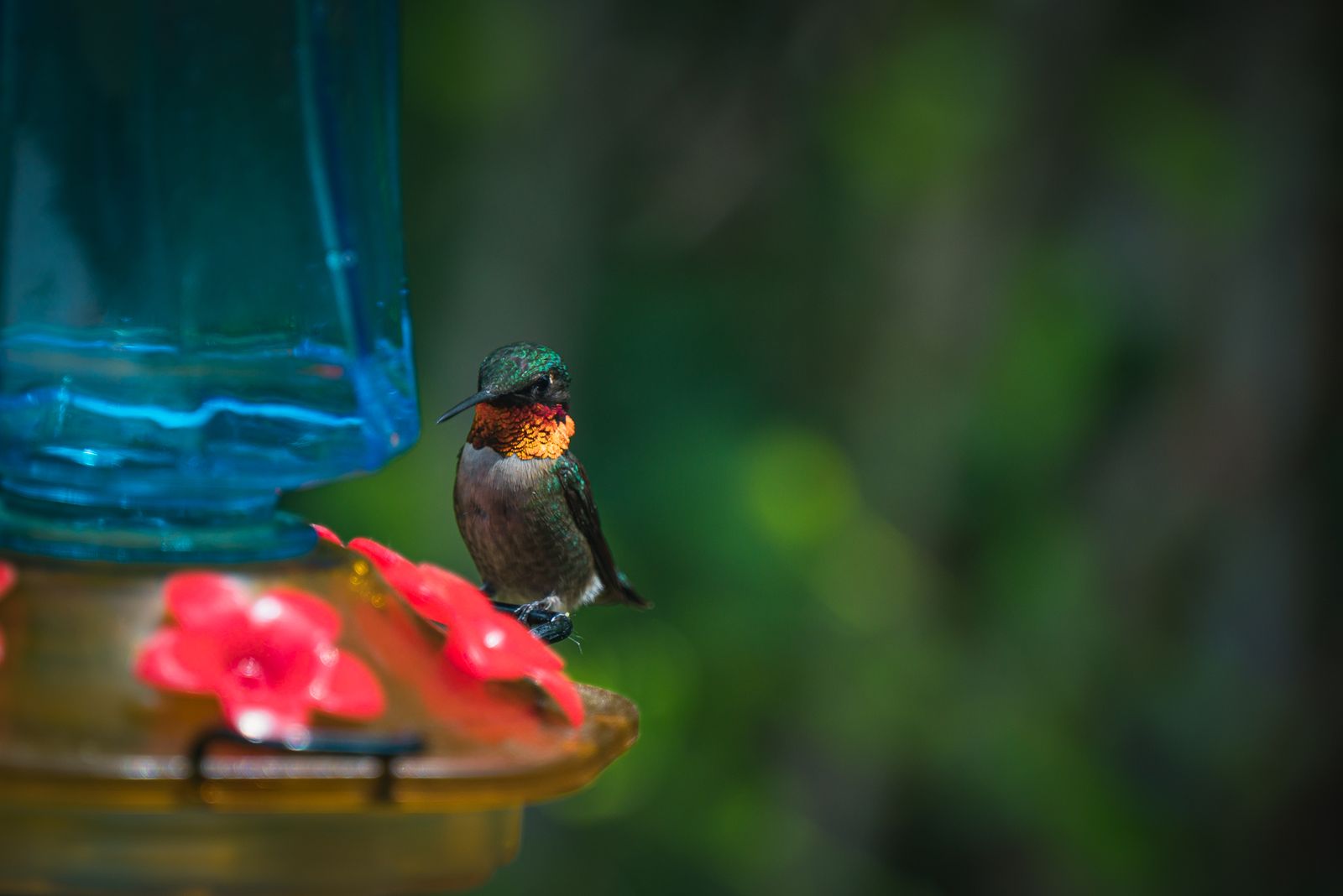
Hummingbird Territorial Behavior in Summer: High-Volume Feeder Guide
Apply the 30-Foot Line-of-Sight Rule: Space hummingbird feeders at least 30 feet apart and out of direct visual contact around house corners or thick garden foliage. Adding 3 or more high-capacity 32 oz feeders reduces territorial guarding by up to 80%, allowing fledglings and females to feed peacefully without single-bully interference.
Key Takeaways: Managing High-Volume Summer Feeding
- 30-Foot Visual Rule: Physical distance alone won't stop bullies; visual barriers like building corners and dense shrubbery are critical.
- 3-Station Minimum: Operating 3 or more separated feeders dilutes a single male's ability to patrol all nectar sources simultaneously.
- 32 oz High-Capacity Need: Peak summer fledglings and migration preparation increase daily nectar demand by 300%, requiring larger glass reservoirs to prevent midday dry-out.
- Heat & Spoiling Control: Temperatures above 90°F cause yeast fermentation within 48 hours; frequent flush cycles protect avian digestive health.
- Dusk Hyperphagia Support: Solar-illuminated feeders provide gentle ambient lighting during twilight, extending essential feeding windows before overnight torpor.
Summer Aggression Timeline: Mid-June to Late August Escalation
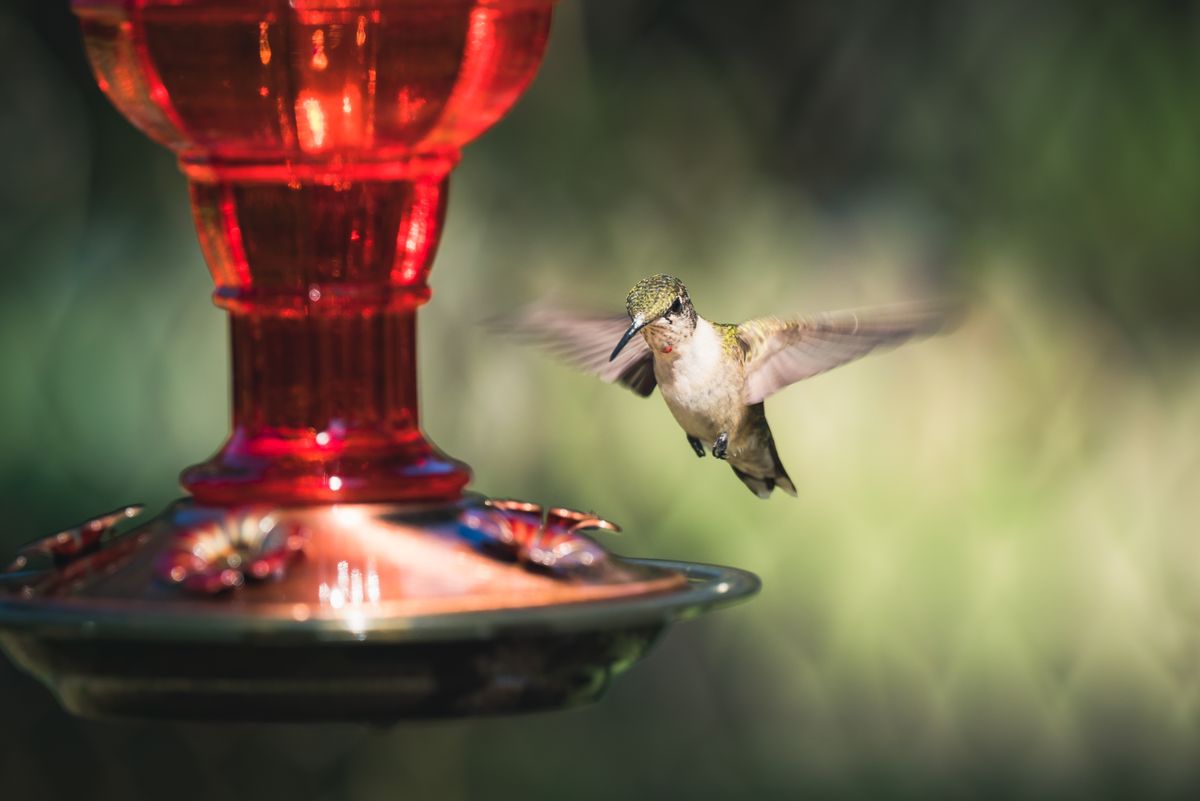
- Mid-June (Territory Claiming) — Adult male Ruby-throated or Rufus scouts select prime feeder perches, establishing initial 50-foot defense perimeters.
- Early July (First Nesting Hatch) — Female nectar demand increases 400% while feeding hungry nestlings. Bullies intensify dive-bombing around single central feeders.
- Late July (Fledgling Emergence) — Local population spikes 3x to 5x as juvenile birds enter the yard. Aerial dogfights reach peak frequency without line-of-sight separation.
- Mid-to-Late August (Premigrating Hyperphagia) — Birds feed continuously from dawn to dusk to double body weight. Installing 32 oz multi-station solar feeders prevents continuous nectar exhaustion.
Peak Summer Maintenance Schedule: High-Volume Nectar & Sanitation
- Every 24 to 48 Hours (Temp > 85°F) — Drain remaining nectar, rinse glass reservoir with hot water, and refill with fresh 4:1 water-to-sugar solution.
- Every 7 Days — Perform a deep brush clean of feeding ports, silicone seals, and anti-rust metal bases using hot water and white vinegar.
- Bi-Weekly — Inspect solar top charging caps, wiping solar panels clear of dust and bird droppings to ensure maximum night lighting.
Optimal Feeder Configuration for Aggressive Yards
To achieve yard peace during the peak summer rush, upgrade your setup with high-capacity, visually striking feeders. We recommend placing three LUJII 32 oz Hand-Blown Glass Solar Hummingbird Feeders around your property. The 32 oz translucent hand-blown glass reservoir eliminates midday dry-outs, while the rust-proof metal base and sealed leak-proof structure withstand intensive daily activity. At dusk, the automatic solar-powered RGB illumination creates a stunning garden centerpiece while assisting hyperphagic hummingbirds during late-evening feeding runs.
Expert Tip: The 'Sightline Deception' Strategy
A dominant male hummingbird cannot defend what he cannot see. Instead of hanging multiple feeders in a cluster along a single porch beam—which creates an easy 'guarding zone' for one bully—place feeders behind architectural corners, hanging garden baskets, or dense trellis vines. If a male bird has to physically fly 15 feet around a corner to inspect a secondary feeder, he will abandon full-yard defense within 48 hours, allowing females and juveniles peaceful access.
3 Common Yard Setup Mistakes That Fuel Feeder Fights
Avoid these critical mistakes when configuring your summer feeding stations:
Blueprint: Anti-Territorial Feeder Placement Layout
Refer to the layout specification below to position your feeding stations around your property to eliminate visual line-of-sight dominance.
Seasonal High-Volume Calendar: Managing Nesting & Fledgling Surges
| Season Stage | Active Bird Demographic | Aggression Index (1-10) | Recommended Capacity & Station Count |
| --- | --- | --- | --- |
| Spring Arrival (April-May) | Migratory Scouts & Breeding Males | 4 / 10 | 1-2 Stations | 16-24 oz total |
| Early Summer (June) | Nesting Females & Territory Males | 6 / 10 | 2 Stations | 32 oz total |
| Peak Summer Surge (July-August) | Adults, Fledglings & Southbound Migrants | 10 / 10 | 3+ Stations | 64-96 oz total (32 oz per station) |
| Early Fall Departure (Sept-Oct) | Late Migrants & Transits | 3 / 10 | 1-2 Stations | 32 oz total |
Adjust your feeder capacity and count based on the seasonal surge stages across North America.
Featured Solution: LUJII 32 oz Solar-Illuminated Glass Feeders
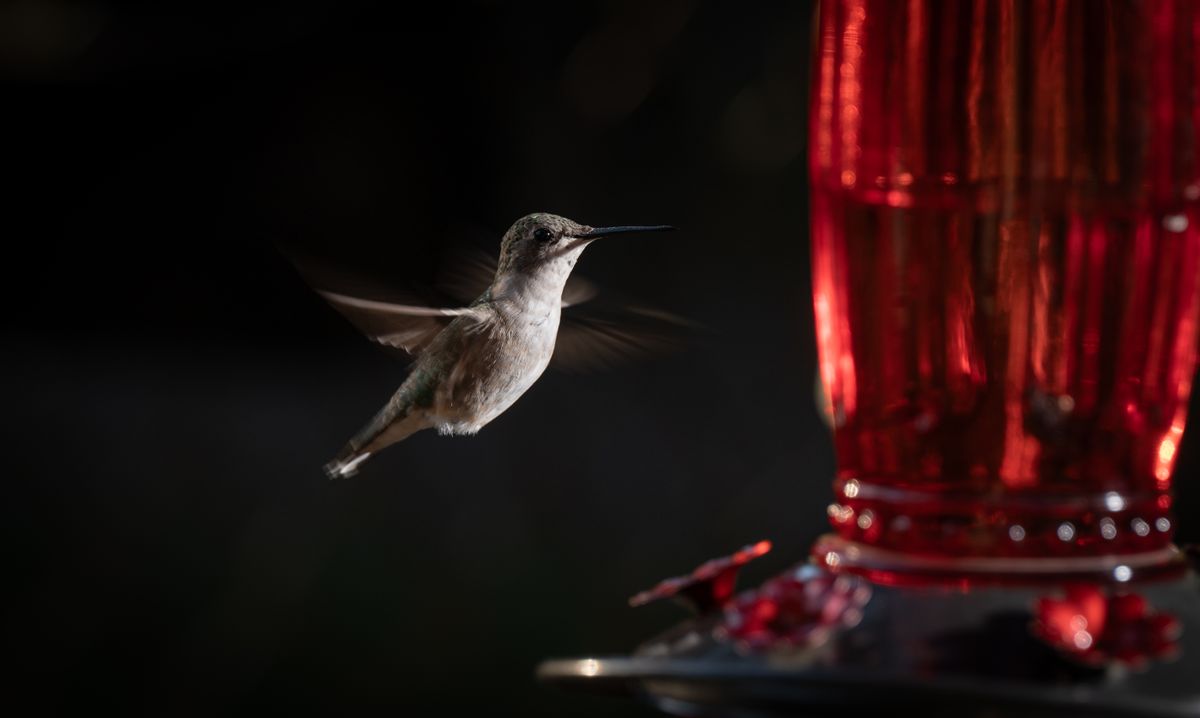
Transform your garden into a serene, anti-bullying hummingbird sanctuary with the LUJII 32 oz Hand-Blown Glass Solar Hummingbird Feeder.
- 32 fl. oz. Capacity: Extra-large translucent glass reservoir prevents midday dry-outs during peak August feeding frenzies.
- Hand-Blown Glass Craftsmanship: Unique 2,300°F artistic glass patterns add vibrant color and charm to your yard.
- Solar-Powered RGB Illumination: Built-in top solar cap charges during the day to glow automatically for up to 8 hours at night.
- Leak-Proof & Weather-Resistant: Heavy-duty anti-rust metal base with silicone sealing rings prevents drips, keeping yellowjackets and crawling ants at bay.
Regional Heat & High-Density Feeding Considerations
High summer temperatures directly impact hummingbird behavior and nectar chemistry. When ambient heat exceeds 90°F in Southern and Southwestern regions, sugar water ferments within 24 to 36 hours due to wild airborne yeast. Fermented nectar produces trace alcohols that cause liver stress in hummingbirds, prompting birds to reject contaminated feeders and violently clash over remaining clean sources.
To manage high heat and volume:
Anti-Territorial Yard Inspection Checklist
- [ ] Feeders spaced minimum 30 feet apart.
- [ ] Line of sight completely blocked between all stations by walls or foliage.
- [ ] At least 3 feeding stations installed during peak summer.
- [ ] Feeders positioned in shade during peak afternoon heat (12 PM - 4 PM).
- [ ] High-capacity 32 oz reservoirs used to prevent midday dry-out.
Frequently Asked Questions: High-Volume Dynamics & Feeder Bullies
Answers to common reader questions regarding summer hummingbird territoriality and multi-feeder management.
Related Guides & Seasonal Resources
- Fall Hummingbird Feeding Guide: Migration, Nectar & Solar Feeder Care
- Hummingbird Feeder Setup & Care FAQ: Safe Nectar, Strategic Placement, and Solar Night Lights
- Fueling Summer Nesting: How High-Capacity Solar Feeders Support Busy Hummingbird Mothers
Your Action Plan for Immediate Yard Peace
Your decision: Determine whether your current yard setup allows visual line-of-sight between existing feeders.
Do this next: Relocate existing feeders to opposite sides of the house and add a third 32 oz station to break territorial dominance.
- Read next: Do Hummingbirds Feed at Night? Understanding Dusk Behavior Around Illuminated Feeders
LUJII 32 oz Hand-Blown Glass Solar Hummingbird Feeder for durable, high-volume multi-station feeding.
Take action now to break feeder dominance and establish a welcoming summer environment for all local hummingbirds.