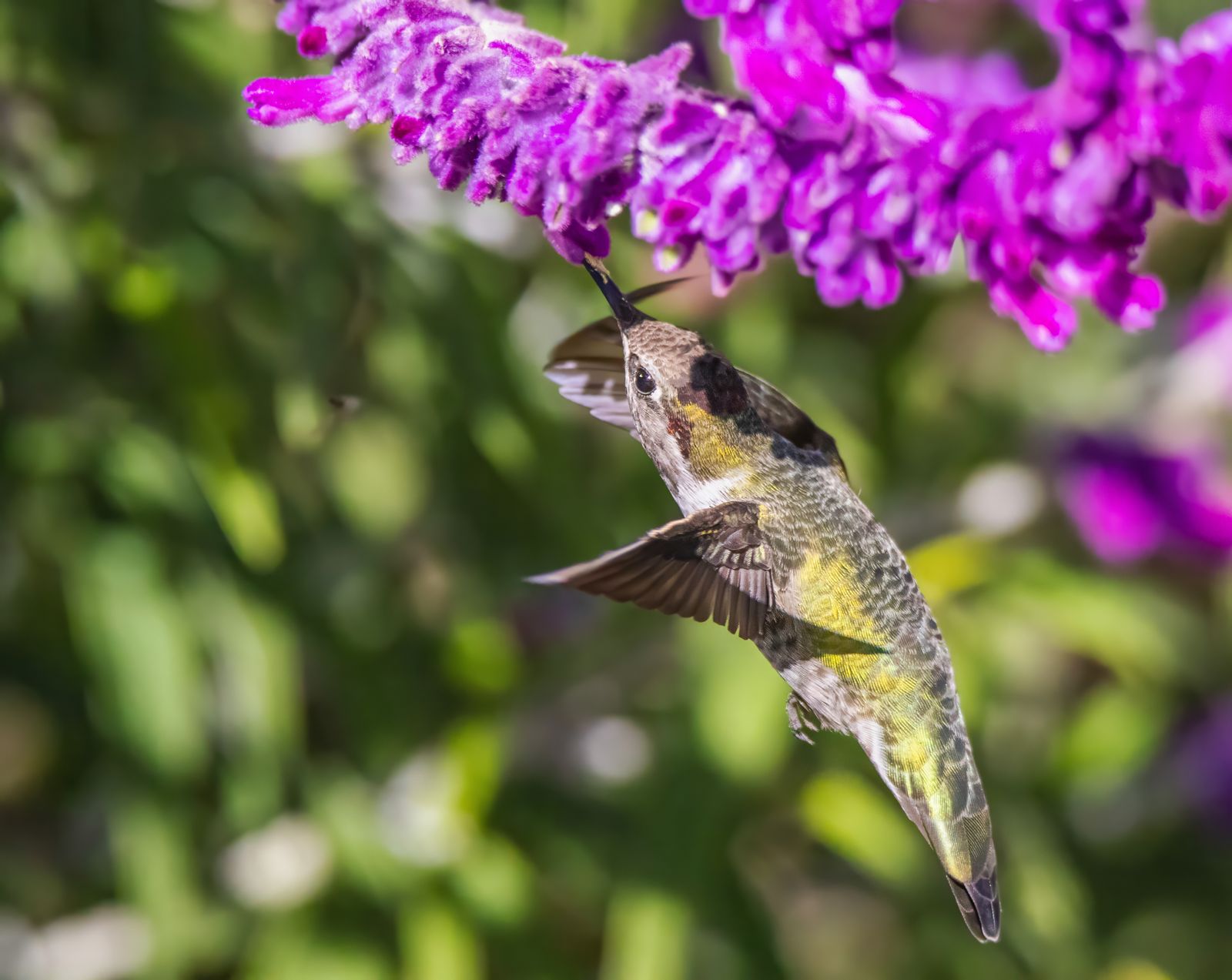
Decoding Backyard Hummingbird Behavior: Field Guide & Feeding Rituals
Are aggressive hummingbirds turning your garden into a warzone? Hummingbirds fiercely guard high-calorie nectar sources due to extreme metabolic survival instincts. To stop feeder bullying, install multiple feeders at least 15 to 20 feet apart behind foliage or around house corners to break visual line-of-sight, creating multi-zone sanctuaries for submissive birds.
Hummingbird Behavior Translation & Ethology Matrix
| Behavior Pattern | Observed Posture / Sound | Ethological Intent | Immediate Garden Countermeasure |
| --- | --- | --- | --- |
| Dive-Bombing | Nose-dives from 30+ feet ending with a loud tail-feather 'pop' or squeak | High-intensity territorial threat intended to intimidate rival males or intruders | Break line-of-sight by moving secondary feeders behind trees, trellis screens, or wall corners |
| Tail-Fanning & Gorget Flaring | Wide spread tail feathers accompanied by flashing bright throat patches (gorget) | Visual warning display signaling dominant ownership of the immediate airspace | Add high perches (dead twigs or shepherd hooks) 10+ feet away to disperse territorial guards |
| Bill-Pointing | Rigid upright posture with the beak tilted vertically upward toward an opponent | Dominance assertion before initiating direct physical contact or chasing | Increase nectar station count; single-feeder yards trigger maximum bill-pointing aggression |
| Pendulum Arc (U-Flight) | Wide side-to-side sweeping arc in front of a perched or hovering target bird | Courtship display (if aimed at females) or territorial intimidation (if aimed at males) | Maintain wide open flight paths near feeding zones while shielding the nectar reservoir itself |
| Twilight Feeding Patrol | Hovering low around feeders during dusk, often approaching illuminated glass reservoirs | Hyperphagic refueling before overnight torpor (metabolic fasting) | Install solar-powered RGB illuminated glass feeders to assist submissive birds feeding in low light |
Use this field matrix to translate physical body language, wing aerodynamics, and vocalizations into immediate behavioral intent and garden management strategies.
Visual Layout Blueprint: Anti-Territorial Feeder Placement
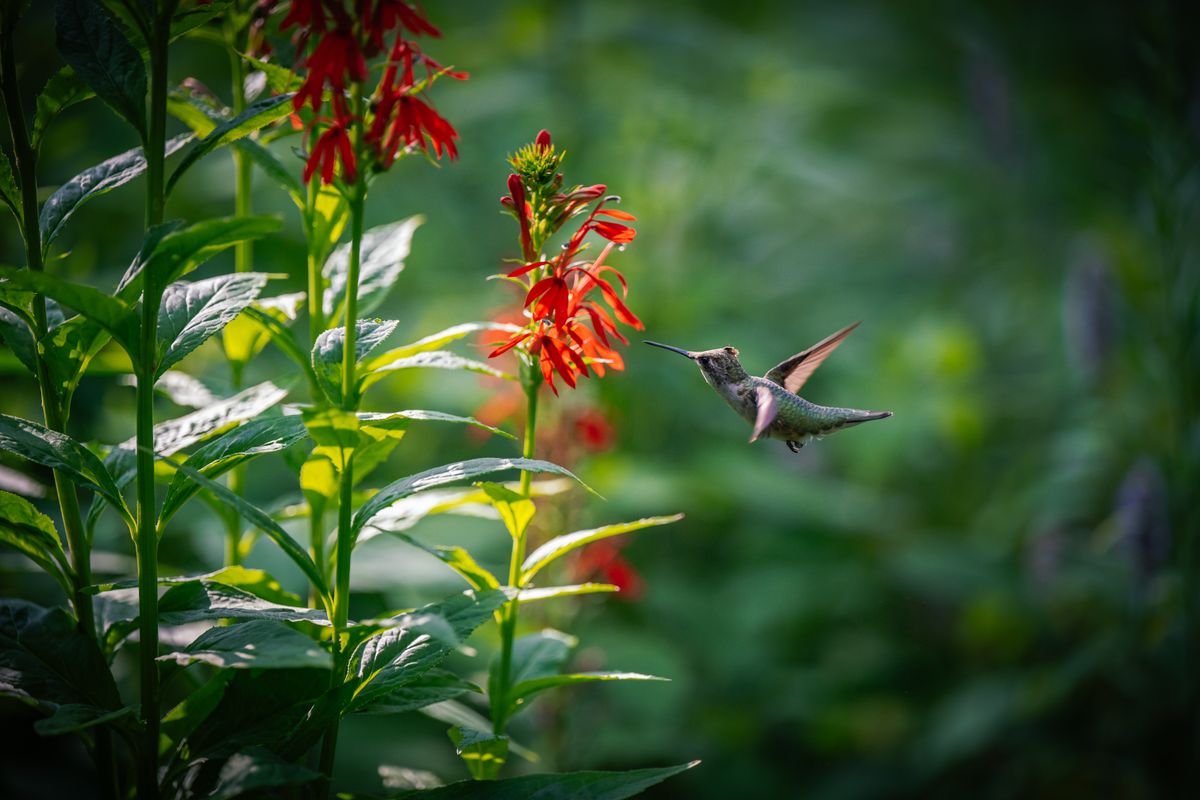
A dominant male hummingbird can easily guard two feeders if he can see them both from a single perch. Strategic yard architecture relies on visual barriers rather than distance alone.
Visual Field Decoder: Body Language & Flight Paths
Quickly identify behavioral signals from your patio with this high-contrast field identification guide.
Expert Tip: Leveraging Dusk Illumination to Bypass Bully Birds
Dominant male hummingbirds generally abandon their high-perch watchtowers as ambient daylight drops below 5 lux, retreating to dense foliage to conserve energy for the night. However, submissive males, juveniles, and females frequently seek emergency calories right at dusk to survive overnight torpor.
By positioning a soft, solar-illuminated feeder—such as a hand-blown glass reservoir with gentle RGB lighting—in a sheltered twilight zone, you create a dedicated evening sanctuary. The subtle illumination allows non-dominant birds to navigate safely to nectar ports during the final 30 minutes of twilight without triggering territorial attacks from roosting alpha males.
Frequently Asked Questions About Backyard Hummingbird Habits
Clear up common misunderstandings about territorial aggression, sound production, and late-day feeding rituals.
Core Field Takeaways
- Metabolic Drivers: Hummingbird aggression is not personal; it is a bio-energetic necessity driven by a heart rate exceeding 1,200 beats per minute.
- Sound Physics: High-pitched tail pops during dive-bombs are aeroelastic flutter sounds produced by tail feathers exceeding 40 mph, serving as auditory boundary lines.
- Pre-Migration Spike: Late summer hyperphagia increases territorial battles as birds attempt to double their body mass before migrating.
- Dusk Feeding Advantage: Solar-illuminated feeders extend low-risk feeding windows for submissive birds after dominant males have roosted.
Sanctuary Layout Decision Matrix: Matching Yard Layout to Bird Density
Designing an effective hummingbird sanctuary requires matching your yard's spatial constraints and foliage density to the territorial habits of local species like Ruby-throated, Anna's, or Rufous hummingbirds.
Best choice for
- Dual Shadow Configuration — Place one feeder on the far left rail and a second around a privacy screen or structural pillar to prevent a single bird from guarding both ports.
- Triangular Barrier Setup — Position three feeders at 18-foot intervals around the perimeter of the house or shed, utilizing building corners as natural sightline breakers.
- Multi-Tiered Canopy & Solar Twilight Stations — Combine high open perches for dominant males with low, shaded glass feeders and solar dusk stations for submissive and juvenile birds.
- Hanging multiple feeders on the exact same shepherd's hook or patio beam.
- Placing nectar stations in wide-open lawns without nearby foliage for quick escape routes.
- Using high-sugar concentrations (>1:3 ratio) which artificially inflates territorial defense aggression.
- High-Density Cluster Strategy (Overwhelm Tactics) — If space is severely limited, place 5+ ports in extreme proximity so so many birds arrive simultaneously that dominant males give up trying to chase them all away.
The Bio-Energetics of Hummingbird Aggression
To understand why a 3-gram hummingbird transforms into a fierce backyard warrior, one must look at bio-energetics. Hummingbirds possess the highest mass-specific metabolic rate of any homeothermic vertebrate. With a resting heart rate near 600 beats per minute that spikes above 1,200 beats per minute during flight, these tiny avian marvels operate on the fine edge of energetic bankruptcy.A single feeder containing fresh 1:4 sugar water represents an astonishingly dense energetic prize—the equivalent of an unlimited high-octane fuel pump. In the wild, natural flower patches yield nectar in micro-droplets spread across hundreds of blooms. When presented with a 32 fl. oz nectar reservoir, a dominant male's evolutionary survival programming triggers an intense territorial defense mechanism. He isn't being 'greedy'; he is defending the caloric cache that guarantees his overnight survival.
Aeroelastic Flutter: The Physics of the Tail Pop
One of the most dramatic backyard spectacles is the dive-bomb display. A male climbs 30 to 80 feet into the air, swoops downward in a steep trajectory, and pulls up sharply directly above an intruder. At the nadir of the dive, a sharp, metallic pop or squeak rings out.Ornithological bio-mechanics research reveals that this sound is rarely vocal. Instead, as the hummingbird reaches speeds exceeding 40 miles per hour, he spreads his outer tail feathers (rectrices). The high-velocity airflow causes the feather vanes to vibrate like a reed in a wind instrument—a phenomenon known as aeroelastic flutter. This acoustic blast serves as a non-physical sonic warning, telling rivals that the defender possesses superior physical flight condition.
``` [ High Dive Altitude: 30-80 ft ] | v (Steep Acceleration > 40 mph) | [ Nadir Pull-Up: Rectrices Spread ] ===> Aeroelastic Tail Feather Flutter (POP!) | v [ Territorial Warning Delivered ] ```
Pre-Migration Hyperphagia: Late Summer Escalation
If you notice backyard fighting turning into total chaos between late July and September, you are observing the effects of hyperphagia—a physiological state of excessive eating driven by hormone shifts before seasonal migration. During this window, hummingbirds must increase their body fat mass by 40% to 100% in a matter of weeks to fuel non-stop migratory flights across vast distances (such as the Gulf of Mexico).During hyperphagia, territorial tolerance drops to near zero. Dominant birds attempt to monopolize every available sugar source, while migrating floaters constantly make daring raids on feeders. Understanding this seasonal surge helps bird lovers prepare by adding extra feeding stations and switching to durable, high-capacity, leak-proof reservoirs to accommodate peak traffic.
Twilight Rituals: How Solar Lighting Assists Submissive Feeders
As daylight fades, hummingbirds enter a critical physiological phase. To survive 8 to 10 hours of darkness without foraging, they must elevate their blood glucose levels right before entering torpor—a state of deep metabolic hibernation where body temperature plummets to conserve energy.During peak daylight hours, dominant males routinely drive away females, juveniles, and submissive males from primary feeders. However, as sunset approaches, these alpha males are forced to abandon their high perches to select secure overnight roosts in dense foliage. This creates a brief 30-to-45-minute 'power hour' at dusk.
Installing a solar-powered feeder equipped with gentle RGB LED illumination provides just enough localized ambient light around the glass reservoir for non-dominant birds to locate nectar ports safely during twilight. Because the light is soft and concentrated near the ports, it guides feeding birds without disrupting natural nocturnal bio-rhythms or attracting unwanted night predators.
Hummingbird Behavioral Criteria Matrix: Threat vs. Mating vs. Foraging
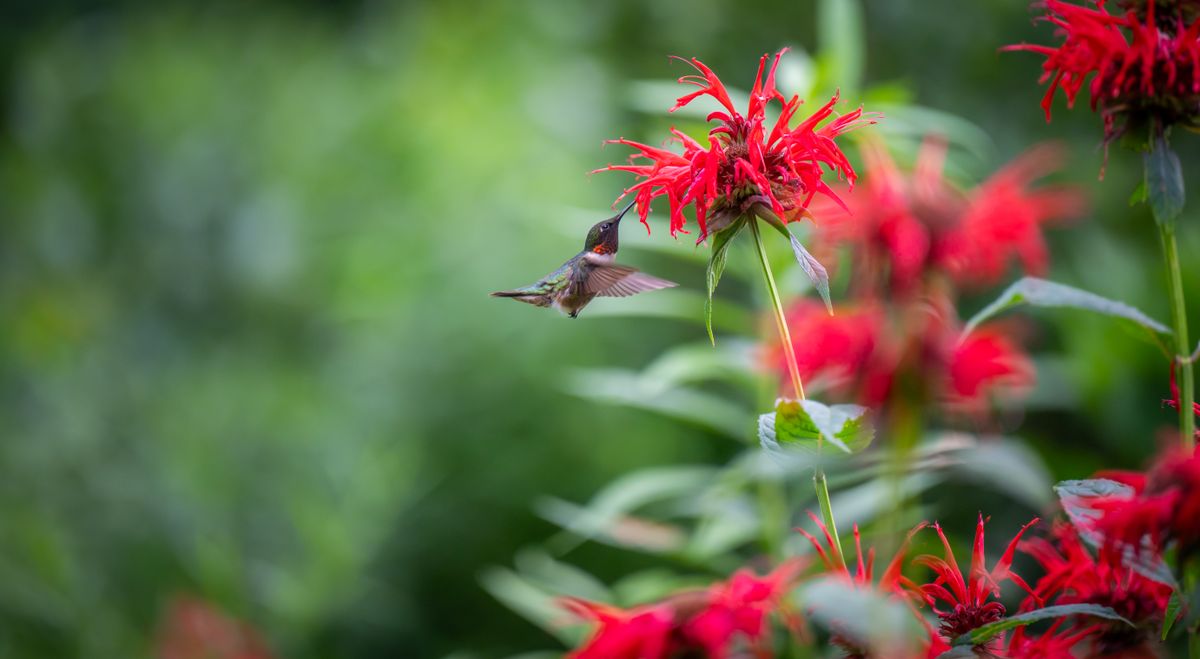
| Diagnostic Criteria | Territorial Threat Display | Courtship / Mating Display | Relaxed Foraging Behavior |
| --- | --- | --- | --- |
| Flight Path & Pattern | Direct linear chases, high-speed dive-bombs, and vertical bill-tilting hovers | Wide pendulum arcs (U-shaped sweeping side-to-side flight) directly in front of a perched bird | Gentle bobbing hover, slow steady approach, rhythmic back-and-forth port visits |
| Vocalization & Sound | Rapid high-pitched chattering, harsh ticking clips, and loud tail-feather pops | High-frequency rhythmic buzzing paired with aerodynamic wing-whirring | Silent or soft, occasional low-volume contentment chirps while perching |
| Tail & Gorget Posture | Tail widely fanned; gorget iridescent feathers fully flared outward toward rival | Gorget flared continuously under direct sunlight; tail held rigid and slightly angled | Tail closed or lightly balanced; gorget relaxed and flat against throat |
| Target & Interaction | Aimed directly at incoming rival birds approaching within a 15–30 ft radius | Aimed exclusively at a stationary female perched in nearby shrubbery | Focused entirely on nectar ports, flower corollas, or misting stations |
| Garden Energy Level | High-stress, erratic energy expenditure designed to intimidate and drive away intruders | Rhythmic, highly synchronized display requiring massive athletic endurance | Low-stress, efficient calorie intake aimed at metabolic stabilization and fat storage |
Evaluate key field behaviors across specific observational criteria to accurately interpret what is happening at your garden feeding stations.
Fatal Backyard Layout Failures That Trigger Feeder Wars
Avoid these four common yard setup errors that accidentally empower bully hummingbirds and stress your local bird population.
Explore Related Backyard Sanctuary Guides
Expand your knowledge of backyard birding ethology, garden design, and feeder care with these detailed reference guides:
- How to Hang Your Solar Hummingbird Feeder to Block Ants and Crawling Insects
- Do Hummingbirds Feed at Night? Understanding Dusk Behavior Around Illuminated Feeders
- Hot Weather Nectar Ratios: How to Keep Hummingbird Food Fresh in Summer
- Hand-Blown Glass vs. Plastic Hummingbird Feeders: Why Artisan Craftsmanship Wins
Recommended Backyard Sanctuary Hardware
Anchor your multi-zone feeding sanctuary with handcrafted solar lighting and leak-proof glass engineering.
Action Plan: Restoring Harmony to Your Hummingbird Haven
Your decision: Determine whether your current backyard setup allows a single dominant male to maintain visual control over all nectar stations.
Do this next: Separate your feeders by at least 15–20 feet and place them behind visual barriers like bushes or wall corners. Introduce a solar-illuminated feeder in a shaded secondary zone to extend twilight feeding opportunities.
- Read next: How to Hang Your Solar Hummingbird Feeder to Block Ants and Crawling Insects
- Read next: Do Hummingbirds Feed at Night? Understanding Dusk Behavior Around Illuminated Feeders
LUJII Hand-Blown Solar Powered Hummingbird Feeder (RGB Lights) for secondary zone twilight feeding.
Take immediate steps to convert your garden from a territorial battleground into a peaceful multi-zone bird sanctuary.
Cover photo by Robert So on Pexels.