Hummingbird Nesting Season: What Changes at Your Feeder
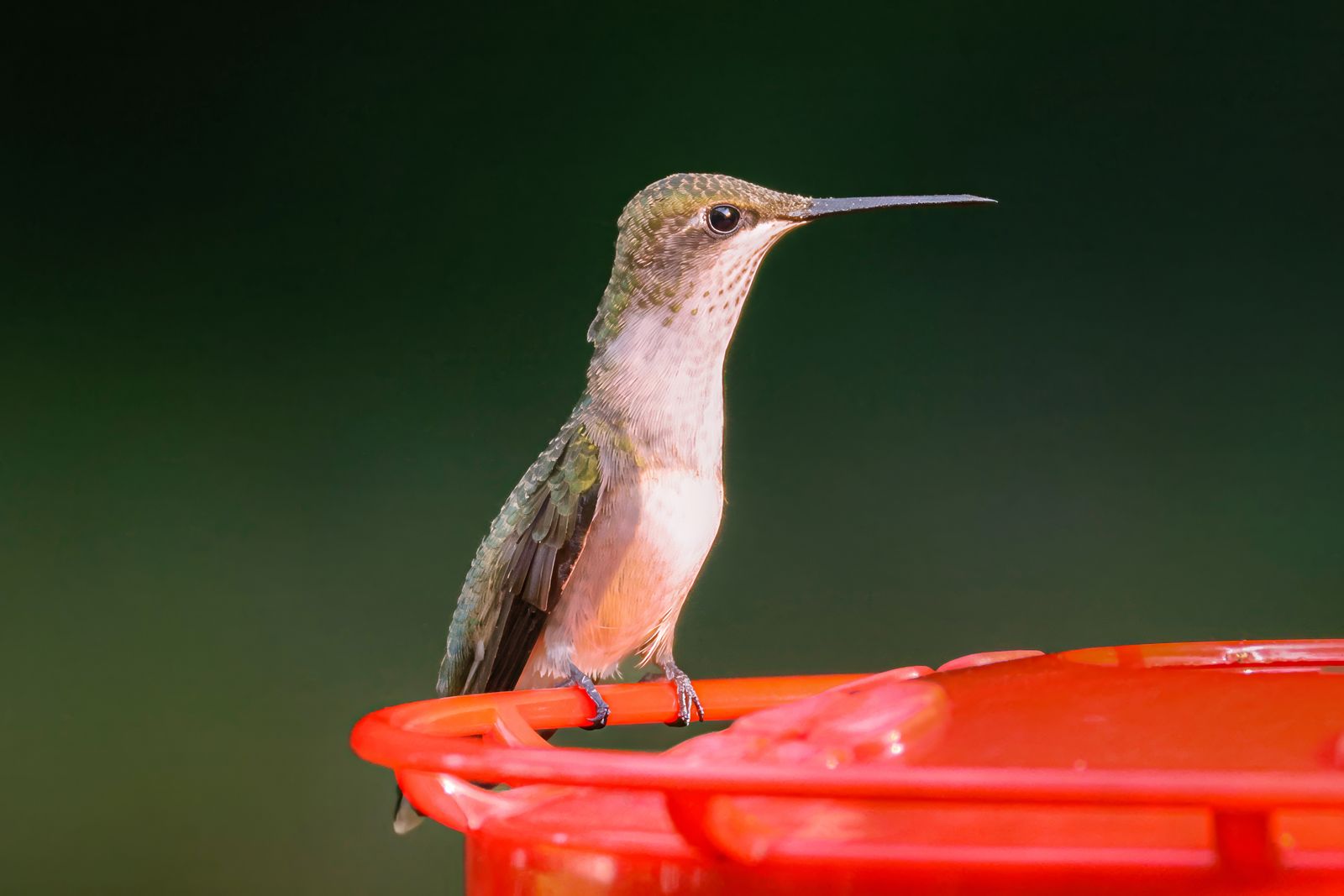
During nesting season a feeder gets busier, quieter, and stranger all at once: females make short, urgent visits and leave immediately, males may vanish for stretches, and the whole rhythm of the yard shifts to the early morning and the last hour of light. Nothing is wrong when this happens. The behavior you are seeing is a nesting female budgeting her time, and the most useful thing you can do is keep the feeder fresh, keep the area calm, and stop rearranging things.
What changes at the feeder when hummingbirds start nesting?
The visit pattern changes before the number of visits does. A female building or sitting on a nest cannot afford long stays, so she arrives, feeds for a few seconds, and leaves on a fixed route. If you have been used to birds hovering, sparring, and perching at the feeder, that sudden efficiency can read as a drop in activity when it is actually an increase.
Three specific shifts are common:
- Shorter, more frequent visits. Quick top-ups replace leisurely feeding.
- A predictable arrival direction. She is commuting from a nest, so she tends to come and go the same way each time.
- Less tolerance for disturbance. A person standing near the feeder that a female would have ignored in early spring may now cause her to abort the approach.
Why do hummingbirds hunt insects instead of drinking nectar during nesting?
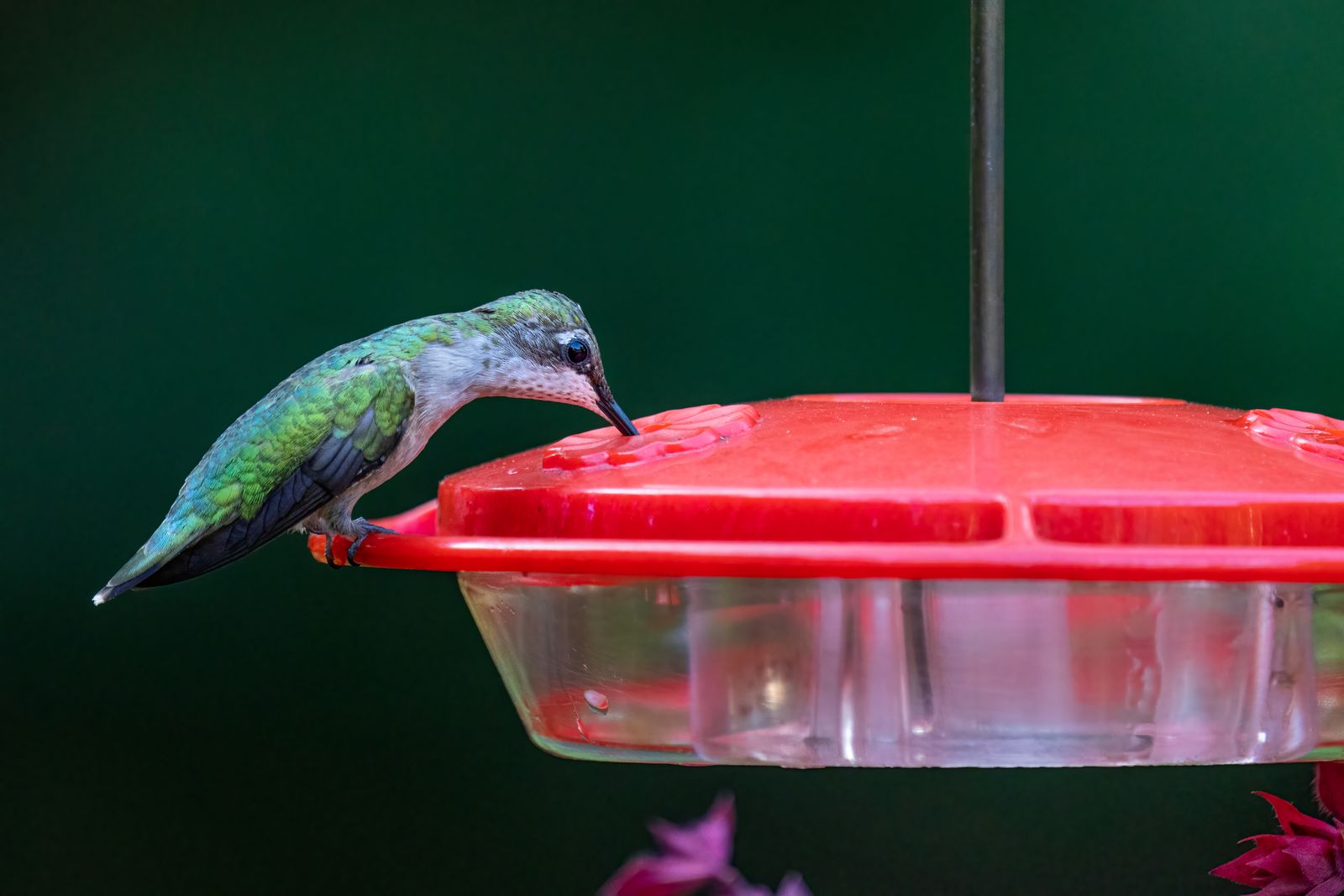
Photo by Skyler Ewing on Pexels
Because sugar water and flower nectar are fuel, not protein. Growing nestlings need insects and small spiders, and a nesting female spends a large share of her foraging time catching them. That is why you may see a bird working the air over a lawn or picking through leaves rather than sitting at the feeder.
This has one practical consequence worth knowing: a yard that is friendly to small insects is a better nesting yard than one that is not. Heavy broad-spectrum insecticide use removes the protein source that the chicks depend on, even if your feeder is spotless and full. Leaving some leaf litter, tolerating a few aphids, and avoiding blanket spraying does more for nesting success than any change to the feeder itself.
Should you look for the nest?
Look, but do not approach. Hummingbird nests are extraordinarily small — typically a tight cup built from plant down and spider silk, often camouflaged with lichen and saddled on a thin, downward-sloping branch. They are easy to walk past for an entire season without noticing.
If you do find one:
If you want a closer look, use binoculars or a camera from outside the bird's comfort zone, and let her behavior tell you where that boundary sits. If she stops mid-approach and hovers while watching you, you are too close.
What does the feeder routine look like through the season?
| Period | Typical feeder behavior | What to do | |---|---|---| | Pre-nesting, early season | Active sparring, long visits, territory fights | Keep the feeder consistently full; consider a second feeder out of sight of the first | | Nest building | Brief visits, birds gathering fluff and spider silk elsewhere | Stop pruning; leave seed heads and plant down in place | | Incubation | Very short, clockwork visits by one female | Do not move the feeder; refresh on a strict schedule | | Nestlings present | Frequent short visits plus a lot of insect hunting | Avoid insecticide; keep the area quiet | | Fledging | New, clumsy birds appearing at the feeder | Expect crowding and hesitant fliers; keep nectar levels up | | Late season | Numbers rise again as young birds and migrants pass through | Increase refresh frequency in heat; keep the feeder up |
Why do clumsy hummingbirds appear at the feeder in late summer?
Those are juveniles. Newly fledged hummingbirds fly well but feed awkwardly, and they often approach a feeder repeatedly without landing cleanly, sit for unusually long stretches, or attempt to feed from parts of the feeder that hold no nectar. This is the single clearest sign that a nest nearby succeeded.
Juveniles also raise the demand on the feeder. This is the point in the season where the level in the reservoir starts dropping noticeably, and a see-through glass body earns its keep — you can read the level from a window and refill before it runs dry rather than discovering an empty feeder.
Does nectar care change during nesting season?
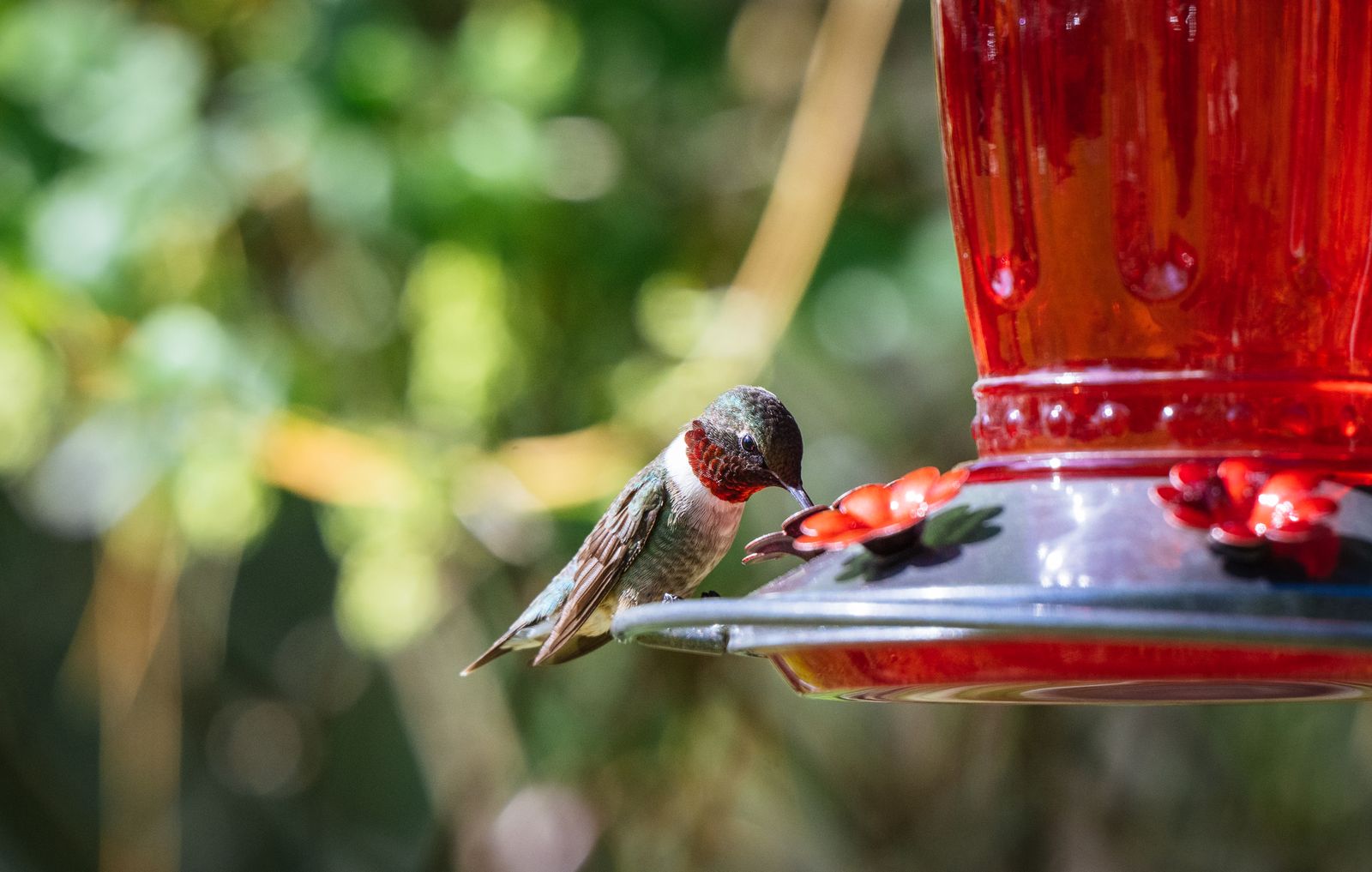
The recipe does not change: one part plain white sugar to four parts water, no red dye, never honey or brown sugar. The schedule does, mostly because nesting season overlaps with rising temperatures. Nectar spoils faster in heat, so shorten the interval between changes and clean the feeder regularly rather than topping up over old liquid.
Two nesting-specific points. First, reliability matters more now than at any other time of year, because a female has built her foraging route around your feeder and has no spare energy to find a replacement. Second, do refills at a consistent time of day, ideally in the middle of the day when visits are less frequent, so you are not standing at the feeder during the morning and evening peaks.
If you are thinking about strengthening the yard's natural food supply alongside the feeder, the comparison of live nectar plants and glass solar feeders covers what each contributes during a demanding season. And if you are choosing a feeder you will be handling and washing frequently through the summer, the glass and plastic durability comparison is the relevant background.
Do feeder lights affect nesting birds?
Hummingbirds feed in daylight and settle at dusk, so a feeder that lights up in the evening does its work after the birds have stopped visiting. Two sensible precautions during nesting season: keep the illumination aimed at the feeder rather than washing into nearby trees and shrubs where a nest may sit, and if you have found a nest, use a fixed low-key setting rather than a cycling one on that side of the yard.
FAQ
Will feeding hummingbirds make them lazy about foraging naturally? No. Feeders supplement a diet that is mostly built from flower nectar and insects. Nesting females hunt insects because the chicks require protein, and no amount of sugar water changes that instinct.
Should I take the feeder down so birds focus on nesting? No. A reliable feeder reduces the time a female spends commuting for fuel. Removing it mid-season forces her to rebuild a foraging route during the period she can least afford it.
Why did my busiest feeder go quiet for a week? Most often a nesting female has narrowed her route, or a dominant male has moved on and the yard is being re-sorted. Keep the nectar fresh and wait it out before changing anything.
Can I put out nesting material? It is unnecessary and can be harmful. Hummingbirds source plant down and spider silk themselves. The most helpful thing is to leave those materials in your yard by not over-tidying and by holding off on pruning.
A practical next step
For the next few weeks, change two things and nothing else: pause pruning and spraying anywhere birds are active, and move your refill time to the middle of the day. Then watch one morning from indoors and note which direction your visitors arrive from — that bearing is the best clue you will get about where a nest sits.
Cover photo by David Kanigan on Pexels.