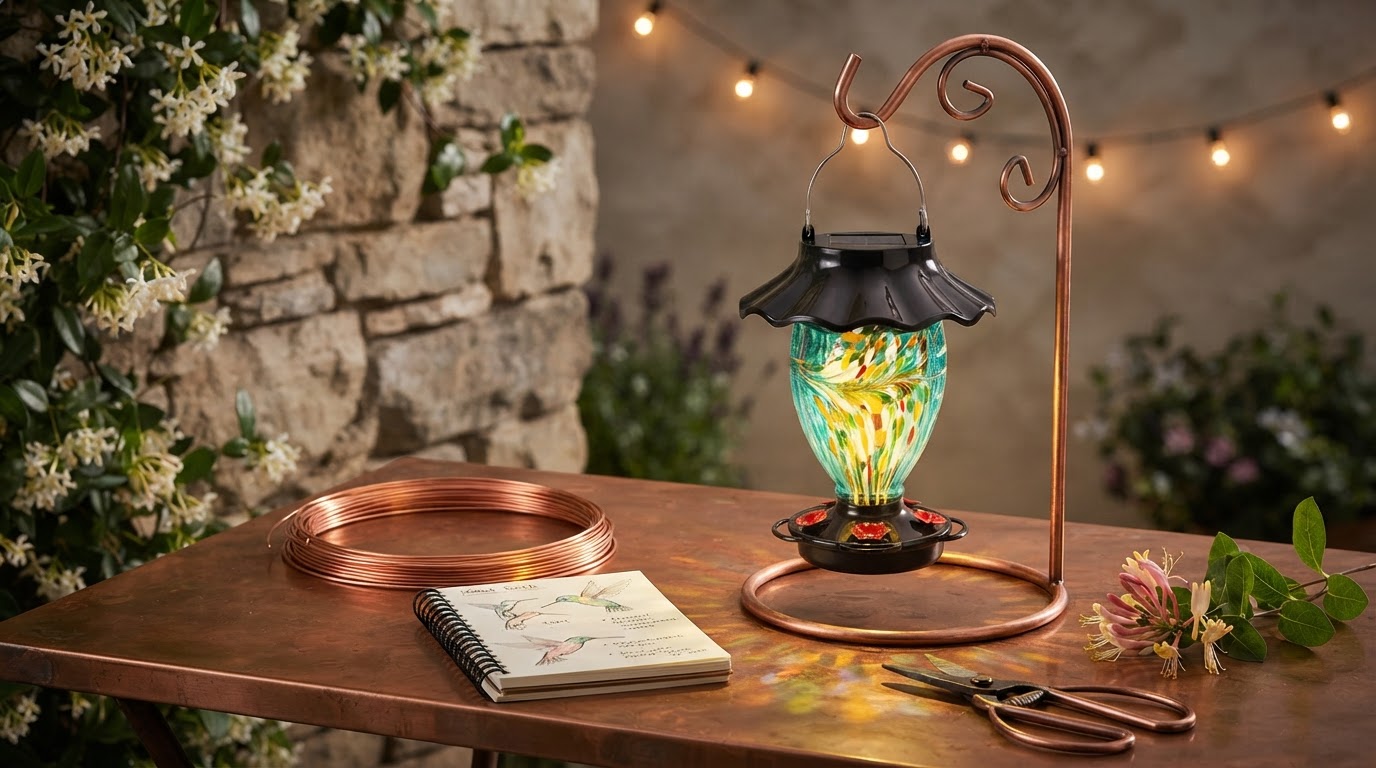
Copper Solar Hummingbird Feeder Material Standards
 Sam VasquezBuying Guide Lead
September 21, 2026. The growing interest in garden aesthetics has led to a surge in searches for copper solar hummingbird feeder options that blend traditional metallurgy with modern renewable lighting. While solid copper is prized for its natural antimicrobial properties, the challenge for manufacturers has been integrating solar-powered lighting without compromising the material's integrity.
Pure copper is a staple in high-end garden gear because it develops a unique patina over time and resists the bacterial growth that can plague plastic alternatives. According to Lehman's, professional-grade copper feeders often feature bee guards and clear glass reservoirs to ensure the birds are protected while providing visibility for the owner. However, finding a model that successfully marries this heavy-duty metal construction with effective solar sensors requires looking at how the internal components are sealed against the elements.
The 4 Durability Benchmarks
When evaluating a copper solar hummingbird feeder, I focus on four specific metrics: structural weight, nectar capacity, solar placement, and the IP rating of the internal electronics. A standard copper model, like the one from Stanwood Brands, offers a 450 ml capacity and a lifetime warranty, which sets a high bar for durability. However, if you want the added functionality of a solar-powered bird feeder with lights, you have to look at the housing. Most high-performing units in this category utilize a copper-finished steel or a heavy-duty copper frame that protects a solar-integrated glass core. I've found that units with a top-mounted monocrystalline solar panel are necessary for consistent charging, as side-mounted panels often fail to reach full capacity under summer foliage. Between these two, I’d go with a glass-reservoir model that uses copper as the structural frame; it provides the aesthetic of the metal while ensuring the nectar remains visible and the solar components remain waterproof. Skip this if you are looking for a feeder to place in a deep-shade forest setting, as the solar cells require at least six hours of direct exposure to power the internal LEDs through the night.
Expert tip: If you choose a feeder with copper components, ensure the nectar ports are made of BPA-free materials or high-quality glass, as acidic nectar can react with low-grade metallic alloys over time if not properly coated.
Understanding why choose a solar powered glass hummingbird feeder is essential before committing to a specific metal finish, as the glass often provides better insulation for the nectar. If you are specifically looking for illumination, checking the waterproof solar bird feeder lights specifications will ensure your electronics don't fail after the first autumn storm. For those who prefer a more traditional look, selecting a glass solar hummingbird feeder with copper accents offers a middle ground between classic style and modern tech. Finally, keep in mind that a glass solar hummingbird feeder is often easier to deep-clean than intricate all-metal designs.
Here’s what I’d actually buy: a hybrid model that uses a solid copper base for weight and stability, paired with a solar-lidded glass jar for the best visibility and light performance.