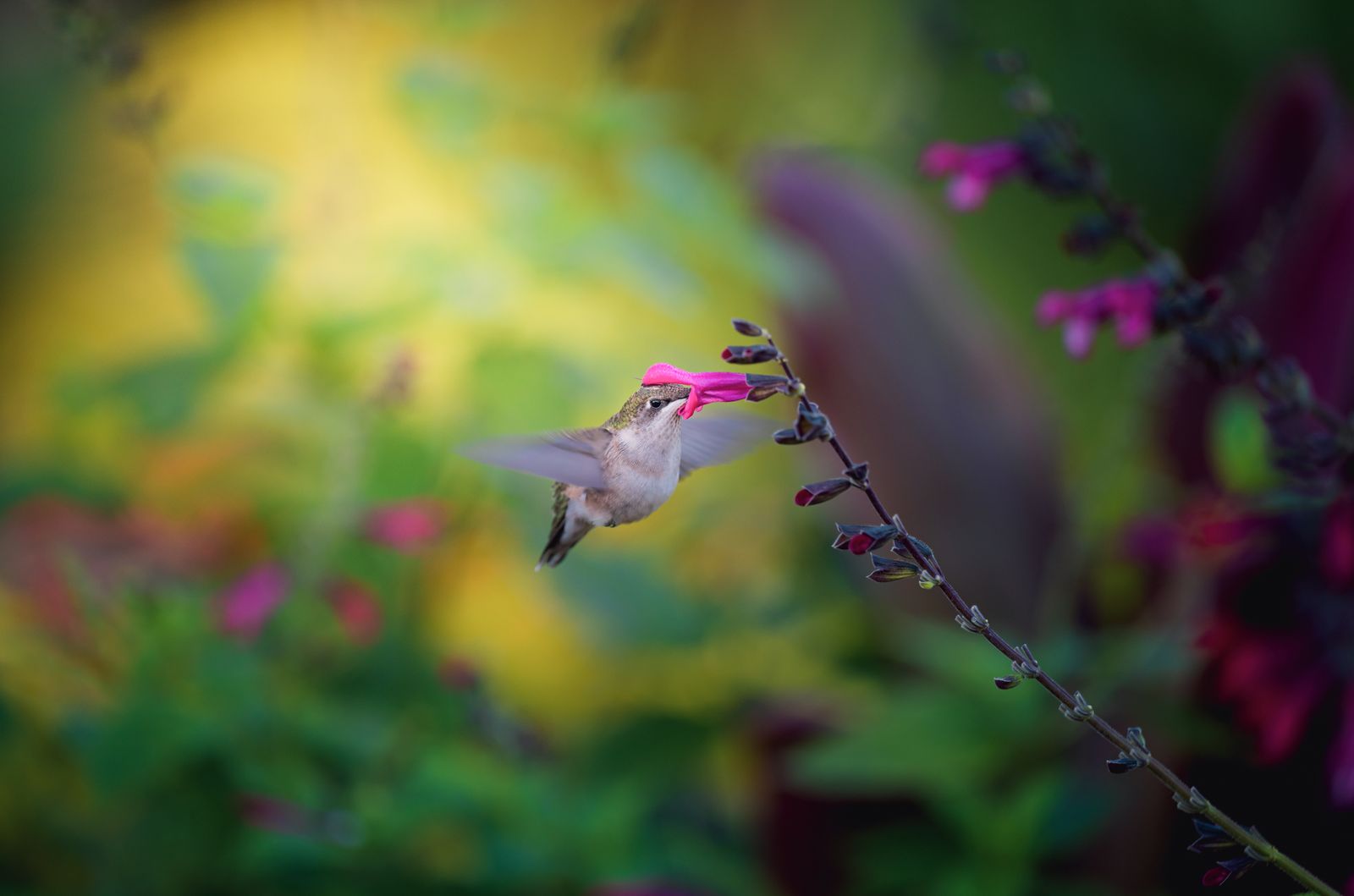
Why Is My Hummingbird Nectar Turning Cloudy? Causes, Dangers, and Quick Solutions
Hummingbird nectar turns cloudy due to rapid bacterial growth and yeast fermentation, accelerated by ambient heat, feeder micro-abrasions, or unboiled tap water. Drinking cloudy nectar causes avian candidiasis, a dangerous fungal infection that swells a hummingbird's tongue and causes starvation. You must immediately dump cloudy nectar, sanitize the feeder with warm water and white distilled vinegar, and refill it with a freshly boiled, fully cooled 4:1 water-to-refined-white-sugar solution.
Nectar Safety Diagnostic Flowchart
- Is the nectar crystal clear when held up to daylight? → Yes: Proceed to check smell and texture.. No: Is the cloudiness present immediately post-boil, or did it develop after hanging outdoors?.
- Did the cloudiness appear immediately post-boil while still warm? → Yes: Safe: Likely tap water mineral precipitation or micro-bubbles. Allow to cool completely; if it clears, it is safe to use.. No: UNSAFE: Bacterial fermentation has occurred. Dump immediately and sanitize feeder..
- Does the nectar have a sour odor, stringy slime, or black spots near the ports? → Yes: UNSAFE: Fungal/mold contamination present. Dump nectar, perform vinegar soak, and scrub all ports.. No: Has the nectar been hanging outdoors longer than 3 days in temps over 80°F?.
- Has ambient temperature exceeded 80°F while hanging for 48+ hours? → Yes: High Risk: Microbial load is elevated even if cloudiness is subtle. Dump and refresh.. No: SAFE: Nectar is fresh. Continue monitoring daily..
Cloudy Nectar Diagnostic & Solutions Matrix
| Visual & Physical Symptom | Root Cause | Wildlife Health Risk | Immediate Action Required |
| --- | --- | --- | --- |
| Hazy white, milky fluid with sweet/sour aroma | Active wild yeast fermentation converting sugar into alcohol and carbon dioxide | High: Alcoholic intoxication impairs flight; yeast blooms irritate digestive tracts | Dump immediately. Soak feeder in 1:4 white vinegar solution for 15 minutes and scrub thoroughly. |
| Stringy white strands or jelly-like biofilm at base | Bacterial bio-film buildup (Acetobacter or Pseudomonas species) | Critical: Causes severe gastrointestinal distress and crop impaction in tiny birds | Dump solution. Scrub reservoir interior and feeding ports with small bottle brushes. |
| Black specks or velvet coating on flower ports | Black mold growth (Cladosporium or Aspergillus) spreading into fluid | Fatal: Causes Avian Candidiasis, swelling the tongue so birds cannot feed | Complete breakdown of feeder. Soak all ports in hot vinegar water and scrub until 100% clean. |
| Slight milky haze immediately after boiling water | Dissolved hard water minerals (calcium/magnesium) or micro-bubble aeration | None: Pure mineral precipitate poses no bacterial threat to hummingbirds | Allow nectar to reach room temperature. If haze settles clear, it is safe to hang. |
Identify your nectar's exact physical state to understand the root cause, risk level, and required corrective action.
Expert Tip: Why Feeder Material Dictates Nectar Freshness
Many backyard birders do not realize that the physical material of their feeder directly controls how fast nectar ferments. Standard plastic feeders develop microscopic surface scratches over time from regular cleaning brushes and sun exposure. These micro-abrasions act as safe harbors for fungal spores and bacterial colonies that resist standard rinsing.
In contrast, non-porous hand-blown glass provides a perfectly smooth surface where microbial biofilms cannot easily adhere. Upgrading to a heavy-duty hand-blown glass reservoir, such as the crafted glass feeders from LUJII, eliminates micro-scratch harbors while allowing effortless 360-degree visual monitoring of nectar clarity.
7-Step Emergency Nectar Sterilization Checklist
- [ ] Discard spoiled or cloudy nectar down the drain immediately; do not reuse standard sugar water.
- [ ] Disassemble all feeder components including glass reservoir, base plate, gaskets, and individual feeding ports.
- [ ] Soak all components in a solution of 1 part white distilled vinegar to 4 parts warm water for 15-20 minutes.
- [ ] Scrub interior glass walls using a bottle brush and clear feeding ports using a port brush to remove hidden biofilm.
- [ ] Rinse all parts thoroughly with clean running water until all vinegar scent is completely neutralized.
- [ ] Air-dry all components completely on a clean towel before reassembling the unit.
- [ ] Refill with fresh 4:1 refined white sugar solution that has been boiled for 1-2 minutes and fully cooled to room temperature.
Nectar Dump vs. Keep Decision Pathway
- Is ambient outdoor temperature above 85°F (29°C)? → Yes: Has nectar been hanging longer than 48 hours?. No: Has nectar been hanging longer than 5 days?
- Has nectar been hanging longer than 48 hours in >85°F heat? → Yes: Dump & Refill: Bacteria double rapidly in extreme summer heat regardless of visual clarity.. No: Inspect clarity closely under bright sunlight.
- Is there any milky haze, floating string, or sediment? → Yes: Dump, Sanitize, Refill immediately.. No: Keep & Monitor daily.
Action Plan for Fresh, Safe Nectar
Your decision: Identify if your current feeder is harboring hidden bacterial biofilms due to age or surface scratching.
Do this next: Dump cloudy nectar immediately, sanitize your feeder using hot water and white distilled vinegar, and transition to a daily or bi-daily replacement schedule during hot summer months.
- Read next: Hot Weather Nectar Ratios: How to Keep Hummingbird Food Fresh in Summer
- Read next: How to Clean and Maintain Your Hand-Blown Solar Hummingbird Feeder
Upgrade to the LUJII Hand-Blown Glass Solar Hummingbird Feeder featuring non-porous glass for effortless monitoring, RGB lighting, and a durable anti-rust metal base.
Take these immediate actions to protect your local hummingbird population and maintain a safe feeding station.
Key Nectar Safety Takeaways
- Cloudy Means Contaminated: Cloudiness is a biological warning sign that yeast and bacteria have overrun the sugar solution.
- Avian Health Hazard: Ingesting fermented nectar can cause fatal tongue swelling (Avian Candidiasis) and liver damage in hummingbirds.
- Temperature Dictates Shelf Life: At temperatures above 90°F, sugar water ferments within 24–48 hours; below 70°F, it may stay fresh for 4–5 days.
- Never Use Bleach or Soap: Harsh dish soaps leave chemical residues that hummingbirds can taste, while vinegar safely disinfects without synthetic chemicals.
- Choose Non-Porous Materials: Hand-blown glass reservoirs prevent microscopic bacteria harborage common in scratched plastic feeders.
Feeder Material & Cleaning Selection Support
Selecting a non-porous glass feeder drastically lowers bacterial growth rates compared to standard plastic models, while natural vinegar cleaning ensures chemical-free safety for visiting birds.
Best choice for
- Hand-Blown Glass Reservoirs — Glass does not degrade or micro-scratch, allowing complete biofilm removal during standard cleaning.
- Distilled White Vinegar Soak — Vinegar effectively dissolves organic buildup and kills yeast without leaving toxic chemical scents or residues.
- Using abrasive wire scrubbers on plastic feeder bottles
- Adding commercial red dye powders containing chemical preservatives
- Leaving sugar water unboiled when using well water or unfiltered municipal tap water
- Hydrogen Peroxide (3% Concentration) Cleaning — A safe alternative to vinegar that breaks down into harmless water and oxygen after scrubbing.
Recommended Hygienic Feeder: LUJII Hand-Blown Glass Solar Hummingbird Feeder
Photo by Veronika Andrews on Pexels
Keep your garden hummingbirds healthy while adding a magical glow to your outdoor space with the LUJII Hand-Blown Glass Solar Hummingbird Feeder.
- Ultra-Smooth Hand-Blown Glass: Handcrafted at 2,300°F, the non-porous glass reservoir prevents yeast spores from embedding in surface scratches, ensuring crystal-clear nectar and fast cleaning.
- 32 fl. oz. Capacity & Transparent Clarity: Easily monitor fill levels and inspect nectar clarity at a glance from across your garden.
- Solar-Powered RGB Illumination: Recharges during the day and automatically lights up for up to 8 hours at night with mesmerizing multi-color lighting modes.
- Rust-Resistant Metal Base & Leak-Proof Seal: Engineered with a tight rubber gasket and slender leak-proof base to keep sticky drips away from crawling ants and bees.
Cloudy Nectar Root Cause Breakdown Matrix
| Spoilage Factor | Primary Environmental Cause | Time to Cloudiness | Prevention Strategy |
| --- | --- | --- | --- |
| Direct Sun Exposure | UV warmth accelerates wild yeast metabolic rates | 24 to 36 Hours | Hang feeder under tree shade, porch awnings, or dedicated feeder baffles. |
| Unfiltered Tap Water | Organic impurities and ambient microbes enter the mix | 36 to 48 Hours | Boil tap water for 1-2 minutes or use filtered water prior to dissolving sugar. |
| Scratched Plastic Reservoirs | Microscopic grooves shelter fungal spores through washings | 48 Hours | Switch to smooth, non-porous hand-blown glass reservoirs. |
| High Ambient Heat (90°F+) | Thermal activation causes rapid bacterial multiplication | 24 Hours | Reduce nectar volume, refill daily with fresh cooled 4:1 sugar water. |
Compare how environmental factors, water source quality, and feeder materials influence nectar clarity.
5 Steps to Prevent Nectar Cloudiness in High Heat
Follow this practical routine to prepare durable, crystal-clear nectar that stays fresh as long as possible.
Common Nectar Maintenance Pitfalls to Avoid
Avoid these frequent mistakes that jeopardize bird safety and cause nectar to spoil prematurely:
Additional Nectar Freshness & Hummingbird Care Guides
Expand your knowledge on hummingbird health, feeder positioning, and pest defense with these essential care topics:
- Hot Weather Nectar Ratios: Adjusting feeding schedules during mid-summer heatwaves.
- Cleaning Hand-Blown Glass Feeders: Step-by-step techniques to maintain art-glass garden decor.
- Preventing Insects Naturally: Keeping ants and bees away without chemical deterrents.
Frequently Asked Questions
Get rapid answers to essential questions regarding hummingbird nectar safety and feeder care.
Cover photo by Chris F on Pexels.