Where to Hang Your Solar Hummingbird Feeder: Sunlight & Safety Guide
You unbox a gorgeous hand-blown glass solar feeder, eager to watch colorful birds by day and glowing RGB lights by night—only to wonder if putting it in direct afternoon sun will cook the nectar, or if putting it in the shade will drain the battery.
To balance solar charging with bird safety, hang your solar hummingbird feeder 5 feet above the ground in a spot that receives 4 to 6 hours of direct morning sunlight on the top solar cap, with dappled afternoon shade covering the glass reservoir. Position the feeder either within 3 feet of a window or beyond 30 feet to prevent fatal bird collisions.
Pre-Hanging Placement Safety Checklist
- [ ] Height: Base of feeder hangs exactly 5 feet above ground level to keep it above garden pests and domestic cats.
- [ ] Window Safety: Positioned either within 3 feet OR beyond 30 feet from all exterior glass panes.
- [ ] Solar Panel Exposure: Top solar cap receives at least 4-6 hours of unshaded sun (preferably morning light).
- [ ] Nectar Protection: Hand-blown glass reservoir sits in dappled or full shade during peak heat (12 PM - 4 PM).
- [ ] Predator Clearance: Nearest tree branch or shrub perch is 10-15 feet away (close enough for safety flight, far enough to prevent ambush jumps).
- [ ] Hardware Stability: Anti-rust metal hook is firmly anchored to support the full weight of a 32 fl.oz filled glass feeder.
Step-by-Step Guide to Finding and Mounting the Ideal Spot
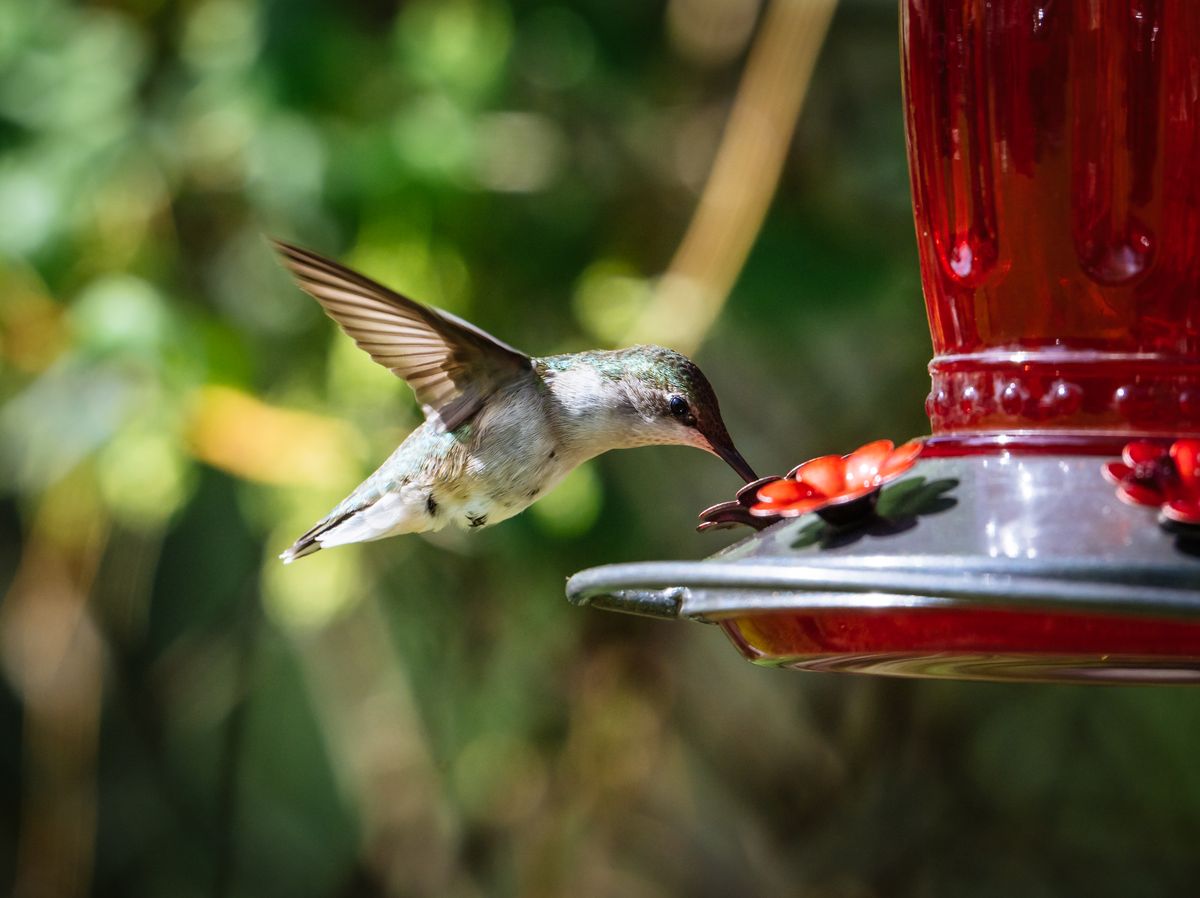
Finding the sweet spot in your garden is easy when you break down sun patterns, bird behavior, and mounting hardware.
Pro Tip: Dappled Canopy Placement for Glass & Solar Caps
Here is a secret used by master garden designers: place your shepherd's hook along the outer eastern drip-line of a deciduous tree. The low morning sun angles directly under the branches to bathe the waterproof solar cap in direct charging light. As the sun climbs higher by noon, the leaf canopy overhead shifts into a natural, dappled shade canopy over the translucent hand-blown glass bottle below, keeping your sugar water cool and fermentation-free all summer long!
Yard Layout Placement Decision Tree
- Do you have an open patio or deck with an east-facing roof eave? → Yes: Mount an extended anti-rust wall bracket on the eastern patio beam. The solar cap catches morning light while the roof overhang provides afternoon shade.. No: Evaluate your lawn and garden beds for a shepherd's hook placement.
- Is there a free-standing garden bed located 10-15 feet from mature shrubs? → Yes: Install a heavy-duty double shepherd's hook in the garden bed. Place the solar feeder on one side and an ant moat on the other, facing east toward early sun.. No: Look at mature shade trees in your yard.
- Do you have a large shade tree with low-hanging sturdy branches? → Yes: Hang the feeder from an extended branch hook along the outer eastern edge of the canopy to ensure top solar exposure without cooking the glass bottle.. No: Choose a fence post bracket elevated 5 feet high, angled away from direct afternoon south/west sun.
Next Steps for Setting Up Your Feeder
Your decision: Identify your garden's east-facing spot that offers 5 feet of ground clearance and morning sunshine.
Do this next: Mount a heavy-duty shepherd's hook 5 feet off the ground in dappled shade and install an insect baffle.
Related resource: https://solarhummingbirdfeeder.com
LUJII Solar-Powered Hand-Blown Glass Hummingbird Feeder (32 fl.oz)
Once your location is selected, complete your installation with proper ant barriers and clean nectar mixture.
Key Placement Rules to Remember
- 5-Foot Elevation: Keeps hummingbirds safe from ground predators and provides optimal viewing height.
- 4-6 Hours Morning Sun: Charges the solar battery for up to 8 hours of evening RGB illumination.
- Afternoon Shade: Protects 32 oz hand-blown glass bottles from heat, stopping sugar fermentation.
- 3/30 Window Rule: Mount feeders closer than 3 feet or farther than 30 feet from glass panes to prevent fatal strikes.
- 10-15 Foot Cover Distance: Gives tiny birds quick shelter from hawks while keeping cats too far away to launch ambush jumps.
Location Decision Matrix: Choosing the Best Spot in Your Yard
The ideal location combines eastern morning sunlight for top-cap solar charging with afternoon shade to preserve sugar water freshness in hand-blown glass.
Best choice for
- Wall-Mounted Anti-Rust Bracket — Provides direct early sun to solar panels, complete shelter from harsh afternoon heat, and easy reach for refilling.
- Heavy-Duty Shepherd's Hook — Allows precise positioning relative to nearby windows and protective shrub cover while showing off hand-blown glass art.
- South or West-facing brick walls with no shade (radiates excessive afternoon heat into glass reservoirs).
- Directly above thick bushes or fence tops where domestic cats can hide and pounce.
- Unshaded open lawns subject to high wind gusts that cause nectar leakage.
- Tree Branch Extension Hook — Great for yards lacking patio structures, provided the hook extends past dense leaf foliage to catch sunlight.
Featured Solar Hummingbird Feeder
Enhance your outdoor sanctuary with handcrafted blown-glass art that transforms into a glowing beacon at dusk.
Placement Scenario Matrix: Sunlight, Shade, and Nectar Shelf-Life
| Yard Placement Scenario | Solar Charging Yield | Nectar Freshness Window | Predator & Window Safety | Overall Suitability Rating |
| --- | --- | --- | --- | --- |
| Full South-Facing Open Sun | Max (8+ hrs RGB light nightly) | Poor (Spoils in 1-2 days above 85°F) | Moderate (Exposed to open sky hawks) | Not Recommended (Cooks nectar) |
| Deep North Tree Canopy | Low (1-2 hrs RGB light nightly) | Excellent (Fresh for 5-7 days) | High (Good overhead tree cover) | Suboptimal (Battery won't charge) |
| East-Facing Dappled Tree Edge | Optimal (6-8 hrs RGB light nightly) | Great (Fresh for 4-5 days) | High (10-15 ft from escape cover) | Ideal 'Sweet Spot' Placement |
| Covered Porch Overhang (Facing East) | Good (5-7 hrs RGB light nightly) | Excellent (Fresh for 5-6 days) | High (Safely within 3 ft of window) | Excellent (Protected from storms) |
See how different yard microclimates impact battery charging runtime versus nectar replacement schedules.
Visualizing the Ideal 'Sweet Spot': Angle, Clearance, and Protection
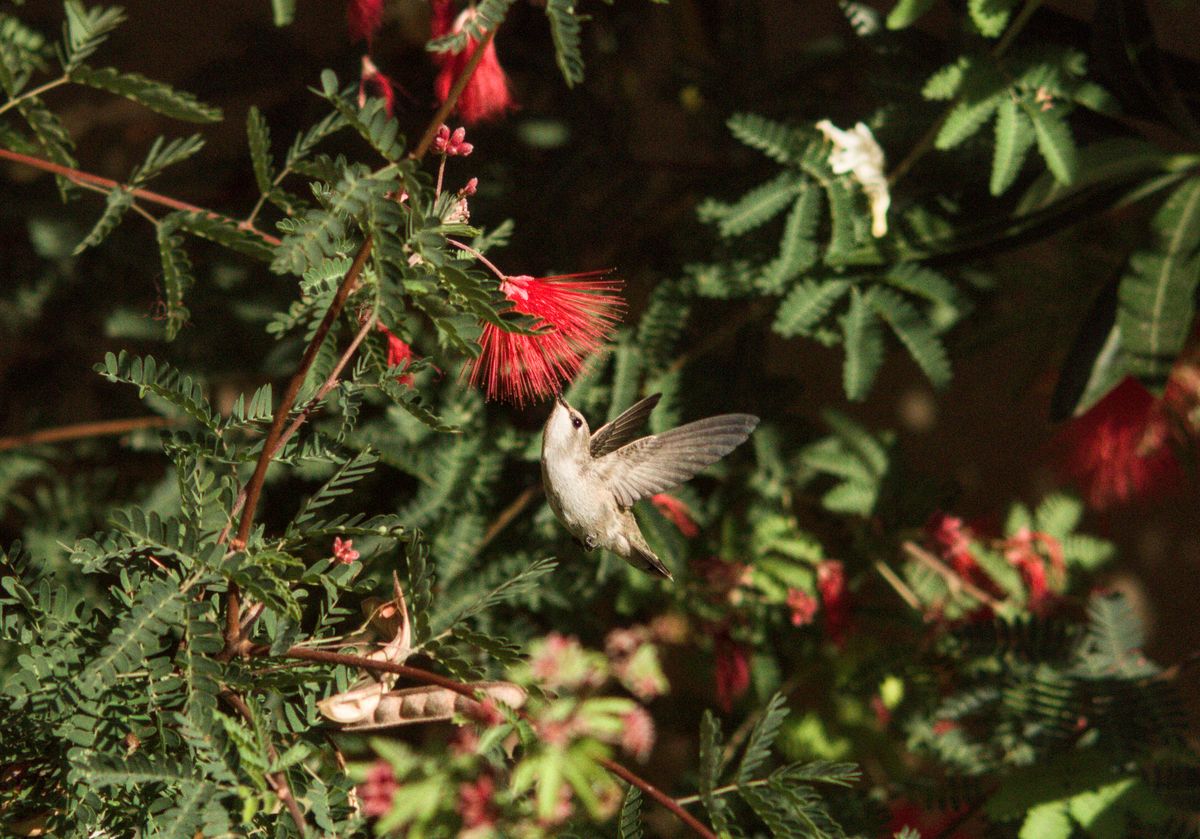
Photo by Jon Champaigne on Pexels
This visual guide details exact garden geometry for mounting your solar feeder.
5 Critical Placement Mistakes That Harm Birds or Drain Batteries
Avoid these frequent errors when setting up your solar illuminated feeder.
Seasonal Placement Shift Timeline (Spring through Autumn)
- Early Spring (April - May) — Hang feeder in open east/south areas. Bare branches allow maximum sunlight to warm incoming migrants while charging solar panels easily.
- Peak Summer (June - August) — Shift hook deeper into dappled eastern tree shade or under patio eaves as temperatures climb above 85°F to prevent nectar fermentation.
- Early Autumn (September - October) — Move feeder back into more open sun exposure as tree leaves fall and migrating hummingbirds require high-energy refueling before heading south.
- Late Autumn / Winter Frost — Clean hand-blown glass reservoir thoroughly, dry, and store inside before freezing temperatures arrive to preserve glass integrity.
Explore Related Nighttime Garden Guides
Deepen your garden design knowledge with these helpful topics on outdoor illumination and hummingbird care:
- The Art of Nighttime Garden Magic: Solar Lighting & Outdoor Ambiance
- How to Protect Hanging Hummingbird Feeders from Ants and Crawling Insects
- Hand-Blown Glass Care: Cleaning and Maintaining Artisanal Garden Decor
- Hummingbird Roosting Habits: Do RGB Lights Affect Nighttime Sleep Cycles?
Frequently Asked Questions About Solar Hummingbird Feeder Placement
Answers to common questions about solar lighting, weather resistance, and bird behavior.
Ready to Bring Magic to Your Garden?
Your decision: Choose a 5-foot high eastern garden location that balances morning sun for solar charging with afternoon shade for nectar safety.
Do this next: Order your handcrafted LUJII Solar-Powered Hand-Blown Glass Feeder and set up an anti-rust shepherd's hook in your garden's sweet spot.
Related resource: https://solarhummingbirdfeeder.com
LUJII Solar-Powered Hand-Blown Glass Hummingbird Feeder (32 fl.oz)
Transform your outdoor space into a daytime hummingbird sanctuary and a nighttime illuminated wonderland.
Cover photo by Chris F on Pexels.