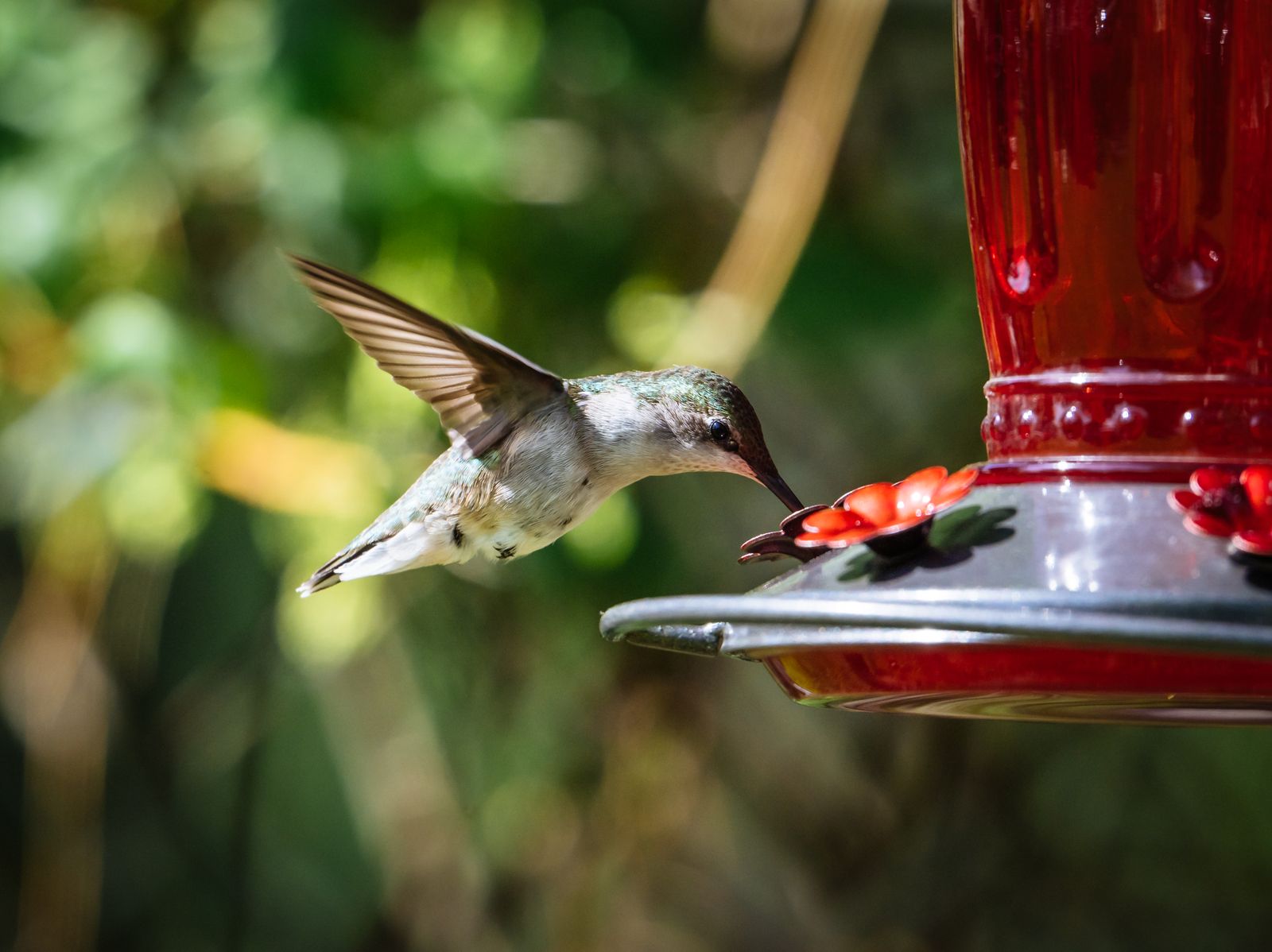
Where to Hang Your Solar Hummingbird Feeder: Sunlight, Safety & Color Visibility Guide
Imagine stepping onto your patio at dusk, holding a warm cup of tea, and watching a glistening hand-blown glass feeder softly illuminate in rich RGB hues while a lingering ruby-throated hummingbird takes a twilight sip. To achieve this magical garden balance where solar batteries charge fully and nectar stays fresh, follow this precise placement rule:
Hang your solar hummingbird feeder 5 feet above the ground, positioned either within 3 feet or beyond 30 feet from house windows. Choose an East-facing location that captures 4 to 6 hours of gentle morning sun to fully charge the solar cap, backed by dappled afternoon shade to prevent nectar fermentation.
Pre-Hanging Location Verification Checklist
- [ ] Height is precisely 5 feet above ground level to deter ground predators while allowing easy refills.
- [ ] Window distance is safely within 3 feet (reduces bird flight momentum) OR farther than 30 feet away.
- [ ] Solar cap receives 4 to 6 hours of direct morning sunlight (East exposure).
- [ ] Overhead foliage or porch angle shields feeder from harsh 12 PM - 5 PM afternoon heat.
- [ ] No dense bushes or hiding spots for cats exist within a 4-foot radius of the hanging pole.
Step-by-Step Guide: Mapping & Positioning Your Feeder
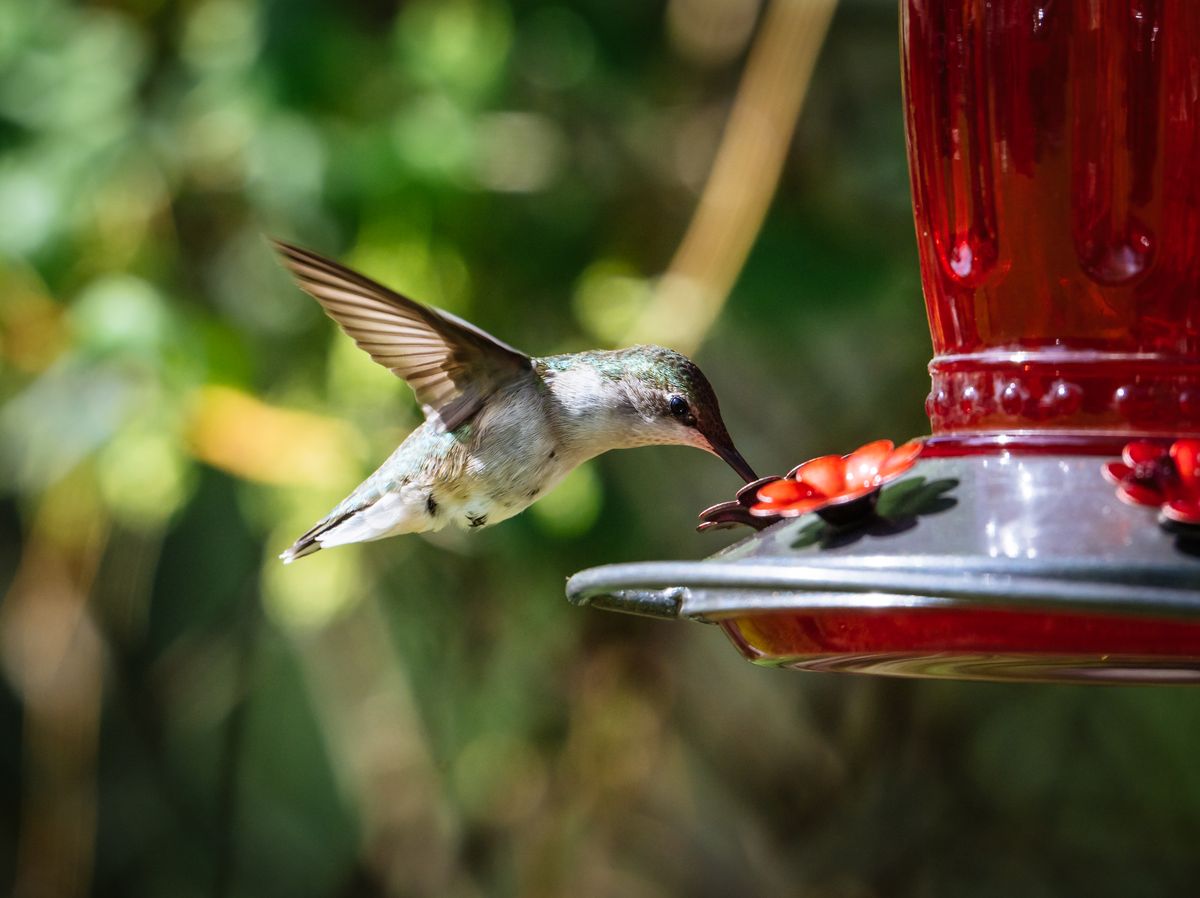
Follow these five straightforward steps to survey your yard micro-climate, install your mounting hook, and position your artisan solar glass feeder for maximum visibility.
Artisan Glass Light Refraction & Color Visibility Secret
Hand-blown glass is a secret weapon for attracting hummingbirds. Unlike flat plastic, handcrafted glass shaped at 2,300 degrees features unique internal curves and translucent patterns. When gentle morning sunlight catches these curves, it acts like a prism, scattering vibrant crimson, emerald, and amber light across your garden. Hummingbirds possess specialized retinal cones that detect ultraviolet and polarized light, making these shimmering refractions visible from hundreds of yards away. Placing your feeder where morning rays slice through the canopy creates an irresistible visual beacon before midday heat sets in.
Initial Setup & Insect Protection Planning
Your decision: Determine your primary mounting point using the 3ft/30ft window rule and East-facing light availability.
Do this next: Mount a heavy-duty garden hook at 5 feet height in an East-facing spot, fill the 32 oz glass reservoir with 4:1 sugar water, and turn on the solar top switch.
- Read next: How to Hang Your Solar Hummingbird Feeder to Block Ants and Crawling Insects
LUJII Hand-Blown Solar Hummingbird Feeder with 32 oz Leak-Proof Base and RGB Lighting Cap.
Key Placement Rules at a Glance
- Height Rule: Hang the feeder precisely 5 feet above the ground to keep hummingbirds safe from jumping cats while maintaining easy refilling access.
- Window Rule: Place feeders within 3 feet or beyond 30 feet from glass surfaces to eliminate fatal window collisions.
- Sun Exposure: Target 4 to 6 hours of direct East-facing morning sun for solar charging, followed by afternoon shade to preserve nectar freshness.
- Visual Refraction: Hand-blown translucent glass magnifies natural sunlight, creating a glowing beacon that lures territorial hummingbirds.
- Nighttime Ambiance: The waterproof solar cap automatically triggers soft RGB lights at dusk, illuminating your garden for up to 8 hours.
Printable Feeder Placement Blueprint
- Optimal Height: 5 feet (60 inches) from ground to feeding ports.
- Window Safety Clearance: Less than 3 feet OR greater than 30 feet.
- Sunlight Window: 6:00 AM to 11:30 AM (4 to 6 hours direct sun for full battery recharge).
- Shade Window: 12:00 PM to 5:00 PM (100% dappled or full shade to keep nectar under 85°F).
- Predator Clear Zone: 4-foot radius clear of bushes, low tree limbs, or stalking ledges.
- Nectar Capacity & Ratio: 32 fl. oz, mixed at 4 parts water to 1 part pure white refined sugar.
- Solar Maintenance: Wipe solar panel cap weekly with a damp microfiber cloth to remove dust and pollen.
Micro-Climate Scenarios: Morning Sun vs. Full Afternoon Shade
| Yard Scenario | Solar Charge Efficiency | Nectar Temperature Risk | Glass Prism Refraction | Recommended Action |
| --- | --- | --- | --- | --- |
| | | | | |
| | | | | |
| | | | | |
| | | | | |
Different garden micro-climates dramatically affect solar battery charging, hand-blown glass refraction, and nectar spoilage rates.
Feeder Placement Goldilocks Evaluator
Evaluate your candidate hanging location using our interactive spacing and sunlight calculator framework.
The Solar Glass Feeder Placement 'Goldilocks Zone' Diagram
Review this visual layout blueprint illustrating exact vertical and horizontal safety distances, window hazard zones, and sunlight angles.
5 Critical Placement Mistakes That Deter Birds or Ferment Nectar
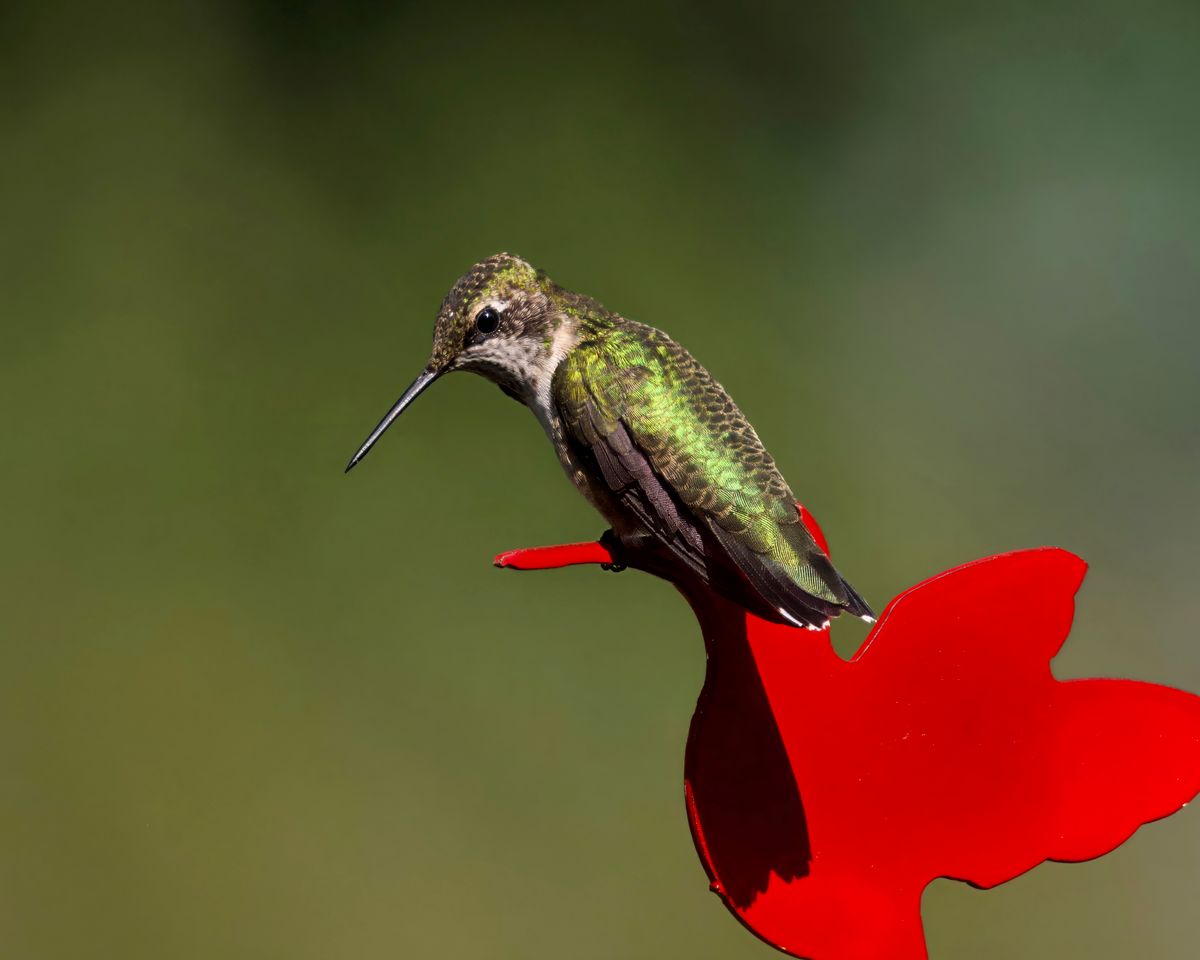
Photo by A. G. Rosales on Pexels
Avoid these frequent placement blunders to keep your hummingbirds safe and your solar glass feeder glowing every night.
Seasonal Sun Angle & Placement Adjustment Timeline
- Spring Migration (April - May) — Hang feeder in high-visibility East-facing spots as bare trees allow maximum sun. Ensure solar cap switch is turned ON to greet returning migratory birds at dusk.
- Peak Summer Heat (June - August) — Audit afternoon shade as tree leaves fill in. If ambient temperatures exceed 90°F, shift feeder slightly westward under tree canopy to shield the 32 oz glass reservoir from afternoon heat while preserving morning solar charge.
- Fall Migration Prep (September - October) — Lower solar panel angles catch lower morning sun. Keep feeder mounted through late fall to nourish migrating hummers; illuminated RGB glass helps late stragglers spot nectar during shorter daylight hours.
- Winter Storage & Maintenance (November - March) — In freezing climates, clean hand-blown glass and store indoors. In warm southern states, clean monthly and wipe the solar cap to maximize lower winter solar angles.
Continue Enhancing Your Hummingbird Sanctuary
Explore our expert care guides to keep your artisan solar feeder performing at its peak all season long:
- Parent Placement & Care Secrets Blueprint — Comprehensive guide to maintaining hand-blown glass, solar batteries, and nectar purity.
- How to Hang Your Solar Hummingbird Feeder to Block Ants and Crawling Insects — Proven strategies for installing ant moats and leak-proof metal bases.
- Hand-Blown Glass vs. Plastic Hummingbird Feeders — Why 2,300-degree artisan craftsmanship outlasts cheap plastic.
Frequently Asked Questions About Solar Feeder Placement
Featured Garden Display Solutions
Elevate your backyard ambiance with our centerpiece solar hand-blown glass feeder.
Transform Your Garden Today
Your decision: Ready to turn your yard into an illuminated hummingbird haven?
Do this next: Pick your ideal East-facing patio spot, set up your shepherd hook at 5 feet height, and hang the handcrafted LUJII Solar Hummingbird Feeder.
- Read next: How to Hang Your Solar Hummingbird Feeder to Block Ants and Crawling Insects
🌟 LUJII Solar-Powered Hand-Blown Glass Hummingbird Feeder 🌟 — Experience handcrafted glass art by day and magical RGB lighting by night!