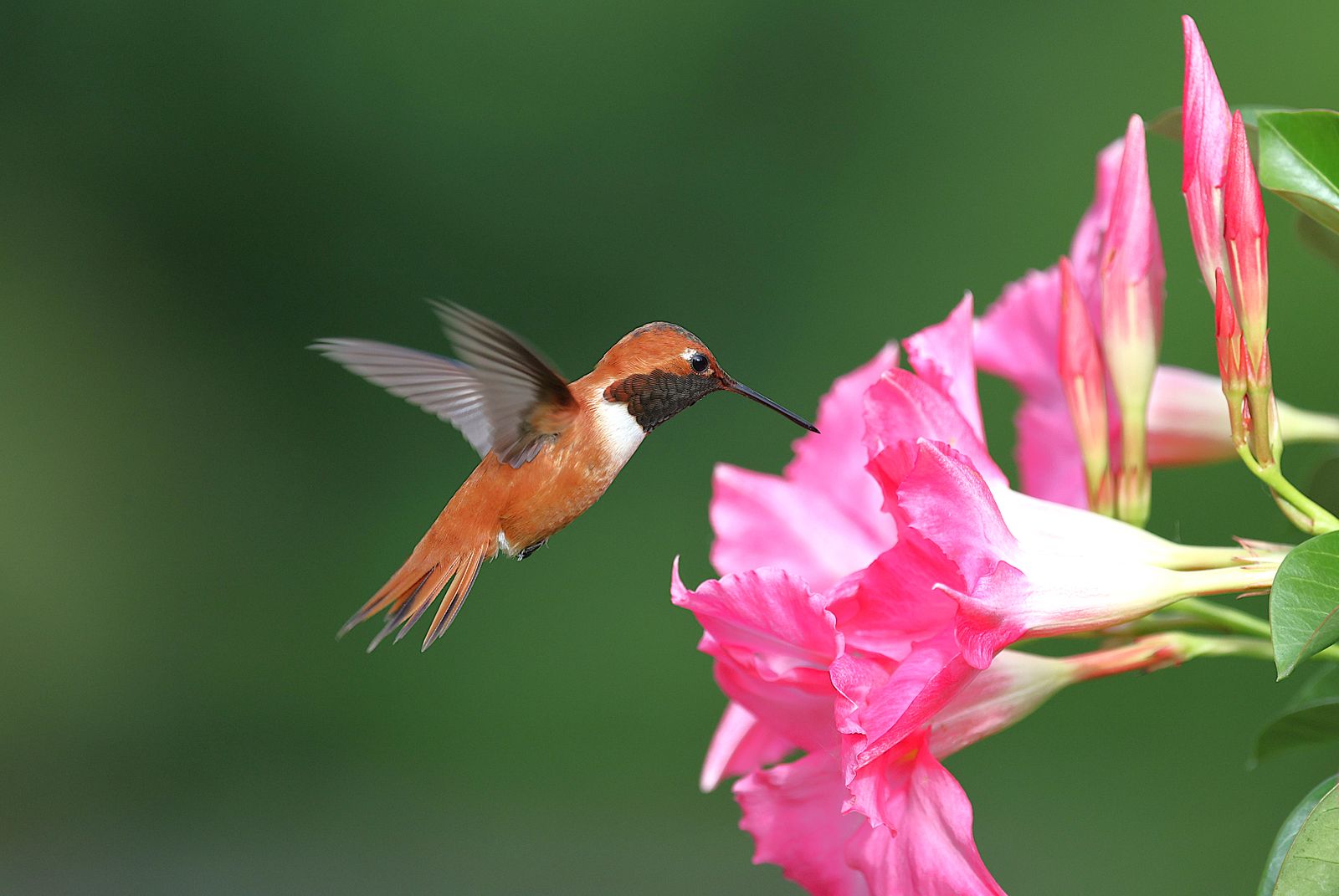
Keeping Hummingbird Nectar Fresh in Summer: Solar Feeder Care Guide
How do you balance charging a solar LED lid with keeping delicate sugar nectar from fermenting into toxic mold under the scorching summer sun? Position your solar feeder to capture 3 to 4 hours of early morning sunlight to fully charge the solar cap, then provide deep canopy shade from noon through late afternoon.
To keep nectar fresh in summer, change sugar water every 24 to 48 hours when outdoor temperatures exceed 85°F. Position your solar feeder to capture 3 to 4 hours of gentle morning sunlight for solar cap charging, then provide deep afternoon shade to prevent sugar fermentation and deadly black mold growth.
Daily & Weekly Summer Nectar Maintenance Checklist
- [ ] Inspect hand-blown glass reservoir daily for cloudiness, stringy floaters, or black mold specks.
- [ ] Verify solar panel cap is wiped clean of tree sap, pollen, dust, and bird droppings.
- [ ] Check the 3-day weather forecast to adjust your nectar change interval (24h for 90°F+, 48h for 85°F–89°F).
- [ ] Rinse reservoir thoroughly with hot tap water during every refill (never use chemical dish soaps).
- [ ] Perform a weekly deep soak using a 1:4 plain white vinegar to water solution to dissolve mineral deposits and fungal spores.
- [ ] Confirm hanging location provides 3–4 hours of 8 AM–11 AM direct sun and deep afternoon shade.
Printable Quick-Reference Summer Care Card
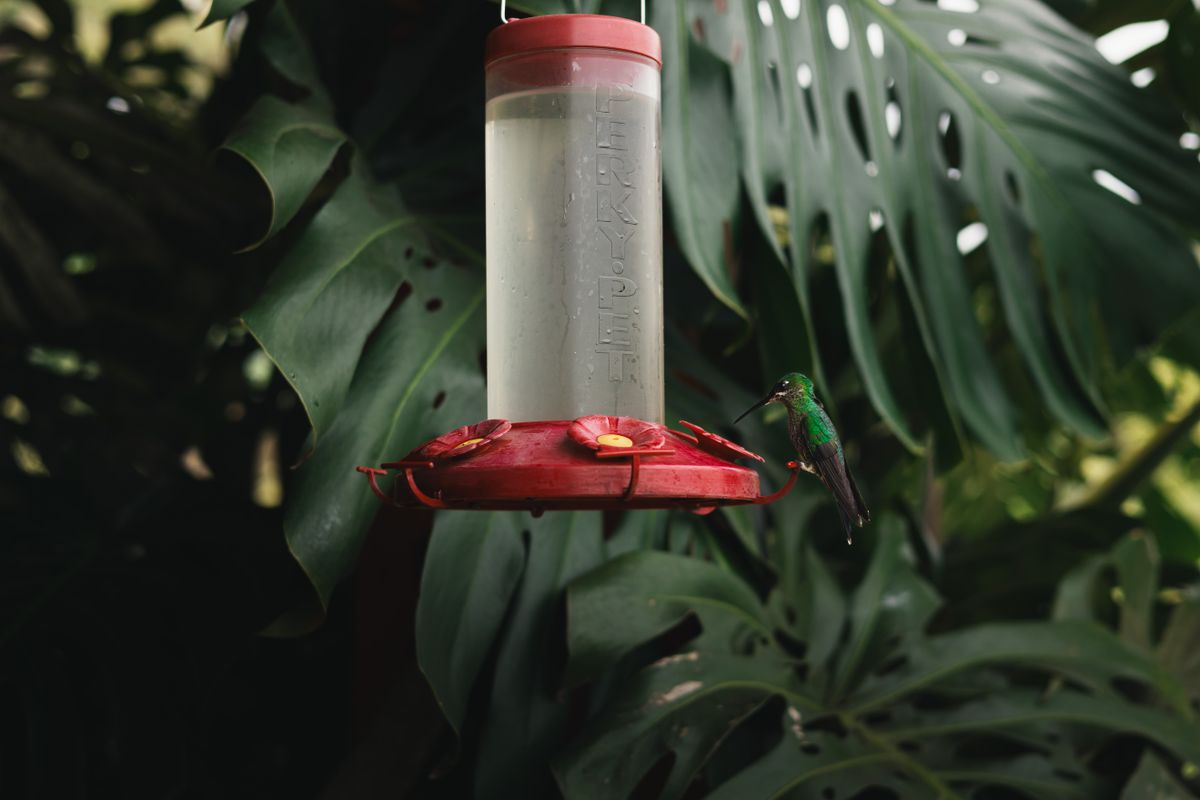
Photo by Dante Muñoz on Pexels
- Temperature Thresholds: Under 75°F = Change every 4–5 days | 75°F–84°F = Every 3 days | 85°F–89°F = Every 2 days | 90°F+ = Every 24 hours.
- Nectar Recipe: 4 parts water to 1 part white refined table sugar. Boil water, dissolve sugar, cool completely. Never use honey, brown sugar, or red dye.
- Solar Placement Formula: Position where the solar cap gets 8 AM–11 AM morning sun and dense tree shade from 12 PM to sunset.
- Natural Sanitation: Flush daily with hot tap water. Deep-clean weekly with 1 part white vinegar to 4 parts warm water. Swirl uncooked white rice to scrub interior glass curves.
Hot Weather Nectar Failure Modes & Solution Matrix
| Failure Mode / Scenario | Root Cause | Immediate Fix | Prevention Protocol |
| --- | --- | --- | --- |
| Cloudy, Milky, or Stringy Nectar | Wild yeast fermentation triggered by ambient heat exceeding 85°F and direct afternoon sunlight. | Discard nectar immediately. Flush glass reservoir with hot water and scrub interior with white vinegar solution. | Shift feeder to an East-facing tree canopy branch and fill only to 24-hour drinking capacity. |
| Black Specks or Fuzzy Mold on Feeding Ports | Avian candidiasis fungal spores germinating in unscrubbed port crevices during humid weather. | Submerge metal base and flower ports in a 20-minute 1:4 white vinegar bath. Scrub ports with a fine tube brush. | Perform a hot water rinse at every refill and deep clean every 3 to 5 days during summer. |
| Solar RGB Lights Dim or Short Night Runtime | Solar cap lens coated in tree sap/dust, or panel received fewer than 3 hours of direct morning sunlight. | Wipe solar cap lens with a damp microfiber cloth. Test power switch beneath cap. | Prune minor overhead foliage to ensure unhindered 8 AM to 11 AM sun access. |
| Wasp, Yellowjacket, or Ant Swarms at Base | Nectar drips on exterior glass curves caused by heat-induced liquid expansion and overflow. | Wipe down glass exterior with a clean damp cloth. Ensure glass bottle is snugly seated on the metal base seal. | Fill feeder to 2/3 capacity (approx. 20-22 oz) to leave an air expansion cushion at the top. |
When summer heat hits, nectar can fail quickly. Diagnose early failure modes before they harm visiting hummingbirds.
Decision Tree: Where Should You Hang Your Solar Feeder Today?
- Is your local peak daytime temperature forecast over 85°F? → Yes: Go to Question 2.. No: Maintain standard 3-day nectar swaps and 4-hour solar sun exposure.
- Does your feeder spot receive direct afternoon sun between 12 PM and 5 PM? → Yes: Relocate feeder immediately to an East-facing tree branch or porch corner that provides deep afternoon shade.. No: Go to Question 3.
- Is the solar RGB light illuminating for 6–8 hours after sunset? → Yes: Your current micro-climate spot is optimal. Maintain 24-48 hour nectar replacement.. No: Prune minor overhead foliage to boost 8 AM–11 AM morning sun exposure while preserving afternoon canopy shade.
Solar Feeder Yard Placement Strategy Diagram
This placement model illustrates how East-facing tree canopy placement balances battery charging with liquid cooling.
Interactive Summer Nectar Scheduler Tool
Calculate your precise replacement intervals and recommended refill volume based on daily local temperatures.
Key Takeaways for Hot Weather Nectar Management
Keep these essential rules in mind when caring for illuminated glass feeders during summer heatwaves.
Temperature-Triggered Nectar Replacement Schedule
- Daily Peak Above 90°F — Inspect nectar clarity. Empty remaining sugar water, flush glass bottle with hot tap water, and refill with fresh, cooled 4:1 nectar every 24 hours.
- Daily Peak 85°F – 89°F — Perform a complete nectar swap every 48 hours. Wipe solar panel cap with a damp microfiber cloth to remove tree sap and dust.
- Daily Peak 75°F – 84°F — Swap nectar every 3 days. Gently rinse feeding ports with warm water and a soft port brush.
- Weekly Deep Clean (All Temperatures) — Disassemble glass bottle from anti-rust metal base. Soak non-solar components in a 1:4 white vinegar bath for 20 minutes, scrub interior curves with bottle brush or uncooked rice swirl, rinse thoroughly, and air dry.
Yard Placement Scenarios: Solar Battery Charging vs. Nectar Freshness
| Yard Placement Scenario | Solar Cap Charge Efficiency | Nectar Preservation Lifespan | Wasp / Ant Attraction Risk | Overall Recommended Action |
| --- | --- | --- | --- | --- |
| Full Afternoon Sun (West Branch / Open Lawn) | 100% (8+ hrs light runtime) | Critical Failure (<12 hours before fermentation) | High (Thermal dripping from liquid expansion) | Avoid completely in summer. Direct 3 PM sun ferments sugar water and creates dangerous internal heat. |
| Morning Sun / Deep Afternoon Shade (East Branch) | 95% (6–8 hrs light runtime) | Optimal (24–48 hours freshness) | Low (Sealed metal base stays cool) | Highly Recommended. Captures gentle 8 AM–11 AM sun for full solar charging while shielding liquid from afternoon heat. |
| Full Deep Shade (Under Covered Porch Roof) | 30–50% (1–3 hrs light runtime) | Maximum (48–72 hours freshness) | Very Low | Acceptable for nectar health, but solar RGB lights will illuminate only briefly or remain dim. |
| Dappled Canopy Shade (Filtered Light All Day) | 80% (5–7 hrs light runtime) | Good (24–36 hours freshness) | Moderate | Great secondary option if an East-facing clear branch is unavailable in your garden layout. |
Compare garden micro-climates to find the ideal balance between daytime nectar cooling and nighttime RGB lighting.
Selecting the Right Micro-Climate Strategy for Your Yard
Selecting the ideal summer care approach depends on your local climate, tree foliage canopy, and daily routine.
Best choice for
- 24-Hour Partial Refill Strategy — Filling the 32 oz reservoir only 1/3 full (10 oz) minimizes sugar water waste while ensuring fresh nectar daily.
- East-Canopy Morning Solar Spot — Captures 8 AM–11 AM sun for 8 hours of evening RGB illumination while shading glass during peak afternoon heat.
- Using bleach, dishwasher detergent, or commercial red-dyed powders in hand-blown glass feeders.
- Dual-Feeder Swapping Method — Keep one clean feeder in reserve while the active feeder hangs in the garden for rapid 60-second morning swaps.
Recommended Tools for Summer Glass Feeder Care
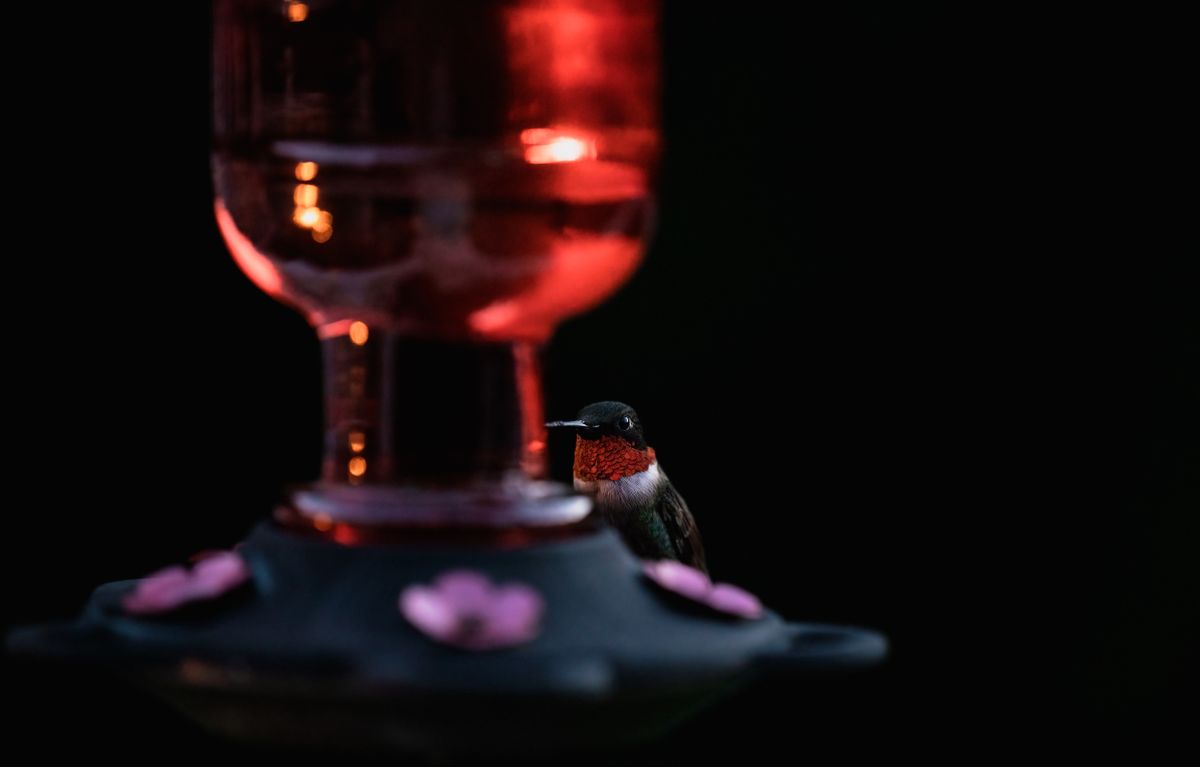
Upgrade your garden sanctuary with hand-blown glass art designed for weather durability and effortless maintenance.
Featured Garden Highlight: LUJII Solar-Powered Hummingbird Feeder
Enhance your summer garden with a brilliant hand-blown glass feeder that attracts hummingbirds by day and lights up your nights.
- Hand-Blown Glass Art: Each 32 fl. oz reservoir is individually handcrafted at 2,300°F with mineral pigments fused directly into the glass matrix—zero fading or peeling.
- Solar-Powered RGB Lights: Automatically illuminates at dusk for up to 8 hours following a full morning recharge.
- Leak-Proof & Weatherproof: Slender shape with a sealed anti-rust metal base minimizes heat expansion drips, while the solar top shields nectar from rain and harsh UV rays.
- Translucent Design: Allows effortless, instant visual checks of nectar clarity and liquid levels.
LUJII Glass Reservoir & Solar Cap Thermal Specifications
| Feeder Component | Material & Thermal Spec | Summer Heat Resistance | Maintenance Role |
| --- | --- | --- | --- |
| Nectar Reservoir | Hand-Blown Translucent Art Glass (2,300°F fused pigment) | Impervious to UV fading; high thermal density helps retain coolness when shaded | Allows instant visual monitoring of nectar clarity; generous 32 fl. oz capacity |
| Solar Light Cap | Weatherproof Plastic Solar Shield with RGB LEDs | Shields reservoir top from upward heat and rain; zero thermal transfer to nectar | Captures morning sunlight; powers up to 8 hours of automatic night lighting |
| Base Assembly | Anti-Rust Coated Metal with Sealed Gasket | Prevents heat-induced leakage and sugar drips | Provides comfortable perches and feeding ports; easy disassembly for cleaning |
| Hanging Hook | Heavy-Duty Weather-Coated Metal Wire | Supports full fluid weight during summer windstorms | Attaches easily to tree branches, shepherd hooks, or canopy extensions |
Examine how handcrafted glass art and protective solar components perform under summer weather conditions.
5 Dangerous Summer Nectar Mistakes to Avoid
Steer clear of these common summer mistakes to protect visiting hummingbirds from toxic yeast infections.
Nectar Spoilage Timeline: What Happens at 60°F vs. 90°F+
Understand how rising ambient temperatures drastically compress nectar shelf-life.
Frequently Asked Questions About Summer Solar Feeder Care
Does the solar LED cap produce heat that warms the nectar at night?
No. The energy-efficient RGB LED lights produce negligible operational heat. Additionally, the protective plastic solar cap acts as a thermal barrier between the lighting housing and the top of the glass reservoir, ensuring nighttime liquid temperature remains cool.
Should I change the 4:1 sugar-to-water ratio during extreme summer heatwaves?
No. Always keep the standard 4:1 ratio (4 parts water to 1 part refined white table sugar) constant. Weakening the solution deprives hummingbirds of vital calories, while strengthening it can cause dehydration. During heatwaves, increase your replacement frequency rather than altering the recipe.
How do I clean mold out of narrow hand-blown glass reservoirs without harsh chemicals?
Soak the glass reservoir in a solution of 1 part plain white distilled vinegar and 4 parts warm water for 20 minutes. Use a flexible curved bottle brush to reach interior curves, or add 2 tablespoons of uncooked white rice with warm vinegar water and gently swirl it around to scrub mold spots safely without chemicals.
Will direct sunlight fade the colorful patterns in hand-blown glass art?
No. Each hand-blown glass reservoir is handcrafted at 2,300 degrees Fahrenheit, fusing mineral pigments directly into the molten glass matrix. Unlike painted or plastic feeders, the vibrant translucent patterns will never fade, peel, or crack under intense solar UV exposure.
Get expert answers to common questions about nighttime LED lights, sugar ratios, and hand-blown glass care.
Immediate Action Plan for Hot Weather Care
Your decision: Determine your yard's East-facing micro-climate spot to capture morning sun while shading nectar from afternoon heat.
Do this next: Check your local temperature forecast today. If temperatures exceed 85°F, empty, rinse with warm water, and refill your feeder with fresh 4:1 sugar water every 24 to 48 hours.
- Read next: Hot-Weather Nectar Ratios: How to Keep Food Fresh in Summer
- Read next: Best Ant Moats for Hummingbird Feeders: Built-In vs. Hanging Hooks
LUJII Hand-Blown Glass Solar Hummingbird Feeder (32 oz) featuring a UV-shielding solar cap and sealed anti-rust metal base.
Take these quick steps today to optimize your garden sanctuary for summer.
Explore Related Backyard Sanctuary Guides
Link internally to artisan glass FAQs, twilight lighting guides, and buying advice.
Cover photo by Veronika Andrews on Pexels.