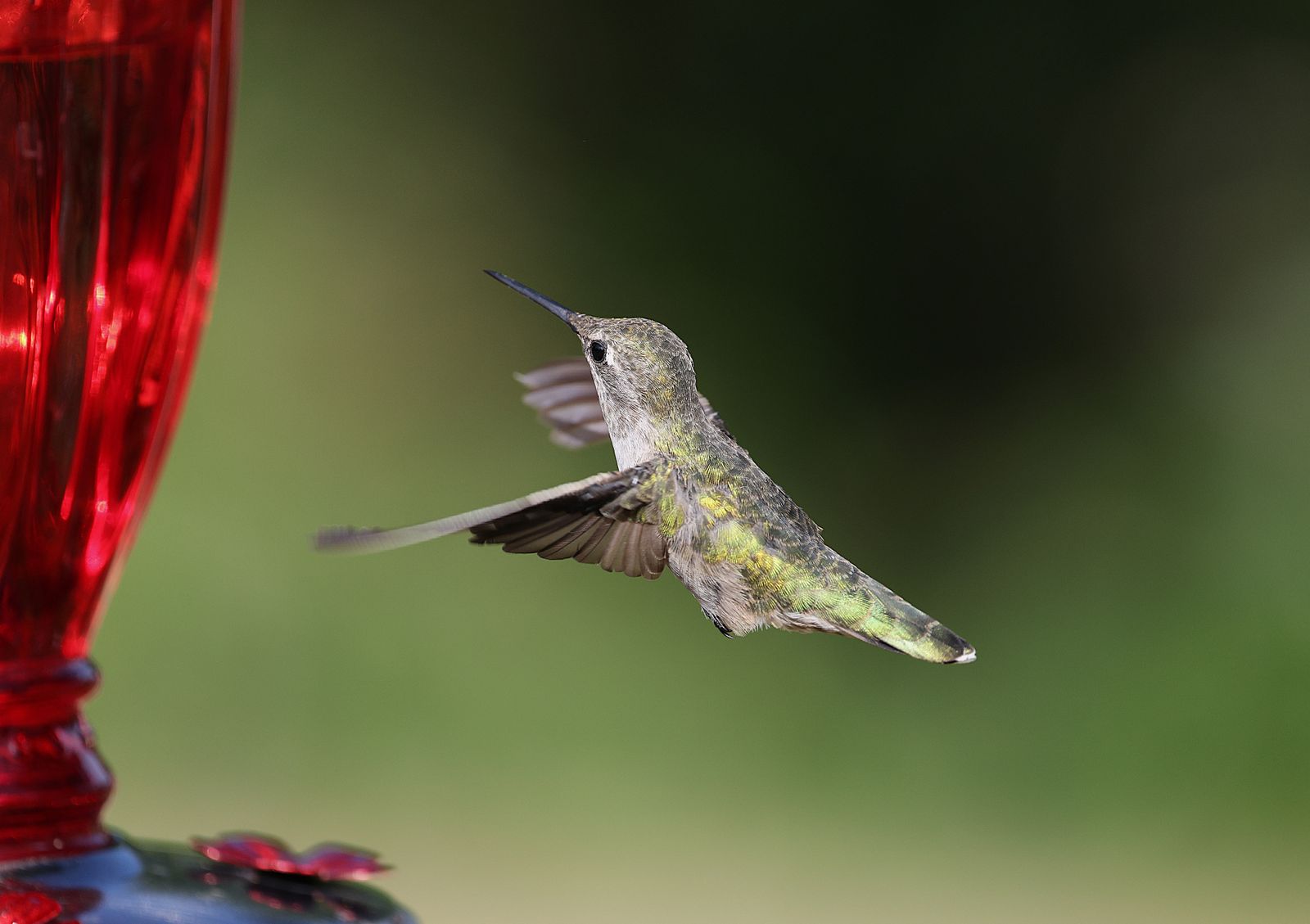
How to Stop Hummingbird Feeder Bullying and Territorial Fighting
Can you stop a dominant hummingbird from bullying others at your feeder? Yes. Move feeders completely out of direct line-of-sight by placing them around house corners, behind dense hedges, or across structural patio walls, separated by at least 15 to 30 feet. Hummingbirds cannot defend feeding stations they cannot visually monitor from a single perch.
Territorial Aggression Diagnostic & Specification Matrix
| Behavioral Parameter | Rufous Hummingbird | Ruby-throated Hummingbird | Anna's Hummingbird |
| --- | --- | --- | --- |
| | | | |
| | | | |
| | | | |
| | | | |
| | | | |
Different hummingbird species exhibit distinct territorial radii, perch attack habits, and line-of-sight tolerances. Use this diagnostic matrix to assess the defense profile of the dominant bird guarding your garden.
Visualizing Peace: Line-of-Sight Feeder Placement Map
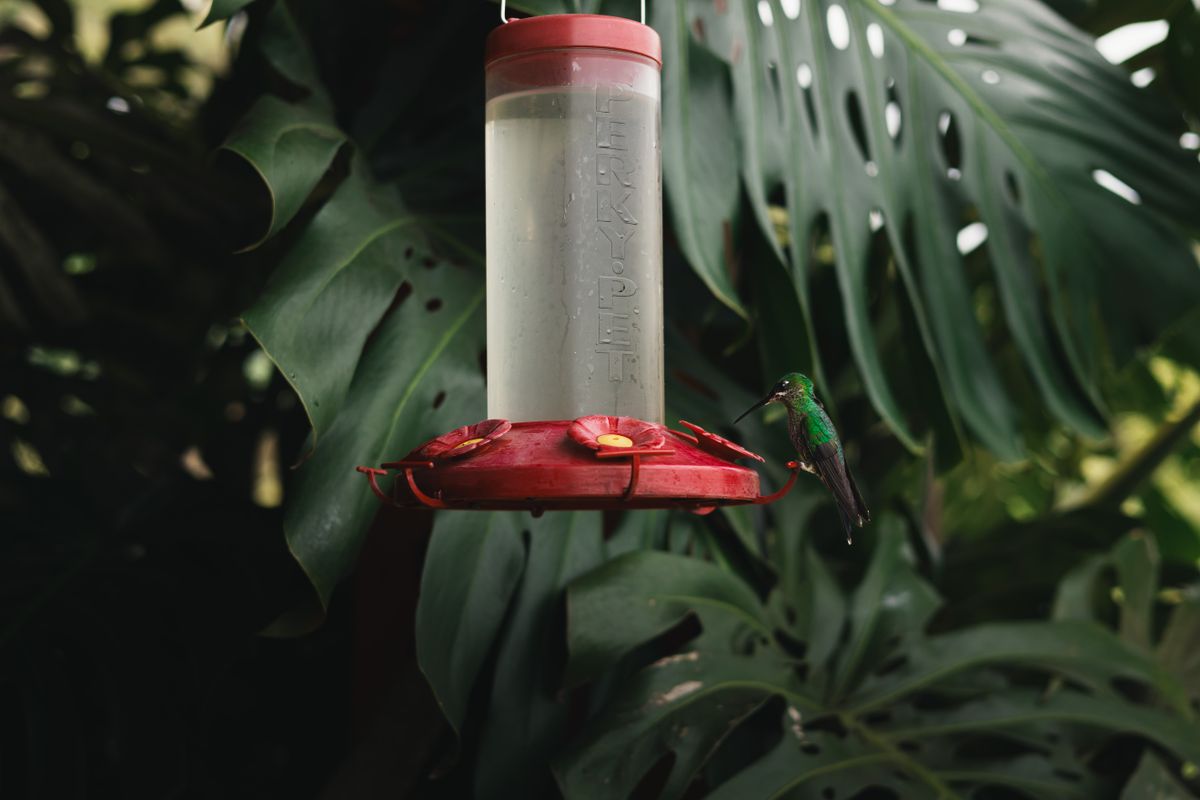
Photo by Dante Muñoz on Pexels
Architectural placement is the most reliable way to neutralize territorial aggression without altering nectar formulas or removing feeding ports.
Yard Setup Checklist: De-Escalating Feeder Aggression
- [ ] Identify the dominant male's favorite high lookout perch (tree branch, wire, or fence post).
- [ ] Verify if all feeders are visible from that single lookout perch.
- [ ] Relocate at least one feeder around a house corner or behind a thick shrub hedge.
- [ ] Ensure relocated feeders maintain a minimum separation distance of 15 to 30 feet.
- [ ] Add a third feeder if more than 5 hummingbirds are competing for space during peak migration.
Hummingbird Anti-Bullying Decision Flowchart
- Is a single bird successfully guarding all feeding stations? → Yes: Check if feeders share a direct line of sight from one perch.. No: Maintain current layout; minor natural chattering is normal.
- Can the bully see all feeders from its primary lookout perch? → Yes: Move secondary feeder around a house corner or behind dense foliage.. No: Increase total feeder count to overwhelm territorial capacity.
- Are feeders spaced less than 15 feet apart? → Yes: Expand distance to 15–30 feet minimum.. No: Add a twilight-illuminated station to extend feeding hours past male roosting time.
Expert Ornithology Tip: Managing Twilight Feeding Dynamics
Dominant male hummingbirds typically defend their feeding territories during peak daylight hours. As evening approaches and light drops below 10 lux, dominant males retreat to their night roosts in higher tree canopies to conserve energy for thermal regulation. However, females and juveniles continue feeding late into dusk. Utilizing solar-powered illuminated feeders—such as handcrafted glass stations with automatic RGB solar lighting—creates a safe window at twilight. Timid birds can access nectar unharassed after the dominant bully has retired for the night.
Frequently Asked Questions About Hummingbird Aggression
Addressing common inquiries regarding hummingbird fighting, color preferences, and night feeding behaviors.
Key Takeaways for a Peaceful Hummingbird Yard
- Visual barriers (walls, hedges, structural pillars) are far more effective than distance alone.
- Territorial defense is driven by intense metabolic demands; a bully defends nectar to ensure its own survival.
- Spacing feeders 15 to 30 feet apart breaks easy patrol routes and forces bullies to pick one zone.
- Adding secondary illuminated feeders extends dusk access, letting timid females and juveniles feed after bullies roost.
- Hand-blown glass solar feeders double as aesthetic yard accents while serving as dispersed feeding hubs.
Selecting the Right Layout Strategy for Your Property Size
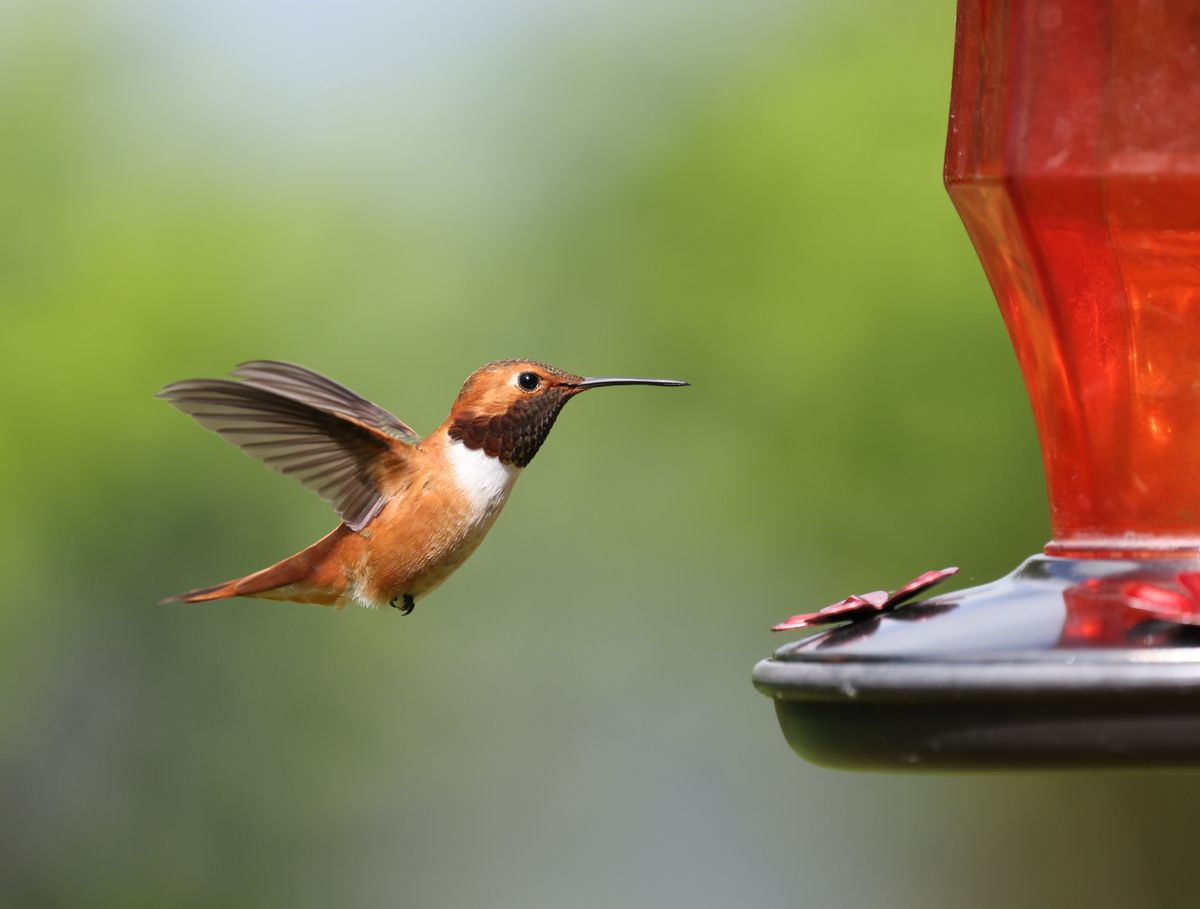
Photo by Veronika Andrews on Pexels
To stop hummingbird feeder bullying, eliminate direct line-of-sight between feeding stations and separate feeders by at least 15 to 30 feet or across physical barriers like house corners.
Best choice for
- Opposite-Wall Visual Barrier Setup — Uses the structure of the house to block line-of-sight, making it impossible for one bully to watch two feeders simultaneously.
- 30-Foot Radius Multi-Station Clustering — Distributes multiple distinct feeding points around trees and shrubbery to overwhelm a single bird's territorial capacity.
- Hanging multiple feeders on the same porch beam or within 6 feet of each other
- Relying on a single massive high-capacity feeder thinking more ports will solve aggression
- High-Density Distraction Feeder — Place one simple feeder high in a tree for the bully, and host primary aesthetic feeders in lower protected zones.
Hummingbirds possess the highest mass-specific metabolic rate of any homeothermic vertebrate. To fuel heart rates that exceed 1,200 beats per minute and wingbeats reaching 80 cycles per second, a single hummingbird must consume its weight in nectar daily. This extreme biological requirement transforms every high-calorie nectar source into a high-stakes asset.
The Caloric Math of Feeder Defense
When a backyard bird enthusiast hangs a high-capacity feeder filled with a 1:4 sugar-water solution, it represents an unnaturally dense energy resource. In nature, wild flowers are scattered across wide meadows. A single concentrated feeder represents thousands of calories in one exact spot.For a male Rufous or Ruby-throated hummingbird, securing exclusive access to this single feeder ensures rapid refueling with minimal effort. The bird calculates defense investment using simple caloric math: if defending the feeder takes fewer calories than flying around foraging natural flowers, aggressive guarding becomes the optimal survival strategy. The bird perches on a prominent branch nearby, monitoring the feeder with exceptional visual acuity.
Why Single-Feeder Setups Consistently Fail
Many gardeners assume that buying a larger feeder with six, eight, or twelve feeding ports will solve fighting. In reality, adding more ports to a single feeder concentrates the reward without changing the bully's line-of-sight. A dominant bird does not care if ten ports are empty; it cares that another bird is drinking from its food source.When a visitor lands on the opposite side of a large feeder, the perched bully instantly detects movement and dive-bombs the intruder. Concentrating ports on a single base actually increases stress across the local bird population. True peace is achieved not through port counts, but through spatial disincentivization—making it physically impossible or calorically unviable for one bird to control all feeding access points.
Leveraging Visual Barriers and Height Variation
Hummingbird eyesight is tuned to motion detection over broad visual fields. However, their vision cannot penetrate solid objects like house corners, wooden fences, or dense boxwood hedges. By placing Feeding Station A on the East patio and Feeding Station B on the West patio, the house itself acts as an impenetrable visual shield.Even in open yards lacking architectural corners, height variation can break easy territorial control. Positioning one feeder low inside a covered arbor (5 feet high) and another feeder higher up in an open maple canopy (12 feet high) creates two distinct visual elevation zones that force a dominant bird to choose only one area to defend.
Layout Tactics Compared by Failure Modes & Success Criteria
| Layout Strategy | Primary Failure Mode | Spatial Requirement | Bully Suppression Efficacy | Ideal Yard Profile |
| --- | --- | --- | --- | --- |
| | | | | |
| | | | | |
| | | | | |
| | | | | |
Evaluating popular anti-bullying strategies by analyzing how and why common setups fail.
Common Backyard Mistakes That Trigger Aggressive Bullying
Avoid these four critical layout and management mistakes that empower bully birds and stress visiting flocks.
Recommended Solution: Hand-Blown Solar Hummingbird Feeders
Create a multi-station garden sanctuary by dispersing beautiful, hand-blown solar glass feeders around your home. Each unit functions as an independent feeding hub by day and a radiant garden centerpiece by night.
Actionable Next Steps: Reclaim Your Garden Sanctuary
Your decision: Decide whether your yard allows for 30-foot open spacing or requires visual barrier placement around house corners.
Do this next: Audit your yard layout today: relocate your primary feeder behind a visual barrier and add a secondary feeder out of line-of-sight.
- Read next: Artisan Glass Hummingbird Feeder FAQ: Care, Cleaning, and Placement Secrets
- Read next: How to Hang Your Solar Hummingbird Feeder to Block Ants and Crawling Insects
Set up a dual-station garden sanctuary using LUJII Hand-Blown Solar Hummingbird Feeders to disperse feeding zones with beautiful, night-lit visual anchors.
Follow this strategic path to transform a hostile feeder warzone into a peaceful, multi-bird haven.