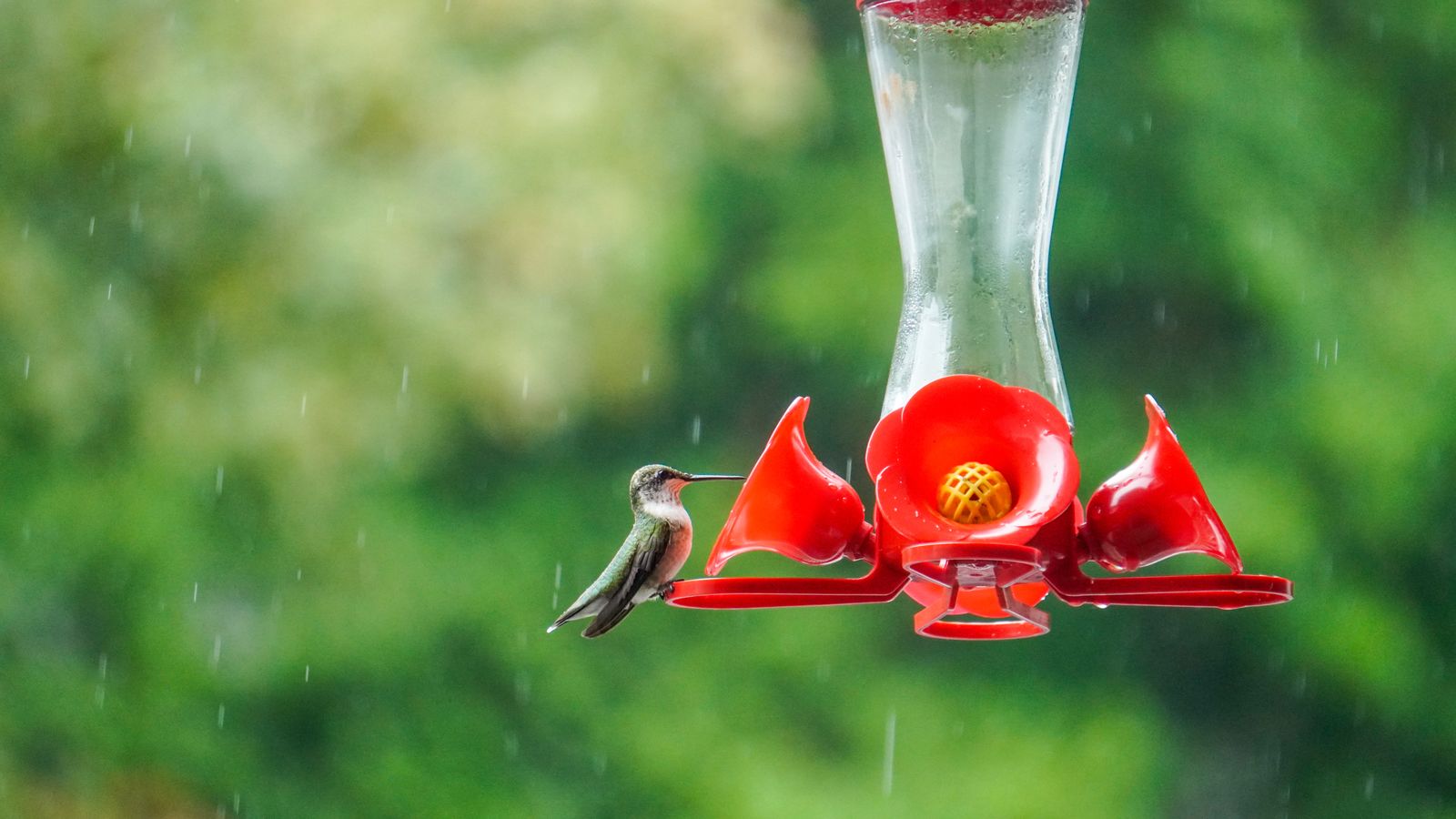
Why One Hummingbird Guards Your Feeder and How to Share the Peace
One hummingbird driving every other bird away from your feeder is normal territorial behavior, not a problem with the feeder. The fix is not to remove the bully but to remove the thing worth guarding: a single, defensible food source in one line of sight. Break the yard into several feeding stations the dominant bird cannot watch at once, and the chasing drops off within days.
Why does one hummingbird chase all the others away?
Because defending a food source is efficient. Hummingbirds burn energy at an extreme rate, and a bird that controls a reliable feeder gets guaranteed calories for the cost of a few short chases. In the wild that instinct protects a patch of flowers; at a feeder it produces the familiar pattern of one bird perched on a nearby twig, launching at every arrival.
The guarding bird — often called a sentry — usually picks a perch with a clear view of the feeder, a few feet away and slightly above it. From there it can see the whole approach. If you watch for ten minutes you will almost always spot the perch before you spot the fight, and knowing where the perch is tells you exactly what needs to change.
Some seasonal context helps. Territorial pressure tends to be highest early in the season when birds are establishing ground, and again in late summer when juveniles and migrants raise the local population. A quiet feeder in between is not a sign your dominant bird left; it may just be a period with less to fight over.
Is a territorial hummingbird actually a problem?
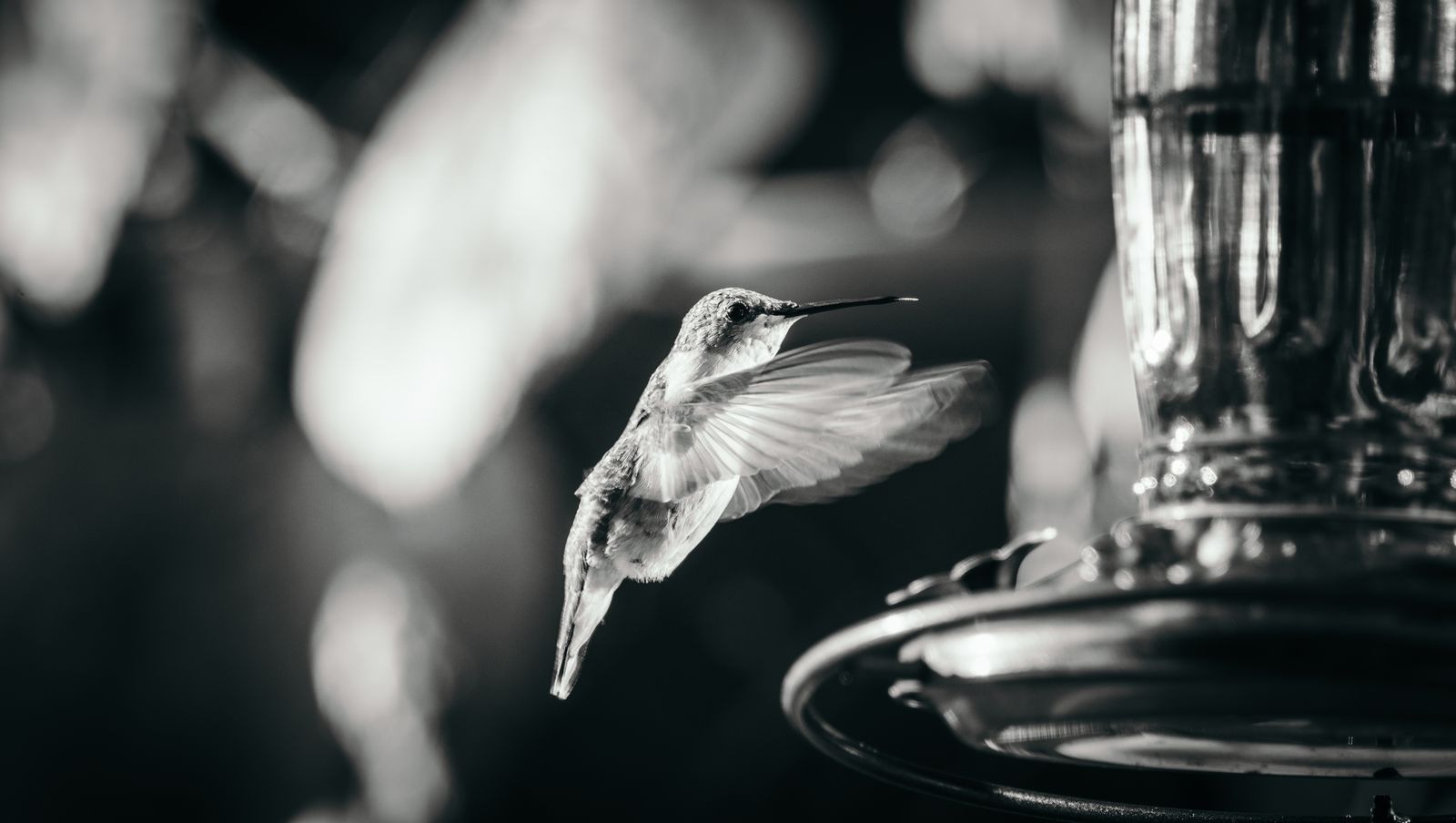
Sometimes yes, sometimes no. Chasing looks violent and is mostly bluff — most encounters end with a short pursuit and no contact. The real costs are indirect:
- Fewer birds visible to you. A defended feeder often serves one or two birds while your yard could support several.
- Wasted energy for subordinate birds. Birds pushed off repeatedly spend more calories to get less food.
- Nesting females squeezed out. During nesting season a female cannot afford long detours, and a monopolized feeder can push her off her most efficient route.
- New birds never establish. A yard with a strong sentry can stay stuck at one resident bird all season.
How do you stop one bird from monopolizing the feeder?
Work through these in order. The first two solve most cases.
What works and what does not
| Approach | Effect on chasing | Notes | |---|---|---| | Second feeder out of sight | Large reduction | The standard fix; give it several days to take hold | | Two feeders hung together | Little to none | One perch guards both | | Removing the sentry perch | Moderate | The bird relocates, but surveillance gets harder | | More ports on one feeder | Small to moderate | Helps most when ports face opposite directions | | Larger reservoir alone | None | Capacity is not what is being contested; access is | | Adding flowering plants | Moderate and cumulative | Diffuse sources are hard to defend | | Trying to scare off the dominant bird | None | Another bird takes the territory within days |
Where should the second feeder go?
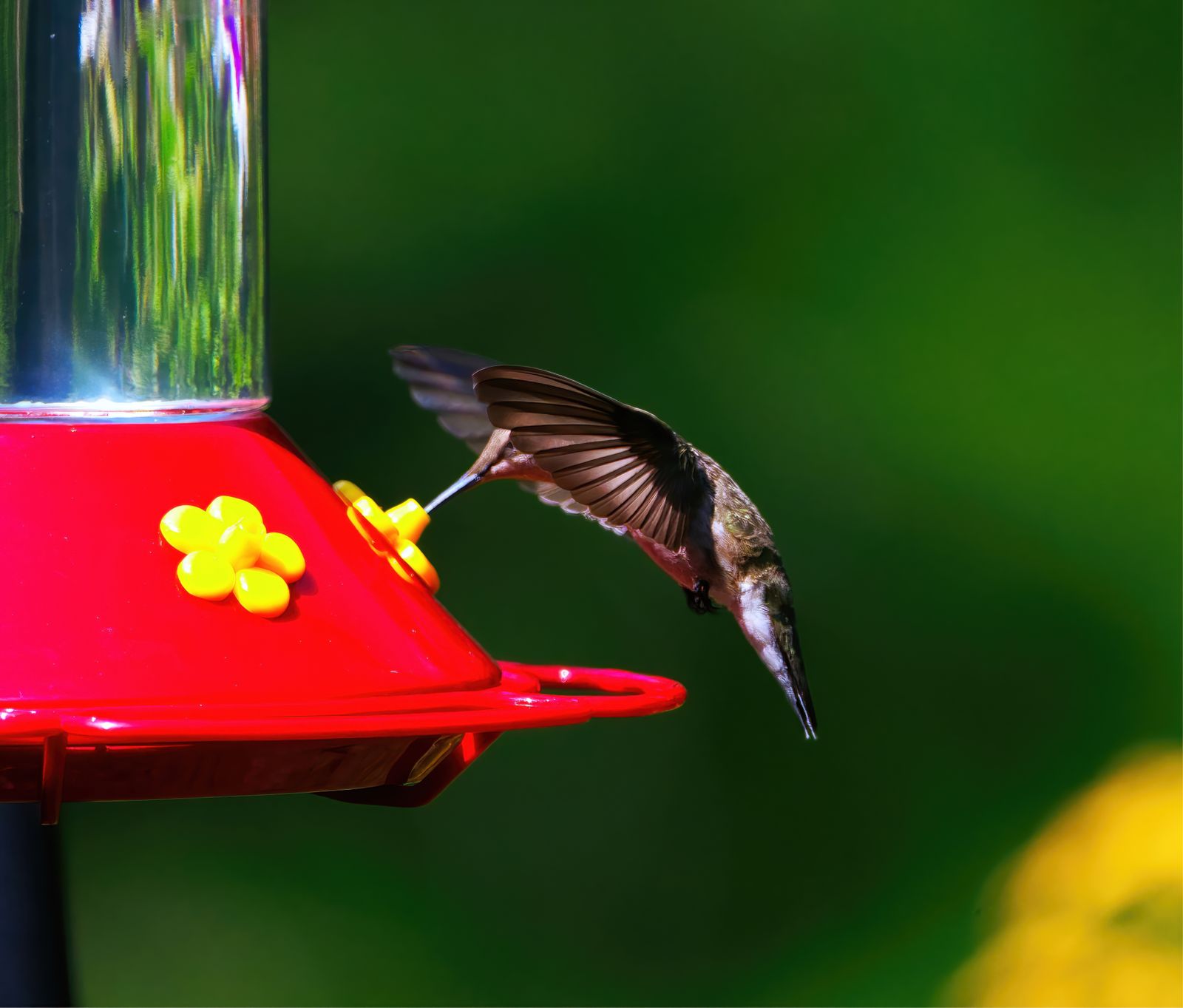
Photo by DANNIEL CORBIT on Pexels
Pick a spot where the two feeders cannot be seen from a single point. The practical test is simple: stand at the first feeder's sentry perch, at roughly its height, and look. If you can see the second location, move it.
Good candidates in most yards are the opposite side of the house, the far end of a fence line with planting between, a front entry when the first feeder is out back, and any position separated by a solid structure such as a garage wall or shed. On a small property, height separation plus a physical screen can substitute for distance.
Keep the practical requirements intact at the new spot too. It still needs a clear approach and a perch nearby for arriving birds, and a solar feeder still needs several hours of direct sun on its cap to charge for evening lighting.
Does the feeder itself make territorial behavior better or worse?
Feeder design has a modest but real effect. Ports spaced around the body of a feeder let two birds feed with the body between them, which reduces direct confrontation compared with ports clustered on one face. A stable feeder that does not spin or swing wildly also helps, because a moving perch makes subordinate birds more hesitant to commit.
Where design does not help is capacity. A larger reservoir means fewer refills for you, not less fighting — a 32 fl oz capacity holds plenty of nectar, but the birds are contesting access to the ports, not the volume behind them. What capacity does buy you is the freedom to run a second and third station without constantly running dry, and a see-through body at each station makes it easy to spot which one is actually being used. If you are deciding what to buy for multiple stations, the glass and plastic durability comparison covers what holds up over seasons of handling.
Keep the nectar simple at every station: one part plain white sugar to four parts water, no red dye, never honey or brown sugar, refreshed more often in hot weather. If you use ant moats, fill them with plain water only.
FAQ
Should I remove the aggressive bird? No, and it would not work. Territory is a position, not a personality — vacate it and a different bird claims it within days. Changing the layout of the food is what changes the behavior.
How long until a second feeder reduces the chasing? Usually a few days to a week. Birds have to discover the new station first, so keep both fresh and resist moving the new one during that period.
Is chasing dangerous to the birds? Serious injury is uncommon; most encounters are display and pursuit. The bigger concern is the energy cost to birds that get pushed off repeatedly, which is what a second feeder resolves.
My feeder went completely quiet after weeks of fighting. What happened? Territorial pressure fluctuates with the season. Birds move on, nesting females narrow their routes, and local numbers dip between migration waves. Keep the nectar fresh and give it a couple of weeks before changing anything.
A practical next step
Watch your feeder for ten minutes and find the sentry perch. Then walk to the far side of a wall, hedge, or corner where that perch has no view, and hang a second feeder there with the same fresh one-to-four nectar. Give it a week without moving it, and count how many birds you can see at once.
Cover photo by Koushalya Karthikeyan on Pexels.