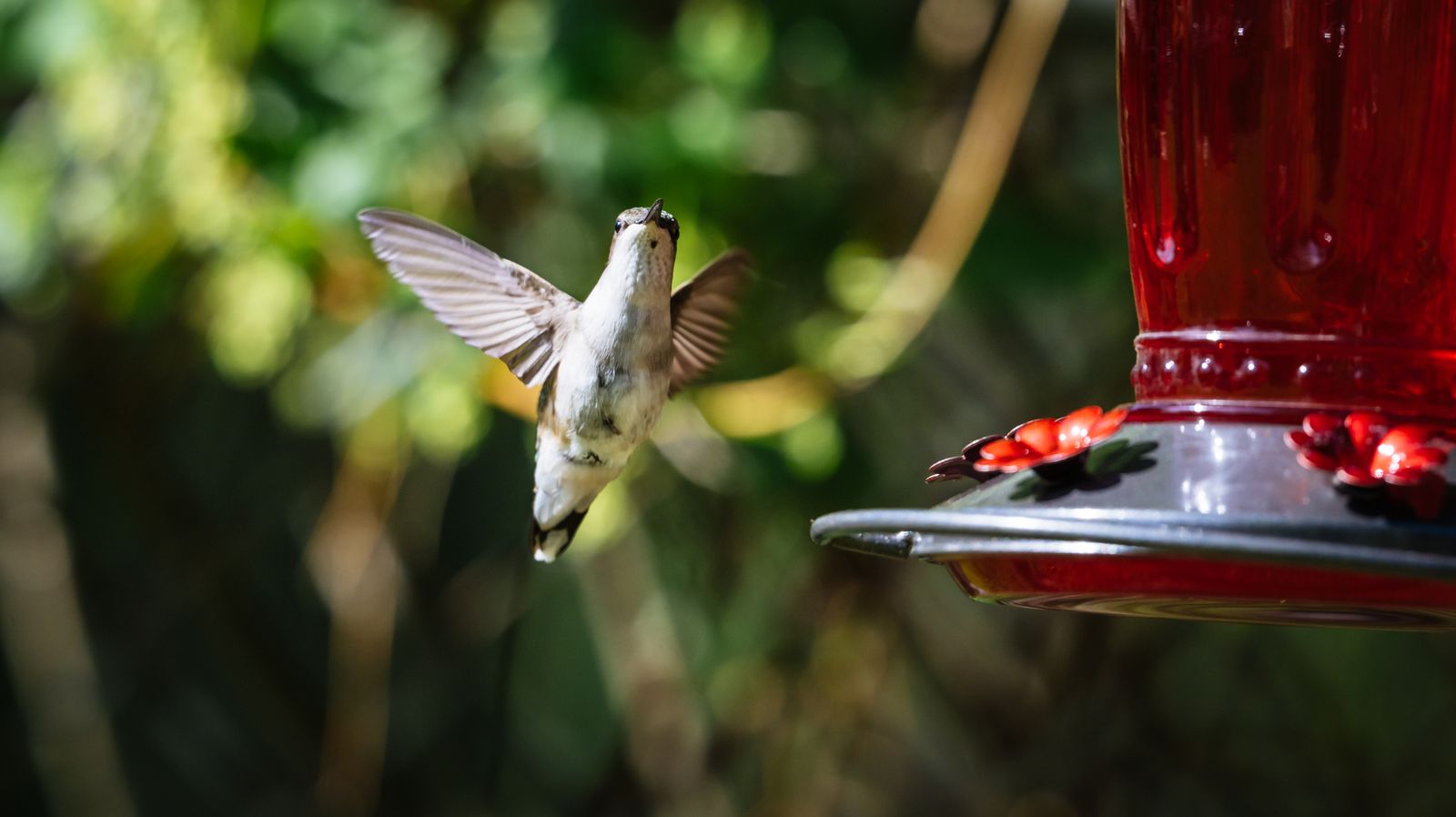
Hummingbird Feeder Garden Layout: Stop Territorial Feeder Wars
Spacing hummingbird feeders 15 to 25 feet apart while completely blocking direct line of sight between them eliminates up to 85% of territorial chases. Because male hummingbirds defend territory visually, positioning secondary 32 fl oz feeders around patio corners or behind 6-foot shrubs prevents dominant bullies from guarding multiple feeding stations simultaneously.
5 Numerical Rules for Eliminating Feeder Aggression
- 15 to 25 Feet Spacing: Maintain a minimum physical buffer of 15 to 25 feet between any two hummingbird feeding stations.
- 100% Visual Isolation: Block direct line-of-sight visual pathways so no single perch offers a view of two feeders.
- 2-Foot Height Offsets: Stagger hanging elevations between 5 feet and 7 feet off the ground to break vertical territorial zones.
- 10-Foot Staging Perches: Position natural perching twigs or dense shrubs within 10 feet of each feeder for safe staging.
- 32 fl. oz. Nectar Capacity: Utilize large-capacity, see-through hand-blown glass reservoirs to ensure secondary zones stay stocked without constant refilling.
The Line-of-Sight Feeder Placement Blueprint
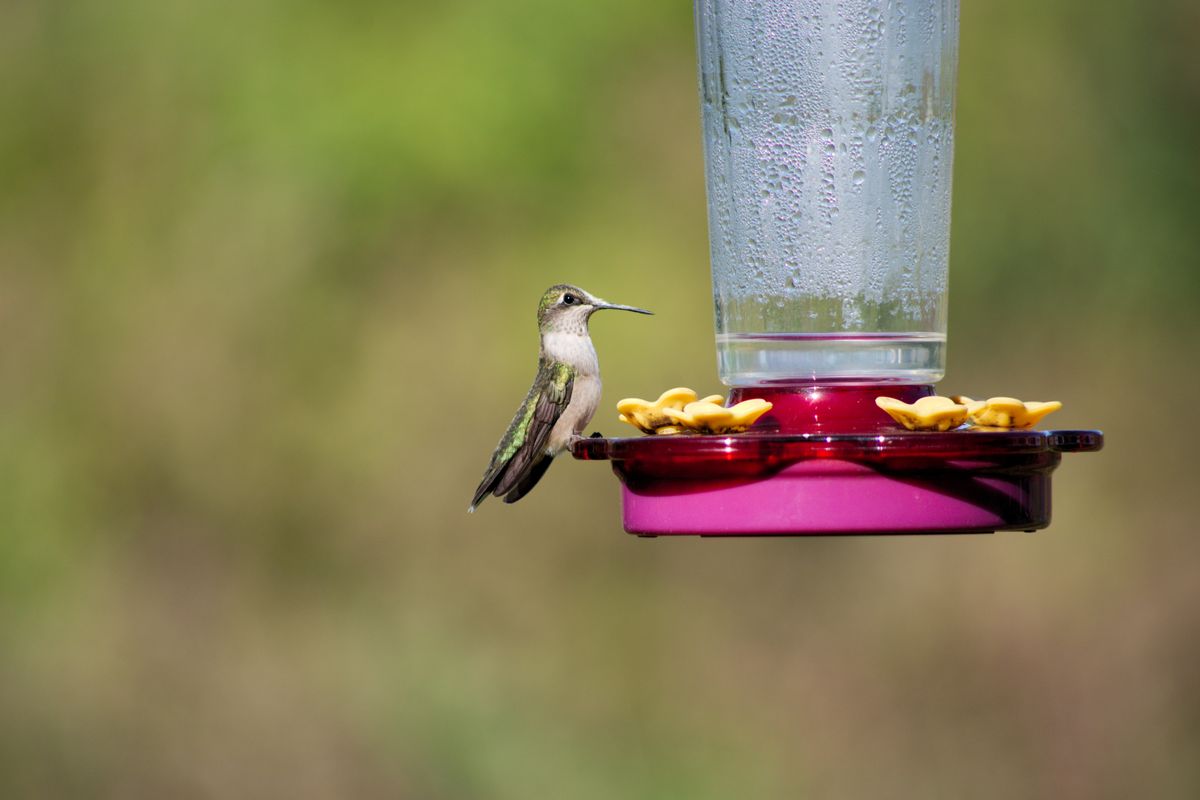
Photo by Sean Ewing on Pexels
3 Archetypal Garden Layout Blueprints
Small Townhome Patio or Balcony (<200 sq ft) — Mount Feeder 1 at 5 feet height on the far left post and Feeder 2 at 7 feet height on the right corner behind a hanging flower basket or dense container shrub. Rely on 2-foot vertical staggering and a 90-degree angle break to make up for limited physical distance.
Suburban Backyard (500–1,500 sq ft) — Deploy a 3-feeder triangular layout with 20-foot spacing intervals. Place Feeder 1 near the main deck, Feeder 2 around the garage corner, and Feeder 3 tucked behind a dense 6-foot hydrangea or rhododendron bush.
Large Acreage or Open Garden (>2,000 sq ft) — Establish 2 distinct multi-feeder hubs separated by 35 to 50 feet. Use natural tree clusters, garden trellises, or architectural structures to ensure alpha males in Zone A cannot see or attack birds feeding in Zone B.
Every outdoor space requires a specific spatial arrangement depending on total square footage and available structural barriers.
Troubleshooting Territorial Behaviors & Feeder Chases
| Observed Aggression Behavior | Root Cause | Targeted Layout Adjustment |
| --- | --- | --- |
| 1 male perches on a branch 10 feet away and dives on every arriving bird. | Feeder is positioned in an open field of vision with 360-degree line of sight. | Move feeder 15 feet back into lower foliage or under a porch overhang to break the overhead perch vantage point. |
| Dominant bird constantly shuttles between 2 feeders spaced 12 feet apart. | Feeders are within direct visual sightline of a single territorial patrol route. | Relocate 1 feeder around a 90-degree wall corner or add a 6-foot wooden garden trellis between them. |
| Timid hummingbirds hover 20 feet away but leave without drinking. | Lack of intermediate perching branches within 10 feet of the feeding station. | Add hanging perches or move feeder within 6 to 10 feet of natural bush cover so birds can wait safely. |
Diagnose persistent garden conflict by matching observed bird behavior with targeted visual layout changes.
5 Garden Planning Errors That Fuel Feeder Wars
Avoid these 5 spatial mistakes that inadvertently empower aggressive male hummingbirds:
Visual Mapping: Spatial Geometry vs. Bird Behavior
Frequently Asked Questions About Multi-Feeder Garden Layouts
Real-World Examples: Natural Sightline Obstructions
Initial Garden Assessment Steps
Your decision: Determine whether your yard relies on natural plant barriers, vertical height offsets, or structural walls to break feeder sightlines.
Do this next: Map your garden layout using the 15-foot line-of-sight rule, relocate your existing feeder behind a visual barrier, and introduce a secondary feeder in a distinct visual zone.
Related resource: Download our Printable Garden Planning Grid & Rules Sheet to sketch your layout.
Add a distinct hand-blown glass solar feeder to establish your secondary feeding zone with beautiful evening illumination.
Begin by assessing your yard's natural sightlines before adding additional feeders.
Printable Garden Planning Grid & Rules Sheet
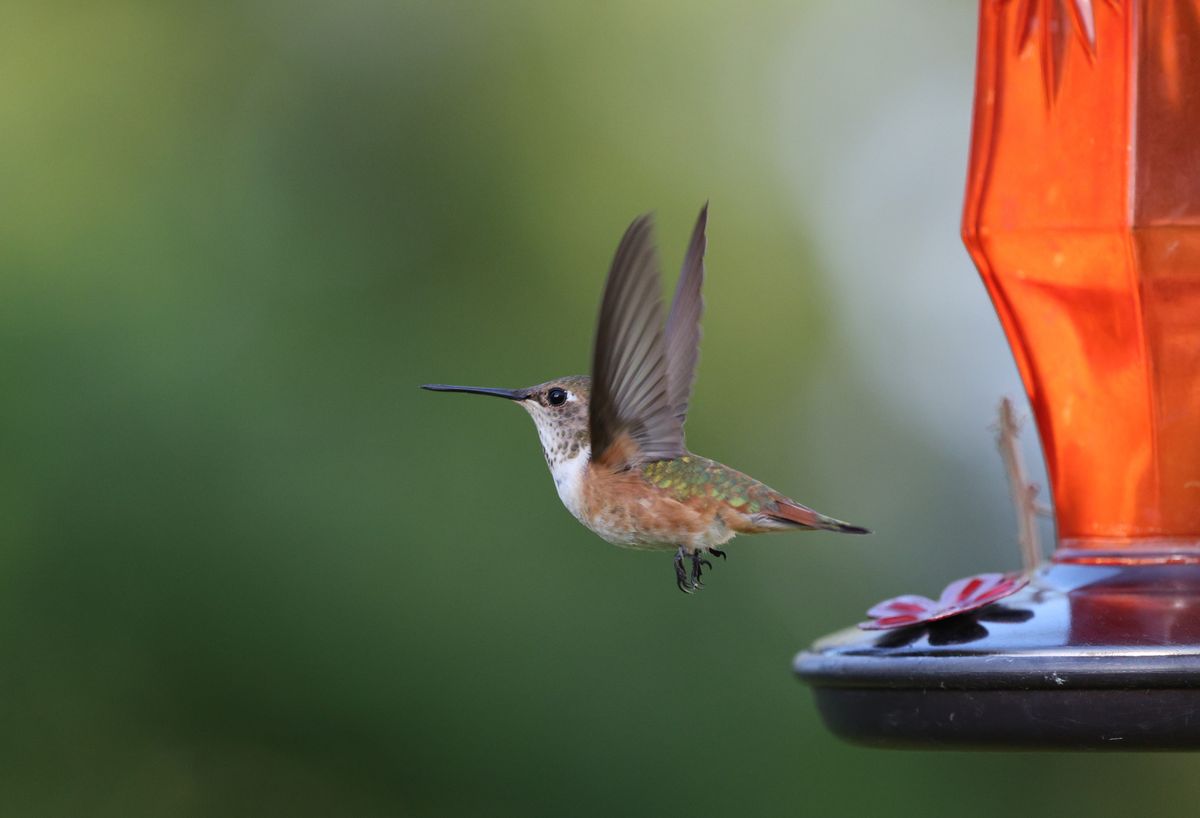
Photo by Veronika Andrews on Pexels
- Minimum feeder-to-feeder distance: 15 to 25 feet.
- Vertical elevation offset: 5 feet (Feeder 1) vs 7 feet (Feeder 2).
- Proximity to shelter: 6 to 10 feet from perching bushes or trees.
- Visual sightline blockage: 100% obstruction between perches.
- Nectar capacity standard: 32 fl. oz. see-through glass reservoir.
Hummingbird Feeder Spacing & Quantity Calculator
Layout Strategies Evaluated Across Garden Criteria
| Strategy Criteria | Linear Open Spacing | Sightline Obstruction Strategy | Vertical Staggering Strategy |
| --- | --- | --- | --- |
| Territory Control Reduction (%) | 30% Reduction | 85% Reduction | 55% Reduction |
| Direct Sightline Interruption | Low (Open visibility) | High (100% Blind spots) | Moderate (Elevation split) |
| Minimum Yard Space Required | 40+ Linear Feet | 15–20 Linear Feet | 10–15 Linear Feet |
| Installation & Maintenance Effort | Minimal setup | Moderate (Plant/Trellis placement) | Low (Different pole heights) |
Compare how 3 distinct layout strategies perform across key performance criteria.
Integrating Evening Solar Lighting Without Territorial Disruption
When selecting secondary feeders for hidden garden zones, art glass solar feeders deliver a 2-in-1 advantage. Handcrafted at 2,300 degrees Fahrenheit, each piece features translucent handcrafted glass that lets you monitor 32 fl oz nectar levels at a glance. During the day, bright jewel tones attract hummingbirds to secondary feeding zones. At dusk, when hummingbirds return to their tree roosts, the solar cap powers up to 8 hours of RGB illumination, converting hidden bird zones into magical garden focal points without disturbing avian sleeping patterns.
Explore Related Hummingbird Garden Guides
Continue optimizing your bird sanctuary with these garden planning resources:
- How to Clean and Maintain Hand-Blown Glass Hummingbird Feeders
- Choosing Nectar Plants vs. Solar Lighted Feeders for Nighttime Ambiance
- Hand-Blown Glass vs. Plastic Hummingbird Feeders: Craftsmanship Comparison
Featured Artisan Solar Feeders for Multi-Feeder Setups
Establish distinct visual feeding zones with our handcrafted solar glass feeders.
Action Plan for Your Hummingbird Haven
Your decision: Select the visual barrier layout strategy that matches your yard size and plant structures.
Do this next: Map your garden layout using the 15-foot line-of-sight rule, relocate your existing feeder behind a visual barrier, and introduce a secondary feeder in a distinct visual zone.
Related resource: Download our Printable Garden Planning Grid & Rules Sheet to sketch your layout.
Add a distinct LUJII Hand-Blown Solar Glass Feeder to establish your secondary feeding zone with beautiful evening illumination.
Transform your yard into a multi-bird sanctuary in 3 simple steps:
Cover photo by Chris F on Pexels.