Caring for Artisanal Glass: How to Clean and Maintain Your Solar Hummingbird Feeder
Should you submerge your solar hummingbird feeder in water? Absolutely not. Submerging the top lid floods the RGB LED circuitry. Instead, separate the feeder into two cleaning zones: wipe the electronic solar cap with a damp microfiber cloth, and soak only the hand-blown glass reservoir and metal base in a warm 4:1 water and white vinegar solution.
The Master Dual-Zone Cleaning Checklist
- [ ] Unscrew solar cap and set aside in a dry, clean place.
- [ ] Empty all unused nectar down the drain.
- [ ] Disassemble glass reservoir, silicone gaskets, and metal flower base.
- [ ] Submerge glass reservoir and metal base in warm water and white vinegar solution (4:1 ratio).
- [ ] Soak for 10-15 minutes to dissolve sugar residue and hard water deposits.
- [ ] Use a flexible micro-brush to clean interior metal port flowers gently.
- [ ] Wipe solar cap exterior and solar panel lens with a damp microfiber cloth.
- [ ] Check solar cap rubber seal gasket for cracks or displacement.
- [ ] Rinse glass and metal components thoroughly with cool tap water.
- [ ] Air dry all components completely before refilling with fresh nectar.
Quick-Reference Maintenance Card (Printable)
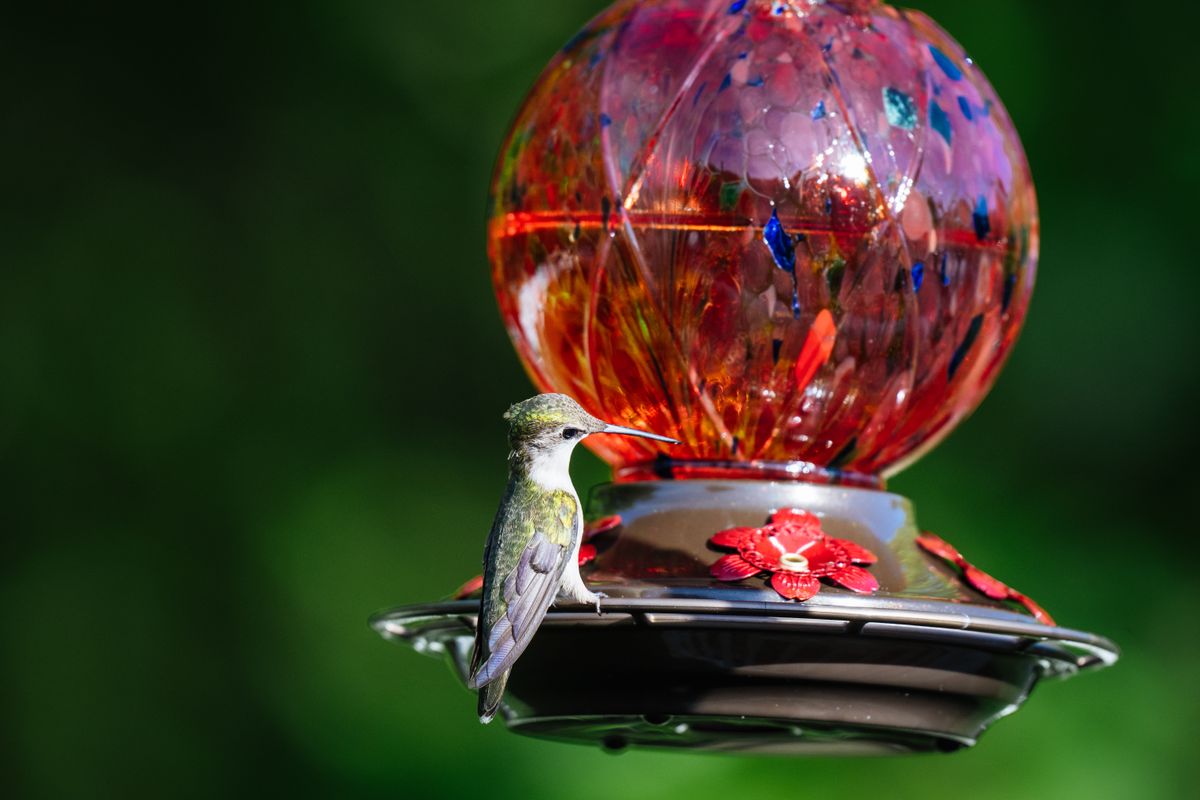
- ZONE A (SOLAR LID): Wipe-only with damp cloth. NEVER submerge in water or place in dishwasher.
- ZONE B (GLASS & BASE): Soak 15 mins in 4:1 warm water & white vinegar solution.
- PORTS & FEEDING FLOWERS: Clean crevices gently using nylon pipe cleaners; avoid metal wire scrapers.
- NO DISH SOAP OR BLEACH: Surfactants leave toxic residues; vinegar dissolves sugar and hard water spots safely.
- THERMAL SAFETY: Never use boiling water on 2,300°F handcrafted glass to prevent thermal shock fractures.
Expert Tip: Preserving Hand-Blown Glass Brilliance
Each glass reservoir of the LUJII Solar Hummingbird Feeder is individually handcrafted by master artisans shaping molten glass at 2,300°F. Because hand-blown glass features subtle structural stress lines unique to artisanal art, sudden temperature swings (thermal shock) can crack the vessel. Always use room-temperature or lukewarm water—never boiling water or ice-cold rinses. Furthermore, avoid dishwashers at all costs; harsh detergents and high heat etch translucent colors and destroy rubber seals.
Troubleshooting Common Cleaning & Solar Maintenance Failures
| Scenario / Failure Mode | Root Cause | Immediate Recovery Action | Preventative Solution |
| --- | --- | --- | --- |
| | | | |
| | | | |
| | | | |
| | | | |
When maintenance goes awry, identify the exact failure scenario below to apply targeted recovery steps before replacing your feeder.
Essential Care Takeaways
- Separate Electronics from Glass: Never submerge the top solar cap in water; clean it strictly with a damp cloth to preserve RGB lighting.
- Sanitize with White Vinegar: Avoid dish soap and bleach. A 4:1 water-to-vinegar solution removes mold, sugar crust, and mineral deposits without toxic residues.
- Prevent Thermal Shock: Hand-blown glass formed at 2,300°F requires lukewarm water to prevent cracking caused by extreme heat or cold.
- Adjust Schedule for Heat: High summer temperatures accelerate fermentation, requiring cleanings every 2 days above 80°F.
Temperature-Based Cleaning Frequency Schedule
Nectar ferments rapidly as outdoor temperatures climb. Use this climate-adjusted schedule to stop harmful mold before it begins.
Top Cleaning Failure Modes That Destroy Solar Glass Feeders
Avoid these critical mistakes that ruin handcrafted glass art and internal solar electronics:
Step-by-Step Cleaning Timeline (15-Minute Process)
Photo by A. G. Rosales on Pexels
- Minutes 0–2: Disassembly & Zone Isolation — Unscrew solar cap and set in dry zone. Disassemble glass reservoir, metal flower ports, and silicone seals. Flush remaining nectar.
- Minutes 2–10: Vinegar Bath Soak — Submerge glass vessel and metal base in a 4:1 warm water and white vinegar solution. Let soak to break down crystallized sugar.
- Minutes 10–13: Port Swabbing & Solar Wipe — Swab tiny metal feeding ports with a soft nylon micro-brush. Wipe exterior solar cap and glass solar lens with a damp microfiber cloth.
- Minutes 13–15: Final Rinse & Air Dry — Rinse glass and metal parts under cool tap water until odor-free. Shake off excess water and air-dry before refilling.
Frequently Asked Questions
The Ultimate Solar Glass Feeder for Your Garden
Looking for a stunning, leak-proof feeder that combines artisan hand-blown glass art with automatic nighttime RGB illumination? The LUJII Solar-Powered Hummingbird Feeder features a 32 fl.oz high-capacity glass reservoir, anti-rust metal flower ports, and an advanced waterproof cap designed for easy maintenance and year-round outdoor durability.
Next Steps for Season-Long Feeder Care
Your decision: Ready to clean your solar glass feeder without damaging solar lights or hand-blown details?
Do this next: Follow our 4:1 vinegar soak routine and dry-wipe the solar lid using a soft cloth today.
- Read next: Hot Weather Nectar Ratios: How to Keep Hummingbird Food Fresh in Summer
LUJII Solar-Powered Hand-Blown Glass Hummingbird Feeder