Solar Hummingbird Feeder Maintenance: Hand-Blown Glass Cleaning Guide
Should you submerge your solar hummingbird feeder to clean it? No. Never submerge the top plastic solar cap in water. Submerging floods the integrated RGB light housing, short-circuits the solar battery circuit board, and ruins nighttime illumination.
To clean safely without damaging your feeder or harming birds, use the Dual-Zone Safety Cleaning Method:
Master Solar Feeder Maintenance Checklist
- [ ] Unscrew and separate non-submersible solar top cap from glass bottle.
- [ ] Wipe solar cap top panel and underside LED housing with a slightly damp microfiber cloth.
- [ ] Empty old nectar into sink; rinse glass reservoir with lukewarm water (never boiling).
- [ ] Submerge glass reservoir and metal base in a 1:4 vinegar-to-water bath for 15 minutes.
- [ ] Use a flexible curved bottle brush to scrub internal hand-blown glass curves.
- [ ] Clean small flower port openings on the metal base using soft Q-tips or port brushes.
- [ ] Rinse glass and metal thoroughly with clean lukewarm water until vinegar smell dissipates.
- [ ] Air dry all components completely before refilling with fresh 1:4 sugar water.
Printable Quick-Reference Care Card
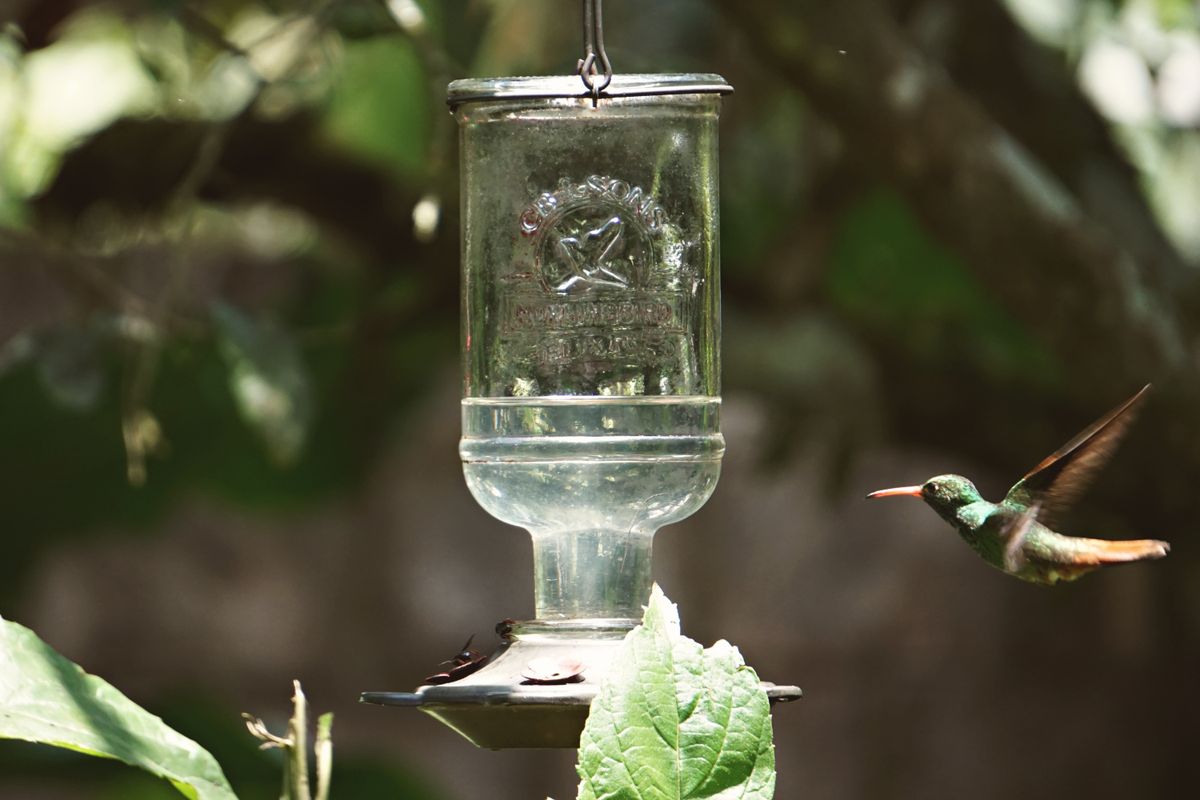
Photo by DΛVΞ GΛRCIΛ on Pexels
- Sanitizing Solution: 1 part distilled white vinegar to 4 parts lukewarm tap water. Zero dish soap or bleach.
- Solar Electronics Zone: Wipe-only panel cap. Never submerge, soak, or run through dishwasher cycles.
- Thermal Shock Threshold: Maximum 40°F temperature difference between glass body and wash water.
- Refill & Wash Cadence: Daily (90°F+), Every 2 Days (81-89°F), Every 3-4 Days (71-80°F), Every 5-7 Days (<70°F).
- Nectar Recipe: 1 part refined white cane sugar to 4 parts boiled tap water. Cool to room temperature before filling 32 oz bottle.
Expert Tip: Preventing Thermal Shock in Hand-Blown Glass
Handcrafted glass reservoirs are shaped by glass artisans at temperatures up to 2,300 degrees Fahrenheit. Because each piece features organic variations in wall thickness, rapidly exposing cold glass to boiling tap water causes uneven expansion, leading to sudden stress fractures.
Troubleshooting Failure Modes: Nectar Leakage & Solar Light Failures
| Scenario / Symptom | Primary Failure Cause | Corrective Action Plan |
| --- | --- | --- |
| Solar RGB lights fail to turn on after washing | Water leaked into solar cap housing or switch turned off during cleaning | Wipe cap dry, ensure power switch is toggled to ON, and place cap in direct sunlight for 8 hours to reboot solar charging. |
| Cloudy film or dark flecks inside hand-blown glass bottle | Wild yeast fermentation or early-stage black mold growth from delayed cleaning | Soak bottle in a 1:4 white vinegar bath for 20 minutes; scrub curved inner glass with a soft nylon bottle brush. |
| Nectar dripping constantly from metal base ports | Base gasket misaligned or feeder hanging unlevel in heavy wind | Inspect rubber seal ring between glass neck and metal base. Re-seat base level and hang from a sturdy shepherd's hook. |
| Ant swarms crawling around feeding ports and metal tray | Sticky exterior sugar spills or lack of physical barrier hook | Wipe outer glass bottle clean after every refill; install a water-filled ant moat inline above the hanging loop. |
| Hardened, crusty sugar buildup around port openings | Nectar evaporating under direct solar heat without routine port flushing | Soak anti-rust metal base in warm vinegar bath for 10 minutes, then scrub ports clean with soft Q-tips. |
If your feeder experiences lighting glitches, sticky nectar buildup, or seal leakage, reference these scenario-based diagnostic steps to restore proper function quickly.
Temperature-Based Cleaning Frequency Schedule
- Above 90°F (32°C) or Full Sun Placement — Clean feeder and replace nectar daily (every 24 hours). Fill 32 oz reservoir halfway to avoid wasting sugar water.
- 81°F – 89°F (27°C – 31°C) — Clean feeder and replace nectar every 2 days.
- 71°F – 80°F (22°C – 26°C) — Clean feeder and replace nectar every 3 to 4 days.
- 60°F – 70°F (15°C – 21°C) — Clean feeder and replace nectar every 5 to 6 days.
- Below 60°F (15°C) — Clean feeder and replace nectar every 7 days maximum.
Key Maintenance Takeaways
- Isolate solar cap electronics from water immersion—wipe upper panels with damp microfiber cloths only.
- Sanitize glass and metal components exclusively with a 1:4 white vinegar-to-water mixture.
- Avoid all commercial dish soaps, bleach, and chemical cleaners that leave digestive-disrupting residue.
- Prevent glass thermal shock by avoiding boiling water and sudden water temperature changes.
- Increase cleaning frequency to daily service when ambient summer heat exceeds 90°F.
Critical Cleaning Mistakes That Destroy Feeders & Harm Birds
Avoid these common failure modes to extend the life of your artisan feeder and protect visiting hummingbirds.
15-Minute Deep Sanitization Timeline
- 0:00 - 2:00 — Unhook feeder from garden pole, unscrew non-submersible top solar cap, and detach metal feeding base.
- 2:00 - 4:00 — Wipe solar top panel and LED light bulb clean with a damp cloth; set cap in a dry sunny window.
- 4:00 - 10:00 — Submerge hand-blown glass reservoir and anti-rust metal base in lukewarm 1:4 vinegar bath for 6 minutes.
- 10:00 - 13:00 — Scrub inside glass curves with nylon bottle brush; clean port flowers and thread grooves with Q-tips.
- 13:00 - 15:00 — Rinse glass and metal with clean cool water until vinegar aroma vanishes; air dry before refilling.
Frequently Asked Questions
Get answers to common care and maintenance questions for solar hand-blown glass hummingbird feeders.
Recommended Solar Hummingbird Feeder Care Essentials
Keep your hand-blown glass sparkling and your twilight solar lights charging bright with these primary garden selections.
Next Steps for Your Backyard Sanctuary
Your decision: Establish a regular 3-to-5 day cleaning schedule tailored to your local summer climate.
Do this next: Disassemble your LUJII feeder, inspect the solar battery housing, and perform a 15-minute lukewarm vinegar soak on the glass reservoir.
Related resource: Artisanal Glass in the Garden FAQ
LUJII Solar-Powered Hand-Blown Glass Hummingbird Feeder (32 fl.oz)
Put your care knowledge into practice to maintain a healthy, vibrant hummingbird habitat all season long.