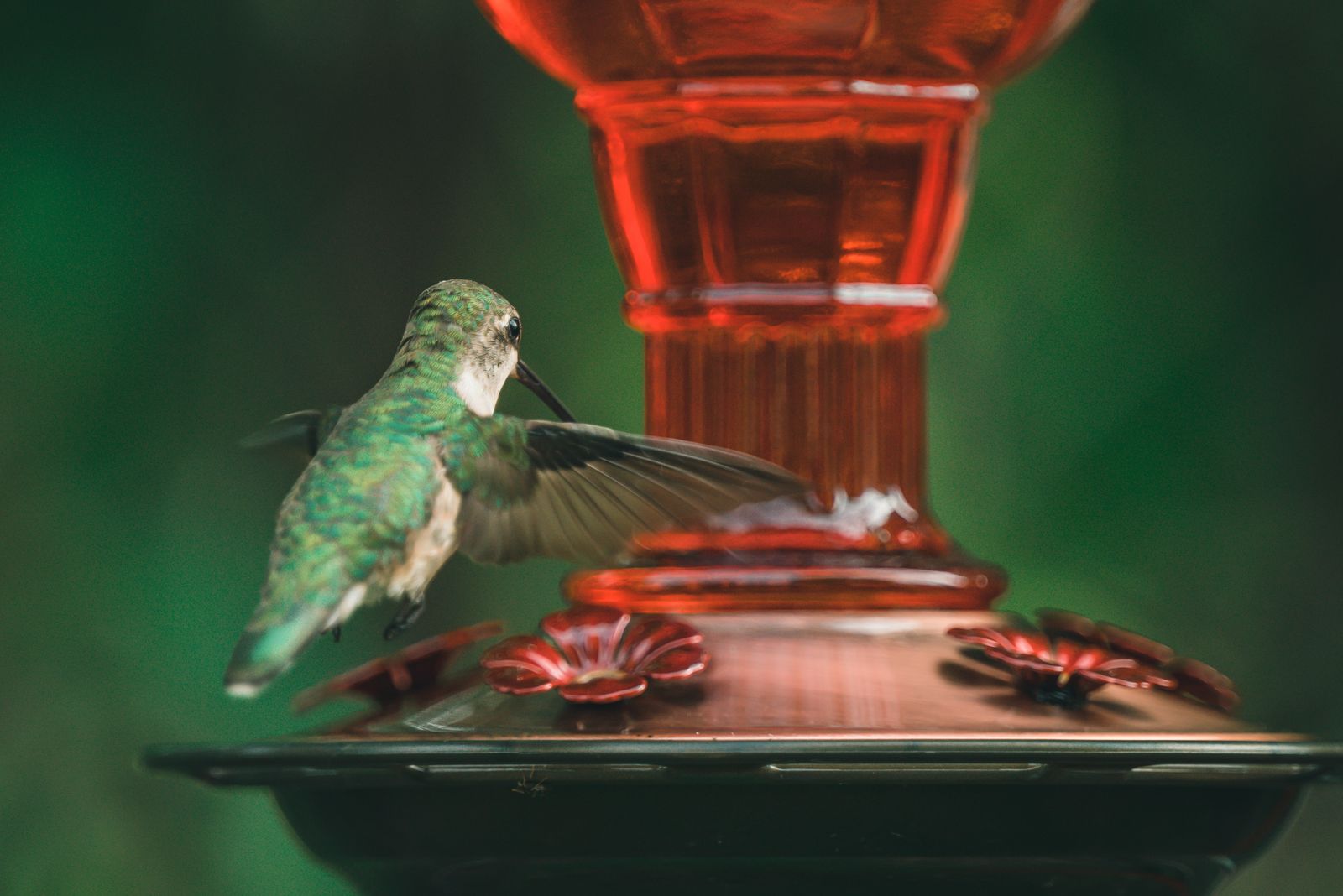
How to Clean and Care for Your Hand-Blown Glass Solar Hummingbird Feeder
How do you thoroughly clean a hand-blown glass solar hummingbird feeder without damaging its RGB electronics or harming visiting birds?
To clean your feeder safely, completely unscrew and detach the top solar cap and set it aside—never submerge it in liquid. Wash the handcrafted glass reservoir and anti-rust metal base in a solution of four parts warm water to one part distilled white vinegar. Scrub internal curves using a soft, flexible bottle brush, rinse thoroughly with clear water, and dry completely before refilling.
Essential Bird-Safe Cleaning Supplies Checklist
- [ ] Distilled white vinegar (5% acidity) — primary non-toxic sanitizer
- [ ] Warm clean tap water (never boiling)
- [ ] Curved flexible bottle brush with soft nylon bristles
- [ ] Microfiber drying cloth for solar panels and glass exterior
- [ ] Uncooked long-grain white rice (for stubborn interior corner mold)
- [ ] Dry cotton swabs for delicate seal grooves and electronic cap edges
Printable Field Guide: 5-Step Deep-Clean Workflow
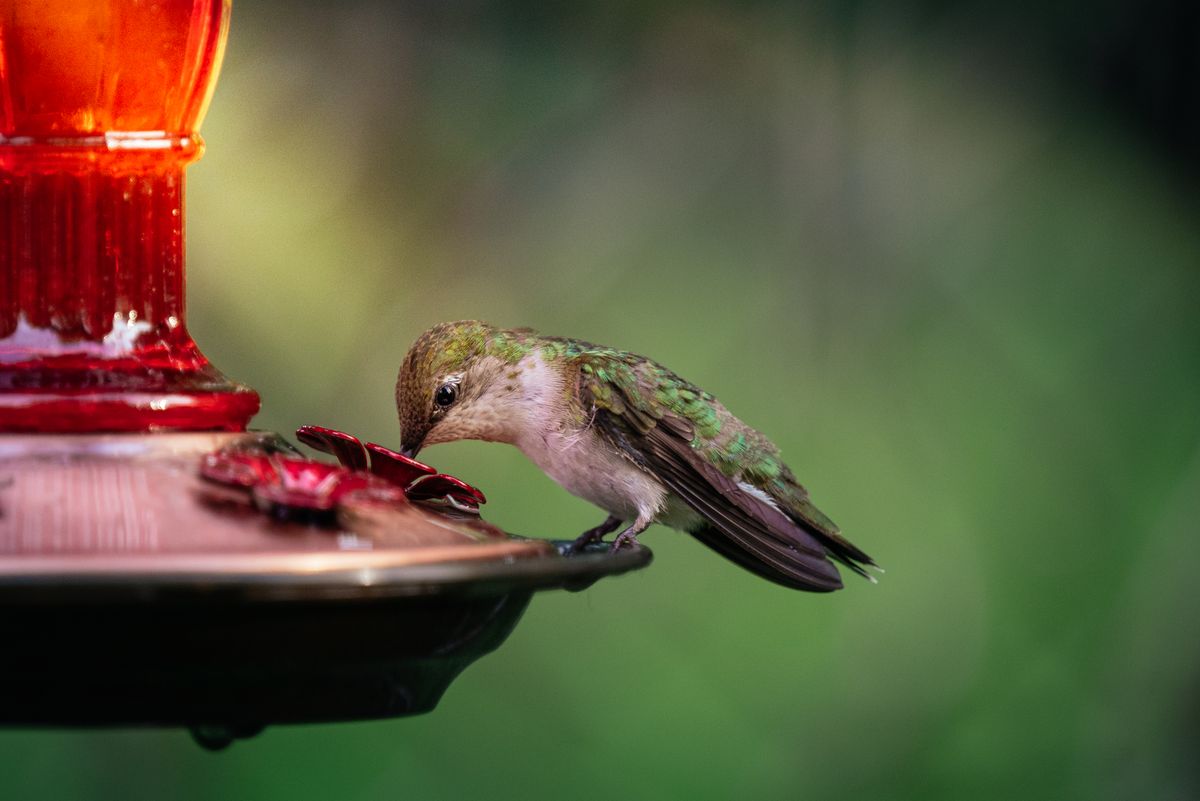
- Step 1: Separate Components — Carefully unscrew the top solar cap and remove the anti-rust metal base from the 32 oz hand-blown glass reservoir.
- Step 2: Dry-Wipe Electronics — Wipe the solar panel, RGB LED housing, and underside cap seal with a barely damp microfiber cloth; set cap in a dry area.
- Step 3: Vinegar Soak — Soak the glass reservoir and metal base in a 4:1 warm water and white vinegar mixture for 15–20 minutes.
- Step 4: Mechanical Scrub — Use a flexible curved brush (or 2 tbsp uncooked rice with vinegar) to swirl away black mold pockets from hand-blown glass curves.
- Step 5: Rinse & Air-Dry — Rinse all non-electronic parts in cool running water, verify zero vinegar odor remains, and allow to air-dry completely before reassembling.
Visualizing Feeder Anatomy: Water-Safe Glass vs. Dry Electronics
Understanding where water can and cannot go is critical for extending the life of your solar-powered artisan feeder.
Expert Care Secrets for Hand-Blown Artisan Glass
Each artisan reservoir is individual art shaped at 2,300 degrees Fahrenheit. Because handcrafted glass retains unique internal stress lines along its translucent curves, never expose your cold feeder to boiling water. Thermal shock can cause fine hairline fractures or complete cracking.
To scrub narrow, hand-blown bottle necks without scratching internal glass artwork, pour two tablespoons of dry uncooked white rice and half a cup of warm vinegar solution inside. Cover the opening tightly with your hand and swirl vigorously for 30 seconds. The grains act as soft, natural micro-scrubbers that gently strip hidden mold out of hard-to-reach contours.
Troubleshooting Matrix: Cleaning and Solar Component Failures
| Failure Scenario | Root Cause | Corrective Action |
| --- | --- | --- |
| Scenario A: Water accidentally splashed into top solar cap battery compartment during washing | Cap was submerged or turned upside-down under running water | Immediately detach cap, open battery door, remove AA rechargeable battery, dry moisture with microfiber cloth, and place cap in a sealed container of dry rice or silica gel for 48 hours before testing. |
| Scenario B: Black spots remain inside deep handcrafted glass curves after brush scrubbing | Standard straight bottle brush cannot flex into artisan glass side pockets | Use the rice-and-vinegar swirl method: combine 2 tbsp uncooked white rice and 1/2 cup warm white vinegar inside the bottle and shake vigorously to scrub internal curves safely. |
| Scenario C: Solar RGB LED lights stay dim or turn off early after 2-3 hours | Solar collector lid is coated with hard water spots, bird droppings, or pollen dust | Wipe the top clear solar collector panel with a drop of isopropyl alcohol on a soft cotton pad to maximize solar charge efficiency during daytime. |
| Scenario D: White crust forms around metal base threads and feeding ports | Crystallized sugar buildup from slow nectar drips or hard tap water minerals | Soak only the metal base in undiluted warm white vinegar for 20 minutes, scrub threads with a soft toothbrush, and apply a drop of food-grade coconut oil to threads. |
| Scenario E: Nectar turns cloudy or emits a sour odor within 24 hours | High outdoor heat (>90°F) or lingering bacteria from soap film residue | Eliminate all dish soap usage. Wash feeder strictly with 1:4 vinegar-water, relocate feeder to partial shade, and replace nectar every 24-48 hours in summer. |
Diagnose and solve physical, electrical, and aesthetic issues before they impact visiting hummingbirds or ruin your garden ambiance.
Core Principles of Solar Glass Feeder Maintenance
- Never submerge the solar cap: The electronic top contains battery circuits and RGB LEDs that require dry-wipe care only.
- Avoid dish soap completely: Soaps leave microscopic chemical films that repel hummingbirds and cause digestive distress.
- Prevent glass thermal shock: Wash hand-blown glass only in lukewarm or warm water—never boiling water.
- Frequency depends on temperature: In summer heat above 90°F, nectar ferments rapidly and requires full sanitization every 2 days.
- Protect metal base threads: Dry anti-rust metal components thoroughly before reassembly to maintain coating integrity.
Temperature-Based Cleaning & Inspection Schedule
- Under 70°F (21°C) — Clean feeder and replace nectar every 6–7 days. Inspect solar panel for dust weekly.
- 70°F to 80°F (21°C - 27°C) — Clean feeder and replace nectar every 4–5 days. Wipe glass exterior to remove sticky residues.
- 81°F to 89°F (27°C - 31°C) — Clean feeder and replace nectar every 3 days. Check metal base seal for tightness.
- Above 90°F (32°C) — Clean feeder and replace nectar every 24–48 hours. Ensure feeder is hung in afternoon shade.
Critical Mistakes That Damage Solar Glass Feeders
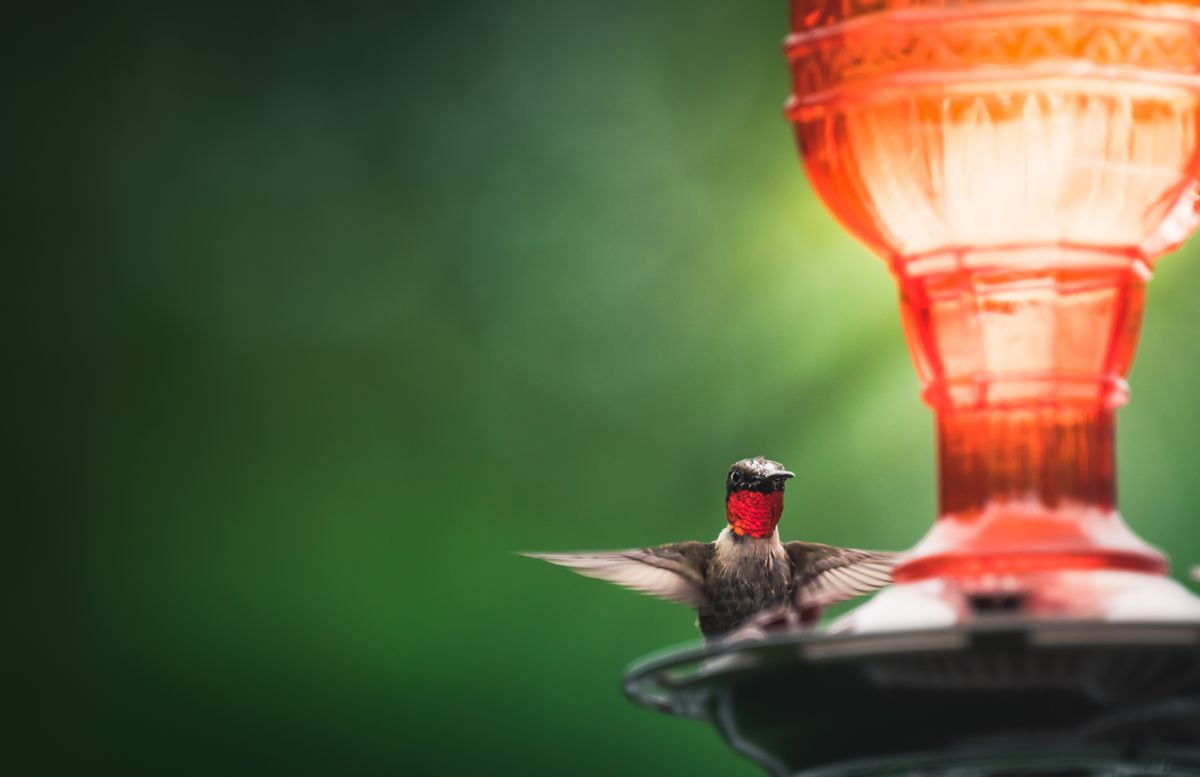
Avoid these frequent missteps to safeguard your glass art and solar electronics:
- Submerging the Solar Module: Dunking the plastic solar cap in a bucket of soapy water causes short-circuiting in the RGB lighting controller and ruins internal AA rechargeable batteries.
- Using Synthetic Dish Soap or Bleach: Commercial soaps contain fragrance, surfactants, and chemical films that stick to glass pores. Hummers have keen taste sensitivities and will abandon soapy feeders. Bleach can degrade base gaskets and metal anti-rust powder coatings.
- Pouring Boiling Water into Glass: Hand-blown artisan glass features intricate wall thickness variations. Rapid expansion from boiling water creates thermal stress breaks.
- Trapping Moisture Under the Solar Cap: Screw-attaching the top solar cap while the glass neck is still wet traps moisture inside the housing, fogging the LED lens and corroding battery contact springs.
Seasonal Care Timeline: Spring Setup to Winterizing
- Early Spring (Setup) — Unpack feeder, install fresh NiMH rechargeable AA battery in solar cap if stored over winter. Wash glass in vinegar water and test RGB night lights in a dark room.
- Mid-Summer (Peak Care) — Perform 4:1 vinegar deep-clean every 2–3 days. Clean top solar panel weekly to clear dust and tree sap for optimal 8-hour nighttime illumination.
- Late Autumn (Transition) — Keep feeder clean and filled 2 weeks after seeing the last hummingbird to support late migrants.
- Winter Storage (Freeze Warning) — Before hard freezes (below 32°F), bring feeder indoors. Water expansion inside glass or metal base ports can cause cracking. Store dry at room temperature.
Explore Related Solar Feeder & Backyard Decor Guides
Expand your knowledge on hummingbird feeding habits, solar placement, and garden design:
- Troubleshooting Nectar Leaks and Solar Lights on Handcrafted Feeders
- How to Hang Your Solar Hummingbird Feeder to Block Ants and Crawling Insects
- Hand-Blown Glass vs. Plastic Hummingbird Feeders: Aesthetic and Durability Compared
- How to Maximize Nighttime Battery Life and Illumination for Your Solar Feeder
Frequently Asked Questions About Solar Glass Feeder Maintenance
Clear answers to common questions regarding artisan glass protection and solar LED lighting.
Recommended Artisan Feeder & Care Essentials
Enhance your backyard habitat with handcrafted solar lighting and durable glass construction.
Post-Cleaning Setup: Reassembling and Re-hanging Your Feeder
Your decision: Decide whether your feeder needs a routine weekly rinse or a deep mold-remediation vinegar soak.
Do this next: Detach the solar housing immediately, inspect the silicone seal, prepare a 4:1 warm water and white vinegar solution, and thoroughly wash and air-dry the glass reservoir.
- Read next: Troubleshooting Nectar Leaks and Solar Lights on Handcrafted Feeders
- Read next: How to Hang Your Solar Hummingbird Feeder to Block Ants and Crawling Insects
🌟 LUJII Solar-Powered Hummingbird Feeder 🌟 featuring 32 oz Hand-Blown Glass Art, waterproof solar RGB cap, and anti-rust metal base.
Now that your hand-blown glass reservoir is sparkling clear and your solar module is clean and dry, you are ready to welcome hummingbirds back to your garden.
Cover photo by Chris F on Pexels.