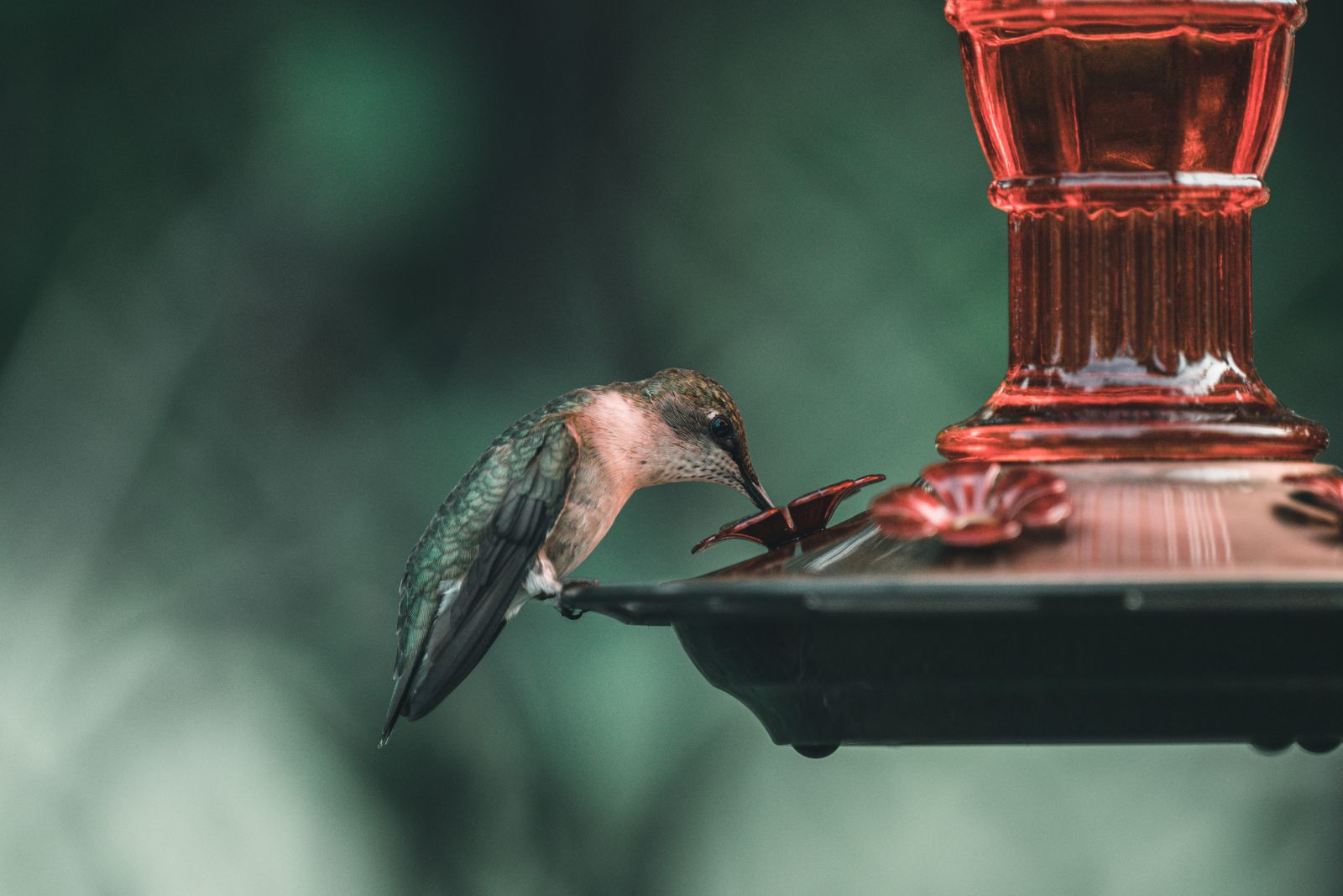
How to Keep Hummingbird Nectar Fresh in Summer Heat (Water Quality Guide)
Rule of thumb: When ambient outdoor temperatures cross 88°F (31°C), hummingbird sugar nectar ferments within 24 to 48 hours. To keep nectar fresh in extreme summer heat, boil purified or filtered water for 1 to 2 minutes, maintain a strict 4:1 white sugar ratio, suspend feeders in full afternoon shade, and replace the solution every 24 to 48 hours.
Key Takeaways for Hot-Weather Nectar Safety
- 88°F Spoilage Threshold: At or above 88°F, microscopic yeast colonies double every 20 minutes, making 24-hour nectar changes mandatory.
- Boil for Baseline Purity: Boiling water for 60–120 seconds destroys municipal tap water bacteria and fungal spores, delaying early fermentation.
- Never Alter the 4:1 Ratio: Adding extra sugar during heatwaves accelerates fermentation rates by 300% and dehydrates active hummingbirds.
- Hand-Blown Glass Advantage: Heavy glass reservoirs provide superior thermal insulation compared to thin plastic feeders, slowing fluid temperature spikes.
- Shade Over Sun: Shading the liquid reservoir while allowing solar caps to receive sunlight protects nectar while powering night-lighting effects.
Summer Nectar Fermentation & Bacterial Growth Timeline
- 0 to 12 Hours (70°F – 80°F) — Baseline solution stability. Water remains 100% transparent. Airborne yeast spores enter through feeding ports but bacterial counts remain negligible.
- 12 to 24 Hours (81°F – 87°F) — Early yeast multiplication begins. Fluid remains visually clear, but subtle pH drops occur as natural ambient sugar breakdown starts.
- 24 to 48 Hours (88°F – 94°F) — Rapid fermentation phase. Sugar turns into trace ethanol and acetic acid. Early haziness appears, accompanied by a faint sour odor around port openings.
- 48+ Hours (95°F+ or Direct Sun) — Severe contamination. Black mold spores (Cladosporium) and pathogenic yeast bloom rapidly. Nectar turns cloudy with visible white stringy sediment. High toxicity risk for birds.
Summer Nectar Replacement Schedule by Outdoor Temperature
- Under 75°F (24°C) — Replace nectar every 4 to 5 days. Perform standard warm water rinse.
- 75°F to 84°F (24°C – 29°C) — Replace nectar every 3 days. Clean feeder ports with small bottle brushes.
- 85°F to 92°F (29°C – 33°C) — Replace nectar every 24 to 48 hours. Sterilize glass reservoir with hot water and white vinegar twice weekly.
- 93°F and Above (34°C+) — Replace nectar every 24 hours without exception. Fill reservoir only halfway to reduce wasted sugar solution.
Master Gardener Tip: The Shaded Thermal Shield Strategy
To maximize nectar lifespan during summer heatwaves, position your feeder under a dense tree canopy or eastern porch overhang that provides 100% shade between 12:00 PM and 4:00 PM—the peak solar radiation window.
Hand-blown glass feeders offer high thermal inertia, keeping liquid temperatures up to 8°F cooler than thin plastic alternatives hung in identical conditions. If using a solar-powered model like the LUJII Hand-Blown Solar Hummingbird Feeder, angle the fixture so the top protective solar cap catches morning rays to charge the internal battery, while keeping the colorful glass body shaded from harsh mid-day heat.
Water Source Purity Comparison Matrix
| Water Source | Total Dissolved Solids (TDS) | Chlorine / Contaminants | Spoilage Risk in Heat | Recommended Treatment |
| --- | --- | --- | --- | --- |
| Tap Water | 100–500 ppm | High (Chlorine/Chloramine) | High (Fast Fermentation) | Boil full 2 minutes to drive off chlorine and kill microbes. |
| Filtered Water (RO/Brita) | 10–50 ppm | Very Low | Moderate (Slow Fermentation) | Boil 1 minute to sterilize storage vessel pathogens. |
| Distilled Water | 0 ppm | None | Low (Baseline Pure) | Heat briefly to 150°F to dissolve sugar thoroughly. |
| Well Water | 200–600+ ppm | Variable (High Minerals/Iron) | Very High (Rapid Fungal Bloom) | Boil 3 minutes or replace with distilled water. |
| Bottled Spring Water | 50–250 ppm | Low | Moderate | Boil 1 to 2 minutes before mixing sugar. |
The purity of the water used to brew your nectar directly dictates how long the solution resists bacterial growth under summer sun exposure.
Peak Summer Heat Wave Nectar Care Calendar
| Month | Avg Temp Range | Nectar Refresh Frequency | Cleaning Protocol | Key Seasonal Action |
| --- | --- | --- | --- | --- |
| June | 70°F – 85°F | Every 3 to 4 Days | Bi-weekly vinegar wash | Establish shaded feeder locations; monitor early nesting activity. |
| July | 86°F – 95°F+ | Every 24 to 48 Hours | Full wash with brush every refresh | Implement thermal shielding; fill reservoirs 50% capacity to minimize waste. |
| August | 88°F – 98°F+ | Every 24 Hours | Daily hot-water rinse + sterilize | Peak migration feeding; add secondary shaded feeders to prevent territorial crowding. |
| September | 75°F – 88°F | Every 2 to 3 Days | Weekly deep clean | Maintain 4:1 ratio for southward migrating birds; clean solar caps for autumn lighting. |
Track your garden routine across the hottest months of the year to match hummingbird migration intensity and temperature changes.
Recommended Heat-Shielding Solar Glass Feeders
For garden enthusiasts seeking durability, artisan beauty, and heat resistance, hand-crafted glass feeders perform exceptionally well in demanding summer climates.
Regional Summer Climate & Humidity Adjustments
Photo by Josh Withers on Pexels
How weather patterns across different U.S. regions affect nectar freshness:
Humid Hot Climates (Southeastern U.S. & Gulf Coast)
In regions with high relative humidity (above 70%), airborne mold spores flourish rapidly. Moisture airborne condensation around feeder ports accelerates fungal colonies. Backyard birders in Florida, Georgia, and Texas should clean feeder ports daily with small nylon brushes and inspect base gaskets for hidden black mildew.Arid High-Heat Climates (Southwestern Deserts & Inland California)
In dry climates exceeding 100°F with humidity below 20%, water evaporates out of feeder ports at high speed. This evaporation concentrates the sugar solution, turning a safe 4:1 ratio into a dense 3:1 or 2:1 solution within 36 hours. High sugar concentrations dehydrate hummingbirds and accelerate caramelization. In desert regions, check nectar fluid levels daily and top off only with pure fresh water if liquid levels drop due to evaporation.Daily Summer Nectar Freshness Checklist
- [ ] Check nectar transparency against direct sunlight (discard immediately if cloudy or hazy).
- [ ] Sniff feeder port openings for sour, fermented, or yeast-like alcoholic odors.
- [ ] Verify feeder is in full shade during peak thermal hours (12:00 PM to 4:00 PM).
- [ ] Inspect rubber and metal base seals for sticky sugar drips that attract insects and airborne spores.
- [ ] Observe visiting hummingbirds—if birds hover near ports but refuse to drink, nectar has likely spoiled.
Frequently Asked Questions About Hot-Weather Nectar
Clear answers to essential maintenance questions for hot summer feeding.
Immediate Action Plan for High-Heat Days
Your decision: Choose boiled filtered or distilled water over plain tap water, and relocate your feeder into complete afternoon shade whenever temperatures exceed 88°F.
Do this next: Inspect your nectar daily using our 5-point checklist and replace the sugar solution every 24 to 48 hours whenever local weather forecasts top 88°F.
Related resource: Downloadable Summer Nectar Care Reference Card
LUJII Hand-Blown Glass Solar Hummingbird Feeder (32 fl. oz, Leak-Proof Base with Protective Solar Canopy Shield)
Take these immediate steps to safeguard your local hummingbird population during summer heatwaves.
Explore Related Nectar Care & Garden Safety Guides
Provide curated internal links to relevant cluster content.
Cover photo by Chris F on Pexels.