Summer Nectar Care: How to Keep Hummingbird Food Fresh in Hot Weather
Wondering how to stop hummingbird nectar from fermenting into toxic alcohol during summer heatwaves above 80°F? Move your feeders into complete afternoon shade, change nectar every 24 to 48 hours (daily when temperatures exceed 90°F), and clean reservoirs with hot water and a bottle brush during every refill. Never use honey, artificial dyes, or unrefined sugars.
Essential Hot Weather Nectar Care Checklist
- [ ] Inspect glass reservoir from afar daily: check for cloudiness, black spots, or suspended floaters.
- [ ] Check local outdoor temperature forecast: if >85°F, prepare for a strict 24-to-48-hour nectar swap.
- [ ] Empty leftover nectar into the sink completely—never top off old, warm nectar with a fresh batch.
- [ ] Rinse feeder bottle and metal base thoroughly with scalding hot tap water during every change.
- [ ] Scrub feeding ports and interior glass curves with a dedicated narrow bottle brush.
- [ ] Refill with fresh 4:1 boiled-and-cooled plain white sugar solution (1 cup water to 1/4 cup sugar).
- [ ] Hang feeder in deep afternoon shade, well away from heat-radiating brick walls or asphalt driveways.
Printable Summer Care Quick-Reference Sheet
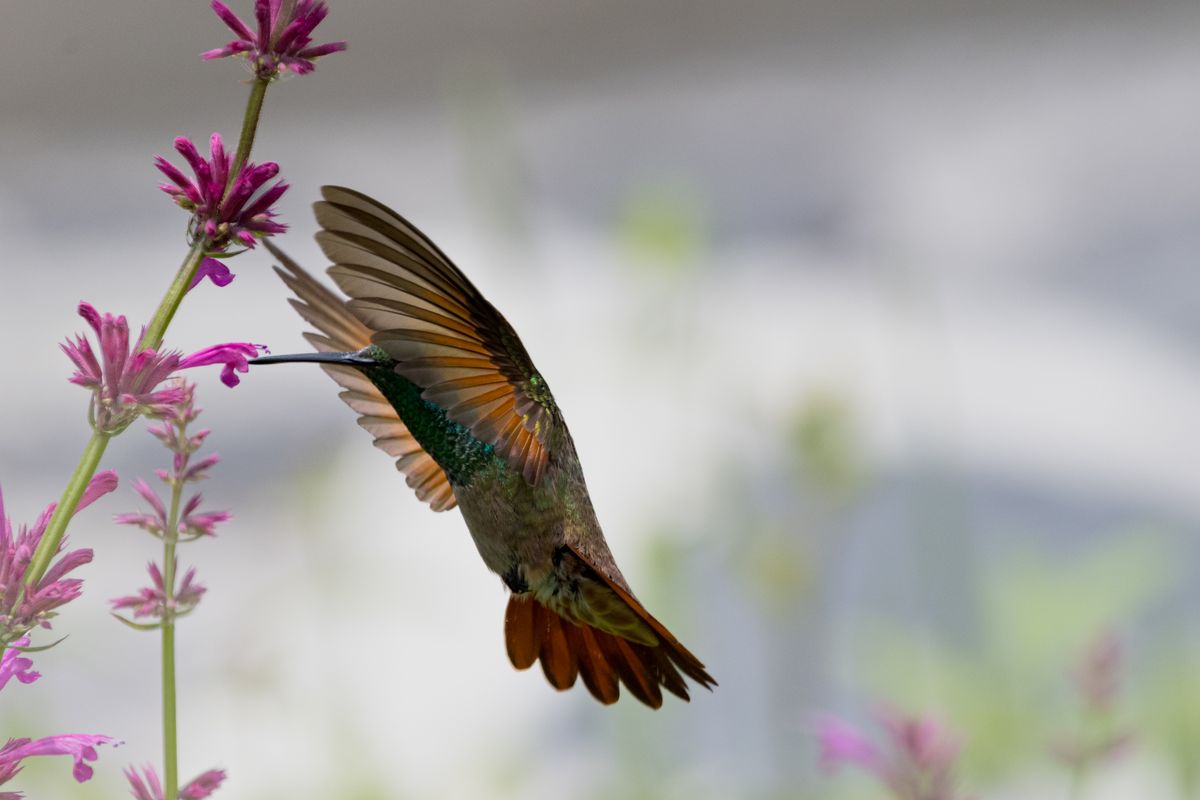
Photo by Claudia Rodriguez Casas on Pexels
- 70°F–79°F: Swap nectar every 3–4 days; standard hot-water rinse.
- 80°F–89°F: Swap nectar every 48 hours; scrub ports with bottle brush.
- 90°F+: Swap nectar every 24 hours; partial-fill reservoir to 30% capacity to avoid waste.
- Shade Rule: Hang feeders under leafy tree canopies or covered porches to prevent solar heating.
- Recipe Rule: 4 parts water to 1 part white refined table sugar. No dyes, no honey, no additives.
Recommended Solution: Hand-Blown Glass Solar Hummingbird Feeders
When summer heat strikes, feeder material matters immensely. Thin, cheap plastic feeders warp under intense UV rays and allow solar heat to penetrate rapidly, accelerating internal fermentation.
In contrast, the LUJII Solar-Powered Hummingbird Feeder utilizes heavy, hand-blown art glass handcrafted at 2,300°F. The dense glass reservoir acts as a natural thermal buffer, shielding nectar from rapid ambient temperature spikes. Furthermore, its protective top solar cap shelters the nectar neck from direct overhead sunlight during peak midday hours, while powering soft RGB LED lights that illuminate your garden at dusk without producing nectar-heating thermal energy.
Summer Spoilage & Contamination Troubleshooting
| Failure Mode / Visual Indicator | Root Cause | Immediate Corrective Action | Long-Term Prevention Strategy |
| --- | --- | --- | --- |
| Nectar turns cloudy or milky-white | Bacterial overgrowth and rapid yeast fermentation at temperatures above 85°F | Discard liquid immediately; soak glass body in hot water and white vinegar | Reduce fill volume by 50% and switch to a mandatory 24-hour nectar replacement cycle |
| Black specks or spots around port gaskets | Toxic black mold (Candida reukaufii) taking root in tiny sugar-water crevices | Scrub ports vigorously with a narrow port brush and 1:10 white vinegar solution | Flush metal base and replace sealing gaskets every 48 hours during peak heatwaves |
| Sour, wine-like, or vinegar odor from feeder | Sugar breakdown into ethanol caused by direct afternoon sun radiation | Dump contents; flush base with scalding water and let glass cool completely before refill | Relocate feeder to a deep deciduous tree canopy that blocks 12 PM–4 PM sun |
| Stringy floaters or haze suspended in liquid | Fungal spores introduced by insect feet or unboiled tap water impurities | Sterilize glass reservoir with boiling water rinse; wash metal base thoroughly | Boil full batch of nectar solution for 2 minutes and allow to cool fully before pouring |
Learn to identify early visual and olfactory warning signs of nectar failure before spoiled liquid harms your visiting hummingbirds.
Pro Tip: The Nectar Chilling & Partial-Fill Secret
During extreme summer heatwaves (90°F and above), avoid filling your 32 fl.oz reservoir to the top! Hummingbirds rarely consume a full liter of nectar before heat causes fermentation. Instead, fill your hand-blown glass feeder to only one-third capacity (10–12 oz).
This simple adjustment eliminates sugar waste while forcing you to refresh the liquid daily. Additionally, store pre-made nectar batches in the refrigerator, but allow cold liquid to sit on the kitchen counter for 10 to 15 minutes before pouring. Pouring ice-cold nectar directly into a hot outdoor feeder can shock tiny avian digestive systems and risk thermal stress on hot glass.
Key Takeaways: Hot Weather Nectar Rules
- Ambient heat above 80°F drastically shortens nectar shelf life from days to hours.
- Thick hand-blown art glass provides vastly superior thermal buffer protection compared to thin plastic.
- Shade is mandatory: direct afternoon sunlight can raise internal liquid temperatures above 105°F.
- Never top off existing nectar; old bacteria will instantly corrupt fresh sugar water.
- Solar RGB LEDs produce negligible thermal energy and will not heat nectar or speed up fermentation at night.
Temperature-Based Nectar Replacement Schedule
- Under 70°F (Cool Spring / Autumn) — Replace nectar every 5 to 7 days. Perform standard warm-water rinse during each refill.
- 70°F – 79°F (Moderate Summer) — Replace nectar every 3 to 4 days. Visually inspect glass reservoir for early cloudiness.
- 80°F – 89°F (High Summer Heat) — Replace nectar every 48 hours. Scrub metal base ports with a narrow brush and hot water.
- 90°F+ (Extreme Heatwave) — Replace nectar every 24 hours without fail. Fill glass bottle to 30% capacity to avoid waste.
Glass vs. Thin Plastic: Thermal Performance Under Sun
| Outdoor Stress Scenario | Standard Thin Plastic Feeders | Hand-Blown Art Glass Feeder (LUJII) | Performance Winner & Impact |
| --- | --- | --- | --- |
| Direct Afternoon Sun (92°F) | Rapid internal heat spike; plastic warps and leaches chemicals into nectar | Thick glass wall buffers rapid heat gain; top solar cap acts as a sun shield | Hand-Blown Glass (Maintains lower liquid temp longer) |
| Multi-Week UV Exposure | Becomes brittle, cracks, clouds over, and suffers permanent color fading | Colors fused inside 2,300°F glass; completely non-fading and UV immune | Hand-Blown Glass (Lasts for years without degradation) |
| Frequent Scalding Wash Cycles | Can warp, melt, or release harmful plasticizers under boiling water | Handles boiling water sterilization effortlessly without thermal shock | Hand-Blown Glass (Allows total sanitation) |
| High Wind & Thermal Shifts | Lightweight body sways erratically, dripping nectar and inviting ants/wasps | Heavy 32 oz structure hangs stable; sealed leak-proof base prevents drips | Hand-Blown Glass (Keeps nectar securely contained) |
Compare how handcrafted art glass reservoirs compare against standard plastic feeders when subjected to summer weather stress.
Choosing the Right Summer Feeder Setup
To prevent nectar spoilage in extreme summer heat, prioritize thermal-stable hand-blown glass feeders placed in morning-only micro-climate shade, filled only with 24-to-48-hour volumes of standard 4:1 white refined sugar water.
Best choice for
- LUJII 32 oz Hand-Blown Glass Solar Feeder — Thick handcrafted glass walls buffer rapid temperature spikes while the top solar cap shields the reservoir neck from direct midday sun.
- Solar-Powered RGB Lighted Feeder — Automatic 8-hour nighttime LED illumination highlights hand-blown glass patterns without generating heat that spoils nectar.
- Using commercial red-dyed nectars in hot weather (artificial dyes degrade faster and pose liver/kidney risks to hummingbirds).
- Filling a 32 oz capacity feeder completely full when hosting only 2–3 local hummingbirds during July heatwaves.
- Hanging feeders directly against dark brick, metal siding, or over concrete patios that radiate stored solar heat.
- Shaded Tree Canopy Micro-Climate — Provides leafy airflow and 100% afternoon shade coverage, keeping internal liquid up to 10°F cooler than open yard areas.
- North-Facing Covered Porch Overhang — Protects feeder from harsh ambient radiant heat while keeping solar panels primed with indirect morning light.
Featured Summer Feeder: LUJII Hand-Blown Solar Hummingbird Feeder
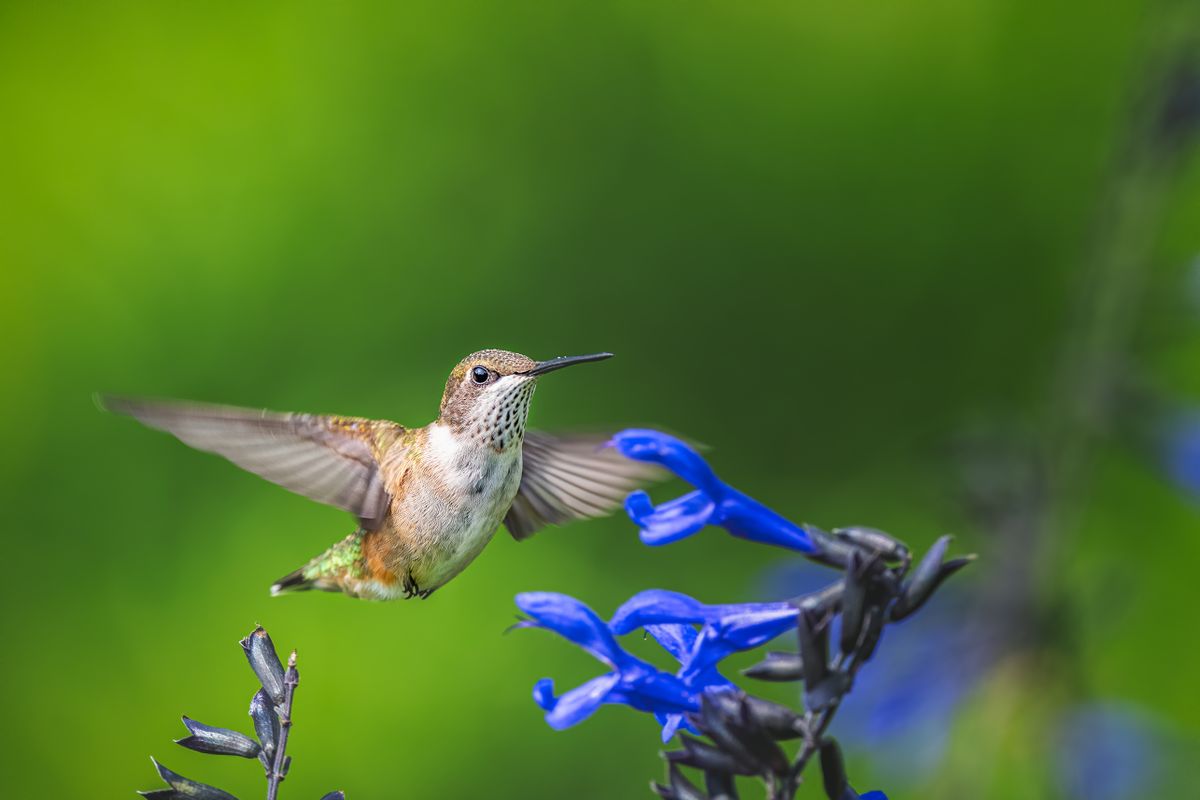
Photo by Skyler Ewing on Pexels
If you want to combine avian safety with breathtaking garden artistry, the LUJII Solar-Powered Hummingbird Feeder is an extraordinary centerpiece.
Each colorful glass reservoir is individually handcrafted at 2,300°F by glass artisans, producing unique translucent swirls that make monitoring nectar clarity simple. Equipped with a generous 32 fl.oz capacity, a sealed leak-proof metal base coated in rust-resistant protection, and a waterproof solar cap with automatic RGB LED lighting, it offers maximum durability against summer sun, rain, and heat.
LUJII Solar Feeder Heat Resilience Specifications
| Feeder Feature / Specification | LUJII Feeder Design Element | Summer Maintenance & Safety Benefit |
| --- | --- | --- |
| Reservoir Construction | Hand-Blown Art Glass (Shaped at 2,300°F) | Dense glass provides excellent thermal buffering against midday sun |
| Nectar Capacity | 32 fl. oz (1 Liter) Translucent Glass | Easy visual clarity to spot early cloudiness; simple to partial-fill |
| Solar Panel & Light Engine | Waterproof Solar Cap with Cool RGB LEDs | Shields bottle top from rain and direct sun; LEDs generate zero nectar heat |
| Base & Port Assembly | Anti-Rust Coated Metal Base + Sealed Silicone Gasket | Prevents messy drips and spills that attract unwanted bees, wasps, and ants |
| Cleaning Accessibility | Wide-Mouth Glass Neck & Disassembling Base | Allows effortless bottle-brush access to scrub away mold spores |
Technical features engineered to withstand high ambient temperatures and daily summer wash routines.
Critical Summer Feeding Mistakes to Avoid
Steer clear of these frequent errors that accelerate sugar water spoilage and threaten hummingbird health during hot weather.
Timeline of Nectar Fermentation in 90°F+ Heat
- Hour 0 – 6 — Nectar is completely fresh, crystal-clear, and safe. High sugar purity provides optimal fuel for fast hummingbird metabolisms.
- Hour 12 – 18 — Ambient warmth activates airborne yeast spores. Microscopic bacterial growth begins; liquid remains visually clear.
- Hour 24 — Early ethanol fermentation starts. Nectar develops a faint haze or tiny bubbles at the neck. Mandatory swap time in 90°F+ heat!
- Hour 36 – 48 — Heavy cloudiness, sour odor, and toxic black mold spores take root around port gaskets. Hummingbirds actively avoid the feeder.
Related Summer Garden & Bird Care Guides
Expand your knowledge on backyard bird care and illuminated garden aesthetics with these complementary topics:
- How to Clean and Maintain Hand-Blown Glass Feeder Ports — Deep-cleaning techniques for delicate art glass.
- Hand-Blown Glass vs. Plastic Feeders — A complete breakdown of durability, thermal transfer, and garden aesthetics.
- Maximizing Solar Battery Runtime for Dusk Illumination — How to position solar caps for 8+ hours of vibrant nighttime RGB lighting.
Frequently Asked Questions About Summer Nectar
Clear, expert answers to common questions about managing sugar water during hot weather.
What to Do Next for a Safe Summer Haven
Your decision: Determine your backyard's maximum daily temperature zone and shade micro-climates before filling feeders.
Do this next: Switch to daily 24-hour partial fills of fresh 4:1 refined sugar water during 85°F+ weather and clean feeder ports with a narrow brush.
Related resource: Downloadable Summer Nectar Hygiene Routine (PDF Checklist)Elevate your summer garden with the LUJII Hand-Blown Solar Hummingbird Feeder featuring a thick 32 oz glass thermal reservoir and leak-proof metal base.
Take these quick steps today to protect your local hummingbirds and keep your summer garden glowing.
Cover photo by Dante Muñoz on Pexels.