Hummingbird Feeder Material Safety FAQ: Rust, Plastics, and Nectar Purity
Contrary to the myth that decorative metal or solar hummingbird feeders inherently leach toxins into sugar water, high-quality feeders built with handcrafted glass reservoirs and powder-coated, anti-rust metal bases are completely non-reactive and safe. Nectar remains 100% pure as long as liquid sucrose contacts only non-porous glass or food-grade, BPA-free components, keeping heavy metals, flaking rust, and harmful microplastics far away from delicate avian visitors.
Material Selection Guide: Balancing Aesthetics, Durability, and Safety
To guarantee 100% nectar purity, select non-porous hand-blown glass for the reservoir, powder-coated anti-rust metal for structural bases, and food-grade UV-resistant plastics for non-contact solar housing.
Best choice for
- Hand-Blown Glass Reservoir + Coated Anti-Rust Base + Sealed Plastic Solar Housing — Glass never leaches chemicals or harbors bacteria, anti-rust powder coating isolates structural metal from moisture, and the top solar cap shields electronics without touching the nectar.
- Translucent Hand-Blown Colored Glass Feeders — Colored glass withstands intense UV radiation without cracking, yellowing, or shedding microplastics, while remaining easy to visually monitor nectar levels.
- Feeders with unsealed raw copper, zinc, brass, or iron submerged directly in liquid sugar water.
- Feeders with internal painted bowls where paint can flake, chip, or dissolve into acidic nectar.
- Cheap non-UV-stabilized thin plastics that degrade, warp, and shed micro-shreds under hot sunlight.
- Food-Grade Polycarbonate (#5 PP or BPA-Free) Feeders — A lightweight, shatterproof alternative for high-wind areas, though requiring earlier replacement than hand-blown glass due to solar weathering over several seasons.
Nectar-Safe Solar Feeder Spotlight
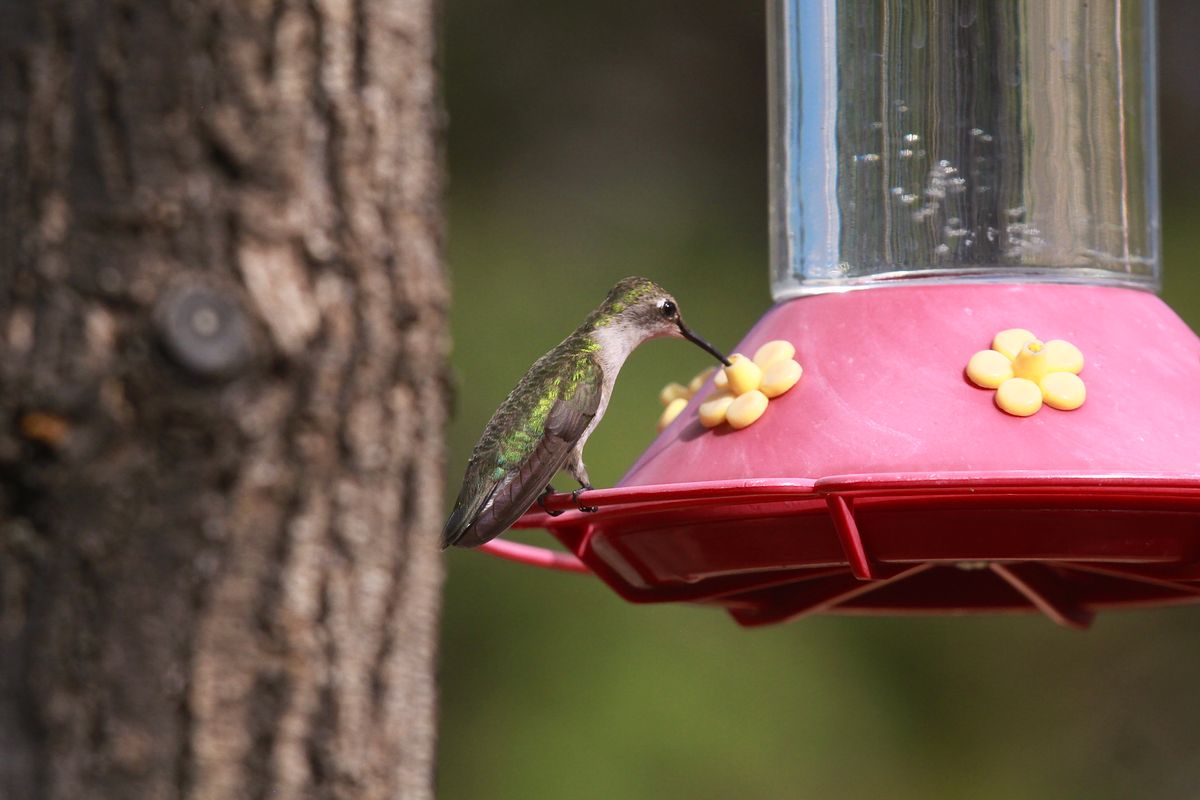
Photo by Jennelope 🩷 on Pexels
For bird lovers seeking the ideal harmony of hand-blown glass craftsmanship, complete material safety, and magical nighttime lighting, this featured feeder sets the benchmark.
The Gold Standard for Nectar Purity
If you want a stunning centerpiece for your garden that guarantees complete safety for hummingbirds, prioritize high-temperature hand-blown glass paired with a powder-coated anti-rust base. The LUJII Solar-Powered Hummingbird Feeder isolates all solar electronics inside a protective top cap, ensuring sugar water contacts only inert glass and food-grade materials. Beautiful by day and softly glowing by night, it provides a clean, toxin-free dining station season after season.
Pro Tip: Why Nectar Acidity Demands Non-Reactive Feeder Materials
Even simple sugar water made from refined white sugar and tap water carries a slightly acidic pH (typically between 6.0 and 6.8). Over weeks of heat and sun, this mild acidity can cause raw metals like iron, zinc, or brass to oxidize and leach metallic ions directly into the liquid. Always choose hand-blown glass reservoirs with powder-coated anti-rust bases; the baked-on enamel or powder barrier creates an impenetrable wall that prevents liquid from touching bare metal.
Hummingbird Feeder Material Safety Matrix
| Usage Scenario / Component | Material Type | Nectar Contact Risk | Durability & Weather Resistance | Safety Verdict |
| --- | --- | --- | --- | --- |
| Direct Nectar Reservoir Chamber | Hand-Blown Artisan Glass | Zero Risk (Inert, Non-Porous) | Exceptional (UV Proof, No Scratches) | Safe (Gold Standard) |
| Direct Nectar Reservoir Chamber | Cheap Structural Plastic / Acrylic | Moderate (Leaching & Microplastics under Heat) | Poor to Fair (Yellows, Cracks under Sunlight) | Caution (Replace Seasonally) |
| Feeder Base & Feeding Ports | Powder-Coated Anti-Rust Metal | Zero Risk (Sealed Enamel Barrier) | High (Rust Resistant & Weatherproof) | Safe (Recommended) |
| Feeder Base & Feeding Ports | Galvanized Zinc or Raw Iron Metal | High Risk (Zinc Leaching & Rust Flakes) | Poor (Oxidizes Quickly in Moist Air) | Unsafe (Avoid for Internal Nectar Contact) |
| Top Cap & Solar Module Shield | Food-Grade Weatherproof Plastic Shield | Zero Risk (No Nectar Contact) | High (Waterproof & Sun Shielding) | Safe (Protects Solar Electronics Above Glass) |
Compare common feeder materials across structural scenarios to identify safety ratings, corrosion resistance, and potential nectar contact risks.
Action Plan: Auditing Your Backyard Feeders
Your decision: Choose hand-blown glass feeders with powder-coated anti-rust metal bases and non-contact, food-grade solar components for complete safety.
Do this next: Inspect your current outdoor feeders today: discard any units with rusting nectar-contact basins, peeling internal paint, or cracked plastic ports.
- Read next: How to Clean and Maintain Your Hand-Blown Solar Hummingbird Feeder
- Read next: How to Make Safe DIY Hummingbird Nectar: The Ultimate 4:1 Recipe
LUJII Solar-Powered Hand-Blown Glass Hummingbird Feeder with Anti-Rust Metal Base (32 fl. oz.)
Follow these steps to evaluate your current garden feeders and transition to a safe, brilliant solar setup.
Core Principles of Nectar-Contact Material Safety
- Hand-blown glass is completely non-porous and chemically inert, making it the safest material for storing sugar water.
- Anti-rust powder coatings on metal bases act as a durable, non-toxic barrier against moisture and metallic leaching.
- Solar illumination modules housed in top plastic caps remain completely isolated from the nectar reservoir.
- Never use internal spray paints, sealants, or raw galvanized metals near liquid nectar.
- Monitor feeding ports for smooth surfaces free of sharp metal burrs or flaking plastic micro-edges.
5-Point Feeder Material Safety Checklist
- [ ] Inspect the reservoir interior: Ensure it is 100% non-porous glass or food-grade, unpainted plastic.
- [ ] Check base coating: Verify metal bases are sealed with an anti-rust powder coating with no flaking or exposed bare metal.
- [ ] Examine solar cap components: Ensure plastic cap shields solar cells and housing from rain without coming into contact with sugar water.
- [ ] Audit feeding ports: Check for smooth edges free of sharp metal burrs or degrading plastic micro-shreds.
- [ ] Test for heavy metal hazards: Confirm no raw lead, zinc, brass, or copper components submerge directly in the sucrose solution.
Dangerous Feeder Material Mistakes to Avoid
Avoid these common oversights that put wild birds at risk of heavy metal poisoning or bacterial exposure.
Deepen Your Knowledge on Nectar Freshness & Care
Expand your birding expertise with these helpful resources on homemade sugar ratios, summer heat care, and proper glass maintenance:Frequently Asked Questions: Material Safety & Chemical Leaching
Get fast, accurate answers to common questions about rust removal, solar heat, glass dyes, and safe plastics.
Upgrade to a Safe, Handcrafted Solar Glass Feeder Today
Your decision: Prioritize 100% non-porous glass and powder-coated anti-rust metals for absolute nectar safety.
Do this next: Explore the LUJII Solar-Powered Hummingbird Feeder to combine artisan glass beauty, leak-proof safety, and magical RGB lighting.
- Read next: Explore LUJII Solar Hummingbird Feeders
LUJII Solar-Powered Hand-Blown Glass Hummingbird Feeder (32 fl. oz.)
Ready to transform your garden into a vibrant hummingbird sanctuary? Bring home the non-toxic elegance of handcrafted glass and automatic twilight illumination.
Cover photo by Veronika Andrews on Pexels.