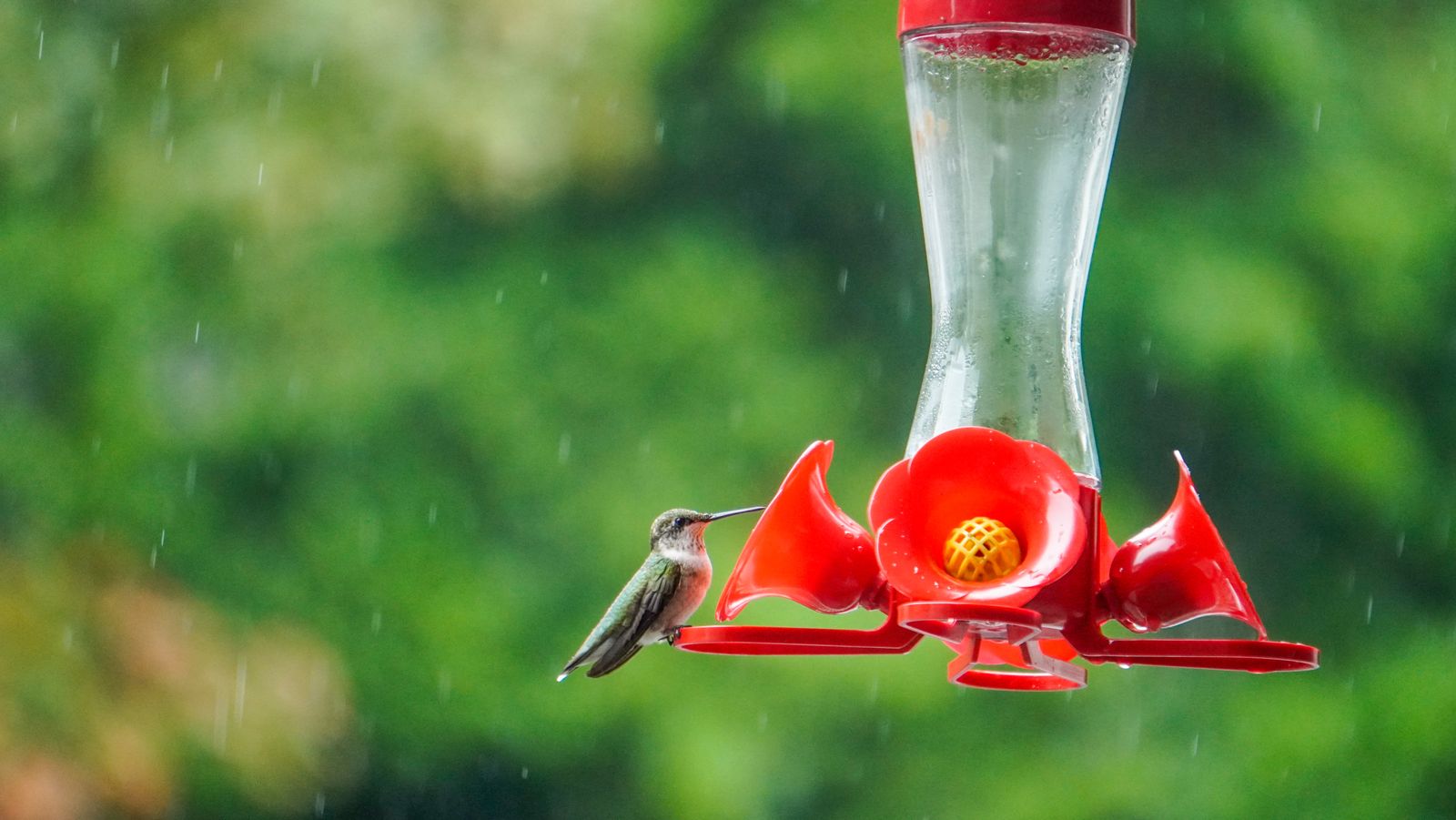
How High to Hang a Hummingbird Feeder: Height, Placement & Safety Guide
Contrary to the popular myth that hanging a feeder high up in a tree canopy is safest, mounting your feeder too high exposes hummingbirds to predatory hawks and makes daily maintenance a chore. The ideal height to hang a hummingbird feeder is 5 to 6 feet (1.5 to 1.8 meters) above the ground.
This elevation places the nectar ports comfortably above the vertical leaping zone of domestic cats while keeping the reservoir within easy arm's reach for daily refilling and cleaning.
Placement Decision Guide: Heights & Clearance Zones by Location
Choose your mounting method based on predator risk, direct sunlight availability for solar charging, and structural weight capacity for heavy 32 oz hand-blown glass feeders.
Best choice for
- Freestanding 6-foot Shepherd's Hook with predator baffle — Elevates the base 5.5 to 6 feet above lawn level and maintains a mandatory 4-foot jump clearance from nearby fences, porch rails, or low branches.
- Heavy-duty wall bracket anchored to stud framing or reinforced steel pole — Provides rigid structural support for 3.5+ lbs of filled glass weight while ensuring 6+ hours of unshaded sunlight for solar RGB nighttime illumination.
- Hanging directly inside dense foliage where outdoor cats can hide and pounce within a 4-foot launch radius.
- Mounting between 3 and 30 feet from window glass, which falls squarely into the fatal window-collision velocity zone.
- Suction-cup window mounts — Ideal for close-up viewing under 3 feet from glass, though generally limited to lightweight plastic models under 12 oz.
Heavy-Duty Mounting Essentials for Glass & Solar Feeders
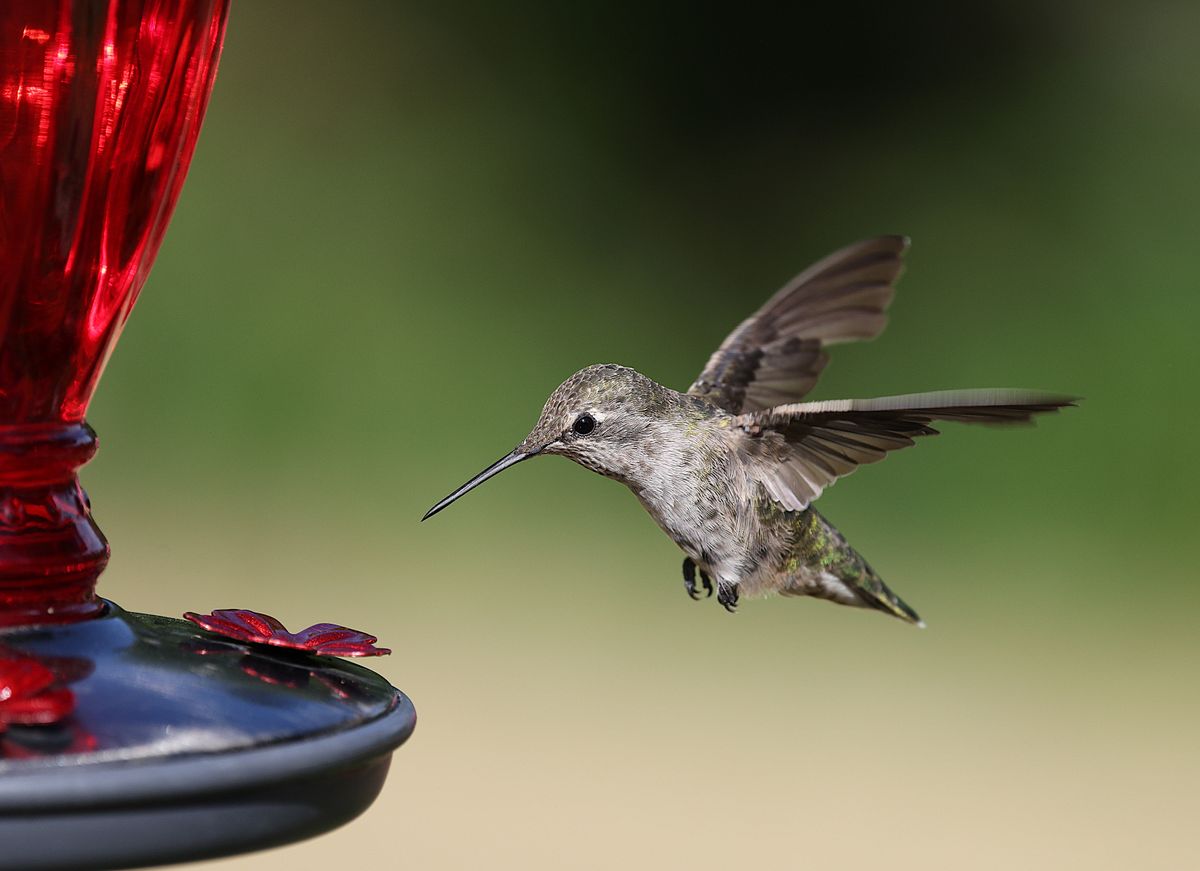
Photo by Veronika Andrews on Pexels
When hanging a premium, handcrafted feeder like the LUJII Solar-Powered Hand-Blown Glass Hummingbird Feeder, your hanging setup must accommodate both artistic weight and functional solar energy needs. Standard thin wire hooks often bow or swing excessively under a full 32 fl. oz. nectar load.
Recommended Setup: Safe Placement for Hand-Blown Solar Glass Feeders
For the ultimate balance of bird safety, visual elegance, and effortless solar charging, anchor your feeder using this field-tested configuration:
- Ground Elevation: Exactly 5.5 feet from the ground to the bottom perching basin.
- Predator Buffer: 4 feet of open air in all horizontal directions away from fence tops, deck railings, or bushes.
- Shelter Proximity: 10 to 15 feet away from a deciduous tree or leafy shrub, giving hummingbirds a safe staging perch to scan for danger before feeding.
- Solar Exposure: Positioned away from deep roof eaves to capture at least 6 hours of unshaded daylight for the top solar panel.
- Hardware Rating: A solid steel Shepherd's hook (minimum 1/2-inch rod diameter) or powder-coated metal wall arm rated for 5+ lbs.
Pro Tip: The 'Refill Comfort & Solar Sweep' Height Check
Before permanently anchoring your pole or wall bracket, perform a quick 10-second test walk. Raise your arms while holding a water pitcher. If the top cap of the feeder sits above your natural reach—requiring a stepstool—lower the mount by 4 inches.
Hummingbirds require clean nectar every 2 to 4 days during warm summer weather. If refilling feels awkward, maintenance will lag, leading to fermented nectar. Additionally, glance upward at 2:00 PM to verify that nearby rooflines or tree shadows aren't casting shade over the top solar collector cap.
Troubleshooting Feeder Height & Placement Issues
| Scenario / Problem | Root Cause | Placement Fix |
| --- | --- | --- |
| Cats lurking beneath or pouncing near feeder base | Feeder is hung under 5 feet or placed within 4 feet of a elevated jump-off point (deck railing or shrub) | Raise hook height to 5.5–6 feet. Relocate the pole so the feeder sits at least 4 feet away from pouncing platforms, and attach a smooth 18-inch metal predator baffle to the pole. |
| Heavy glass feeder sways violently or tips in mild breeze | Mounted on a flimsy 1/4-inch garden wire hook or thin tree branch | Upgrade to a heavy-duty, dual-step Shepherd's hook with a 5/8-inch solid steel core, or mount an anti-rust metal wall bracket directly to a wooden post. |
| Solar RGB lights fail to illuminate or turn off after 1 hour | Feeder is tucked beneath deep porch eaves or dense tree canopies | Shift feeder 2 to 3 feet outward into direct line-of-sight daylight. Ensure the solar cap receives a minimum of 6 hours of full solar exposure daily. |
| Birds avoiding feeder despite fresh nectar | Feeder is isolated in vast open lawn with no nearby perches, or hung 3 to 10 feet from reflective window glass | Move feeder within 10–15 feet of leafy tree branches for shelter, and ensure window clearance is either under 3 feet or over 30 feet. |
If you notice neighborhood cats lingering, nectar dripping, or birds shying away from your feeding station, use these scenario-based adjustments to restore garden harmony.
Visual Safety Blueprint: 3D Clearance Buffer Zones
Visualizing safety clearances around your feeding station ensures hummingbirds enjoy a predator-free refuge while giving your garden a striking decorative focal point.
Key Placement Rules at a Glance
Keep these essential spatial rules in mind when setting up or relocating your feeding station:
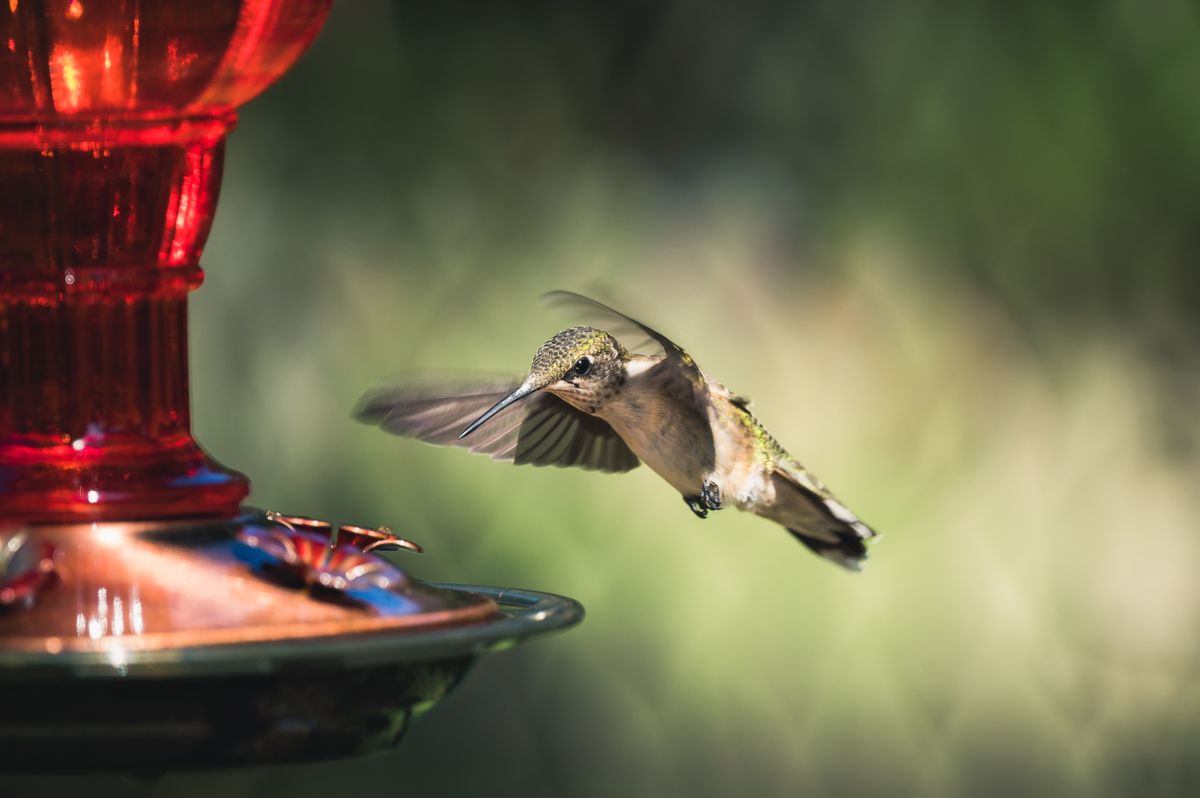
Mounting Location Safety & Accessibility Matrix
| Mounting Location | Cat Safety Rating | Wind Stability (32 oz Glass) | Solar Charging Access | Refill & Maintenance Ease |
| --- | --- | --- | --- | --- |
| Freestanding Steel Shepherd's Hook | High (with pole baffle) | High (if solid steel core) | Excellent (100% open sky) | Excellent (easy walk-up access) |
| Covered Porch Eave Hook | Moderate (watch railing height) | High (sheltered from wind) | Poor (eave blocks direct sun) | Moderate (may need high reach) |
| Exterior Wall Stud Bracket | High (smooth vertical wall) | Maximum (rigid lag-screw anchor) | Good to Excellent | High (mounted at chest level) |
| Tree Branch S-Hook | Low (cats climb trunks) | Low to Moderate (branch sways) | Fair to Poor (leaf canopy shade) | Moderate to Difficult |
Compare popular outdoor mounting locations to see how they perform across safety, stability, and solar illumination criteria.
Technical Clearance Specifications & Minimum Distances
| Clearance Metric | Recommended Dimension | Critical Safety Reason |
| --- | --- | --- |
| Ground Clearance (Feeder Base) | 5.0 ft to 6.0 ft (1.5 m to 1.8 m) | Exceeds standard cat vertical pouncing height while staying within human reach. |
| Horizontal Predator Jump Clearance | 4.0 ft minimum (1.2 m) | Prevents cats from leaping sideways from deck railings, fence tops, or dense shrubs. |
| Window Glass Safety Buffer Zone | < 3.0 ft OR > 30.0 ft | Within 3 ft, birds cannot reach fatal collision speed; beyond 30 ft, they recognize glass as an obstacle. |
| Resting Perch Proximity | 10.0 ft to 15.0 ft (3.0 m to 4.5 m) | Provides protective leaf cover for resting and territorial surveillance without harboring ambush predators. |
| Solar Panel Sun Exposure | 6+ hours unshaded daylight | Charges top-mounted lithium batteries fully to power nighttime RGB garden illumination. |
Use these precise dimensional metrics when measuring your garden layout with a tape measure.
5 Dangerous Placement Mistakes That Harm Hummingbirds
Even well-meaning garden lovers occasionally make placement errors that put visiting tiny birds at risk. Avoid these five common pitfalls:
Explore Related Hummingbird Care Guides
Expand your knowledge on creating a safe, vibrant backyard hummingbird sanctuary with our companion resource guides:
- Ant Proofing Your Station: Discover how water moats and physical barriers stop crawling insects without chemical spray.
- Hand-Blown Glass Care & Cleaning: Step-by-step instructions on washing delicate artistic glass and preventing mold in hot summer weather.
- Nighttime Garden Aesthetics: How soft RGB solar lighting creates an enchanting twilight backyard ambiance without disrupting wildlife.
Frequently Asked Questions About Hummingbird Feeder Height & Placement
Find fast answers to common questions regarding feeder mounting, hardware selection, and bird safety.
Next Steps for Setting Up Your Safe Feeding Station
Your decision: Determine your preferred installation spot that meets the 5–6 ft height standard and gets at least 6 hours of direct sunlight if using a solar feeder.
Do this next: Measure your proposed mounting height with a tape measure and ensure you have an anti-rust metal hook that safely supports a filled 32 oz hand-blown glass feeder.
Related resource: Summer Storm Protection: Weatherproofing Your Glass Solar Hummingbird Feeder Setup
🌟 LUJII Hand-Blown Glass Solar Hummingbird Feeder (32 oz Capacity) with Anti-Rust Metal Base
Ready to bring color, art, and wildlife to your outdoor space? Follow these simple setup actions to transform your patio or yard into a safe hummingbird haven.
Cover photo by Koushalya Karthikeyan on Pexels.