Why Is Your Hummingbird Feeder Leaking After Rain? (And How to Fix It)
Hummingbird feeders leak after rain because falling cold rainwater rapidly cools the glass reservoir, shrinking the trapped internal air pocket and drawing rainwater in, while gusty wind sway and sudden atmospheric pressure drops break the vacuum seal at the feeding ports. To fix a leaking feeder, inspect and clean the base rubber gasket, fill the reservoir completely to eliminate internal air, and hang the feeder level under a wide weather baffle.
Rainstorm Leak Diagnostic Flowchart
- Is the feeder dripping or overflowing immediately after rain? → Yes: Check if the feeder was swinging heavily during the storm.. No: Feeder is stable; inspect for ant infestation or blocked ports..
- Was the feeder swinging significantly in wind gusts? → Yes: Wind tilt broke the surface tension at feeding ports. Solution: Install a rigid pole mount or heavy-duty stabilizer.. No: Is the nectar inside diluted, cloudy, or displaced by rainwater?.
- Is rainwater pooling inside the base or diluting nectar? → Yes: Thermal shrinkage or worn base gasket allowed rainwater entry. Solution: Replace rubber O-ring gasket and fill nectar to the brim.. No: Check if nectar was poured while warm. Warm nectar expands internal air, triggering liquid displacement..
Feeder Leak Troubleshooting Matrix
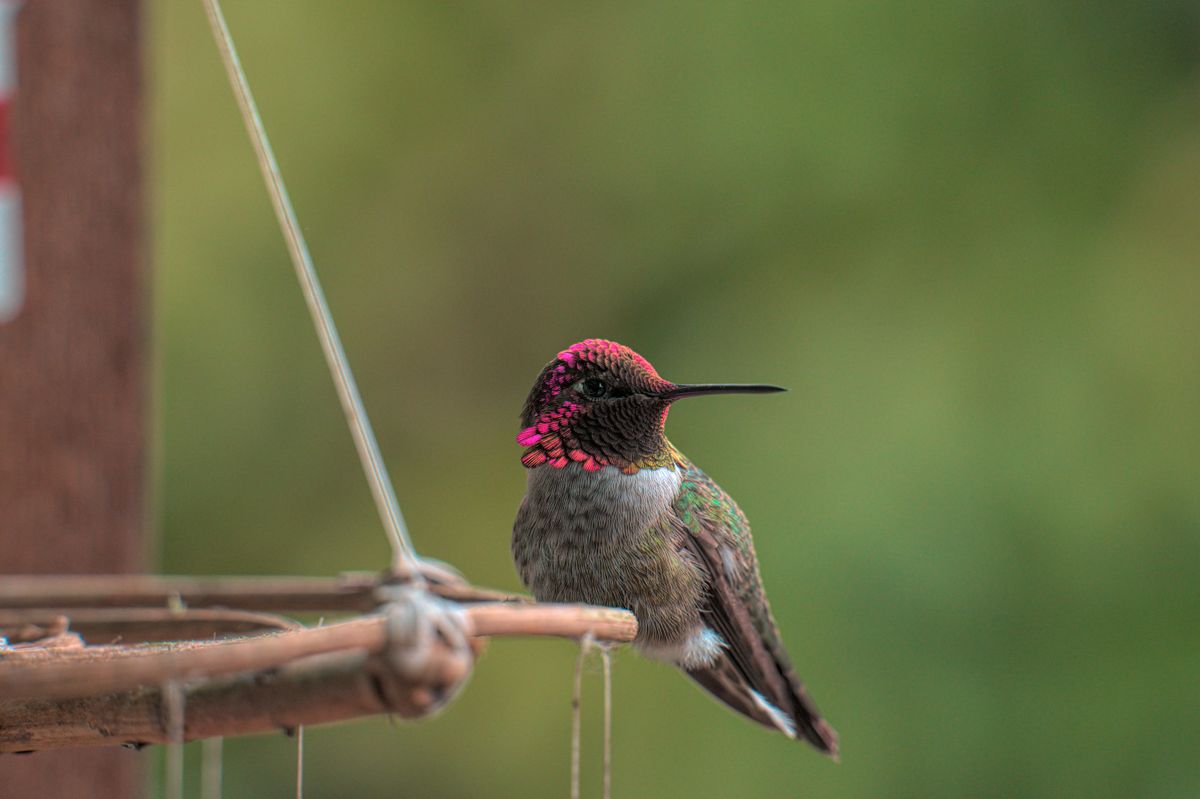
Photo by Townsend Walton on Pexels
| Observed Symptom | Underlying Physics / Cause | Immediate Field Remedy |
| --- | --- | --- |
| Continuous dripping from feeding ports during cold rain | Thermal Air Contraction: Cold rainwater cools top of glass bottle, shrinking air pocket and pulling in water until pressure equalization forces nectar out. | Refill reservoir 100% full with chilled nectar to eliminate the air pocket before hanging. |
| Nectar streaming from base threads where bottle screws in | Gasket Seal Compromised: Dirt, sugar crystals, or warped O-ring preventing an airtight vacuum lock. | Unscrew base, scrub threads with warm water, re-seat silicone O-ring, and tighten firmly (do not over-tighten). |
| Watery, pale nectar in base tray after storm passes | Direct Rain Intrusion: Raindrops striking angled feeding ports displace sugar water and dilute mixture. | Install a 12-to-14-inch dome weather shield directly above the top hanger hook. |
| Feeder empties completely onto ground during high winds | Mechanical Fluid Tilt: Wind sways feeder beyond 15 degrees, breaking surface tension at ports and pouring nectar. | Move feeder to a wind-sheltered location or mount on a rigid metal shepherd's hook. |
Match your post-rain feeder symptoms with the underlying physical cause and recommended field repair.
Pro Tip: The Air-Bubble Vacuum Test
Before hanging your refilled glass feeder back out in the garden, perform this quick indoor vacuum validation check: invert the filled feeder over your kitchen sink and hold it still for 10 seconds. You should see 2 to 3 initial air bubbles rise to the top of the bottle as fluid fills the base basin, followed by complete stillness. If a continuous stream of bubbles keeps rising, air is entering through a bad gasket seal or cracked thread, and the feeder will spill as soon as weather conditions change.
Post-Storm Feeder Inspection & Reset Checklist
- [ ] Inspect rubber O-ring gasket for cracks, warping, or sugar debris.
- [ ] Check nectar color and clarity for signs of rainwater dilution.
- [ ] Ensure feeding ports are clear of dirt or rainwater blockage.
- [ ] Verify feeder hanging pole is 100% plumb and level.
- [ ] Inspect solar LED cap housing for moisture accumulation.
- [ ] Wipe down feeder base to remove sticky nectar residue that attracts ants and yellowjackets.
Diagram: How Rain Breaks Your Feeder's Vacuum Seal
Understanding how barometric pressure and temperature shifts affect fluid mechanics makes preventing future storm drips simple.
Decision Tree: Is Your Feeder Defective or Just Weather-Stressed?
- Does the feeder leak indoors over the sink during the 10-second vacuum test? → Yes: Hardware Issue: Replace rubber O-ring gasket or clean glass threads.. No: Weather/Environmental Issue: Proceed to next question.
- Does the leak only occur during rainstorms with strong winds? → Yes: Wind Motion Problem: Add a rigid mounting arm or relocate feeder to a protected porch area.. No: Thermal/Barometric Drop: Install a 12-inch clear acrylic rain guard and fill reservoir completely.
Immediate Actions to Stop Nectar Wasting
Your decision: Decide whether your leak is caused by environmental factors (wind/temperature) requiring a baffle and level hanging, or hardware degradation requiring a new rubber gasket or base replacement.
Do this next: Empty the feeder, wash with warm water, replace or inspect the rubber O-ring seal, refill completely with cool 4:1 nectar, invert firmly over a sink to establish vacuum lock, and rehang beneath a wide rain guard.
- Read next: The Ultimate Buying Guide to Weather Baffles and Shields for Solar Feeders
- Read next: Best Ant Moats for Hummingbird Feeders: Built-In vs. Hanging Hooks
For high-wind rain protection, consider the LUJII Hand-Blown Glass Solar Hummingbird Feeder featuring a 32 oz heavy glass reservoir, leak-proof metal base, and waterproof protective solar cap.
If your feeder is currently dripping, bring it inside immediately to protect your lawn and prevent pest surges. Wash the base thorough, check the O-ring seal, and prepare a fresh 4:1 sugar-water mix.
Key Takeaways: Preventing Rain Leaks
- Inverted feeders rely on a delicate equilibrium between internal vacuum pressure and external air pressure.
- Cold rain causes air inside partially filled feeders to contract and expand rapidly, pushing nectar out through ports.
- Wind sway over 15 degrees disrupts liquid surface tension at feeding ports, dumping nectar.
- Filling feeders 100% full with chilled nectar removes the air pocket responsible for thermal pressure leaks.
- Heavy hand-blown glass feeders offer greater inertia against wind sway compared to lightweight plastic models.
Feeder Styles Under Heavy Rain: Glass vs. Plastic Inverted vs. Top-Fill Dish
| Feeder Architecture Style | Vacuum Mechanics Under Rain | Wind Sway Resistance | Rainwater Dilution Risk | Overall Rain Rating |
| --- | --- | --- | --- | --- |
| Heavy Hand-Blown Glass Inverted (e.g., LUJII) | High seal integrity; thick glass insulates internal air pocket against rapid thermal shock. | Excellent (1.8–2.5 lbs filled weight resists gusty movement). | Low when paired with protective top solar cap or rain guard. | Superior (4.8/5.0) |
| Lightweight Molded Plastic Inverted | Moderate seal integrity; thin plastic wall flexes under barometric pressure drops. | Poor (Lightweight body sways easily, spilling nectar at ports). | Moderate; rain splashes directly onto wide exposed feeding ports. | Fair (2.5/5.0) |
| Saucer / Dish Style Top-Fill | No vacuum lock needed (nectar sits below port level). | Good (Liquid remains level in dish). | High if unshielded; rain drips directly into ports unless wide dome cover is installed. | Good (4.0/5.0) |
Different hummingbird feeder architectures handle barometric pressure drops and wind-driven rain with varying degrees of success.
Choosing the Right Rain Protection Strategy
When dealing with rain-induced feeder leaks, birding enthusiasts must choose between retrofitting existing inverted feeders with weather baffles and new O-rings or upgrading to leak-resistant, heavy-glass sealed-base feeders.
Best choice for
- Heavy hand-blown glass feeder with a wide rain baffle and anti-rust metal base — Added glass weight minimizes swaying, while the baffle prevents rainwater from entering feeding ports.
- Replacing the base silicone O-ring gasket and filling nectar to the brim — Eliminates air gaps where thermal expansion forces nectar down the feeding tubes.
- Hanging lightweight plastic inverted feeders on long flexible S-hooks in gusty rain.
- Filling feeders with warm nectar right before hanging them outside in cool spring rain.
- Saucer-style dish feeder mounted beneath a covered porch — Eliminates vacuum pressure dependence entirely while providing complete overhang protection.
Featured Leak-Proof Solar Glass Feeders
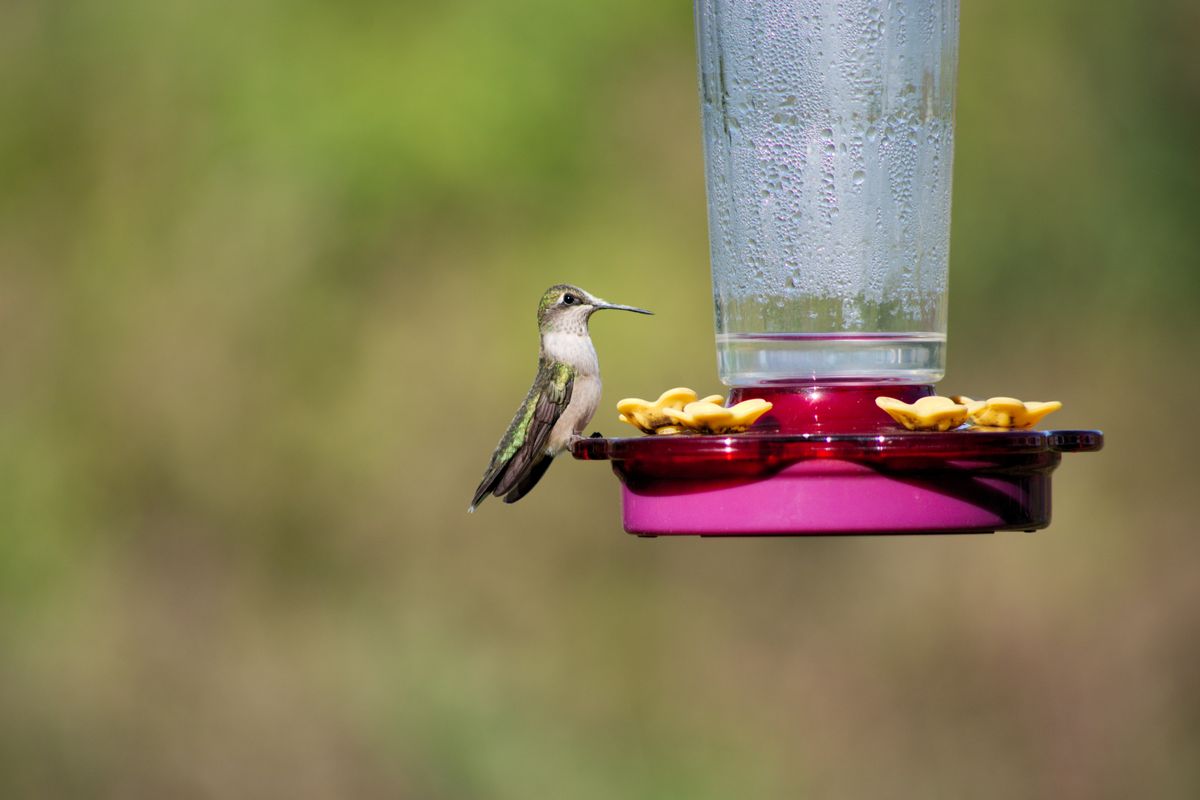
Photo by Sean Ewing on Pexels
If your current feeder suffers from persistent thread leaks or lightweight wind tilt, upgrading to a handcrafted glass feeder with a engineered sealed base solves both issues while illuminating your garden at night.
Weather Resistance Specification Matrix
| Feature Component | Standard Feeder Spec | Storm-Resistant Spec (LUJII Grade) | Why It Prevents Leaks |
| --- | --- | --- | --- |
| Reservoir Material | Thin Single-Molded Plastic (1.5mm) | Heavy Hand-Blown Art Glass (4–6mm thick) | Thicker glass insulates nectar from rapid air temp changes during cold rain. |
| Base Gasket Seal | Flat Foam or No Seal | Grooved Food-Grade Silicone O-Ring | Creates continuous airtight vacuum lock against metal base threads. |
| Solar Top Housing | Unsealed plastic snap lid | IP65 Waterproof Isolated Plastic Cap | Shields internal nectar chamber from rainwater intrusion while protecting LED electronics. |
| Base Construction | Plastic snap-on tray | Coated Anti-Rust Sealed Metal Base | Prevents warping under pressure and maintains level feeding ports. |
Key construction parameters required to keep inverted hummingbird feeders leak-free during severe weather.
5 Steps to Reset and Restore a Vacuum Seal After a Rainstorm
Follow this step-by-step reconditioning process to eliminate drips and restore airtight fluid dynamics.
5 Mistakes That Guarantee Your Feeder Will Leak When It Rains
Avoid these common setup errors that compromise vacuum pressure and invite rainwater intrusion.
Related Storm & Spring Care Guides
- Why Is My Hummingbird Feeder Leaking? (And How to Fix It Fast)
- How to Stop Hummingbird Feeders From Leaking and Dripping in Summer Heat
- Why Is My Hummingbird Feeder Leaking? How Air Pressure and Base Seals Work
Frequently Asked Questions About Rain & Feeder Leaks
Answers to pressing queries regarding rainwater dilution, pest management, and solar feeder maintenance.
Final Summary & Action Plan
Your decision: Decide whether your leak is caused by environmental factors (wind/temperature) requiring a baffle and level hanging, or hardware degradation requiring a new rubber gasket or base replacement.
Do this next: Empty the feeder, wash with warm water, replace or inspect the rubber O-ring seal, refill completely with cool 4:1 nectar, invert firmly over a sink to establish vacuum lock, and rehang beneath a wide rain guard.
- Read next: The Ultimate Buying Guide to Weather Baffles and Shields for Solar Feeders
For high-wind rain protection, consider the LUJII Hand-Blown Glass Solar Hummingbird Feeder featuring a 32 oz heavy glass reservoir, leak-proof metal base, and waterproof protective solar cap.
A leak-free hummingbird feeder keeps your birds healthy, prevents pest invasions, and ensures your garden stays clean. Inspect your setup today and upgrade to an insulated, handcrafted glass feeder if weather leaks persist.
Cover photo by Veronika Andrews on Pexels.