Why Is My Hummingbird Feeder Leaking? How Air Pressure and Base Seals Work
A hummingbird feeder leaks for one of two reasons: air is getting into the reservoir where it should not, or the air already inside is expanding and pushing nectar out. The first is a seal problem — a loose base, a gasket with residue on it, or a hairline crack. The second is physics, and it happens most often when a feeder is filled to the brim on a cool morning and then sits in afternoon sun. Both are fixable without tools.
Why an inverted feeder holds nectar at all
An inverted reservoir does not leak for the same reason a finger over a straw holds water. Nectar tries to run out of the ports, but as it starts to go, it leaves behind a slightly lower air pressure at the top of the sealed reservoir. Outside air pressure pushing up at the ports balances the weight of the liquid, and the flow stops. What you are left with is a small, stable meniscus of nectar sitting right at the port — exactly enough for a bird to reach and no more.
That balance is delicate in one direction only. Anything that adds pressure inside the reservoir, or lets outside air sneak in at the top, breaks the stalemate and the nectar starts moving again. Understanding that single mechanism explains every leak you will ever see.
The five real causes of a leaking feeder
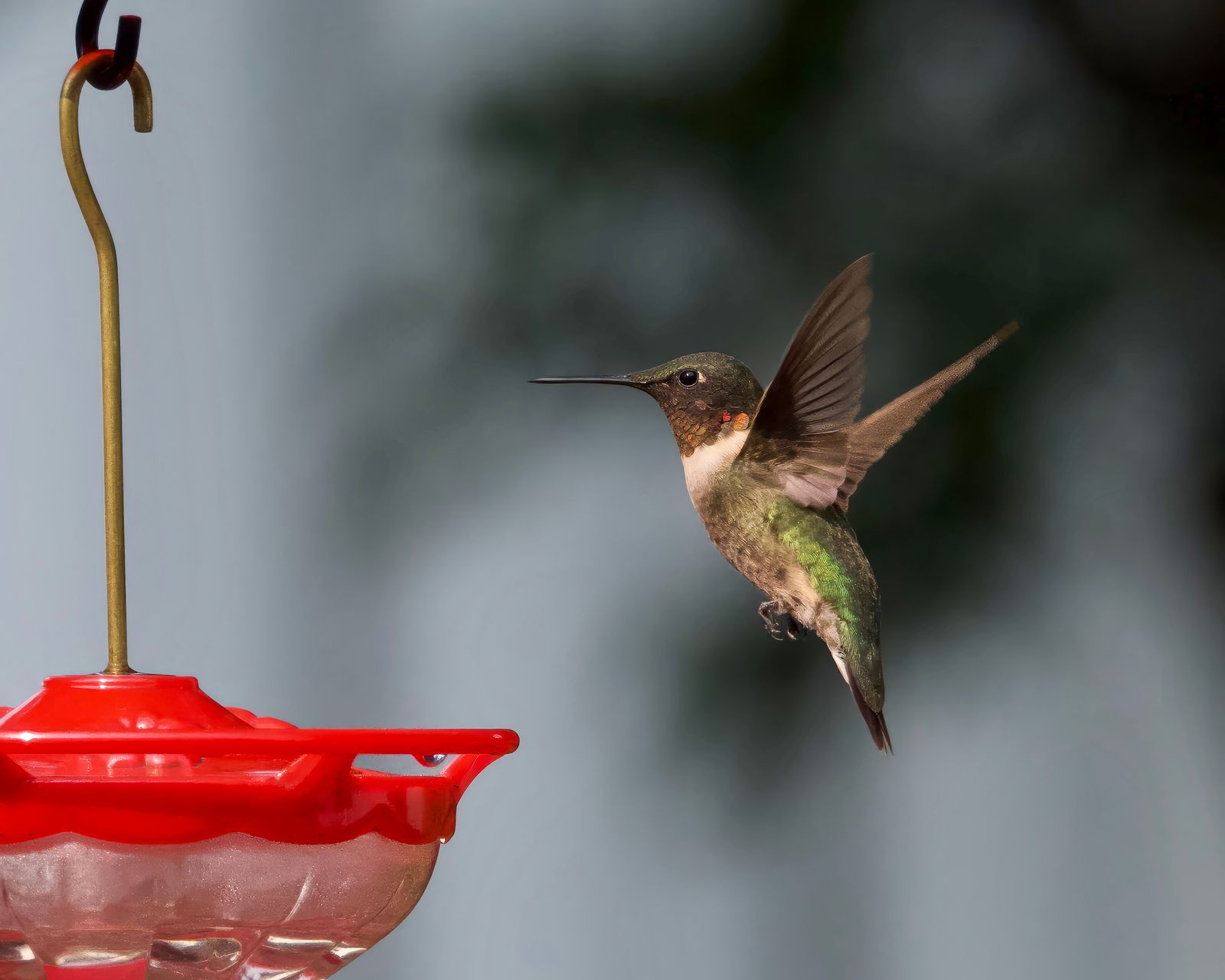
Photo by A. G. Rosales on Pexels
| Cause | Telltale sign | Fix | |---|---|---| | Heat expanding trapped air | Drips start mid-afternoon, stop by evening | Fill about 80 percent full; move out of harsh afternoon sun | | Base not fully seated or slightly cross-threaded | Steady seep from the joint, worst right after filling | Empty, clear the threads, reseat squarely, snug — not forced | | Residue or grit on the gasket | Wet ring around the base seam; leak returns after every refill | Remove the gasket, rinse both mating surfaces, dry, refit | | A gasket that has hardened or deformed | Leak persists after a careful reseat | Replace the ring rather than tightening harder | | Wind, swinging, or heavy bird traffic | Splash marks rather than a continuous drip; ground wet in one direction | Shorten the hanger; move out of the wind channel |
Heat is the most common cause, and it is not a defect
Air expands when it warms. A reservoir filled cold at 7 a.m. and hanging in direct sun at 3 p.m. contains air that now wants more room than it has, and the only way out is through the ports — taking nectar with it. This is why so many people describe a feeder that is fine all morning and drips every afternoon.
Two habits eliminate almost all of it. First, leave headroom: fill to roughly 80 percent rather than to the very top, so expanding air has somewhere to go before it starts pushing liquid. On a 32 fl.oz reservoir that headroom is meaningful, and the see-through glass makes it easy to judge by eye rather than by guesswork. Second, keep the feeder out of the harshest afternoon sun. Dappled or afternoon shade both reduces expansion and slows nectar spoilage, which matters just as much.
A sudden temperature drop does the opposite — it can pull a little air in at the ports, which then re-expands the next warm day. Nothing is wrong; it is the same mechanism running in reverse.
Find your leak in twenty minutes
Do this once and you will know which of the two categories you are dealing with.
Because water shows up on stone and decking as a clean wet patch instead of a sticky one, this test also tells you where the leak lands, which narrows down whether it is the base seam or the ports.
Filling technique that prevents drips
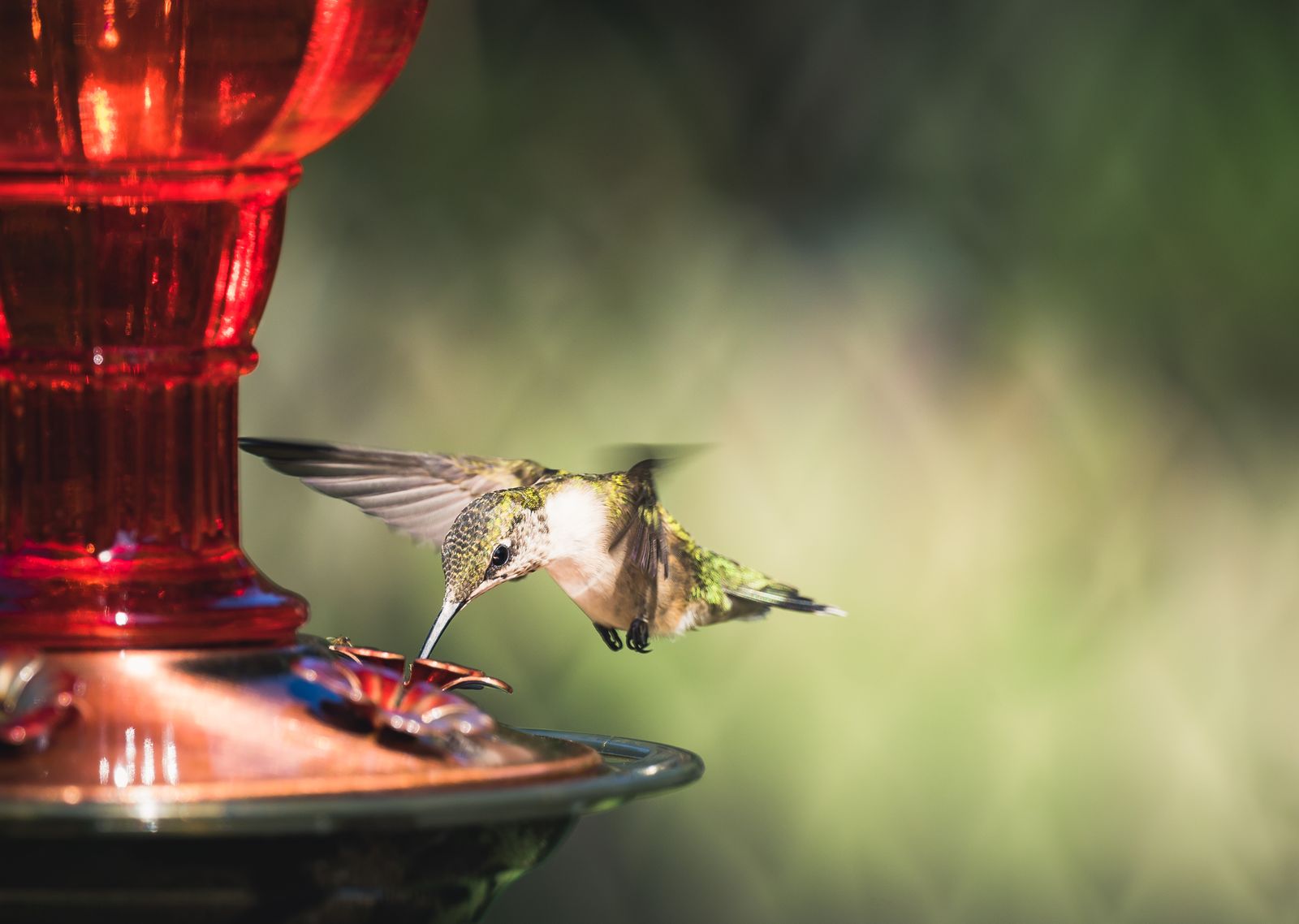
Most spill complaints trace to the moment of filling rather than the hours after it.
- Fill the reservoir with the base off, then invert it over a sink until the initial rush stops. That first surge is normal, and it belongs in a sink rather than on a patio.
- Wipe the outside of the glass and the base dry before hanging. A sticky exterior recruits ants within a day, and ants around a base seam are frequently mistaken for a leak.
- Mix nectar correctly: one part plain white sugar to four parts water, fully dissolved, with no red dye, no honey, and no brown sugar. Undissolved sugar settles and gums up port openings, which changes how nectar sits at the opening.
- In hot weather, change the nectar every day or two. Fermenting nectar produces gas, and gas in a sealed reservoir pushes liquid out — a spoiled batch and a leaking feeder are often the same event.
- Hang a water-only ant moat above the feeder. Plain water only; oil fouls feathers and is never appropriate.
When it really is the seal
A slender sealed base is designed to minimize drips and spills, and when a leak survives the water test in shade, the culprit is nearly always something small on the sealing surface. Check the gasket for a hardened, glazed, or squared-off profile — rubber that has lost its spring will not conform no matter how hard you tighten.
Also inspect the glass rim under a bright light. Hand-blown glass is durable, but any rim chip creates a channel that no gasket can bridge. If the rim is clean and the ring is supple, reassemble slowly: set the base on level, engage the threads without cross-loading, and stop the moment it feels seated. The metal base assembly is meant to be snugged, not cranked.
For a broader view of how materials behave over several seasons of this handling, the comparison of hand-blown glass and plastic feeders covers where each one tends to fail first.
FAQ
Is a few drops after filling normal? Yes. Inverting a full reservoir always releases a little nectar before the pressure balance sets, which is why the flip belongs over a sink. Continuous dripping an hour later is not normal.
Will filling the feeder less often reduce leaking? Filling it less full will. Leaving old nectar in longer will make things worse, because fermentation creates pressure and mold. Use a smaller fill volume and keep the change interval short.
Can I use petroleum jelly on the threads to stop a leak? No. Greases and oils near nectar risk contaminating feathers and the liquid itself. Clean the sealing surfaces properly or replace the gasket instead.
Why does the leak only happen on hot days? Because warm air inside the reservoir expands and displaces nectar through the ports. Leave headroom when filling and shift the feeder out of direct afternoon sun, and the pattern usually disappears.
A practical next step
Run the water test this weekend, in shade first and then in sun, and note which stage produced the drip. That answer tells you whether to clean a gasket or change where the feeder hangs — and it saves you from replacing hardware that was never broken. If you are also thinking about reducing how much a single feeder has to carry, the piece on live nectar plants alongside glass solar feeders explains how planting spreads the load.
Cover photo by Chris F on Pexels.