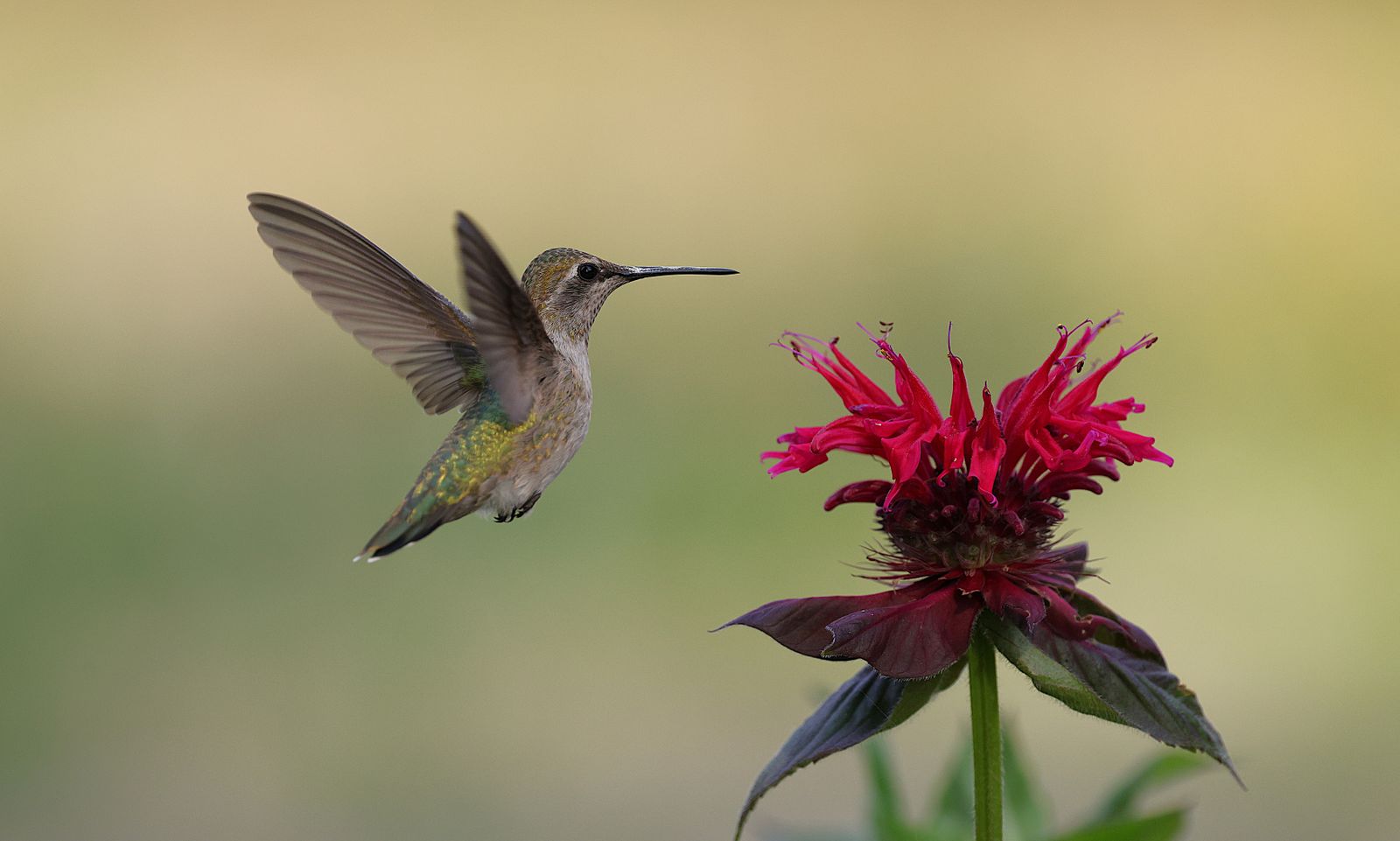
Where to Place a Solar Hummingbird Feeder in a Flower Garden
Should you mount your solar hummingbird feeder directly inside your flower bed or along the outer edge? Place your solar feeder on a 5-to-6-foot pole near the center of a low-to-medium planting bed. This ensures the top solar cap receives at least 6 hours of unshaded sunlight while maintaining 10 to 15 feet of clearance from dense predator cover.
Placement & Solar Technical Specifications
| Technical Parameter | Recommended Specification | Functional Purpose |
| --- | --- | --- |
| Solar Panel Sunlight Exposure | Minimum 6 Hours Direct Sun | Ensures full recharge for up to 8 hours of nighttime RGB LED illumination. |
| Feeder Hanging Height | 5.0 to 6.0 Feet Above Ground | Keeps nectar safe from ground pests while placing hand-blown glass at optimal viewing height. |
| Predator Escape Clearance | 10 to 15 Feet from Dense Shrubs | Prevents domestic cats from ambushing birds while offering quick perching cover. |
| Surrounding Plant Canopy Clearance | 360-Degree Overhead Solar Cone | Prevents tall summer perennial stalks from casting shadows over top solar cells. |
| Sightline Buffer to Patio/Window | 15 to 30 Feet | Maximizes visual enjoyment of dusk lighting without disturbing territorial hummingbirds. |
To maintain reliable nighttime lighting and bird safety, adhere to these precise physical and solar placement parameters when preparing your garden bed.
3D Garden Bed Zone Layout Architecture
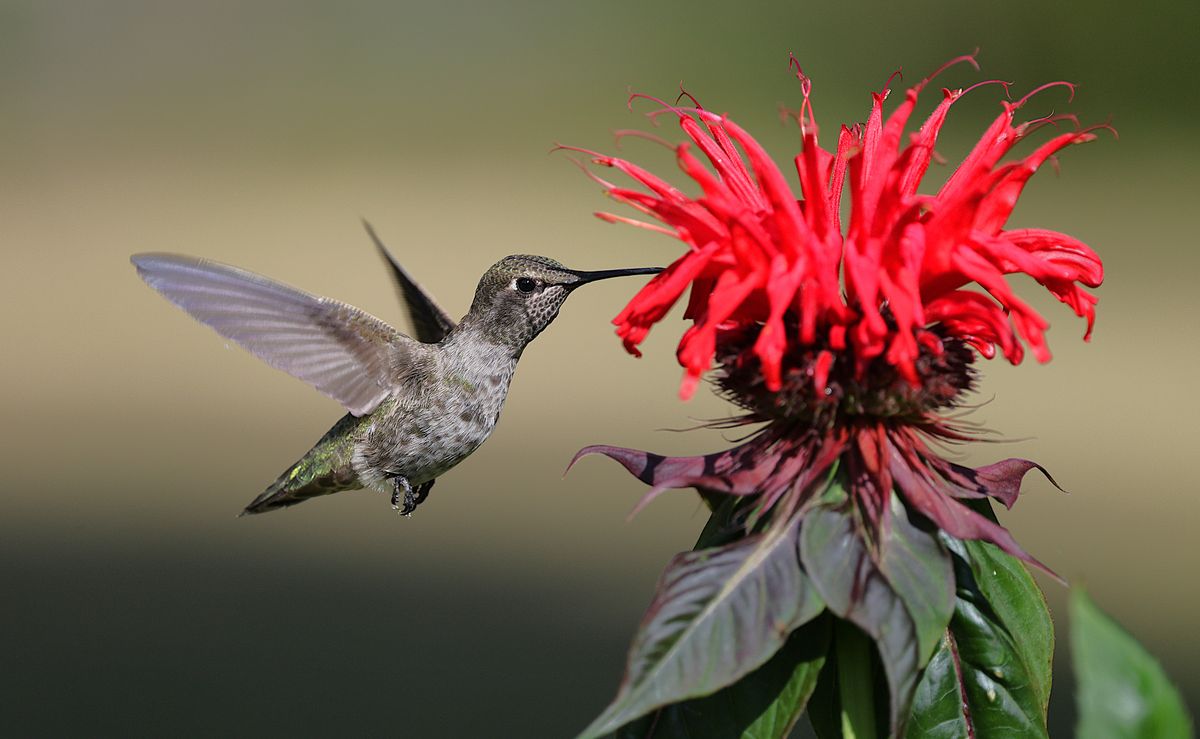
Photo by Veronika Andrews on Pexels
The structural layout below outlines how to build concentric planting tiers around your central feeder pole to guarantee sunlight, safety, and continuous nectar access.
Recommended Setup: The 3-Tier Native Bed Blueprint
For optimal solar panel performance and hummingbird activity, pair your garden design with the LUJII Solar-Powered Hand-Blown Glass Hummingbird Feeder. Featuring an anti-rust metal base, a leak-proof 32 fl.oz reservoir, and handcrafted blown glass, this feeder acts as a focal anchor that recharges all day under open skies and transforms into a glowing RGB garden accent at dusk.
Seasonal Bloom & Placement Adjustment Schedule
| Season | Solar Angle & Canopy Shift | Landscaping & Feeder Placement Action |
| --- | --- | --- |
| Early Spring (Mar - Apr) | Low sun angle; low foliage growth. | Install central 6ft pole; verify 6+ hours of unobstructed direct sun; fill with fresh 1:4 nectar. |
| Mid-Summer (May - Jul) | High overhead sun; peak perennial height. | Prune fast-growing background stalks (e.g., Delphiniums) to eliminate shadows on top solar cap. |
| Late Summer (Aug - Sep) | Peak migration; dense plant canopies. | Rinse ant moats; trim foliage within 3 feet of feeder to maintain open flight paths for territorial birds. |
| Autumn / Winter (Oct - Feb) | Low southern sun path; dormant perennials. | Relocate feeder pole if tree shadow angles lengthen; clean and inspect solar cap for winter storage if needed. |
Sun angles and plant canopies change dramatically throughout the growing season. Follow this quarterly schedule to prevent solar panel shading and maintain bird access.
Native Nectar Companion Plant Matrix
| Plant Species | Mature Height | Sunlight Requirements | Bloom Season | Ideal Feeder Offset Distance |
| --- | --- | --- | --- | --- |
| Salvia coccinea (Scarlet Sage) | 1.5 - 3.0 ft | Full Sun to Part Shade | Spring to First Frost | 2 to 4 ft (Zone 1-2 Front/Sides) |
| Monarda fistulosa (Wild Bergamot) | 2.0 - 4.0 ft | Full Sun | Mid to Late Summer | 4 to 6 ft (Zone 2 Perimeter) |
| Aquilegia canadensis (Wild Columbine) | 1.0 - 2.0 ft | Part Shade to Full Sun | Spring | 2 to 3 ft (Zone 1 Front Border) |
| Lonicera sempervirens (Coral Honeysuckle) | 10 - 15 ft (Vining) | Full Sun | Spring through Summer | 8 to 12 ft (Trellis Backdrop) |
| Penstemon barbatus (Beardtongue) | 2.0 - 3.0 ft | Full Sun | Early to Mid Summer | 3 to 5 ft (Zone 2 Side Flank) |
Select native plants that complement feeder nectar without blocking light from reaching the top solar collector panel.
Pro Tip: Solar Panel Angle vs. Tall Stalk Shading
Always calculate the peak summer shadow angle of tall perennials like Hollyhocks, Delphiniums, or sunflowers before anchoring your feeder pole. As these plants reach full maturity in midsummer, their seedheads can project micro-shadows across top-mounted solar panels during peak charging hours (10 AM to 2 PM), reducing nighttime RGB battery runtime by up to 50%. Position any flowers taller than 4 feet strictly to the north side of the solar pole.
Frequently Asked Questions About Garden Placement
Common questions regarding insect management, nocturnal illumination, and plant care around solar hummingbird feeders.
Your Garden Layout Implementation Steps
Your decision: Determine the south-facing garden zone that receives 6+ hours of sunlight and offers 10-15ft perch proximity.
Do this next: Install a heavy-duty 5-to-6-foot pole, establish low groundcover around the base, and suspend your hand-blown solar glass feeder.
- Read next: Do Hummingbirds Feed at Night? Understanding Dusk Behavior Around Illuminated Feeders
LUJII Solar-Powered Hand-Blown Glass Hummingbird Feeder
Follow these logical steps to prepare your garden bed, position your mounting pole, and introduce your solar glass feeder.
Essential Placement Rules to Remember
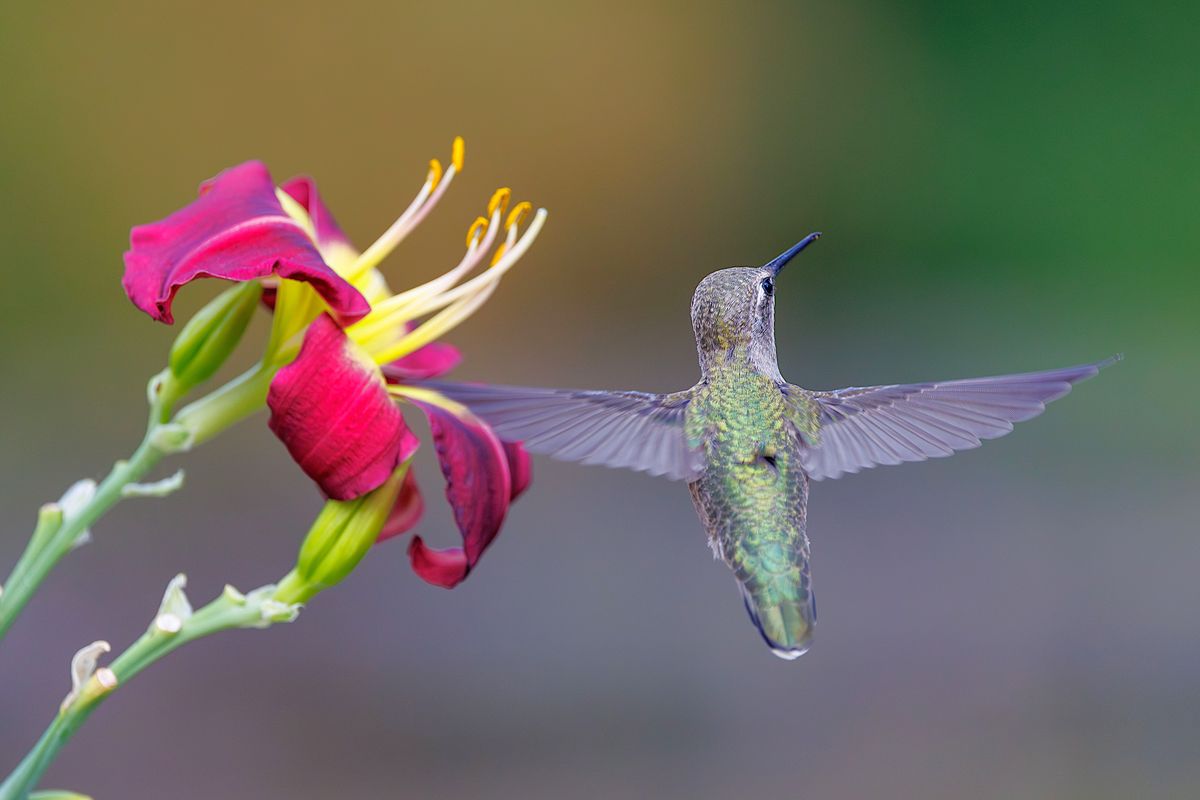
Photo by Veronika Andrews on Pexels
- Sunlight First: Ensure the solar cap receives at least 6 hours of unshaded direct sunlight for full night RGB charging.
- Height Standard: Mount the feeder 5 to 6 feet above ground level to protect nectar from pests and ground splashing.
- Buffer Distance: Maintain 10 to 15 feet of distance from dense shrubs to prevent predator ambushes while providing perching cover.
- North-Side Tall Stalks: Keep tall perennial flowers (over 4 feet) strictly on the north side of the pole to avoid solar panel micro-shadows.
- Tiered Landscaping: Plant low groundcovers directly under the pole and medium nectar flowers along the side perimeters for 360-degree flight access.
Choosing Your Garden Zone: High-Sun vs. Partial-Shade Borders
Selecting the best placement depends on balancing 6+ hours of direct sunlight for the solar cap with 10-15 feet of nearby protective tree perches.
Best choice for
- Center-Bed Shepherd Hook Mount — Provides maximum direct sunlight for RGB solar charging while giving hummingbirds 360-degree approach clearance.
- Front-Edge Extended Pole Mount — Prevents tall summer stalks from casting shadows on the top solar panel and keeps ground predators at a safe distance.
- Placing directly under dense tree canopies where solar panel charging fails.
- Mounting within 5 feet of low bushes where domestic cats can hide.
- Free-Standing Garden Bed Arch — Allows placement higher than fast-growing tall perennials while framing the hand-blown glass aesthetic.
Integrating a solar hummingbird feeder into a flowering garden bed bridges functional wildlife care with artistic garden design. The primary objective is to create a multi-tiered sanctuary where natural floral nectar and supplemental feeder syrup complement each other, while top-mounted photovoltaic cells absorb unhindered sunlight throughout the daylight hours.
The Science of Dual Attraction: Flowers + Glass Art
Hummingbirds rely heavily on visual cues to locate feeding territories. Red, orange, and bright pink tubular blossoms act as natural beacons. When a hand-blown glass solar feeder featuring swirling, translucent color patterns is centered within these blooms, it catches ambient sunlight by day, signaling a rich feeding station.
However, placing a feeder directly inside a dense patch of tall flowers can compromise solar efficiency. Sunlight must hit the top cap's silicon solar cells for several hours to power internal batteries. If tall perennial stems cast shadows across the cap, nighttime LED runtimes drop sharply. By using a tiered planting strategy—placing low groundcovers at the base and mid-height plants along the perimeter—you preserve a 360-degree overhead light cone.
Protecting Hummingbirds While Enhancing Dusk Views
Feeder placement must address bird safety alongside aesthetics. Hummingbirds need quick access to perches where they can rest, preen, and scan for rivals or predators. Positioning the feeder pole 10 to 15 feet away from larger shrubs or low trees provides ideal staging perches. Avoid placing the pole closer than 5 feet to dense ground bushes, as hiding domestic cats can utilize low cover to launch ambush attacks.
At sunset, the automatic dusk sensor triggers internal RGB LEDs, illuminating handcrafted glass art from within. This ambient lighting adds a magical touch to evening garden strolls without disturbing roosting birds, who retreat to high tree foliage for nighttime torpor.
Garden Placement Configurations: Failure Modes & Solutions
| Placement Criteria | Overcrowded High-Stalk Bed (Failure Mode) | Under-Tree Shaded Border (Failure Mode) | 3-Tier Sunlight Zone Blueprint (Optimal) |
| --- | --- | --- | --- |
| Primary Solar Charging Failure | Tall flower stalks block overhead sun; solar panel receives under 2 hours of light, resulting in dead dusk lights. | Dense tree canopy blocks direct light completely; solar battery fails to recharge. | Unshaded 360-degree top cone guarantees 6+ hours of sunlight for reliable 8-hour RGB illumination. |
| Predator Ambush Risk (Cat Threat) | Low foliage and dense stalks allow feral cats to conceal themselves directly beneath feeding ports. | Overhanging branches provide drop points for climbing predators. | 10-15 ft clearance from dense cover grants birds clear sightlines and instant escape routes. |
| Bee & Wasp Intrusion Risk | Sweet-smelling nectar flowers touching ports attract insect swarms directly onto feeder glass. | Stagnant shade creates ideal resting spots for sugar wasps and yellowjackets. | Tubular native flowers spaced 3-5 ft away separate insect foraging from leak-proof feeder ports. |
| Visual & Maintenance Access | Inaccessible inner bed forces you to trample blooms during weekly cleaning and refilling. | Hidden beneath low foliage; invisible from patio windows. | Stepping pad access path allows effortless weekly refills while presenting clear indoor views. |
Review how common placement mistakes compare directly against the recommended 3-tier sunlight blueprint.
Critical Landscaping Mistakes That Shield Solar Panels & Endanger Birds
- Placing Feeders Inside Tall Stalk Patches: Positioning your feeder directly among 4-to-6-foot plants like Hollyhocks, Delphiniums, or sunflowers allows mature stalks to shade the solar cap during critical charging hours.
- Hanging Feeder Poles Too Close to Low Bush Cover: Mounting a shepherd hook less than 5 feet from dense, low-growing shrubs gives outdoor cats ideal hiding spots to spring at feeding hummingbirds.
- Ignoring Seasonal Solar Path Shifts: Forgetting that the sun's trajectory moves lower on the horizon during late summer and autumn can cause nearby structures or fence lines to cast unexpected shadows across your solar panel.
Explore Related Garden & Solar Feeder Guides
- Do Hummingbirds Feed at Night? Understanding Dusk Behavior Around Illuminated Feeders: Discover how hummingbirds sleep in torpor and why soft solar RGB lights do not disrupt their natural roosting cycles.
- Hot Weather Nectar Ratios: How to Keep Hummingbird Food Fresh in Summer: Learn how to prevent syrup fermentation when placing feeders in high-sun garden zones.
- Artisan Glass Hummingbird Feeder FAQ: Care, Cleaning, and Placement Secrets: Essential maintenance procedures for keeping hand-blown glass sparkling clean without damaging solar caps.
Featured Hand-Blown Solar Glass Feeders for Garden Beds
Transform your garden into a daytime wildlife sanctuary and a nighttime visual centerpiece with the LUJII Solar-Powered Hummingbird Feeder.
- Hand-Blown Glass Art: Every reservoir is individually crafted at 2,300 degrees, creating unique, vibrant color patterns that catch daylight.
- Solar RGB Illumination: Recharges automatically under sunlit garden skies to illuminate your yard for up to 8 hours after dusk.
- Leak-Proof Construction: Built with a slender, see-through 32 fl.oz reservoir and an anti-rust metal base engineered to withstand sun, rain, and snow.
Cover photo by Veronika Andrews on Pexels.