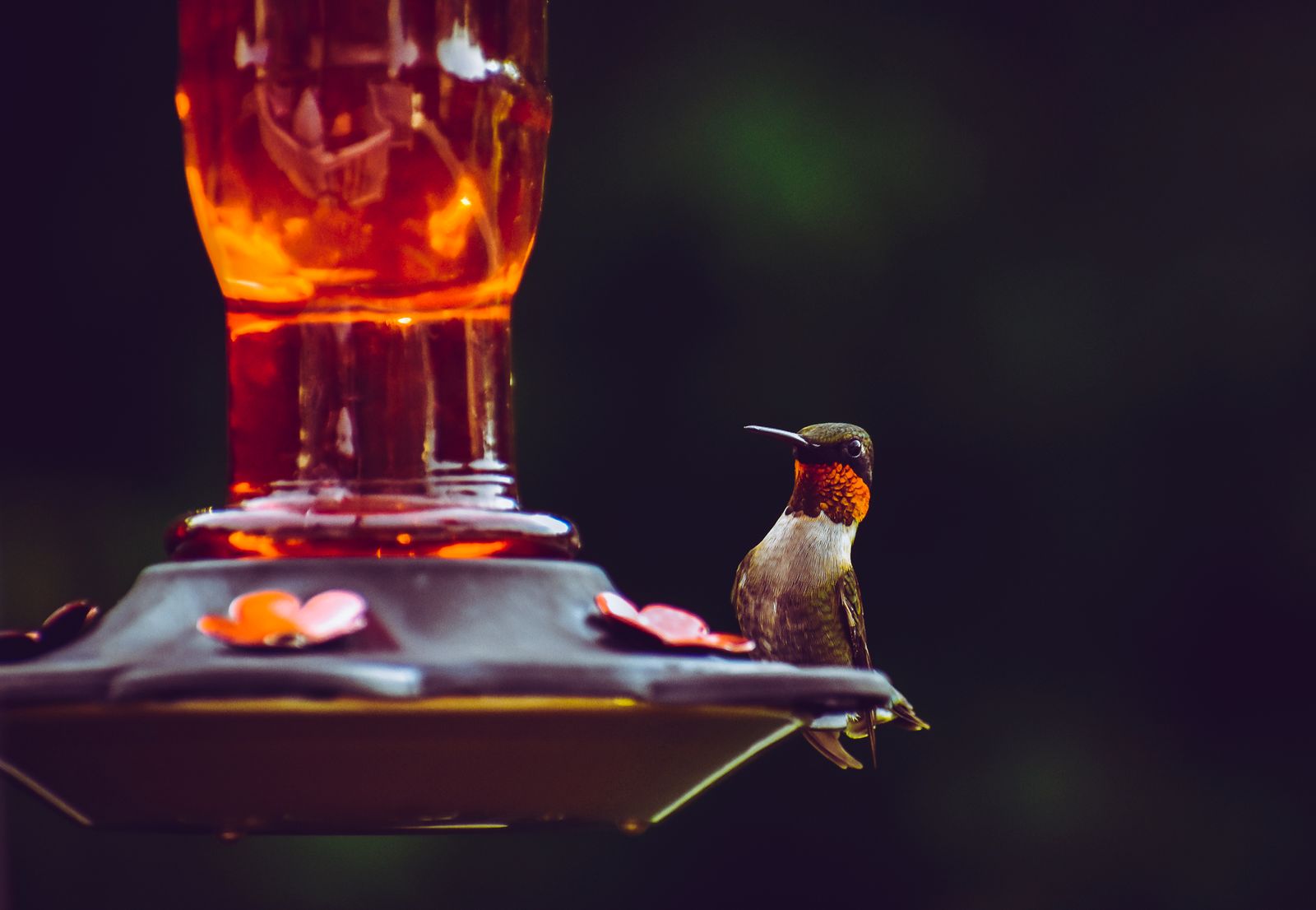
Where to Hang Your Solar Hummingbird Feeder in Spring: Rain & Solar Setup Guide
Follow the 5-foot, 4-hour rule: Hang your solar glass hummingbird feeder 5 feet (1.5 meters) off the ground, positioned 12 to 18 inches inside an east-facing porch eave or shelter line. This delivers 4 to 6 hours of direct morning sunlight for full solar RGB battery charging while deflecting driving spring rain and protecting heavy hand-blown glass from 30+ mph wind gusts.
Essential Placement Guidelines at a Glance
- Height Baseline: 5 feet above ground level keeps nectar accessible for routine 3-day cleaning cycles while keeping hummingbirds safely clear of ground predators.
- Solar Collection: Requires 4 to 6 hours of unshaded morning sunlight to power automatic evening RGB LED illumination for up to 8 hours.
- Rain Defense: Position feeder 12 to 18 inches inside roof drip lines or install a 12-inch clear weather baffle to avoid 1:1 nectar dilution.
- Glass Safety: Anchor heavy 32 fl. oz hand-blown glass feeders using anti-rust metal S-hooks rated for 15+ lbs to prevent storm damage.
- Window Clearance: Maintain either under 3 feet or over 10 feet of distance from glass windows to eliminate fatal bird flight collisions.
Spring Weather Shift: Week-by-Week Adjustment Timeline
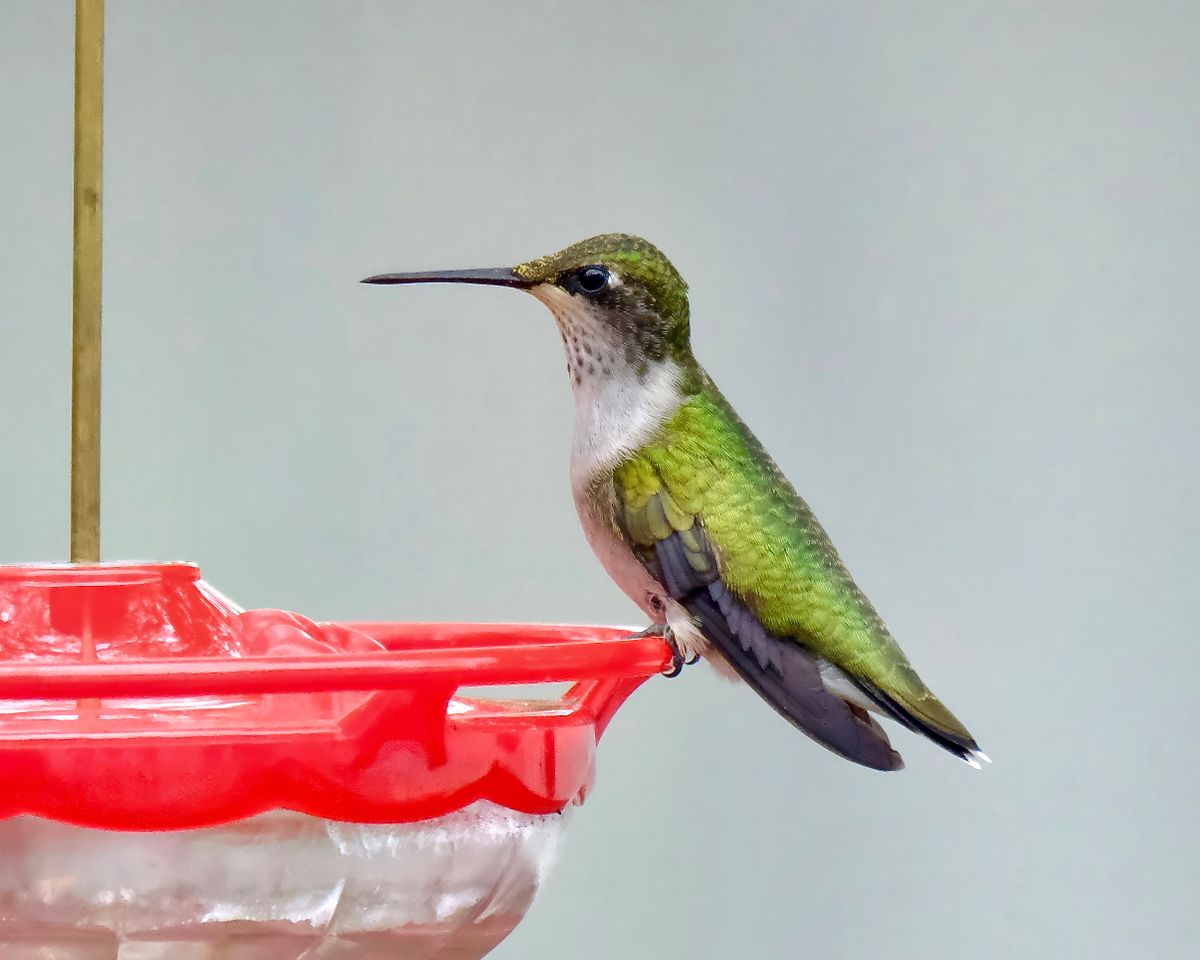
Photo by A. G. Rosales on Pexels
- Early Spring (March / Early Scout Arrival) — Hang feeder on east-facing porch overhangs or bare deciduous tree limbs at 5 feet height. Maximize early sun rays while keeping sugar water from freezing during 32°F overnight dips.
- Mid Spring (April / Heavy Rain Season) — Shift feeder 12–18 inches inside roof drip lines or attach a clear 12-inch weather baffle. Check metal anti-rust bases daily to ensure high winds haven't loosened threaded seals.
- Late Spring (May / Full Canopy & Nesting) — Re-evaluate leaf canopy cover. Prune overhanging foliage blocking the solar top cap to guarantee 4+ hours of direct sunlight, ensuring 8 hours of evening RGB light performance.
Rainy Season Nectar & Solar Panel Care Schedule
- Every 3 Days (Rainy/Warm Weather) — Empty, rinse, and refill 32 fl. oz glass reservoir with fresh 4:1 water-to-sugar nectar. Damp spring conditions accelerate mold growth at port feeding stations.
- Weekly — Wipe the plastic solar cap with a microfiber cloth to remove pollen, dust, and splash water. A clean cap ensures maximum photovoltaic conversion during short spring sun windows.
- Monthly / Post-Storm — Inspect metal base anti-rust coating, clean rubber seals, and verify that mounting S-hooks remain secure after high wind events.
Pro Tip: The Dual-Angle Eaves Technique
To achieve 100% weatherproofing without sacrificing solar battery performance, mount your feeder under a south-east corner porch eave angled at 45 degrees. Morning solar radiation hits the cap directly from the east when sun angles are low, while the roof overhang blocks vertical and westerly driving rainstorms. If high wind persists, add a lower stabilizing tether attached to the metal base loop to eliminate wide sway arcs that strike porch railings.
5 Spring Placement Mistakes That Ruin Nectar & Battery Life
Avoid these common setup blunders that compromise bird health, damage glass, or drain solar battery performance:
Interactive Guide: Finding Your Property's Golden Micro-Zone
- Do you have a covered porch or deck overhang with an East or South exposure? → Yes: Hang 12-18 inches inside the eave at 5 feet height. You achieve 5+ hours of solar exposure with 90% rain deflection.. No: Proceed to next location evaluation.
- Do you have mature deciduous trees (oak, maple, birch) in your garden? → Yes: Suspend from a sturdy 2-inch thick limb using an anti-rust metal S-hook. Early spring bare branches allow max solar charging; emerging summer leaves offer natural shade later.. No: Use a heavy-duty steel Shepherd's Hook anchored in ground soil.
- Are you mounting on an open Shepherd's Hook in your lawn? → Yes: Install a 12-inch clear acrylic weather baffle above the solar cap. Ensure location receives 6 hours of unshaded sun and sits 10+ feet away from house windows.. No: Re-check balcony or wall mount options with 45-degree angle brackets.
Regional Spring Weather & Placement Activation Calendar
| US Climate Zone | Target Setup Date | Spring Placement Strategy | Sun & Rain Adjustment |
| --- | --- | --- | --- |
| Southern Tier (Zones 8-10) | February 15 - March 1 | East-facing porch eave; high rain protection | 4 hours morning sun; 18-inch overhang depth |
| Central / Midwest (Zones 6-7) | March 15 - April 1 | Sheltered deck hook or south eave | 5 hours morning sun; add wind tether |
| Northern Tier / Pacific NW (Zones 3-5) | April 15 - May 1 | Open morning sun with 12" clear weather baffle | 6 hours direct sun; max rain shelter |
Use this timing guide based on your geographical US climate zone to deploy and optimize your solar glass hummingbird feeder.
Printable Pocket Checklist: Spring Feeder Setup
- Set feeder height exactly 5 feet (1.5 m) off the ground.
- Position feeder 12 to 18 inches inside porch roof drip line.
- Verify solar top cap receives 4 to 6 hours of direct morning sunshine.
- Anchor hand-blown glass body with heavy-duty metal S-hook (rated 15+ lbs).
- Check window clearance: distance must be <3 feet or >10 feet from glass.
- Inspect anti-rust metal base threads and rubber gasket for liquid-tight seal.
- Clean solar cap weekly with damp cloth to maintain full 8-hour RGB illumination.
Featured Setup: Heavy-Duty Glass Protection & Solar Lighting
To combine breathtaking artisan craftsmanship with storm-ready resilience, pair your garden setup with the ultimate solar-illuminated feeder.
Side-by-Side: Evaluating Yard Micro-Zones for Glass Solar Feeders
| Yard Location | Rain Protection Score | Solar Charging Hours | Wind Safety Rating | Best For |
| --- | --- | --- | --- | --- |
| Covered Porch Eave (East/South) | 9.5 / 10 | 4 - 6 Hours | 9.0 / 10 | Optimal all-around choice for glass protection & solar battery charge |
| Deciduous Tree Branch | 7.0 / 10 | 5 - 7 Hours (Early Spring) | 7.5 / 10 | Natural bird habitat integration; excellent early spring solar exposure |
| Lawn Shepherd's Hook + Baffle | 6.0 / 10 | 8+ Hours | 6.0 / 10 | Maximum solar lighting efficiency; requires wind stabilization tether |
| Patio Awning Edge | 8.5 / 10 | 4 - 5 Hours | 8.5 / 10 | Great close-up viewing; protect glass from swinging against support poles |
Compare popular spring placement spots to balance solar charging performance, storm protection, and feeder safety.
Diagram: The Golden Zone - Sunlight vs. Shelter Balance
Refer to this spatial clearance diagram when selecting your feeder's overhang position.
Solar Charge & Rain Dilution Risk Estimator
Planning your layout? Use this interactive logic framework to test your candidate hanging location before drilling mounting holes.
Navigating Regional Spring Storm Patterns (US Zones)
Spring climate variations across the United States present unique challenges for solar glass hummingbird feeders:
- Pacific Northwest & Coastal East: Persistent overcast skies and light drizzle require placing solar caps in unshaded East/South micro-zones. Clean solar caps twice weekly to remove water spots and maximize ambient photovoltaic collection.
- Midwest & Great Plains: High wind gusts (30+ mph) accompanied by severe thunderstorms mean heavy 32 oz hand-blown glass feeders must be hung on heavy-duty metal S-hooks near natural wall windbreaks. Add lower tether wires to prevent swinging.
- Southern States: Rapid spring temperature spikes (80°F+) combined with heavy downpours promote rapid fermentation. Position feeders where they receive cool afternoon shade while securing 4-5 hours of morning solar charge.
Storm-Ready Installation Safety Checklist
- [ ] Feeder hung exactly 5 feet above ground level for ideal visibility and cat protection.
- [ ] Feeder positioned 12 to 18 inches inside the porch drip line to avoid roof runoff.
- [ ] Solar cap receives at least 4 to 6 hours of direct morning sunlight.
- [ ] Metal base is fully sealed and screwed tight to prevent nectar leaks in high winds.
- [ ] Clear 12-inch weather baffle installed if hanging on an open shepherd hook.
- [ ] Distance to nearest window is either under 3 feet or over 10 feet to prevent bird collisions.
Frequently Asked Questions About Spring Feeder Placement
How do I keep rain from watering down my hummingbird nectar?
Hang your feeder 12 to 18 inches inside a porch roof overhang or install a 12-inch clear acrylic weather baffle directly above the solar cap. The clear baffle shields feeding ports from driving rain without blocking sunlight from reaching the solar panel.
Will a solar hummingbird feeder charge if it's placed under a porch roof?
Yes. As long as the feeder is positioned near the outer edge facing east or south to receive 4 to 6 hours of direct morning sunlight, the solar battery will reach full capacity to power 8 hours of nighttime RGB illumination.
How do I prevent strong spring winds from breaking my glass feeder?
Anchor your feeder using heavy-duty steel S-hooks rated for 15+ lbs rather than thin plastic hangers. Position the feeder near structural windbreaks like porch posts or house walls, and attach a lower stabilizing line if needed.
What is the best height to hang a hummingbird feeder in spring?
Hang your feeder exactly 5 feet (1.5 meters) off the ground. This height keeps nectar easily accessible for routine 3-day refill cycles while keeping feeding hummingbirds safely above ground predators.
Answers to common reader queries about solar performance, weather baffles, and glass feeder safety.
Your Action Plan for Rainy Season Setup
Your decision: Determine if your primary hanging location offers 4–6 hours of morning sun while keeping the feeder 12–18 inches inside the rainwater drip line.
Do this next: Install a heavy-duty, rust-resistant S-hook at 5 feet height on an east-facing porch eave before early scout birds arrive in your region.
Related resource: Download our Printable Pocket Checklist for Spring Feeder Setup
Equip your garden with the LUJII Solar-Powered Hand-Blown Glass Hummingbird Feeder featuring a leak-proof metal base and automatic RGB lights.
Take these quick steps to prepare your garden for returning hummingbirds and evening solar illumination.
Continue Building Your Spring Hummingbird Haven
Link to related seasonal care guides.
Cover photo by Chris F on Pexels.