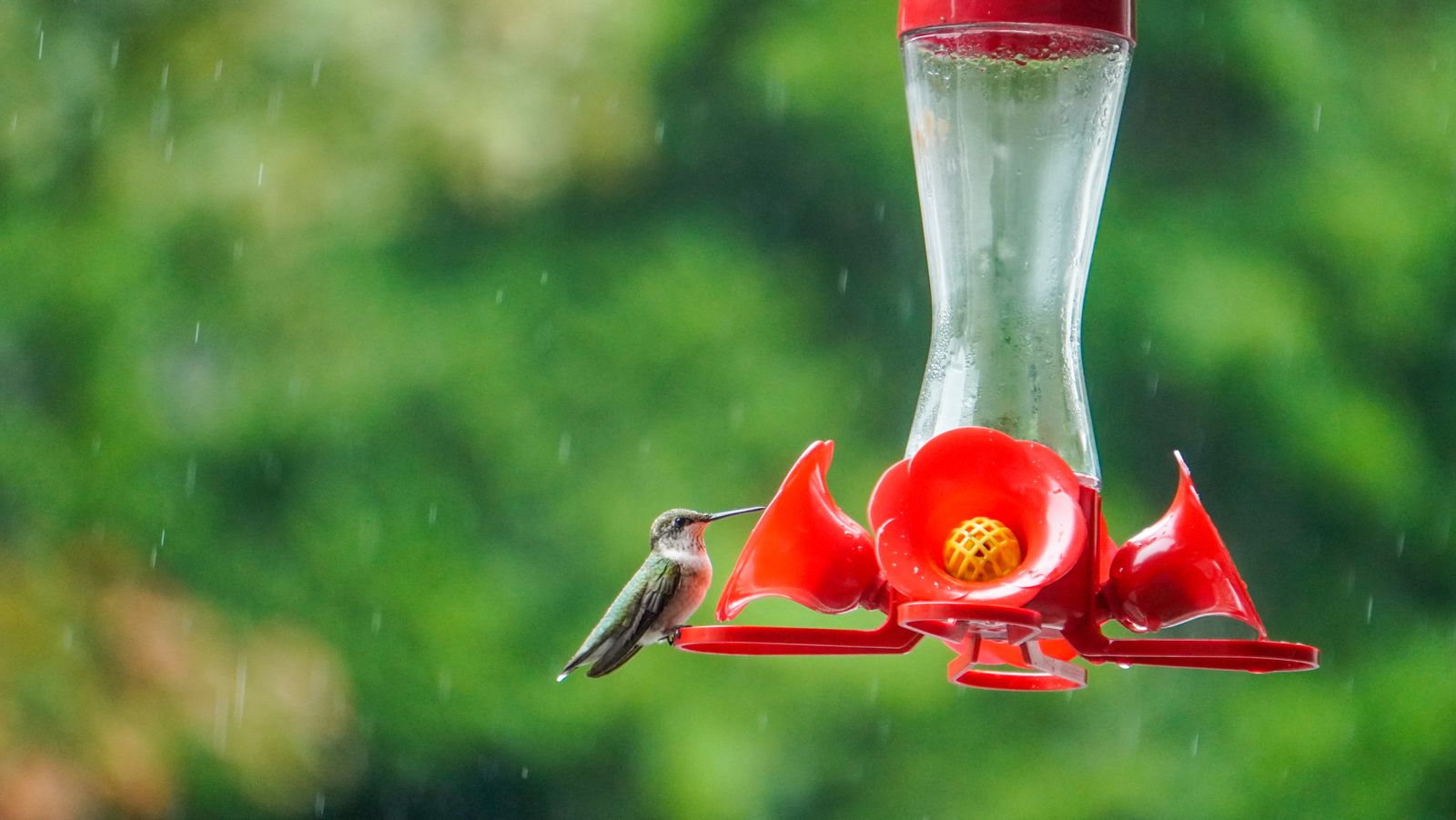
Beat Summer Heatwaves: How to Keep Nectar Fresh and Leak-Free During Extreme Heat
To prevent heatwave nectar spoilage and thermal leaks, change sugar water every 24 hours when temperatures exceed 90°F, fill reservoirs completely to eliminate air pockets, and hang feeders in deep afternoon shade. Hand-blown glass feeders with sealed metal bases naturally insulate nectar and maintain air vacuum pressure far better than thin plastic.
Thermal Expansion Leak Prevention Flowchart
- Ambient Temperature Rises Above 85°F → Yes: Air pocket inside inverted bottle heats up and expands. No: Standard vacuum holds liquid stable in feeding ports.
- Air pocket expands inside bottle → Yes: Internal pressure pushes nectar downward through ports, causing dripping. No: Nectar stays level in internal channels.
- Feeder exhibits active afternoon dripping → Yes: Apply 100% Cool Liquid Fill Method to eliminate trapped air bubble. No: Maintain standard 48-hour refresh schedule.
- 100% Cool Fill applied + Hung in afternoon shade → Yes: Vacuum pressure locked; zero air expansion; nectar remains fresh & leak-free. No: Thermal pressure continues forcing nectar out of ports.
Heatwave Nectar Spoilage & Thermal Leak Matrix
Photo by Ant Armada on Pexels
| Temperature Scenario | Nectar Lifespan | Fermentation & Mold Risk | Thermal Leak Mechanism | Required Action |
| --- | --- | --- | --- | --- |
| Cool Summer (< 75°F) | 4 to 5 Days | Low: Yeast growth develops slowly. | Minimal: Low ambient air expansion. | Standard maintenance; fill to partial or full capacity. |
| Warm Days (75°F – 84°F) | 3 Days (72 Hours) | Moderate: Early micro-fermentation begins. | Slight: Small air pockets expand during peak afternoon heat. | Inspect clarity daily; refresh every 3 days; wipe base ports. |
| Hot Weather (85°F – 92°F) | 2 Days (48 Hours) | High: Rapid yeast multiplication and cloudiness. | Moderate to Severe: Trapped air pushes nectar out of ports by 2:00 PM. | Fill reservoir 100% full with chilled 4:1 nectar; hang in 70%+ shade. |
| Extreme Heatwave (93°F+) | 1 Day (24 Hours) | Critical: Bacterial blooms and dangerous alcohol within 24h. | Extreme: Large air pockets expand rapidly, draining feeder base. | Change nectar daily; partial batches to prevent waste; mandatory full afternoon shade. |
Use this scenario matrix to match daily high temperatures with your exact cleaning frequency, fermentation risk levels, and leak prevention tactics.
Daily Heatwave Feeder Safety Inspection Checklist
- [ ] Check nectar clarity (discard immediately if cloudy, stringy, or black spots appear).
- [ ] Inspect feeding ports for active dripping caused by thermal air expansion.
- [ ] Verify feeder is in complete shade during peak heat hours (11:00 AM – 4:00 PM).
- [ ] Wipe away sticky nectar drips from metal base to prevent ant and wasp infestations.
- [ ] Ensure solar cap is receiving late afternoon angled light for nighttime RGB lighting.
Expert Tip: The Ice-Water Inversion Method for Vacuum Tightness
To lock in maximum vacuum pressure during extreme heat, cool your freshly boiled 4:1 sugar water solution in the refrigerator before filling your feeder. When you invert a handcrafted glass feeder filled to the brim with chilled liquid, the air inside the reservoir remains compressed. As the cool bottle slowly stabilizes to ambient shade temperatures, the tight vacuum seal holds liquid firmly in place, resisting the internal expansion that causes cheap plastic feeders to drip.
Microclimate Placement Decision Tree for Maximum Shade & Solar Charge
- Is your hanging location exposed to direct sun between 11:00 AM and 4:00 PM? → Yes: Move to eastern tree canopy or under a deep covered porch overhang.. No: Location protects nectar from peak thermal heat spikes.
- Does the solar cap receive angled morning or late afternoon sunlight? → Yes: Ideal microclimate! Solar panel recharges fully while nectar stays shaded.. No: Solar light may run shorter at night; consider hanging slightly closer to canopy edge.
- Is the feeder hung within 3 feet of dark brick, asphalt, or vinyl siding? → Yes: Relocate! Radiated wall heat can raise nectar temperatures by 10-15°F above ambient air.. No: Good thermal airflow maintained around glass reservoir.
Your Immediate Heatwave Action Plan
Your decision: Determine if your current feeder setup can withstand thermal expansion or if it requires microclimate adjustment.
Do this next: Move your feeder to full afternoon shade, fill the reservoir completely to eliminate air pockets, and wash thoroughly every 24-48 hours.
- Read next: Hot Weather Nectar Ratios: How to Keep Hummingbird Food Fresh in Summer
- Read next: Twilight Nectar Care FAQ: Does Nighttime Solar Light Affect Nectar Freshness?
Upgrade to a thick Hand-Blown Glass Solar Hummingbird Feeder with an anti-rust metal base for maximum thermal resistance and airtight vacuum performance.
Protect your visiting hummers today by auditing your feeder's shade level and nectar temperature.
Key Takeaways for Hot Weather Nectar Care
Keep these essential heatwave rules in mind throughout July and August:
- Strict 4:1 Ratio: Always stick to 4 parts water to 1 part refined white table sugar. Never alter ratios or add dye during heatwaves.
- Eliminate Air Pockets: Fill inverted bottles 100% full to prevent trapped air from expanding and pushing nectar out of feeding ports.
- Deep Midday Shade: Position feeders where trees or roof overhangs block harsh 11:00 AM – 4:00 PM sunlight.
- Thermal Mass Matters: Artisanal hand-blown glass insulates liquid far better than thin plastic walls.
- No LED Thermal Heat: Solar-powered LED caps produce zero thermal radiation, ensuring nighttime illumination won't warm the nectar reservoir.
Feeder Material Options: Handling Thermal Expansion
During extreme summer heatwaves, heavy hand-blown glass reservoirs with anti-rust sealed metal bases perform significantly better than plastic feeders by mitigating rapid liquid temperature spikes and resisting UV degradation.
Best choice for
- Hand-Blown Glass Solar Feeder with Sealed Metal Base — Thicker glass acts as thermal insulation against sudden ambient air heat spikes, and heavy metal bases maintain tighter air-vacuum seals than warping plastic.
- Using thin plastic feeders in unshaded areas above 90°F, as thermal warping breaks vacuum seals and accelerates fermentation.
- Shaded Porch Hanging with Solar Extension Cable — Keeps the reservoir 100% shaded all day while allowing the solar cell to capture sunlight nearby.
Recommended Heat-Resilient Solar Glass Feeders
Elevate your garden aesthetic while giving hummingbirds a safe, heat-resistant feeding station.
🌟 LUJII Solar-Powered Hummingbird Feeder 🌟
Crafted with thick, hand-blown glass fired at 2,300°F, this feeder features an insulating translucent reservoir that lets you easily monitor liquid levels. Equipped with an automatic solar RGB lighting cap and a leak-proof anti-rust metal base, it seamlessly combines artisanal craftsmanship with weatherproof outdoor durability.
- Capacity: 32 fl. oz slender leak-resistant shape
- Illumination: Up to 8 hours of ambient nighttime RGB lighting
- Base: Anti-rust coated metal with silicone vacuum gasket
Glass vs. Plastic Reservoir Performance in 90°F+ Heat
Photo by Claudia Rodriguez Casas on Pexels
| Performance Metric | Hand-Blown Glass Solar Feeder | Standard Thin Plastic Feeder |
| --- | --- | --- |
| Thermal Mass & Insulation | High: Thick glass slows internal liquid temperature spikes. | Low: Thin walls heat nectar rapidly within 1-2 hours. |
| Vacuum Seal Integrity | Rigid neck preserves gasket seal under pressure changes. | Plastic threads warp in heat, causing vacuum loss and drips. |
| UV & Weather Resistance | 100% UV-proof; colors fired at 2,300°F never fade or leach. | Degrades, yellow-cracks, and can leach micro-chemicals in direct sun. |
| Nighttime Ambiance | Integrated solar LED creates magical RGB evening glow. | No lighting functionality. |
| Cleaning & Maintenance | Non-porous glass resists mold embedding; easy soap soak. | Scratches easily, creating microscopic grooves for black mold. |
Compare how hand-blown glass and standard plastic feeders hold up under hot summer conditions.
Step-by-Step Nectar Refresh & Cleaning Routine for Heatwaves
Follow this simple 4-step protocol every 24-48 hours during hot weather spells to guarantee pure, safe nectar for your birds.
5 Dangerous Heatwave Feeder Mistakes to Avoid
Avoid these frequent missteps that compromise bird health or cause unnecessary feeder leaks during hot weather.
Related Hot-Weather Hummingbird Care Guides
- Summer Hummingbird Feeder Maintenance: Heat, Leak & Rust Guide
- Best Leak-Proof Hummingbird Feeders: Engineering, Physics, and Garden Aesthetics
- Hummingbird Feeder Leak Troubleshooting: Stop Nectar Drips Fast
Frequently Asked Questions About Heatwave Nectar Care
Clear up common questions about solar feeder lighting, sugar ratios, and base maintenance during summer high heat.
Summary & Final Action Plan
Your decision: Ready to beat the heat and enhance your garden landscape?
Do this next: Inspect your outdoor setup today, adjust hanging microclimates for 100% afternoon shade, and ensure you refill with chilled 4:1 nectar.
Related resource: LUJII Solar Hummingbird Feeder Catalog
Explore LUJII Hand-Blown Glass Solar Hummingbird Feeders at https://solarhummingbirdfeeder.com
By understanding the simple physics of thermal expansion and placing your hand-blown glass feeder in optimal midday shade, you can enjoy leak-free feeding and stunning evening solar lighting all summer long.
Cover photo by Koushalya Karthikeyan on Pexels.