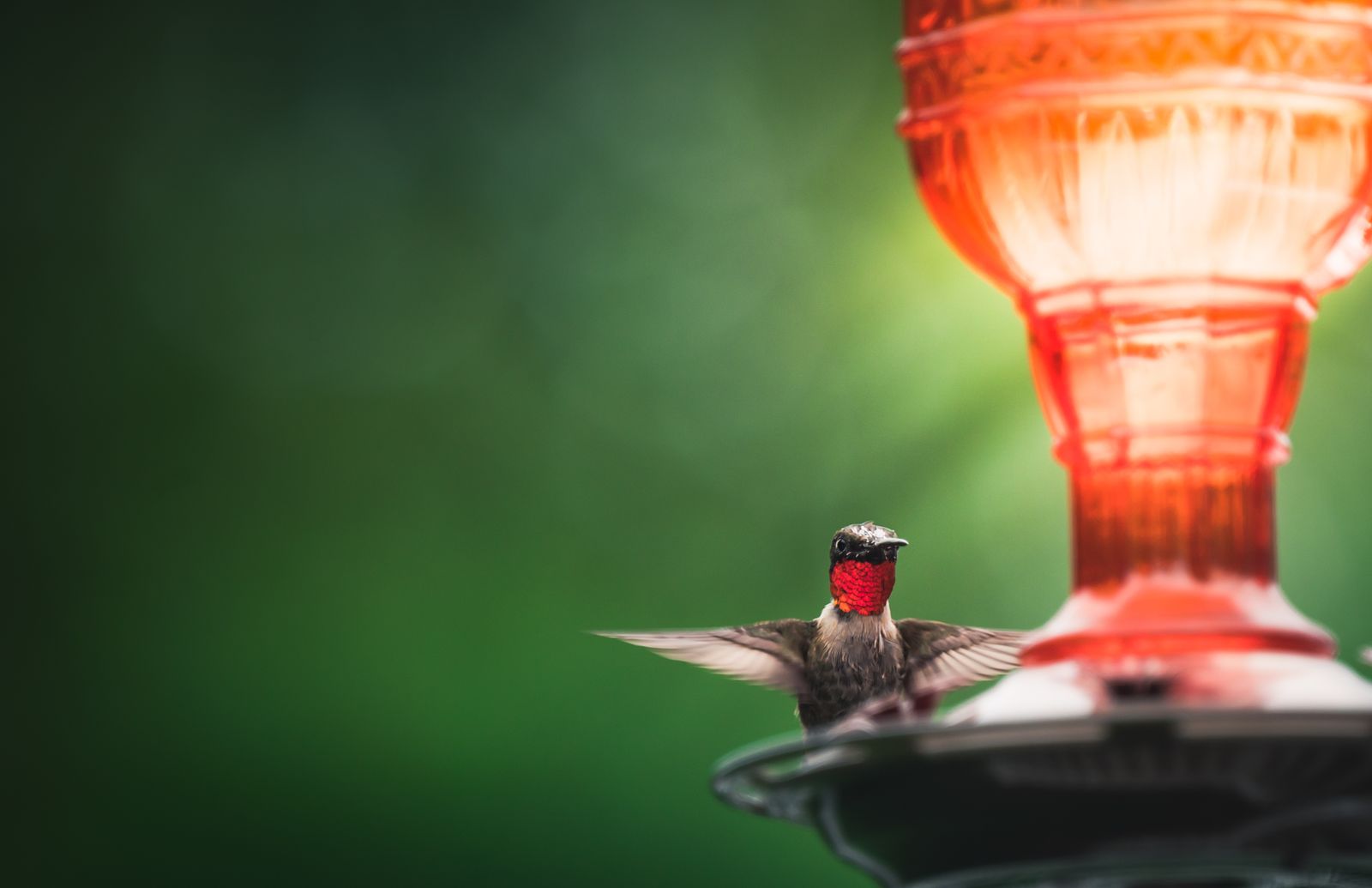
Spring Hummingbird Migration Patterns: When to Hang Your Feeder
14 days before your area's historical first-bird arrival date—or as soon as nighttime temperatures consistently stay above 40°F (4°C)—is the exact threshold to hang your hummingbird feeder. Early male scouts travel up to 50 miles per day and arrive 7 to 10 days ahead of females; hanging your feeder 2 weeks early guarantees nectar is waiting when exhausted migrants arrive.
Essential Spring Migration & Setup Highlights
Key facts to keep in mind for early spring setup:
- 14-Day Advance Window: Mount feeders 10 to 14 days prior to expected regional migration fronts so pioneer male scouts identify your yard as a primary territory.
- 40°F Thermal Threshold: Standard 4:1 sugar nectar freezes at 27°F (-3°C), but feeder maintenance begins when night temperatures average 40°F to prevent thermal shock to early arrivals.
- 2300°F Glass Durability: Hand-blown art glass feeders withstand harsh early spring wind gusts up to 30 mph better than light plastic bottles.
- 8-Hour Solar Illumination: Dusk-activated RGB lighting helps early morning and late twilight scouts locate water and nectar perches in low-light conditions.
- Strict 4:1 Ratio: Use 1 part refined white table sugar to 4 parts water. Never add red dye, honey, or artificial sweeteners.
Monthly Spring Migration Timeline (February through May)
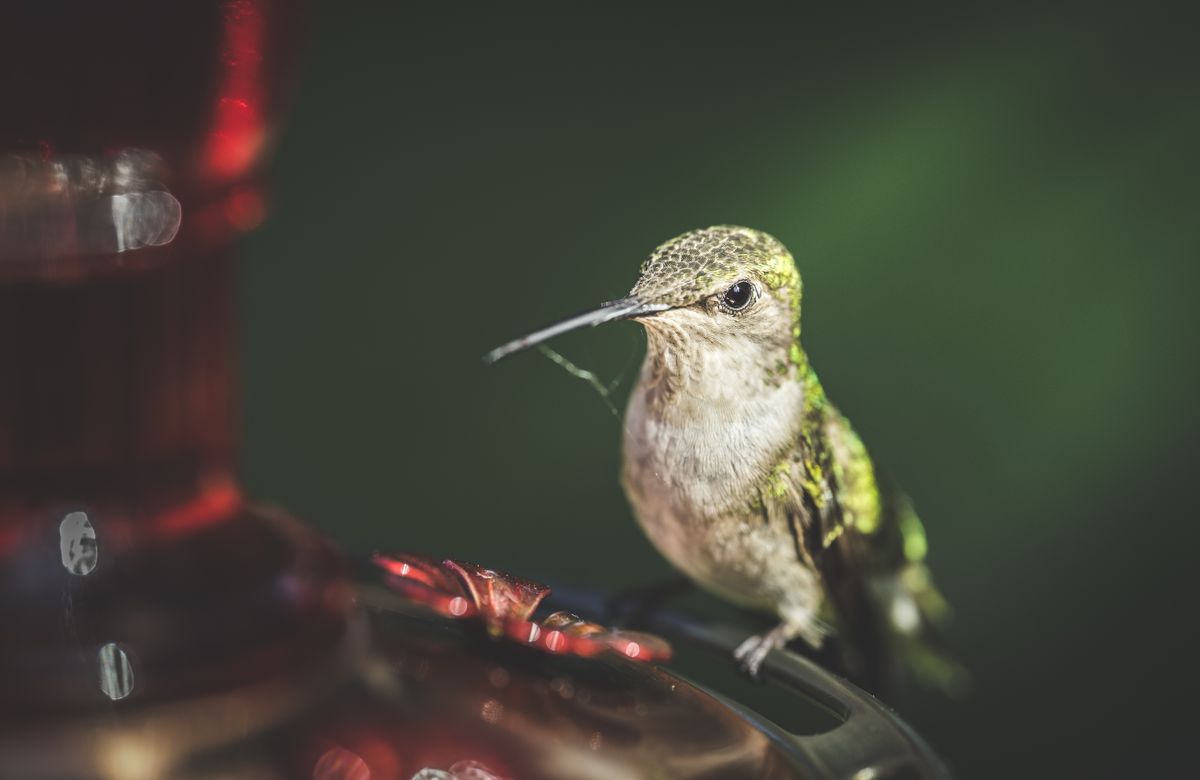
- February 15 – March 15 — Gulf Coast & Deep South Front: Ruby-throated hummingbirds complete their 500-mile, 18-hour non-stop flight across the Gulf of Mexico. Gardeners in Florida, Louisiana, southern Texas, and coastal Georgia must hang feeders by February 20.
- March 15 – April 15 — Mid-Atlantic & Southern Interior Push: Migration moves through North Carolina, Tennessee, Virginia, and northern Texas. Rufous hummingbirds advance along the Pacific Northwest coast. Hang feeders between March 20 and April 1.
- April 15 – May 1 — Central & Midwest Surge: Ruby-throated and Black-chinned arrivals peak across Ohio, Illinois, Pennsylvania, Missouri, and southern New York. Feeder stations should be fully deployed by April 10.
- May 1 – May 15 — Northern Tier & Canadian Border: Final migration wave reaches Minnesota, Maine, Washington, Montana, and southern Canada. Rufous and Broad-tailed species reach high-elevation Rocky Mountain breeding territories.
Early-Spring Nectar Maintenance & Refill Schedule
- Under 60°F (15°C) — Change nectar every 6 to 7 days. Cold weather retards bacterial growth, but check weekly for ambient pollen buildup or dust accumulation.
- 60°F to 70°F (15°C–21°C) — Change nectar every 4 to 5 days. Rinse reservoir thoroughly with hot water during every refill.
- 71°F to 80°F (22°C–27°C) — Change nectar every 3 days. Perform full deep-clean with a 1:10 vinegar solution to eliminate fermentation yeast.
- Above 80°F (27°C) — Change nectar every 2 days max. Position feeder in afternoon shade to prevent sugar solution fermentation and mold growth.
Expert Tip: Catching Early Twilight Scouts with Lighted Feeders
Male scout hummingbirds initiate foraging runs up to 45 minutes before sunrise and continue feeding past late dusk twilight when ambient insect activity drops. During early spring, ambient light levels are low, making feeders tucked under tree canopies difficult to spot. Using a hand-blown glass feeder featuring built-in solar RGB illumination creates a soft, ambient glow that attracts early scouts during low-light dawn and dusk hours without disturbing their natural sleep cycles.
5 Critical Mistakes to Avoid During Spring Migration
Avoid these high-risk errors when preparing your backyard hummingbird habitat:
Species-by-Species Spring Migration Comparison
| Hummingbird Species | Primary Migration Corridor | US Arrival Window | Preferred Habitat & Altitude |
| --- | --- | --- | --- |
| Ruby-throated (Archilochus colubris) | East of Rocky Mountains / Mississippi Flyway | March 1 (South) to May 5 (North) | Deciduous woodlands, suburban gardens, lowland meadows (< 3,000 ft) |
| Rufous (Selasphorus rufus) | Pacific Flyway & Rocky Mountain West | February 15 (NW Coast) to May 10 (AK) | Coastal forests, mountain passes, brushy canyons up to 6,000 ft |
| Black-chinned (Archilochus alexandri) | Intermountain West & Texas Corridor | March 15 (TX) to April 25 (PNW) | Arid river banks, canyon bottoms, urban gardens |
| Broad-tailed (Selasphorus platycercus) | Central & Southern Rocky Mountains | April 10 (AZ/NM) to May 15 (CO/WY) | Subalpine meadows, pine-oak woodlands (6,000 – 10,000 ft) |
Understand arrival timing, primary flight corridors, and habitat preferences for the 4 primary US hummingbird species.
US Regional Migration Arrival & Setup Guide
- Gulf Coast & Deep South (FL, GA, AL, MS, LA, TX) — Deploy feeders by February 20. exhausted migrants arriving from Central America need high-calorie 4:1 nectar immediately. Hang feeders near south-facing tree lines protected from coastal winds.
- Mid-Atlantic & Ohio Valley (VA, NC, PA, OH, KY, WV) — Deploy feeders by April 1. Spring weather fluctuates wildly; ensure feeders are hung near early-blooming shelter like flowering plum or redbud trees to buffer cold overnight gusts.
- Midwest & Upper Great Lakes (IL, IN, MI, WI, MN, IA) — Deploy feeders by April 15. Late spring frosts are common. Bring glass reservoirs indoors overnight if temperatures are forecasted below 25°F, re-hanging them at pre-dawn twilight.
- Pacific Northwest & West Coast (CA, OR, WA) — Deploy feeders by February 15. Anna's hummingbirds reside year-round, while Rufous migrants arrive early. Protect feeders from heavy spring rain using solar top caps and rain guards.
State-by-State Spring Hummingbird Arrival Calendar
| US State / Region | Historical Scout Arrival Window | Target Feeder Deployment Date | Primary Species Expected |
| --- | --- | --- | --- |
| Texas (Gulf Coast) / Louisiana | March 1 – March 10 | February 15 | Ruby-throated, Black-chinned |
| Florida / Georgia / South Carolina | March 5 – March 15 | February 20 | Ruby-throated |
| North Carolina / Tennessee / Virginia | April 1 – April 10 | March 18 | Ruby-throated |
| Missouri / Illinois / Indiana / Ohio | April 15 – April 25 | April 1 | Ruby-throated |
| Pennsylvania / New York / New Jersey | April 20 – May 1 | April 5 | Ruby-throated |
| Wisconsin / Minnesota / Michigan | May 1 – May 10 | April 15 | Ruby-throated |
| Washington / Oregon / Northern CA | March 1 – March 15 | February 15 | Rufous, Anna's |
| Colorado / Utah / Wyoming | May 5 – May 15 | April 20 | Broad-tailed, Black-chinned |
Look up your state to find historical arrival windows and your mandatory 14-day feeder hanging deadline.
Spotting Early Arrivals: Hand-Blown Solar Glass Feeders
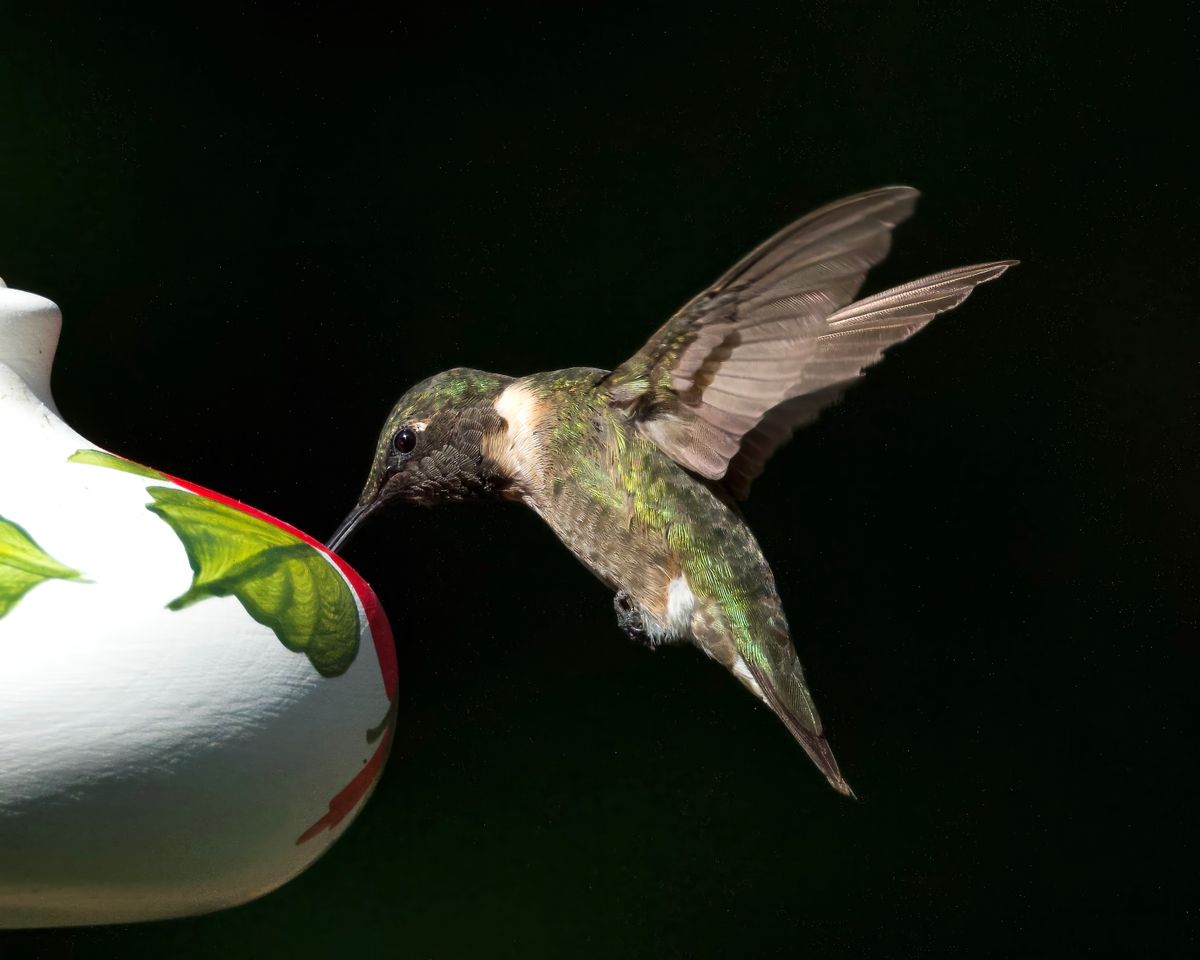
Photo by A. G. Rosales on Pexels
Preparing your garden for early spring scouts requires a balance of heavy-duty durability, weather resistance, and maximum visibility. The LUJII Solar-Powered Hummingbird Feeder is built specifically to address early-season migration challenges.
- 2,300°F Hand-Blown Glass Art: Each 32 fl. oz. translucent reservoir is hand-crafted at 2,300 degrees Fahrenheit, giving it thick glass walls that resist strong spring winds and retain solar warmth longer during chilly mornings.
- Integrated Dusk RGB Illumination: Solar top caps charge during sunny spring days to power up to 8 hours of soft RGB LED lighting at night, making your feeder easy for early-dawn scout birds to locate.
- Leak-Proof Metal Base: Features an anti-rust coated metal base with an airtight rubber seal that prevents drips during spring storm gusts while remaining easy to clean.
Your Early-Spring Deployment Plan
Your decision: Identify your target feeder deployment date by finding your state on the migration calendar and subtracting 14 days.
Do this next: Inspect your hand-blown glass feeder for winter storage wear, test the solar cap under direct sunlight for 6 hours, prepare fresh 4:1 pure white sugar nectar, and mount the feeder 5 to 6 feet high in a sheltered garden spot.
- Read next: How to Make Safe DIY Hummingbird Nectar: The Ultimate 4:1 Recipe
LUJII Hand-Blown Solar Hummingbird Feeder (32 oz, Leak-Proof Base with Dusk RGB Illumination)
Follow these simple actions to prepare your yard before the first migration wave arrives.
Managing Spring Frosts & High Wind Exposure
Early spring weather is unpredictable across most of the United States. Standard 4:1 nectar (1 part white refined sugar to 4 parts water) has a lower freezing point than pure water, solidifying at approximately 27°F (-3°C).
If nighttime forecasts predict dips below 28°F:
Spring Feeder Deployment Setup Checklist
- [ ] Inspect glass reservoir and metal base for any cracks or rust from winter storage.
- [ ] Sterilize feeder thoroughly using a 1:10 vinegar-to-water solution.
- [ ] Prepare 4:1 sugar-water nectar (boil water, dissolve pure white refined sugar, let cool completely).
- [ ] Place solar cap in direct sunlight for 6 hours to verify battery and RGB LED illumination function.
- [ ] Mount feeder 5 to 6 feet above ground in a wind-sheltered spot near early spring cover or tree branches.
- [ ] Hang feeder 10 to 14 days before your state's historical first-arrival date.
Frequently Asked Questions About Spring Migration
Clear answers to common spring feeder timing and maintenance questions.
Explore Related Backyard Wildlife Guides
Enhance your knowledge of hummingbird care and garden decor with these additional guides:
- How to Make Safe DIY Hummingbird Nectar: The Ultimate 4:1 Recipe
- Is Red Dye Safe for Hummingbirds? Myths, Dangers, and Safe Nectar Alternatives
- Do Hummingbirds Feed at Night? Understanding Dusk Behavior Around Illuminated Feeders
- Best Illuminated Feeders for Twilight Garden Decor: Solar RGB Glass vs. Standard Feeders
Cover photo by Chris F on Pexels.