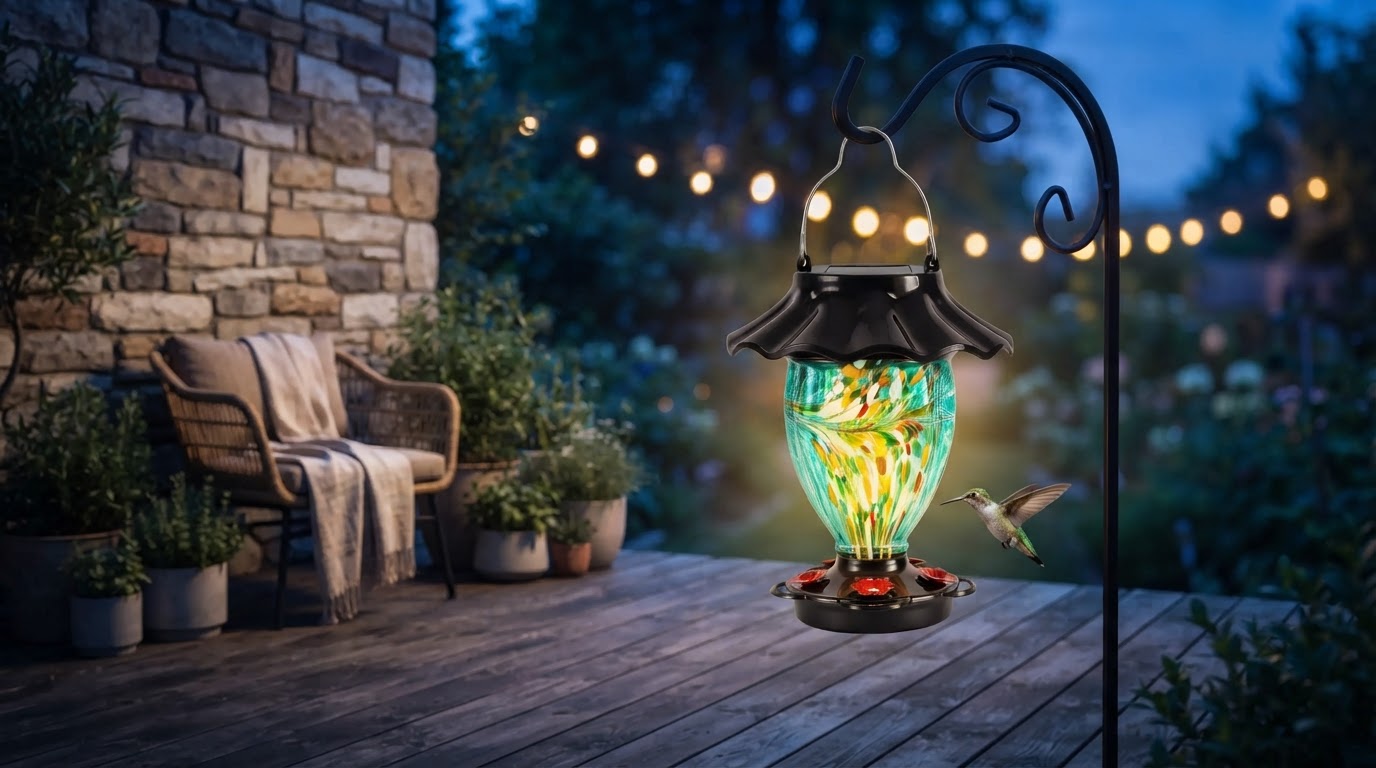
Solar Hummingbird Feeder Night View Performance Check
 Sam VasquezBuying Guide Lead
October 11, 2026 — The rising consumer demand for a solar hummingbird feeder that functions as both a nutritional station and a decorative light source has shifted how we evaluate backyard hardware. While traditional feeders disappear after dusk, modern units utilize integrated photovoltaic cells to power LED arrays or infrared sensors for night-time observation.
I have noticed that most owners prioritize aesthetics, but the technical reality of low-light performance varies wildly between brands. According to data from Better with Birds, high-end units like the isYoung now feature full-color night vision and 2.5K QHD resolution to ensure that even late-evening visits are captured with clarity. This matters because hummingbirds are typically diurnal, but the illumination provided by a hummingbird feeder with solar light allows you to enjoy the feeder's architectural beauty and monitor for nocturnal visitors like moths or curious local wildlife long after the sun sets.
The 4 Night Performance Metrics
When I evaluate a solar hummingbird feeder for night view, I focus on battery capacity and light temperature. A standard glass solar hummingbird feeder typically generates between 5 to 10 lumens of light, which is enough for a soft glow but insufficient for security or detailed photography. For those wanting to actually see activity, the integration of 2K or 2.5K sensors is non-negotiable. The Soliom G1, for example, utilizes a 2K solar-powered camera system to bridge the gap between a simple light and a functional observation tool. If you are looking for the best solar powered hummingbird feeders for visibility, you need to check the IP rating; an IP65 rating ensures the internal LED circuitry survives the moisture that often accumulates overnight. Battery runtime is the other critical factor. Most entry-level solar cells require 6-8 hours of direct sunlight to provide 4-6 hours of illumination. If your yard is heavily shaded, the light will likely fail before midnight. Between these two options—the simple glowing glass models and the high-tech camera units—I’d go with the camera-integrated versions if you actually care about seeing the birds. The simple LED versions are really just lawn ornaments that happen to hold nectar. Skip this if you live in an apartment with a north-facing balcony, as you simply won't get the solar charge necessary to trigger the night sensors.
Expert tip: To maximize the night view on a camera-equipped model, avoid placing the feeder directly under a bright porch light, as the ambient glare can confuse the infrared sensors and wash out the High Dynamic Range (HDR) balance.
For most backyard setups, the Best Solar Powered Hummingbird Feeders will offer a balance of 3000K warm light and at least a 600mAh battery. If you're on a budget, a standard glass solar hummingbird feeder provides the best visual appeal for the price, even if it lacks the high-definition recording capabilities of the pro-tier smart feeders. Here's what I'd actually buy: a high-capacity solar unit with a dedicated perch, as the extra weight of a camera requires a more stable mounting system than a simple shepherd's hook.
Shop Solar Hummingbird Feeder.
Sources
- Smart Hummingbird Feeder Pro Solar
- Top 7 Best Smart Hummingbird Feeders with Cameras 2026
- The Best Bird Feeder Cameras of 2026