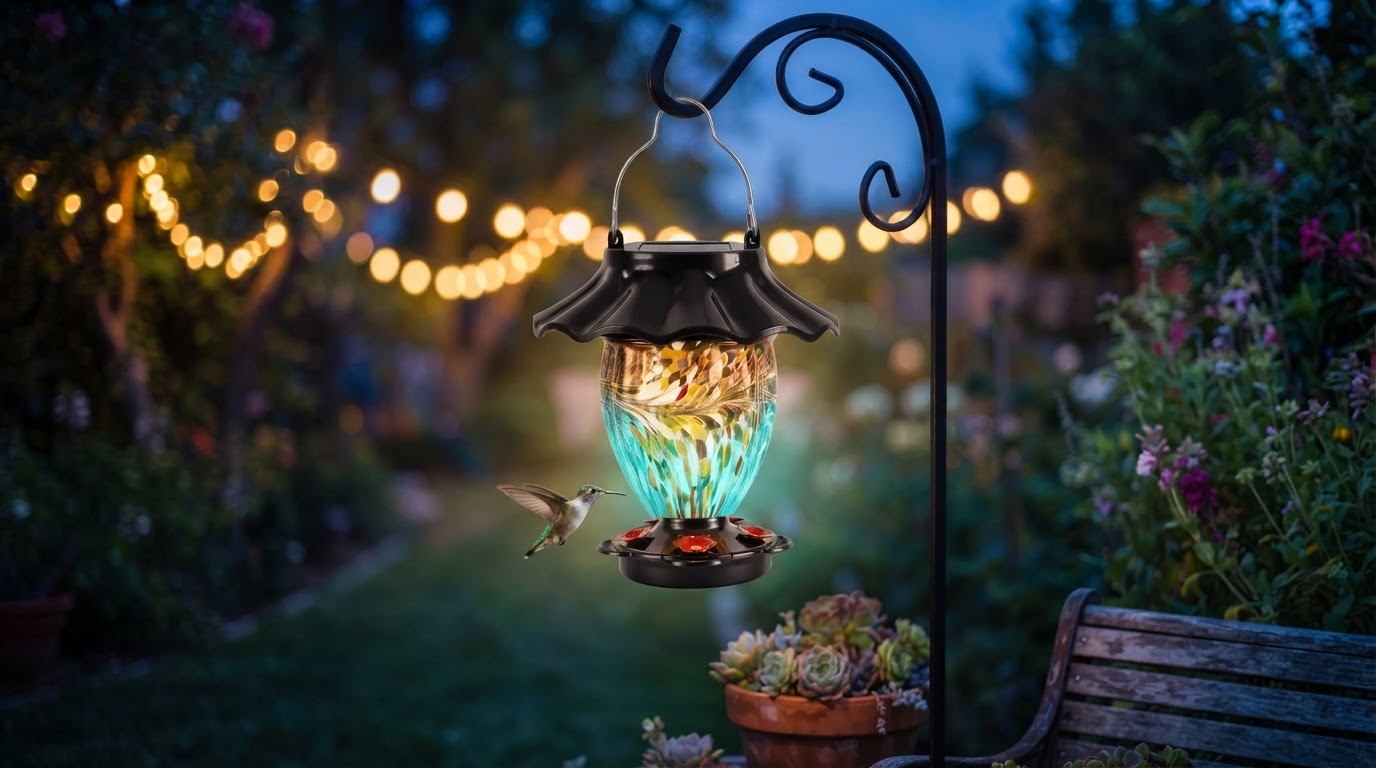
Solar Hummingbird Feeder Aesthetics for Garden Decor
 Sam VasquezBuying Guide Lead
October 1, 2026. This guide examines how a solar hummingbird feeder serves as both a functional avian habitat and a central piece of garden lighting. It is written for homeowners looking to integrate wildlife support into their existing outdoor aesthetic without adding complex wiring.
The Challenge of Nighttime Garden Utility
Traditional hummingbird feeders are designed for daytime visibility, often relying on bright red plastics to attract birds. While effective for the birds, these feeders frequently become visual dead zones once the sun sets, contributing nothing to the evening ambiance of a patio or garden. Many gardeners struggle to find a balance between supporting local pollinators and maintaining a cohesive landscape design that looks intentional after dark. According to Hobby Lobby, modern solar-powered LED hummingbird feeders address this by utilizing clear or textured glass bottles that capture light during the day and illuminate from within at night. This shift from utility-only plastic to decorative glass reflects a broader trend in outdoor design where every element must serve a dual purpose.
When I look at the current market, I see a clear divide between mass-produced plastic models and artisanal glass pieces. The plastic versions are functional but often lack the durability to survive a full season of UV exposure without fading or cracking. In contrast, a copper solar hummingbird feeder balcony setup provides a more permanent architectural feel. The problem isn't just about how the feeder looks to us; it is about how it withstands the elements while remaining attractive to the birds. If you choose a model with low-quality solar cells, you end up with a dull glow that fails to highlight the garden's features. A well-placed solar bird feeder hanging lantern can act as a wayfinding light, but the hummingbird-specific models need to prioritize the nectar reservoir's integrity to prevent fermentation under the heat of the internal LED. Finding a unit that balances thermal management with light output is the primary hurdle for most buyers.
Integrating Solar Lighting and Avian Care
To solve the problem of dark garden corners, the Solar Hummingbird Feeder utilizes a high-efficiency solar panel integrated into the lid. This design ensures that the internal battery, which Earl May Garden Centers notes can run for up to 8 hours per charge, remains hidden from view while maximizing sun exposure. For those specifically searching for a glass solar hummingbird feeder, the weight of the hand-blown glass provides necessary stability against wind, preventing the nectar from spilling. The light emitted is typically a soft, warm white or a color-changing cycle that illuminates the embossed textures of the glass. This creates a shimmering effect that mimics the movement of water, adding a dynamic layer to your garden decor that a static decorative solar garden lights bird feeder might miss.
Here's what I'd actually buy: I prefer the hand-blown glass models over the textured plastic versions. The glass is easier to sterilize, which is non-negotiable for bird health. If you're on a budget, the Hobby Lobby model with the wavy embossed texture is a solid entry point, though it uses a plastic base. However, between these two, I’d go with a LUJII model because their leak-resistant designs are more robust for long-term outdoor use. They offer a specific aesthetic that fits well in a cottage-style garden or a modern minimalist backyard. The key is the placement; a solar feeder needs about six hours of direct sunlight to perform. I’ve found that placing it near a solar bird feeder hanging lantern creates a layered lighting effect that makes the garden feel larger at night. Skip this if you have a heavily shaded yard with no access to direct sunlight, as the LED will never reach its full brightness and the battery life will suffer significantly.
Selecting the Right Decorative Feeder for Your Space
Choosing a feeder involves more than just picking a pretty color. You need to consider the maintenance cycle and the specific needs of the birds in your region. A decorative solar garden lights bird feeder might attract a variety of songbirds, but hummingbirds require specific port sizes and protection from bees. When evaluating a solar hummingbird feeder for your garden decor, use this framework to ensure you aren't sacrificing function for form:
- Material Durability: Prioritize hand-blown glass or thick, UV-stabilized polycarbonate to prevent clouding and leaks.
- Solar Capacity: Ensure the solar cell is positioned on top and has a clear path to the sky; side-mounted panels often fail to charge fully.
- Ease of Cleaning: The feeder must come apart completely. If you can't reach the bottom of the reservoir with a brush, mold will grow.
- Light Duration: Look for a minimum of 6-8 hours of illumination to ensure the garden stays lit through the evening.
- Nectar Protection: The LED should be positioned so it does not significantly raise the temperature of the nectar, as heat speeds up spoilage.
- Mounting Options: Consider if you need a shepherd's hook or if the feeder includes a built-in hanging chain for a copper solar hummingbird feeder balcony installation.
Shop Solar Hummingbird Feeder here: https://solarhummingbirdfeeder.com