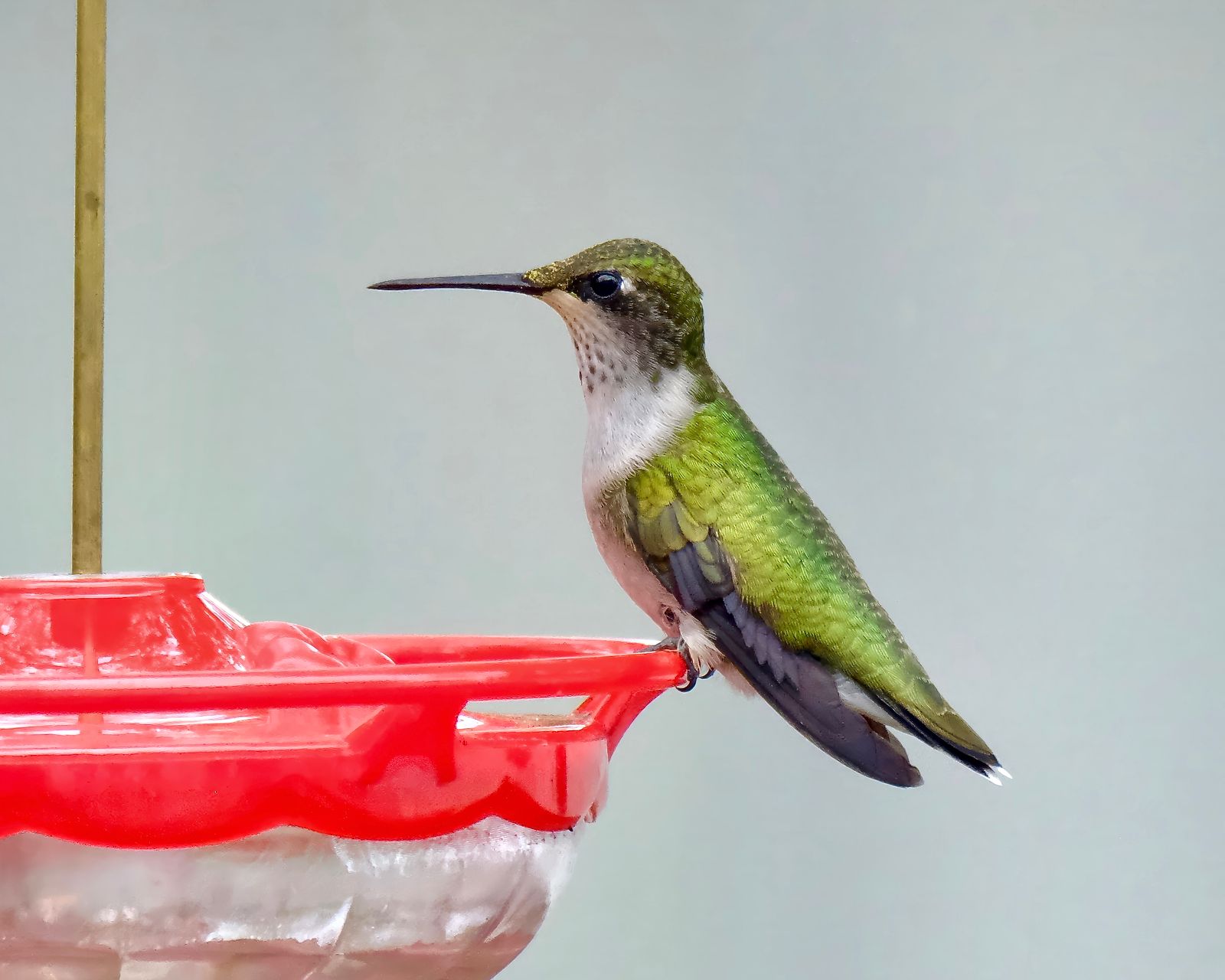
Solar Bird Feeder Performance: PNW Rain vs. Desert Sun Guide
A solar hummingbird feeder yields 3 to 4 hours of RGB LED runtime under 50% overcast Pacific Northwest skies versus 8 full hours in direct Desert Southwest sunlight. Nectar requires replacement every 5 to 7 days in cool 60°F drizzle, but every 24 to 48 hours in 95°F+ desert heat to stop fermentation.
Essential Regional Performance Takeaways
- 3–4 Hours vs. 8 Hours: Overcast PNW skies convert diffuse daylight into 3 to 4 hours of night lighting, whereas clear Desert Southwest sun delivers a maximum 8-hour charge.
- 24–48 Hours vs. 5–7 Days: High desert heat (95°F+) accelerates sugar fermentation requiring 24 to 48 hour nectar swaps, compared to weekly refills in cool 60°F damp weather.
- 2,300°F Hand-Blown Glass: Artistically crafted glass withstands high ambient thermal expansion easily, but needs protection against thermal shock from ice-cold water.
- Dual Climate Weatherproofing: An IP-rated protective plastic solar cap shields sensitive electronics from heavy rain, while a powder-coated anti-rust metal base resists corrosion in high humidity.
Climate Deep Dive: PNW Overcast Moisture vs. Desert Southwest UV & Heat
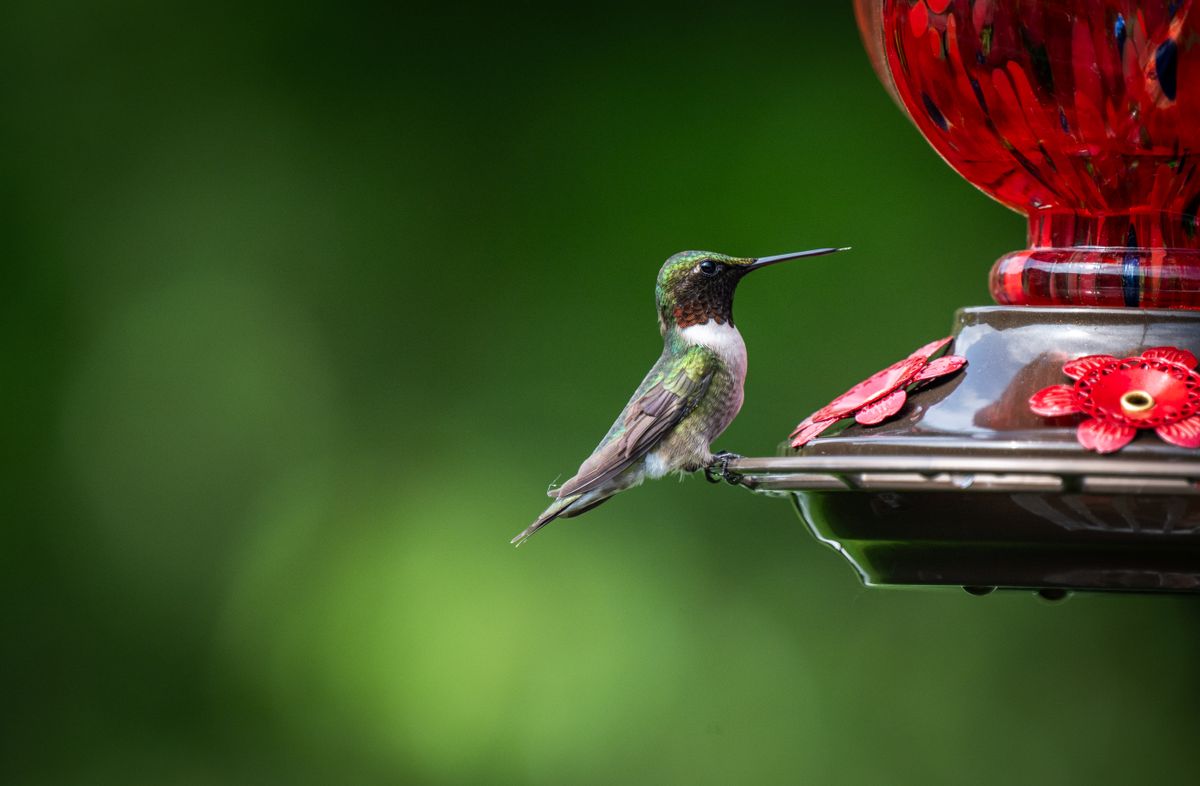
Solar hummingbird feeders operate at the intersection of optics, microbiology, and atmospheric physics. In the Pacific Northwest (PNW), marine cloud layers scatter direct sunlight, reducing total photon arrival at the top solar panel. However, modern photovoltaic cells still capture diffuse solar radiation, accumulating enough charge during a 60°F drizzly afternoon to power multi-mode RGB LEDs for 3 to 4 hours after dusk.
Conversely, the Desert Southwest presents intense direct UV radiation and ambient temperatures frequently exceeding 100°F. Under these conditions, the solar panel achieves a 100% battery top-off within 4 to 5 hours, driving dusk-to-dawn LED runtime up to the 8-hour limit. The primary challenge in desert climates isn't solar battery yield—it is nectar preservation. Sugar water exposed to high heat ferments rapidly into dangerous alcohol and mold colonies, making strict 24 to 48 hour nectar replacement schedules mandatory.
LUJII Weatherproofing Specifications & Climate Tolerances
| Component / Feature | Craft & Material Specification | PNW Wet Climate Tolerance | Desert Heat Climate Tolerance |
| --- | --- | --- | --- |
| Glass Reservoir | 32 fl.oz Hand-blown glass (Shaped at 2,300°F) | Impermeable to moisture; translucent walls simplify mold monitoring. | Handles 115°F+ air temps; resists thermal stress when refilled at room temp. |
| Solar Engine & Cap | Sealed IP-rated protective plastic housing | Shields internal solar battery and circuit board from persistent rain. | UV-stabilized casing prevents yellowing and hazing under intense solar rays. |
| Illumination System | Automatic dusk sensor with multi-mode RGB LEDs | Delivers 3–4 hours of vibrant ambient light after diffuse cloud charging. | Delivers full 8 hours of brilliant nighttime lighting after direct sun absorption. |
| Base Assembly | Leak-proof, powder-coated anti-rust metal base | Resists corrosion from continuous 85%+ relative humidity and damp air. | Sealed silicone gasket guards against heat-induced liquid leaks. |
Here is how the handcrafted materials and protective engineering of the LUJII Solar Hummingbird Feeder perform across opposing weather extremes.
Pro Placement Tip: The 50/50 Shade & Sun Balance Rule
To achieve maximum night illumination without boiling your nectar in hot climates, apply the 50/50 Placement Rule. Hang your feeder where the top solar panel catches unobstructed morning sun from 7:00 AM to 11:00 AM (charging the battery), while a tree canopy or porch overhang casts deep shade over the lower 32 fl.oz glass reservoir during scorching 2:00 PM to 6:00 PM afternoon peak heat.
Microclimate Placement Strategies for PNW & Southwest Yards
- Pacific Northwest (Rainy, Overcast, Mild 50°F–68°F) — Mount the feeder on an unshaded south-facing shepherd's hook away from dripping evergreen branches. Ensure the top solar cap has a clear sky view to maximize diffuse light harvesting, and clean the solar cap weekly to remove rainwater mineral spots.
- Desert Southwest (Scorching Sun, Low Humidity, 95°F–110°F+) — Hang the feeder under an eastern patio arbor or deciduous shade tree. This protects the 32 fl.oz hand-blown glass reservoir from direct afternoon heat while allowing morning sunlight to fully recharge the solar light engine.
Featured All-Climate Feeder: LUJII Hand-Blown Glass Solar Feeder
Whether your garden faces heavy coastal moisture or intense desert sunshine, the LUJII Solar-Powered Hummingbird Feeder combines artisanal beauty with multi-climate durability. Each 32 fl.oz glass reservoir is individually handcrafted at 2,300°F by master glassmakers, creating vibrant, one-of-a-kind translucent patterns that let you check nectar levels at a glance.
At night, the solar cap automatically illuminates the glass with mesmerizing RGB lighting for up to 8 hours. Supported by a leak-proof, powder-coated anti-rust metal base and a protective waterproof solar cap, this feeder resists both rust and intense thermal UV rays, making it an ideal gift and garden accent for bird lovers across the United States.
PNW Rain vs. Desert Sun: Side-by-Side Climate Performance Matrix
| Performance Metric | Pacific Northwest (Wet / Overcast) | Desert Southwest (Hot / Arid) | LUJII Built-In Feature Defense | Recommended Care Action |
| --- | --- | --- | --- | --- |
| Direct Sun Exposure | 1 to 3 hours (High overcast) | 8 to 12 hours (Clear direct sun) | High-efficiency top solar panel | Wipe top solar panel cap clear of dust or rainwater film every 3 days. |
| Nighttime LED Runtime | 3 to 4 hours ambient glow | 8 hours maximum full runtime | Auto-on sensor & multi-mode RGB LEDs | Position solar panel with unobstructed overhead sky view. |
| Nectar Fermentation Risk | Low (Temperatures < 70°F) | Critical (Temperatures > 95°F) | Slender 32 fl.oz see-through glass body | Refresh nectar every 5–7 days in PNW vs. every 24–48 hours in Desert. |
| Moisture & Rust Threat | High (85%+ humidity & drizzle) | Low (Dust and dry wind focus) | Anti-rust powder-coated metal base | Inspect base threads monthly to ensure drain ports remain unobstructed. |
| Glass Thermal Stress | Low (Mild seasonal swings) | High (Ambient heat + direct UV) | 2,300°F hand-blown art glass | Never pour cold liquid directly into a scorching sun-warmed glass bottle. |
Compare key environmental variables, battery expectations, and maintenance schedules across both regional extremes.
Climate Decision Guide: Matching Your Setup to Your Local Weather
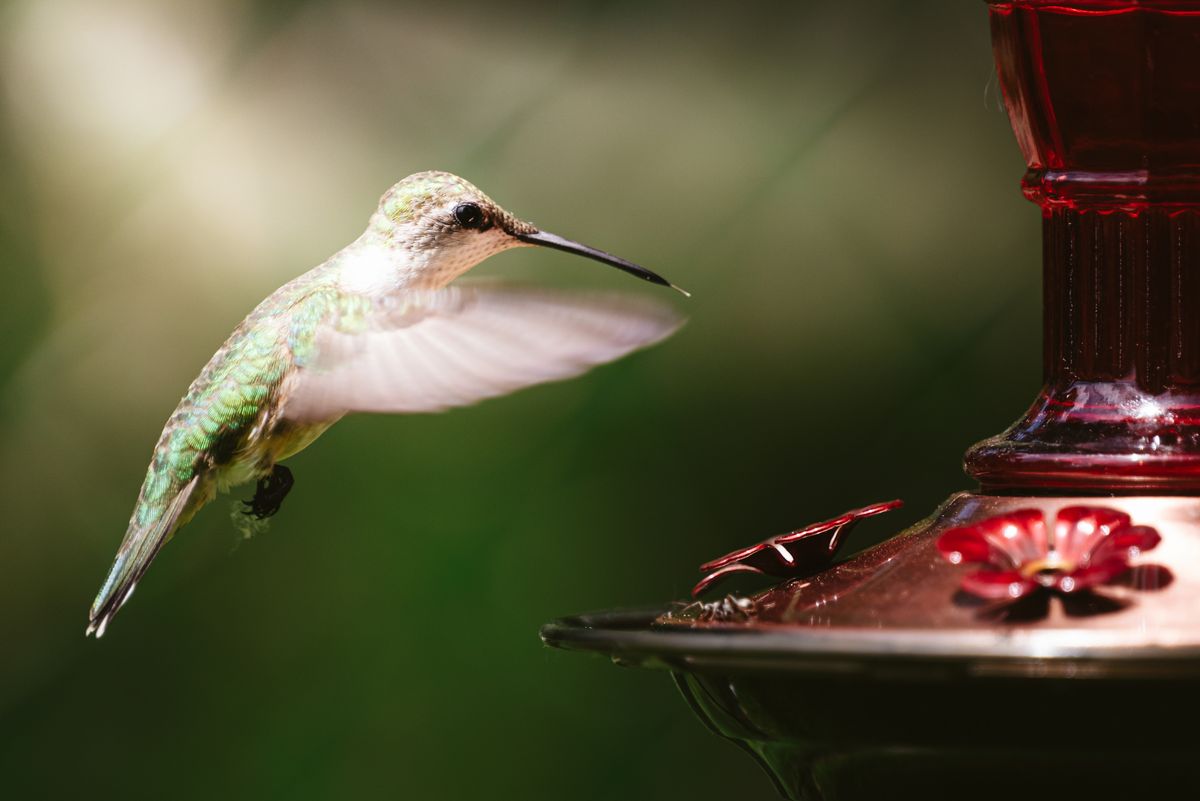
Optimize your solar feeder setup by balancing top-panel solar clearance with lower-reservoir shade protection based on local high temperatures and humidity levels.
Best choice for
- Unshaded South-Facing Shepherd's Hook — Captures maximum diffuse UV daylight for 3 to 4 hours of RGB night light while keeping 32 fl.oz nectar fresh for up to 7 days.
- Morning-Sun / Afternoon-Shade Patio Canopy — Provides 4–6 hours of morning solar charge for a full 8-hour night light show while shading nectar from rapid 24–48 hour heat fermentation.
- Hanging solar feeders directly under dense evergreen canopy drips in rainy regions where solar panels get under 2 hours of sky exposure.
- Leaving 4:1 sugar nectar unswapped for longer than 48 hours in desert environments exceeding 90°F ambient heat.
- Dual-Feeder Rotation Strategy — During extreme 100°F+ heat waves, rotate a freshly chilled 32 fl.oz feeder from inside every 24 hours while thoroughly cleaning and refilling the alternate feeder.
Real-World Backyard Scenarios: From Seattle Drizzle to Phoenix Heatwaves
Seattle Spring Drizzle (55°F, Overcast, Intermittent Drizzle) — Mount the feeder on an elevated garden pole clear of roof drip lines. The protective plastic solar cap shields internal electronics from dampness while capturing diffuse light for 3 to 4 hours of soft evening color. Change nectar every 6 days.
Phoenix Summer Heatwave (105°F, Direct Sun, Low Humidity) — Hang the feeder under a shaded patio arbor where morning sun hits the top cap at a 45° angle. Change nectar every 24 hours to prevent dangerous fermentation. Always bring hot glass indoors to cool to room temperature before washing or refilling.
Here is how to adjust your feeding routine during seasonal weather changes in two distinct US climate zones.
Frequently Asked Questions About Regional Solar Feeder Performance
Find answers to common questions about regional solar charging, thermal tolerances, and weather protection.
Next Steps for Your All-Climate Solar Feeder Setup
Your decision: Determine whether your local backyard experiences heavy overcast moisture or intense heat waves to select the optimal hanging spot.
Do this next: Position your solar feeder to catch morning sunlight on the top cap while keeping the glass reservoir shaded from scorching afternoon heat.
- Read next: LUJII Solar-Powered Hummingbird Feeder Official Homepage
🌟 LUJII 32 fl.oz Hand-Blown Glass Solar Hummingbird Feeder 🌟 featuring RGB lights, leak-proof metal base, and waterproof solar cap.
Take these quick steps to set up your solar feeder for maximum longevity, brilliant night illumination, and happy hummingbird visitors.
Explore Related Solar & Heritage Glass Feeder Guides
Provide internal navigation to relevant guides.
Cover photo by A. G. Rosales on Pexels.