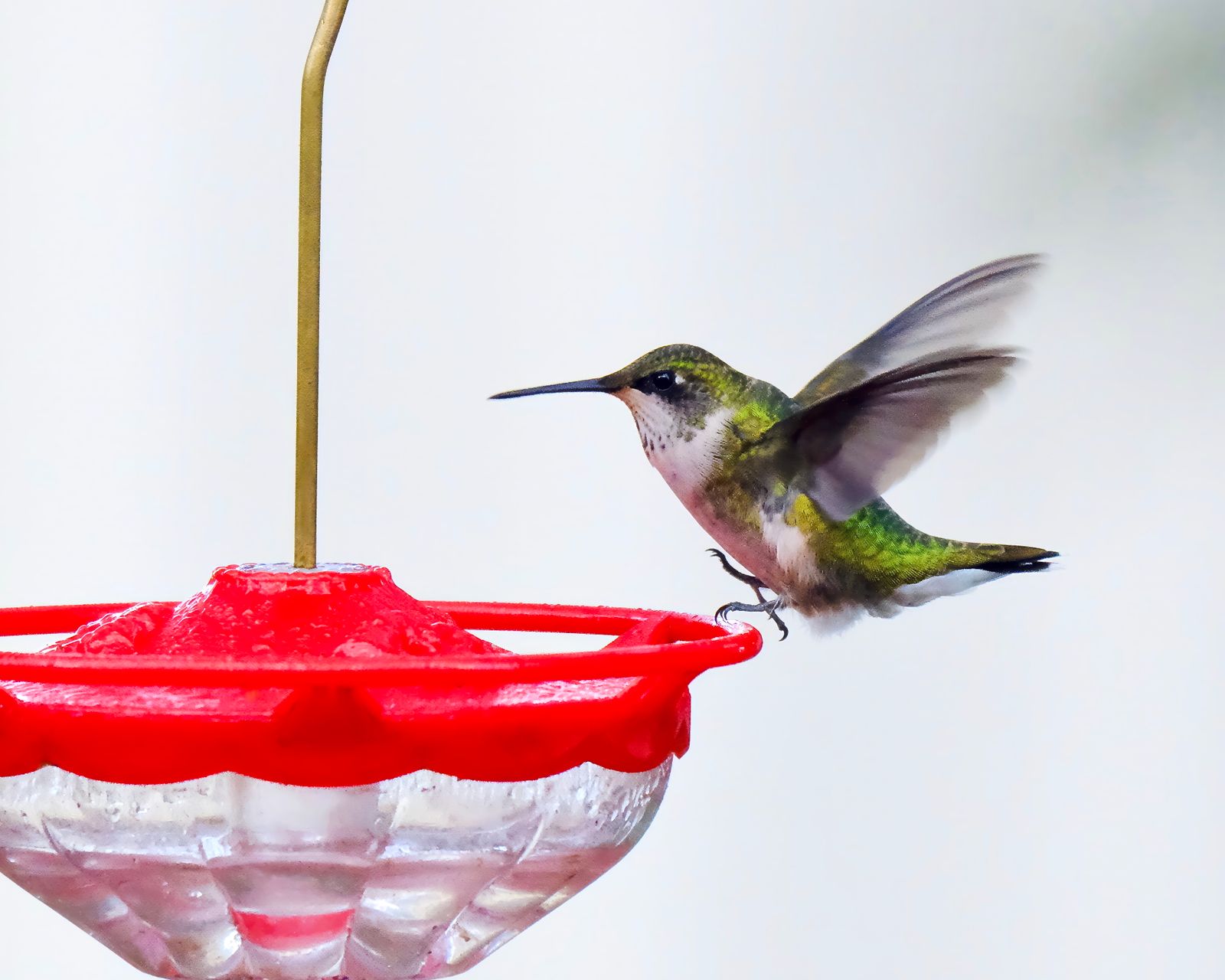
How to Choose a Solar Hummingbird Feeder for Your Yard: Sun, Sightlines, and Bird Traffic
Choosing a solar hummingbird feeder is mostly a yard question, not a product question. Three things decide whether a feeder works where you live: how much unshaded midday sun the spot gets, how much traffic your local birds actually generate, and where you will be sitting when you look at it. Get those right and the feeder performs; get them wrong and even a beautiful piece ends up in shade, half full of spoiling nectar, facing the wrong direction.
Start with your yard's sun map
Solar hardware is placement-dependent in a way nothing else in a garden is. Walk outside at midday — not morning, not evening — and note which spots have open sky overhead. Those are the only places a solar cap charges properly. A feeder whose lights run for up to 8 hours after a full recharge will deliver that on a clear day in an open spot and a fraction of it under a leafy branch.
Then complicate the picture on purpose, because nectar wants the opposite of what the panel wants. Direct afternoon sun on a reservoir accelerates fermentation, so the ideal spot gets strong morning and midday light on the cap and relief from the worst afternoon heat. East-facing walls, the edge of a pergola, and open positions under a high thin canopy all thread that needle.
Write down your candidate spots before you shop. Whether you need a hanging feeder, a shepherd's hook, or a post mount falls out of that list rather than the other way around.
How much capacity do you actually need?
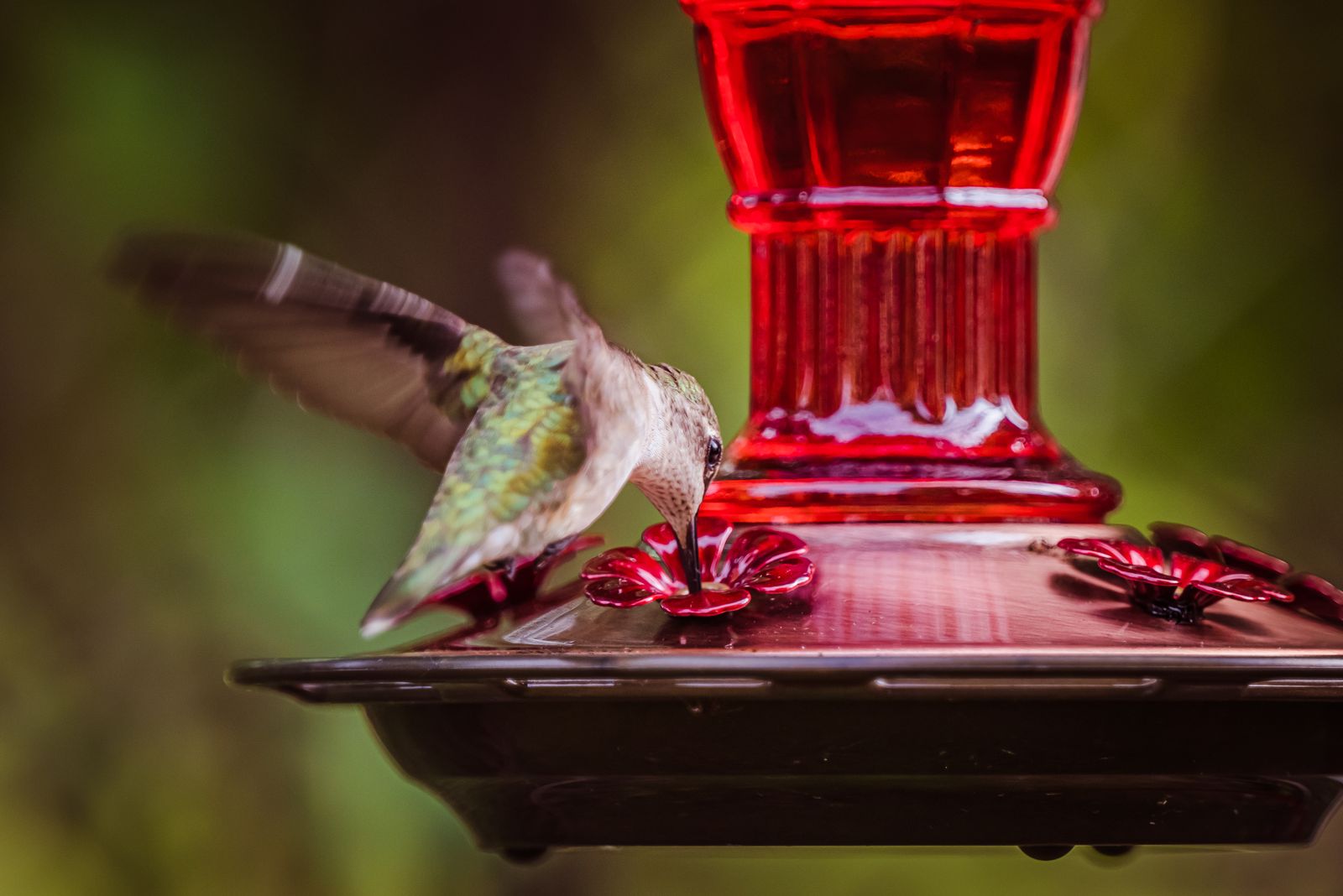
Bigger is not better with nectar. Sugar water spoils on a schedule set by temperature, so any nectar the birds do not drink before the change interval expires gets poured out. Capacity should match your traffic, and most yards need less than people assume.
| Your situation | Practical fill volume | Why | |---|---|---| | First season, no birds yet | A few ounces at a time | Almost all of it would otherwise be discarded | | One or two regular visitors | Roughly a quarter full | Change every 2 to 3 days in mild weather | | A busy yard in migration season | Half to three-quarters full | Traffic can empty this in a day or two | | Hot weather, any traffic level | Less than usual | Daily changes above 90°F make big fills wasteful |
This is the argument for a larger reservoir used partially rather than a small one used fully: a 32 fl.oz capacity gives you headroom for a heavy migration week without forcing you to overfill in July. A see-through glass body makes partial fills easy to judge, since the nectar level reads from across the patio.
Why one feeder is often the wrong answer
Hummingbirds are territorial, and a single dominant bird will frequently claim a feeder and spend the day chasing every other bird off it. From the patio this looks like a busy feeder. In reality one bird is eating and several are being driven away.
The fix is two or three feeders placed out of sight of each other — around a corner of the house, on opposite sides of a shrub, at different heights with something visually blocking between them. A bird cannot defend what it cannot see. This single move does more to increase how many hummingbirds you watch than any feature on any feeder.
It also changes what you should buy. Instead of one enormous feeder, plan on a set of smaller fills in separated positions, and stagger your placement over a couple of weeks so you learn which positions get used.
Where you will look at it from
Feeders are watched, so treat sightlines as a specification.
- Choose a viewing seat first. Kitchen window, patio chair, desk — whichever you occupy most.
- Hang at roughly eye level from that seat, commonly 4 to 5 feet off the ground for a patio chair.
- Put something dark behind it. A hedge, fence, or open sky makes both the bird and colored glass legible. A pale wall directly behind flattens the view.
- Keep two open approach sides. Hummingbirds want a clear flight lane and a perch to survey from.
- Check the glare direction. A feeder positioned between you and the setting sun becomes a silhouette for the best hour of the day.
- Think about the daytime object, not just the night one. A feeder sits in your garden through 14 hours of daylight before it lights up, so how it reads at noon matters. The comparison of hand-blown glass and plastic feeders covers that difference in detail.
Refill ergonomics decide whether you keep up the routine
The most important long-run feature is how easy the feeder is to service, because a correct nectar routine means touching it constantly — every 4 to 5 days in cool weather and daily in a heat wave.
Look for a wide reservoir opening a bottle brush actually fits, a base that comes apart and reassembles by hand without tools, ports you can reach with a narrow brush, and a hanging height you can reach without a ladder. A slender shape and a sealed base help on the spill side: less mess on the way to the sink means fewer ants recruited to the hanger.
Then plan the routine around it. Mix at one part plain white sugar to four parts water, with no red dye, no honey, and no brown sugar. Fill to roughly 80 percent so expanding air on a hot day has somewhere to go instead of pushing nectar out of the ports. Wipe the exterior dry before hanging, and put a water-only ant moat above the feeder from the first warm week.
A pre-purchase checklist
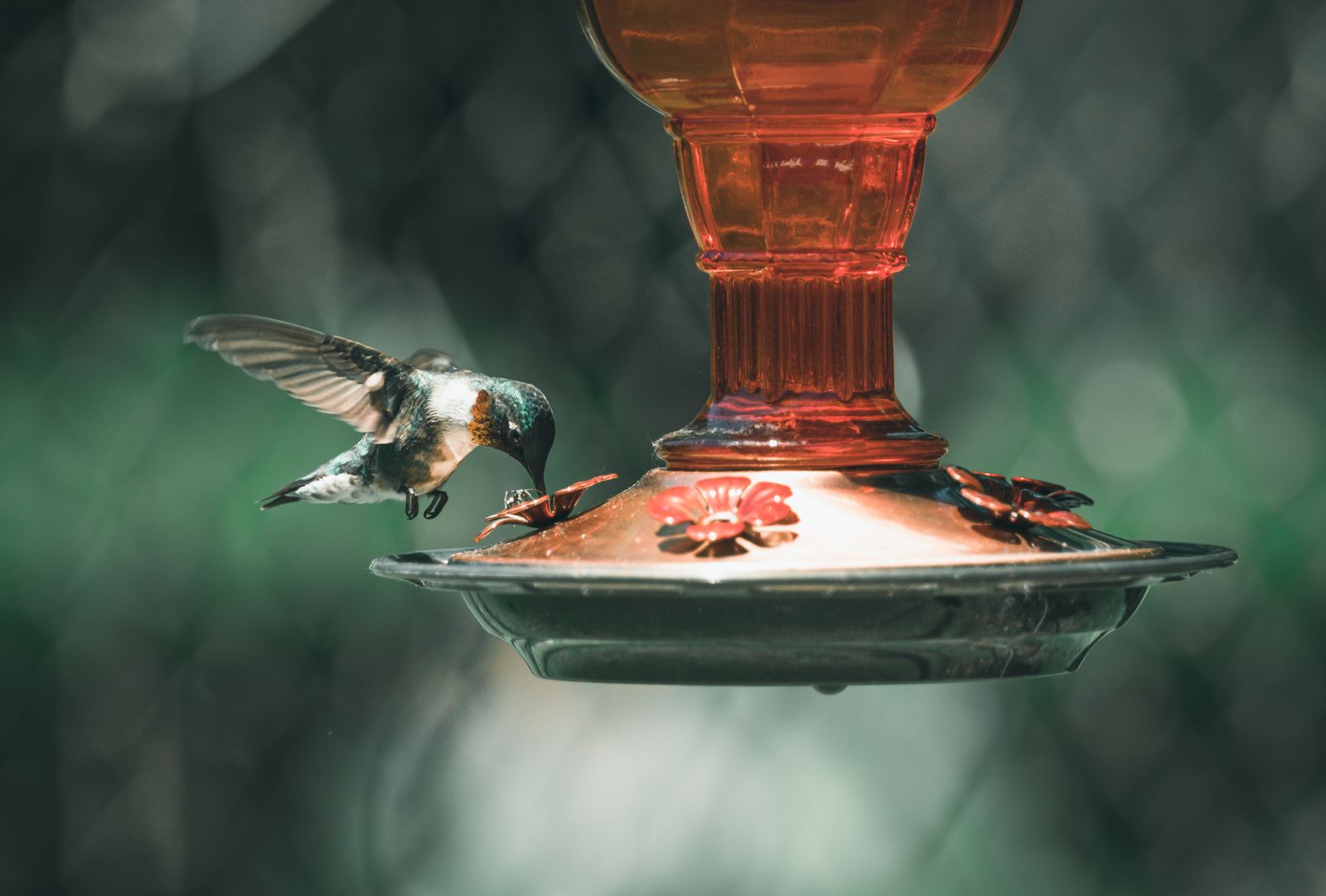
Matching the feeder to the yard
| Yard type | What to prioritize | What to avoid | |---|---|---| | Small patio or balcony | Eye-level hanging, one focal piece, small fills | A large reservoir you cannot empty in time | | Open sunny yard | Afternoon shade for the nectar; solar charging is easy | Full west-facing exposure all afternoon | | Mature shaded yard | The few gaps with open midday sky | Deep canopy spots, where solar simply will not charge | | Windy or exposed site | A short hanger and a sheltered position | Long chains that let the feeder swing and splash | | Yard with heavy ant pressure | Clean exterior habits and a deep moat | Foliage or fencing touching the feeder |
FAQ
Does a solar feeder need any wiring or a timer? No. The cap charges during daylight and the lights switch on by themselves after dark, which is why solar suits yards with no outdoor outlet. There is nothing to schedule.
Will an illuminated feeder attract more birds? Not by itself. Daytime attraction comes from visibility, fresh nectar, and nearby flowering plants; the light runs after hummingbirds have gone to roost. The piece on live nectar plants alongside glass solar feeders covers what actually moves the needle.
How long does it take for birds to find a new feeder? Anywhere from a day to a few weeks depending on local traffic and whether flowering plants already draw birds nearby. Keep the nectar fresh through the waiting period, since a spoiled first impression sets you back.
Is a bigger reservoir better value? Only if your traffic uses it. A larger reservoir filled partway is flexible; a large one filled to the top in hot weather mostly produces nectar you pour down the drain.
A practical next step
Before buying anything, spend one midday walking your yard and mark two spots that have open sky overhead and some afternoon shade below. Those two marks tell you the feeder style, the hardware, and how many feeders your yard can support — and they take about ten minutes to find.
Cover photo by A. G. Rosales on Pexels.