How Do RGB Solar Garden Lights Work? The Science, Setup, and Maintenance FAQ
Many garden enthusiasts believe solar RGB lights require complicated electrical wiring or external timers. In reality, an integrated photovoltaic cell absorbs solar energy during daylight hours, converting sunlight into direct current electricity stored in a rechargeable NiMH battery. When dusk arrives, a light-sensitive photoresistor automatically completes the circuit, instructing an internal micro-chip to drive red, green, and blue LEDs that illuminate hand-blown glass for up to 8 hours.
Selecting the Right RGB Solar Decor for Your Garden Layout
Choose RGB solar garden decor with high-efficiency monocrystalline solar panels and sealed weatherproofing if you want zero-electricity accent lighting; opt for models with multi-mode switches to conserve power during shorter winter days.
Best choice for
- Multi-mode RGB slow cycle solar glass feeders — Sufficient daily sun hours allow full 8-hour nighttime cycling through the full RGB spectrum.
- Single static color or low-power continuous glow mode — Reduces milliamp-hour draw on the rechargeable battery when solar charging hours are restricted.
- Your desired location is permanently shadowed under dense tree canopy or deep porch eaves with zero direct sunlight.
- The light will be positioned directly under a bright ambient night light or streetlight, which prevents the auto-dusk photoresistor from triggering.
- Hardwired low-voltage LED landscape lighting — Provides constant brightness regardless of weather, but requires trenching, wiring, and outdoor AC outlets.
- Standard single-color warm white solar stakes — Simpler circuitry with slightly higher runtime per charge hour, but lacks color-changing garden aesthetics.
When evaluating hand-blown glass solar fixtures versus standard plastic yard stakes, consider both glass translucency and housing durability. Handcrafted glass reservoirs not only withstand UV degradation and temperature shifts far better than plastic, but their internal swirl patterns also refract RGB light across wider radiuses, turning a functional nectar station into a mesmerizing twilight centerpieces.
Featured Artisan Solar Feeder: LUJII Hand-Blown Glass Solar Hummingbird Feeder
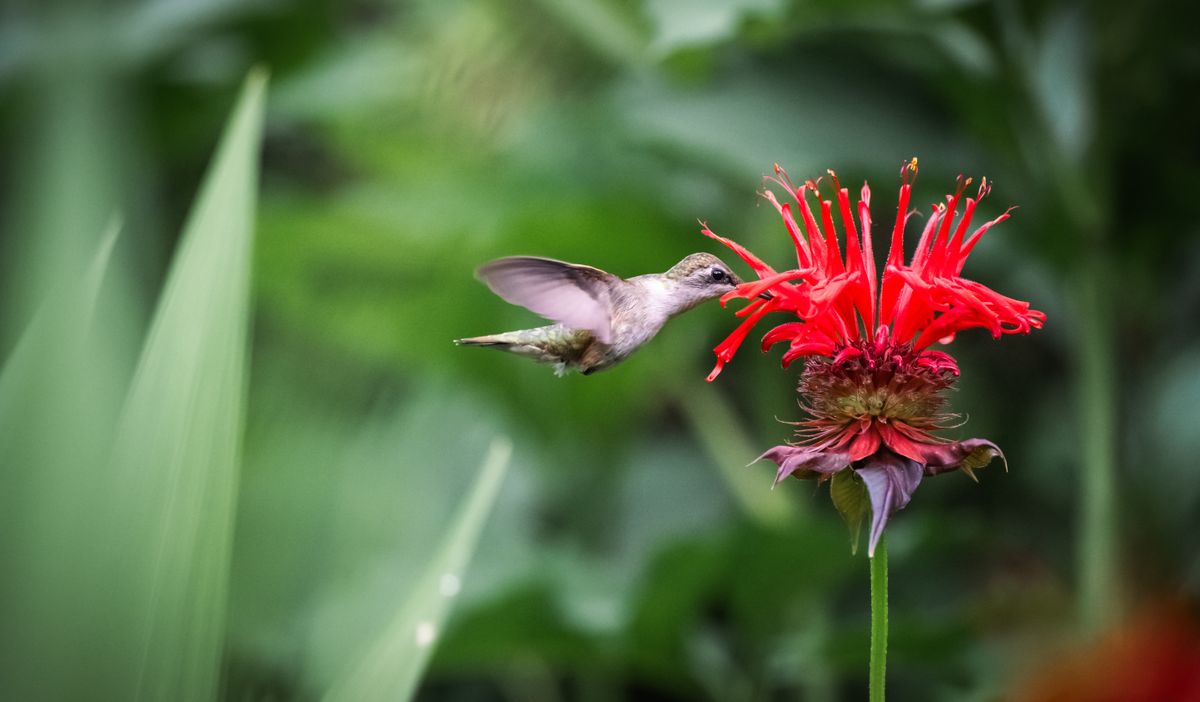
If you are seeking the ultimate combination of artisan craftsmanship, wildlife care, and automated evening illumination, the LUJII Solar-Powered Hummingbird Feeder stands out as an exceptional centerpiece.
Each feeder features a thick glass reservoir hand-blown by glass artists at 2,300°F, creating vibrant, one-of-a-kind color patterns that diffuse solar RGB illumination into a warm, enchanting evening glow. The top solar housing is weather-sealed against rain, snow, and harsh afternoon heat, while the 32 fl. oz. slender reservoir prevents nectar leaks. Paired with an anti-rust coated metal base and multiple RGB lighting modes, it brings daily joy to backyard bird watchers and garden lovers alike.
Expert Insight: Balancing RGB Color Modes for Maximum Nightly Runtime
Not all RGB lighting modes draw power equally from your feeder's internal NiMH battery cell. Understanding the milliamp-hour (mAh) consumption of different diode settings helps you tailor performance across changing seasons:
- Static Color Mode (Single Red, Green, or Blue): Consumes approximately 15–20 mA per hour, providing up to 8 full hours of illumination on a standard 300 mAh charge.
- Slow RGB Fade Mode: Alternates voltage across all three LED color channels smoothly. Draws an average of 22–28 mA per hour, providing roughly 6.5 to 7.5 hours of continuous evening glow.
- Fast RGB Strobe / Flash Mode: Continuously triggers peak current pulses across multiple channels simultaneously, drawing 32+ mA per hour and reducing runtime to 4.5–5.5 hours.
Troubleshooting Common RGB Solar Light and Feeder Issues
| Scenario / Symptom | Physical Cause | Electrical Cause | Recommended Action |
| --- | --- | --- | --- |
| Light turns off shortly after dusk (under 2 hours) | Solar panel cap covered in pollen, dust, or shaded by leaves | Battery receives partial charge (under 300 mAh stored) | Clean panel cap with a damp microfiber cloth; relocate feeder to receive 6+ hours of direct sunlight. |
| RGB LED flickers rapidly or fails to turn on at night | Feeder hung directly under a bright streetlight or porch bulb | Photoresistor sensor detects ambient lux above dark threshold | Move feeder away from artificial light sources so the dusk sensor can trigger automatically. |
| Light fails to illuminate completely after a sunny day | Rechargeable AAA NiMH battery has reached its end of lifecycle | Battery internal resistance prevents energy storage | Unscrew solar cap housing and replace the internal AAA NiMH 1.2V rechargeable battery. |
| Nectar drips from base when solar light gets warm | Air inside glass bottle expands during hot afternoon sun | Increased thermal pressure forces liquid through feeding ports | Fill reservoir with cool nectar in early morning and hang in a spot with partial afternoon shade. |
When outdoor solar lighting fixtures exhibit short runtimes, dim diodes, or erratic sensor behavior, systematic troubleshooting usually points to quick environmental or battery fixes. Refer to the diagnostic matrix below to resolve issues quickly.
Visual Breakdown: Anatomy of an RGB Solar Glass Feeder Top
Understanding how solar rays pass through protective housing into micro-electronic circuitry helps garden owners maintain their fixtures for years of trouble-free enjoyment.
Core Takeaways on Solar RGB Light Mechanics
- Photovoltaic panels convert daylight into DC electrical current stored in a 1.2V NiMH battery.
- A photoresistor triggers the RGB micro-circuit automatically at dusk without manual switches.
- Soft RGB twilight illumination does not disrupt daytime hummingbird feeding habits.
- Hand-blown glass reservoirs withstand outdoor temperatures while diffusing multi-color light.
- Wiping the solar cap monthly maintains 100% solar conversion efficiency.
Seasonal Maintenance Checklist for Solar RGB Garden Decor
Photo by Veronika Andrews on Pexels
- [ ] Wipe solar panel cap with soft damp cloth to clear dust, pollen, and bird droppings.
- [ ] Inspect rubber gasket seal around the battery compartment for water tightness.
- [ ] Verify light sensor function by covering the solar top completely with your hand to trigger LEDs.
- [ ] Check metal base for nectar residue and clean with mild warm water.
- [ ] Replace rechargeable NiMH battery every 12-18 months for peak charge capacity.
Frequent Pitfalls with Solar RGB Accent Lights
Even experienced gardeners occasionally run into easily avoidable mistakes when placing or cleaning solar-powered glass decor:
Explore Related Topics on Solar Decor & Wildlife Care
Expand your knowledge on solar energy efficiency, handcrafted glass art, and backyard bird attraction with these complementary guide topics:
- How to Maximize Nighttime Battery Life and Illumination for Your Solar Feeder — Deep dive into solar mAh battery sizing, panel tilt angles, and winter care.
- Troubleshooting Nectar Leaks and Solar Lights on Handcrafted Feeders — Step-by-step seal replacement and nectar temperature control tips.
- Hand-Blown Glass vs. Plastic Hummingbird Feeders: Aesthetic and Durability Compared — Explore why thermal resistance at 2,300°F makes glass the superior choice for outdoor gardens.
Frequently Asked Questions About Solar Garden Decor & RGB Lighting
Get answers to the most common questions regarding solar RGB feeder technology, battery replacement, and wildlife interaction.
Your Next Steps for Vibrant, Long-Lasting Garden Lighting
Your decision: Determine your garden placement spot that receives at least 6 hours of direct sunlight, and select your preferred RGB operating mode based on regional sun hours.
Do this next: Clean your solar panel lid with a damp microfiber cloth, ensure the base seal is tight, and place the feeder in an open, unshaded area clear of bright porch lights.
- Read next: How to Maximize Nighttime Battery Life and Illumination for Your Solar Feeder
- Read next: How to Clean and Maintain Your Hand-Blown Solar Hummingbird Feeder
LUJII Hand-Blown Solar Hummingbird Feeder with RGB Lighting Modes and Rust-Resistant Metal Base
Ready to bring enchanting evening light and delightful wildlife into your yard? Start by evaluating your garden layout and selecting a prime sunny spot for your handcrafted solar feeder.
Cover photo by Veronika Andrews on Pexels.