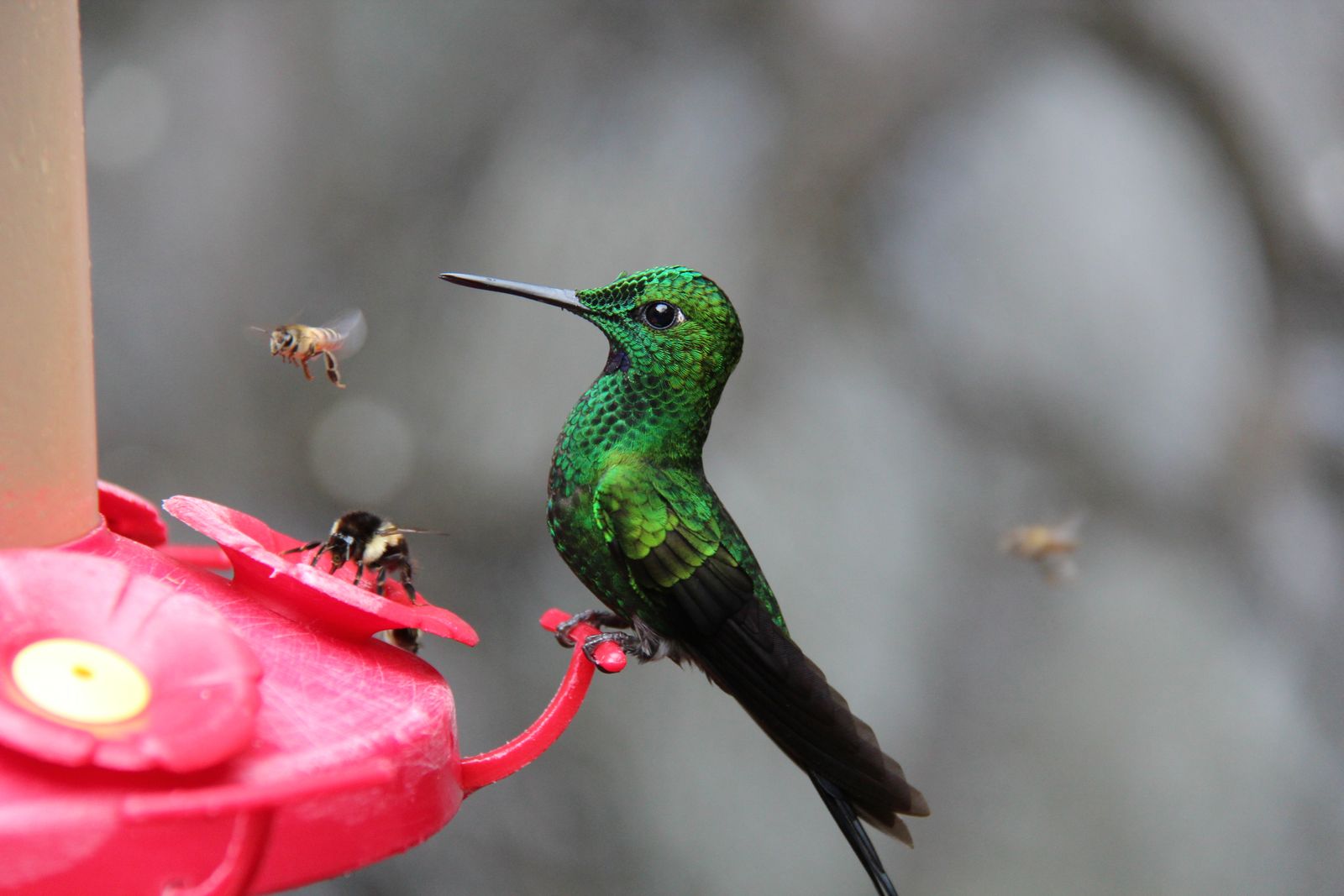
Hummingbird Feeder Spill Prevention FAQ: Stopping Drips Before They Attract Bees & Ants
Hummingbird feeders drip primarily because solar heat expands trapped air inside the bottle, forcing nectar out through the ports, or due to a broken vacuum seal. To stop drips immediately: chill your nectar before filling, fill the bottle completely to minimize air space, tighten seals firmly, and hang the feeder in full shade.
5-Step Feeder Leak Diagnostic Flowchart
- Is your hummingbird feeder dripping nectar? → Yes: Observe the drip pattern: Does it stream immediately or drip only during sunny afternoons?. No: Feeder seal is intact. Check for active bee or ant activity near ports..
- Does nectar rush out continuously immediately after inverted refilling? → Yes: Broken vacuum seal or misaligned silicone gasket. Disassemble, clean threads, inspect rubber washer, and tighten base securely.. No: Move to afternoon heat diagnostic..
- Does dripping occur only during hot, sunny afternoon hours? → Yes: Thermal air expansion in top reservoir chamber. Relocate feeder to full afternoon shade and top off nectar to 100% capacity.. No: Move to physical movement diagnostic..
- Does dripping happen when the feeder sways in summer breezes? → Yes: Excessive kinetic sway. Relocate feeder to a sturdy shepherd's hook or install a rigid stabilizer hook.. No: Check glass body for hairline cracks or thread wear..
Feeder Leak & Spill Diagnostic Matrix
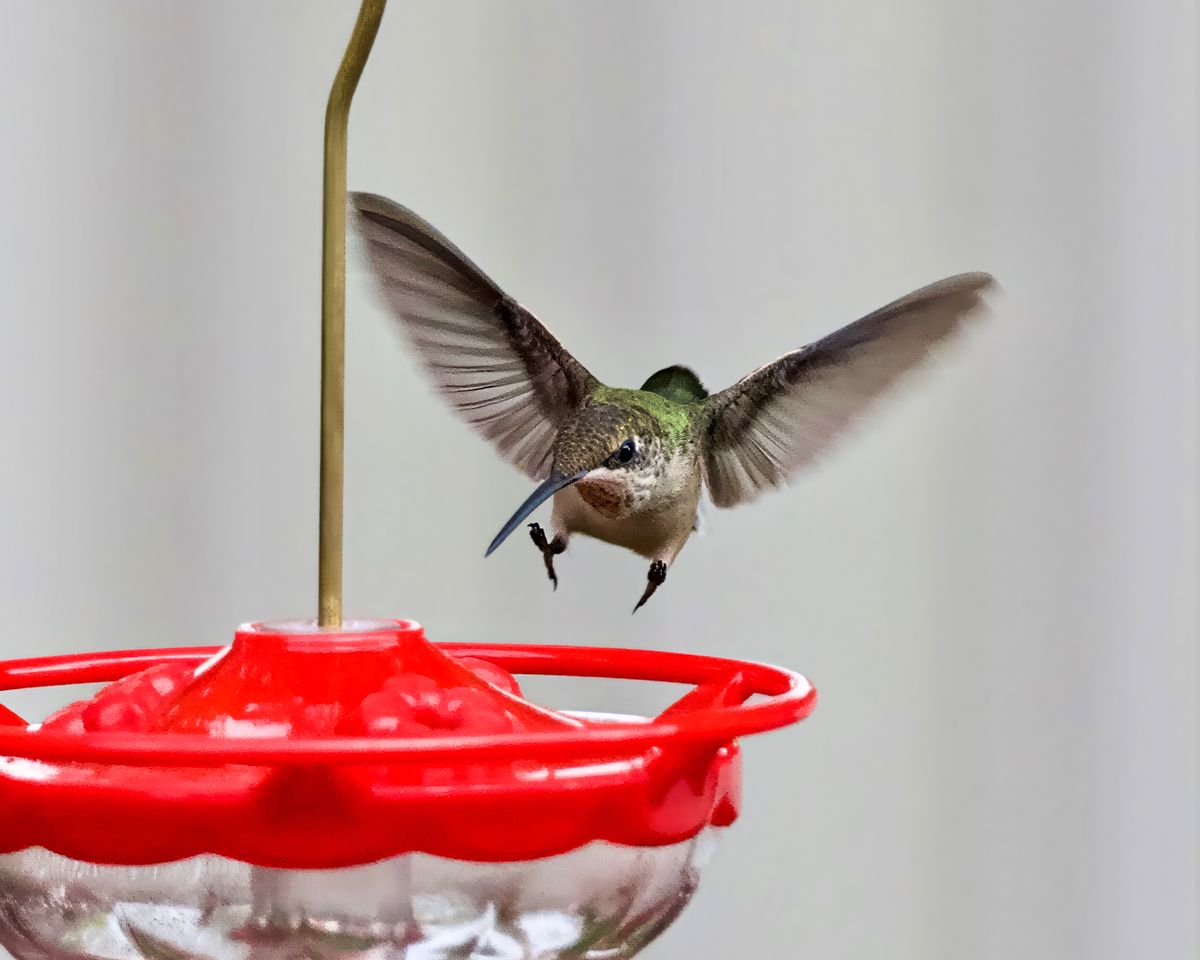
Photo by A. G. Rosales on Pexels
| Observed Leak Scenario | Root Cause Physics | Immediate Fix | Preventative Action |
| --- | --- | --- | --- |
| Drips steadily during peak afternoon heat (2 PM – 5 PM) | Sunlight heats air pocket above nectar; expanding air forces liquid down through feeding ports. | Move feeder into complete afternoon shade immediately. | Fill reservoir 100% full with chilled nectar to eliminate internal air chamber volume. |
| Continuous stream immediately after turning feeder upside down | Broken vacuum seal due to unseated silicone ring, sugar crystal buildup, or cross-threaded base. | Invert feeder over sink, unscrew base, wipe threads clean, re-seat gasket, and screw base tightly. | Apply a tiny drop of food-safe vegetable oil to gasket rings during monthly deep cleans. |
| Spills only on windy days or summer storm gusts | Centrifugal kinetic force tilts nectar level past feeding port thresholds. | Hang feeder from a shorter, rigid S-hook close to a sturdy tree branch or wall bracket. | Upgrade to a heavier hand-blown glass feeder with a weighted metal base to resist wind sway. |
| Seepage around metal-to-glass thread connections | Worn rubber washer or microscopic thread warping from over-tightening. | Unscrew base, replace rubber washer or add Teflon food-safe thread tape. | Hand-tighten firmly until snug; avoid using force that warps plastic or rubber gaskets. |
Identify the exact physical cause behind your feeder leak and execute targeted physical remedies.
The Leak-Free Refill & Maintenance Checklist
- [ ] Cool sugar nectar to room temperature or chilled before pouring (never pour warm nectar into bottle).
- [ ] Fill the glass reservoir entirely to the brim to leave minimum air space inside the bottle.
- [ ] Inspect the silicone gasket in the base for cracks, sugar crystal buildup, or misalignment.
- [ ] Screw the base firmly onto the glass bottle to form a tight liquid and air seal.
- [ ] Invert the feeder swiftly in one smooth motion over a sink before hanging in full shade.
Visual Breakdown: Inverted Feeder Vacuum Physics & Drip Causes
Understanding fluid thermodynamics explains why inverted bottle feeders leak when sun exposure changes internal air pressure.
Decision Tree: Is It Time to Fix Your Feeder or Upgrade Design?
- Is your glass or plastic feeder reservoir free of physical cracks? → Yes: Proceed to test base seal integrity.. No: Replace feeder immediately. Structural cracks ruin vacuum tension permanently.
- Does your feeder base feature a removable, high-grade silicone gasket? → Yes: Clean gasket, remove sugar crusting, and re-test vacuum seal over a sink.. No: Cheap plastic-on-plastic threads strip easily; upgrade to a sealed metal-base design.
- Can you hang the feeder in 100% shade during peak afternoon sun? → Yes: Relocate feeder to shaded porch overhang or dense tree canopy; drip risk drops by 90%.. No: Inverted bottles will thermal-drip in direct sun. Upgrade to a solar-shielded or shallow basin feeder.
Actionable Steps for Leak Prevention
Your decision: Determine whether your feeder leak is caused by simple refilling errors or structural wear.
Do this next: Execute the 5-step leak-free refill checklist, move your feeder into total afternoon shade, and inspect silicone gaskets for cracks.
Related resource: Pest-Free Feeding Pillar: Keeping Bees, Wasps, and Ants Away from Nectar
LUJII 32 fl.oz Hand-Blown Glass Solar Hummingbird Feeder with Anti-Rust Sealed Metal Base
Take immediate control of your feeder setup today to safeguard your garden against unwanted wasps, ants, and sticky residue.
Key Takeaways: Preventing Nectar Spills and Pest Swarms
- Over 80% of feeder drips are caused by thermal air expansion inside the reservoir, not physical cracks.
- Filling inverted glass bottles completely to the top eliminates the air pocket that expands under solar warmth.
- Never pour warm sugar syrup into a feeder; cool nectar creates a tight initial vacuum seal.
- Shade is your best defense against both thermal dripping and rapid nectar fermentation.
- Sealed metal base constructions with durable silicone washers prevent thread distortion and leaks.
Choosing the Right Feeder Design for Leak Prevention
Fixing feeder drips depends on whether your existing feeder has a simple gasket seal failure or fundamental thermal expansion issues common in lightweight plastic inverted bottles.
Best choice for
- Sealed metal-base glass feeders with protective solar/weather caps — Heavy handcrafted glass resists rapid internal air temperature spikes, while rigid metal bases prevent plastic warping under heat pressure.
- Standard inverted glass bottle with replaceable silicone washer — Allows quick manual reset of internal vacuum seal while maintaining easy nectar monitoring.
- Avoid thin, lightweight plastic inverted feeders in hot, unshaded areas where rapid thermal expansion guarantees dripping.
- Avoid feeders without removable silicone gaskets, as non-replaceable worn seals lead to permanent leaks.
- Dish-style / basin feeders — Nectar sits below feeding ports, eliminating gravity drips entirely, though capacity is often lower.
- Heavy hand-blown glass feeders with sealed metal bases — Combines high liquid capacity (32 fl. oz) with superior thermal insulation and leak-proof threading.
Recommended Solution: LUJII Sealed Metal Base Solar Feeder
If you are tired of wipedown routines, sticky porch decks, and aggressive wasp swarms, upgrading to an artisan-crafted, leak-proof feeder changes everything.
The LUJII Solar-Powered Hummingbird Feeder is engineered specifically to eliminate common inverted feeder vulnerabilities:
- Leak-Proof Sealed Metal Base: Features an anti-rust coated metal base paired with a heavy-duty silicone seal that maintains vacuum tension even in summer temperature shifts.
- 32 fl. oz Hand-Blown Glass Reservoir: Thicker handcrafted glass provides thermal insulation against rapid solar heating, while the vibrant translucent design lets you monitor nectar levels at a glance.
- Solar Cap Protective Shield: The top solar cap acts as a physical sun shield, reducing direct radiant heat on the nectar chamber while charging internal batteries for up to 8 hours of mesmerizing nighttime RGB illumination.
- Durable Weatherproofing: Built to withstand rain, wind, and hot sun without warping or cracking.
Inverted Glass Bottle vs. Top-Fill & Sealed-Base Feeders
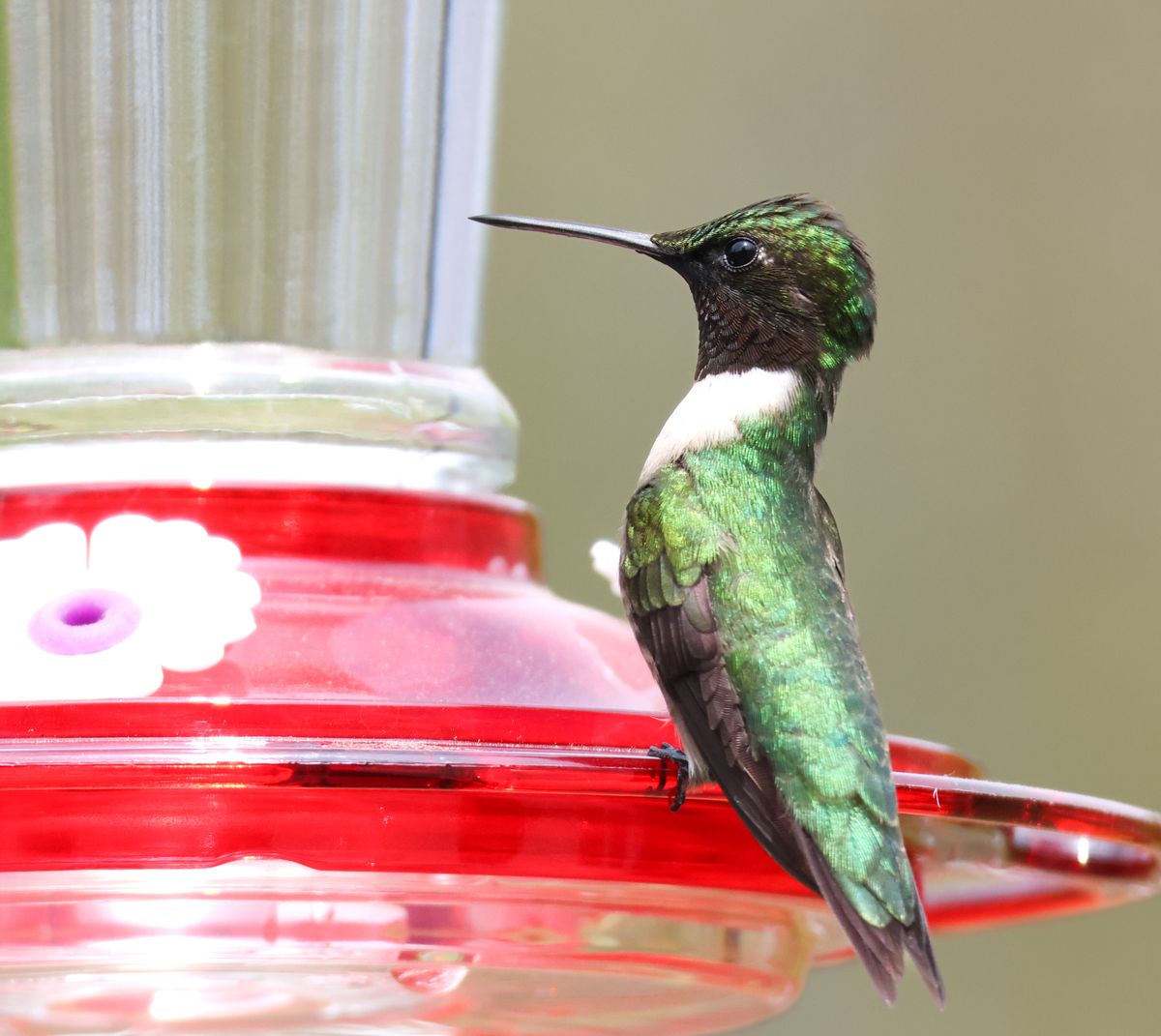
Photo by Catherine Dempsey on Pexels
| Feeder Architecture | Thermal Leak Resistance | Pest Deterrence | Durability & Craftsmanship | Best Yard Location |
| --- | --- | --- | --- | --- |
| Sealed Metal Base Glass (LUJII) | High — Thick glass insulated against quick temperature jumps; protective solar cap blocks direct sunlight. | Excellent — Leak-proof seal prevents sugar drips that attract ants and wasps to ground underneath. | Superior — Hand-blown glass art forged at 2,300°F with rust-proof coated metal base. | Partially shaded gardens, patios, decks, and lawn shepherd's hooks. |
| Thin Plastic Inverted Bottle | Low — Thin plastic walls heat rapidly, causing severe afternoon thermal expansion drips. | Poor — Frequent dripping creates sticky trails that attract yellowjackets and ant colonies. | Low — Plastic yellowizes, warps under UV rays, and cracks within 1–2 seasons. | Strict full-shade locations only. |
| Shallow Dish / Saucer Basin | Very High — Nectar sits below ports so gravity cannot force fluid out. | Moderate — No drips, but open basin surface area can ferment quickly if unshaded. | Moderate — Usually molded acrylic or basic glass. | Low-wind garden areas with high bird visibility. |
Compare how different feeder styles perform across key performance factors like thermal stability, leak resistance, and pest control.
Step-by-Step Guide to Resetting an Inverted Feeder's Vacuum Seal
If your feeder is streaming liquid immediately after hanging, perform this complete vacuum seal reset:
5 Common Refill Mistakes That Cause Nectar Leaks
Avoid these frequent maintenance errors that inadvertently ruin feeder vacuum pressure and attract unwanted backyard pests:
Related Pest & Summer Feeder Guides
- Troubleshooting Hummingbird Feeder Mold: Why Protective Caps Matter
- Slender Base vs. Wide Basin Feeders: Which Design Stops Nectar Drips Best?
- Summer Hummingbird Feeder Maintenance: Heat, Leak & Rust Guide
Frequently Asked Questions: Feeder Leaks, Bees, and Ants
Answers to common questions regarding hummingbird feeder maintenance, fluid dynamics, and pest control.
Your Final Action Plan for a Pest-Free, Leak-Free Garden
Your decision: Choose between re-sealing your current feeder or upgrading to a durable, handcrafted solar feeder with a leak-proof metal base.
Do this next: Relocate your feeder into afternoon shade, apply the 5-step leak-free refill protocol, and consider upgrading to the LUJII Solar-Powered Hummingbird Feeder for unmatched beauty and leak-proof performance.
Related resource: Pest-Free Feeding Pillar: Keeping Bees, Wasps, and Ants Away from Nectar
LUJII 32 fl.oz Hand-Blown Glass Solar Hummingbird Feeder with Anti-Rust Sealed Metal Base
Transform your backyard into a peaceful sanctuary for hummingbirds while keeping drips, bees, and ants far away.
Cover photo by Dick Scholten on Pexels.