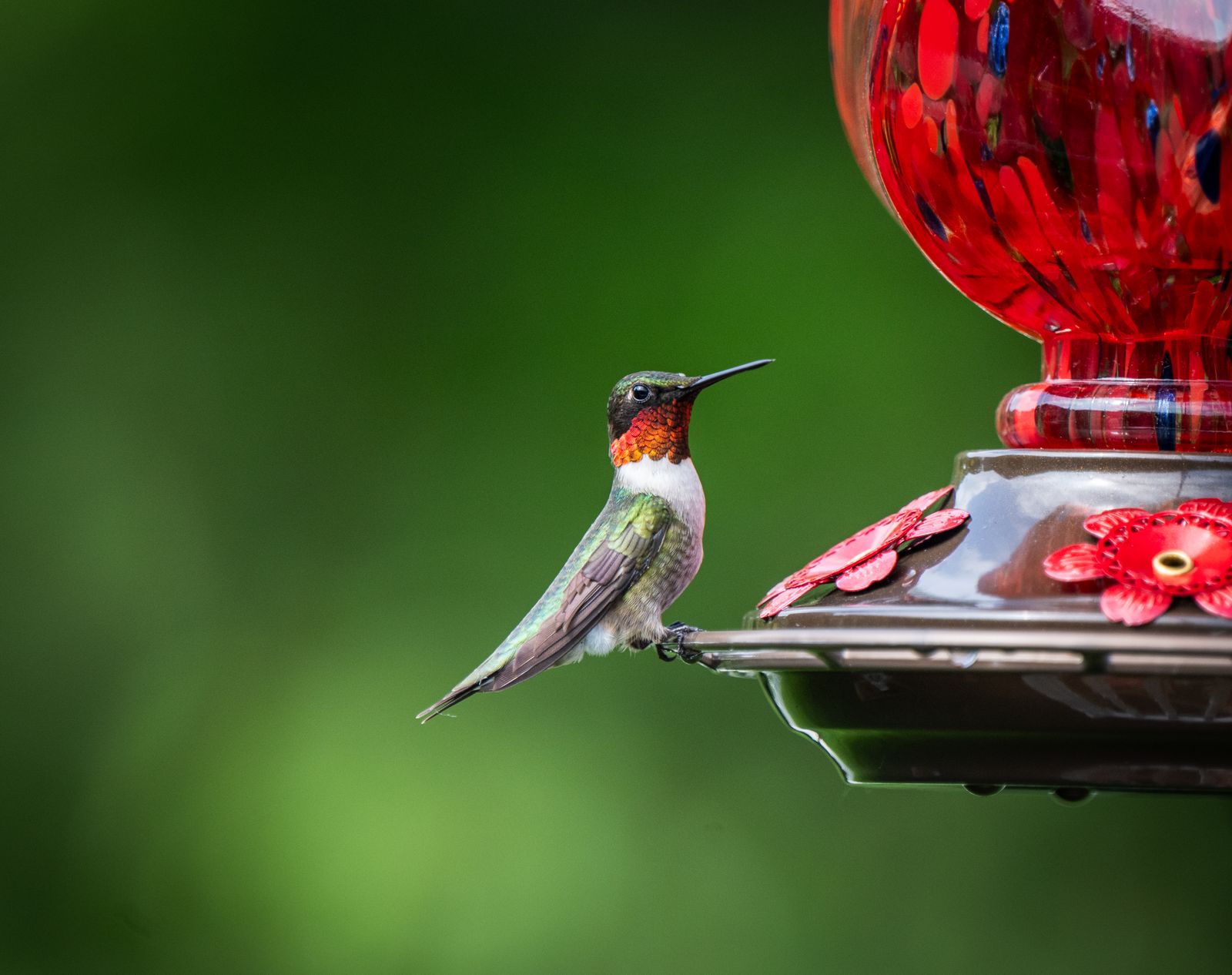
Hummingbird Feeder Bee Guard FAQ: Port Colors, Guard Types, and Quick Solutions
Myth: Yellow flower ports attract more hummingbirds and belong on every feeder.
Truth: Honeybees and yellowjackets possess compound eyes heavily tuned to yellow UV wavelengths, while hummingbirds naturally target vivid red contrast. To stop insects without deterring birds, choose all-red, recessed flower ports equipped with flexible silicone one-way Nectar Guards, keeping nectar levels 1/2 inch below port rims to eliminate pressure drips.
Decision Guide: Selecting the Right Bee Defense for Your Feeder
To eliminate bees and wasps while keeping hummingbirds returning, prioritize hand-blown glass feeders with all-red recessed flower ports and flexible internal silicone valves. Avoid yellow floral accents and keep nectar 1/2 inch below the port rim to prevent heat-induced drips.
Best choice for
- Deep recessed red flower ports with internal silicone membrane guards (Nectar Guards) — Long hummingbird beaks reach through deep ports effortlessly, whereas short bee proboscises cannot touch nectar, all without obstructing internal solar night lighting.
- Flexible silicone-tip guards paired with strict 1:4 un-dyed nectar filled 1/2 inch below port rim — Seals the port against escaping sugar vapors while preventing thermal expansion drips under high afternoon heat.
- Feeders featuring bright yellow plastic flower petals around nectar ports.
- Applying cooking oils, petroleum jelly, or chemical sprays directly onto feeding ports or glass surfaces.
- Shaded relocation 10-15 feet away from current spot — Disrupts established insect foraging flight paths while territory-loyal hummingbirds quickly locate the new position.
Pest-Resistant Solar Feeders for Peaceful Backyard Birdwatching
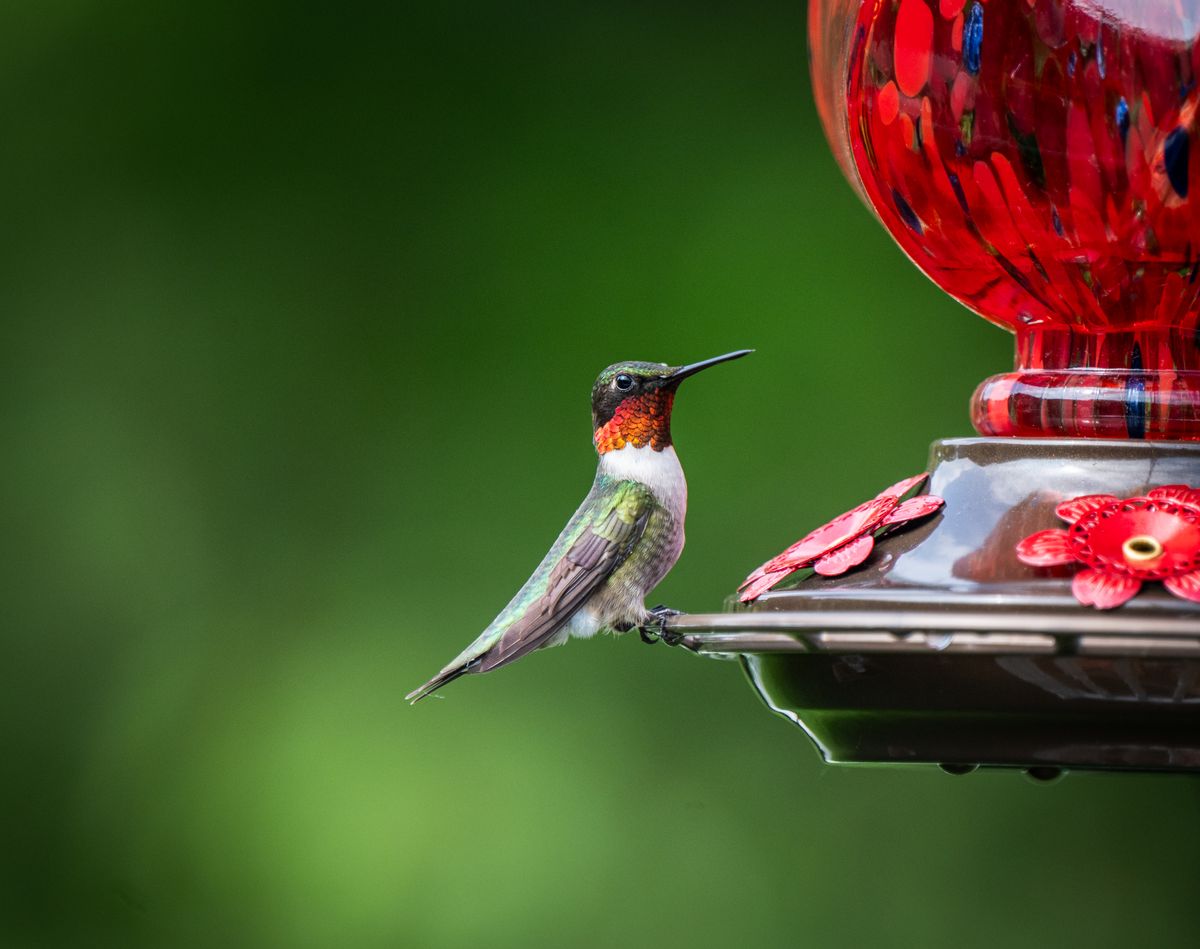
Elevate your garden sanctuary with handcrafted beauty engineered to keep unwanted insects at bay. The LUJII Solar-Powered Hand-Blown Glass Hummingbird Feeder combines generation-old glassblowing art with smart pest-deterrent engineering.
- Artisan Hand-Blown Glass: Each 32 fl. oz. translucent reservoir is individually shaped at 2,300°F, creating unique color patterns that allow instant nectar level monitoring.
- Built-in Bee & Leak Defense: Featuring a heavy-duty, anti-rust metal base with recessed deep-red feeding ports and a precision-sealed gasket system that prevents afternoon thermal drips.
- Solar RGB Illumination: The waterproof, weather-shielding top cap charges during the day and automatically illuminates the vibrant glass with magical ambient RGB lights for up to 8 hours at night.
- Easy Maintenance: The wide-mouth glass bottle unthreads smoothly from the metal base, making weekly cleaning of ports and internal silicone guards effortless.
Expert Advice: Avian vs. Insect Vision Science in Port Selection
Understanding how insects and birds see the world is your greatest advantage in preventing feeder takeovers.
- Insect Vision (Trichromatic): Honeybees and wasps perceive light from ultraviolet (UV) through blue and green wavelengths (300–550 nm). They are practically blind to deep red wavelengths, but are intensely drawn to bright yellow accents and UV-reflective white surfaces, which mimic nectar-rich wildflowers.
- Hummingbird Vision (Tetrachromatic): Hummingbirds possess a fourth cone photoreceptor that sees deep red wavelengths (600–700 nm) with remarkable visual clarity. They spot high-contrast red objects against green garden foliage from hundreds of yards away.
Bee Guard Mechanism & Scenario Comparison
| Scenario / Feeder Setup | Guard Mechanism Type | Bee Exclusion Rate | Hummingbird Access | Solar Lighting Compatibility | Maintenance Effort |
| --- | --- | --- | --- | --- | --- |
| High-temperature direct sun with heavy bee presence | Flexible Silicone Membrane (Nectar Guard) | 98% Exclusion | Unobstructed | 100% Compatible (Internal Seal) | Weekly warm-soap soak |
| Shaded patio with mild wasp activity | Recessed Red Metal Flower Ports | 90% Exclusion | Unobstructed | 100% Compatible (Integrated) | Bi-weekly rinse |
| Vintage glass feeder with wide open ports | Plastic Mesh Port Inserts | 80% Exclusion | Slight resistance for small species | May partially obstruct bottom LEDs | Needs micro-brush scrubbing |
| Windy garden post prone to swaying | Internal Floating Disc Guards | 85% Exclusion | Unobstructed | Compatible (Reservoir dependent) | Monthly deep clean |
Compare physical guard mechanisms across common backyard scenarios to identify the best fit for your feeder style, bird safety, and solar lighting setup.
Fast Insect Identification & Port Troubleshooting Matrix
| Observed Pest | Behavioral Symptoms | Root Cause at Port | Immediate Non-Toxic Fix |
| --- | --- | --- | --- |
| Honeybees (Apis mellifera) | Hovering around ports in morning light; clustering on yellow petals | UV attraction to yellow port accents or dry sugar trails on rim | Swap yellow ports for all-red floral covers; wipe base exterior with damp cloth. |
| Yellowjackets & Paper Wasps | Crawling aggressively inside port openings on hot afternoons | Thermal pressure pushing nectar out through ports; sticky exterior drips | Lower nectar fill line 1/2 inch below rim to leave expansion headspace; relocate to shade. |
| Bald-Faced Hornets | Attacking ports and chasing hummingbirds away aggressively | High sugar concentration odors or open port access | Install flexible silicone Nectar Guards inside port throats; reduce nectar ratio to strict 1:4. |
| Ants & Crawling Insects | Forming trails up hanging wires and entering port edges | Missing or dried-out ant moat; sugar spills along hanging rod | Fill top ant moat with clean water; wipe metal base with warm water solution. |
Identify which insect is visiting your feeder and deploy targeted, non-toxic solutions immediately.
Action Plan: Restore Peace to Your Backyard Feeding Station
Your decision: Choose hand-blown glass feeders equipped with recessed red metal flower ports and internal flexible silicone valves.
Do this next: Remove any yellow decorative accents from your feeder, wipe down the base with warm water to clear sugar trails, and adjust nectar levels to sit 1/2 inch below the port rim.
Related resource: Explore our comprehensive guide on Best Ant Moats for Hummingbird Feeders: Built-In vs. Hanging Hooks.Upgrade to the LUJII Solar Hand-Blown Glass Hummingbird Feeder featuring a rust-resistant metal base with red recessed ports that naturally deter bees while illuminating your garden at night.
Follow these practical steps to transition your garden to a bee-free hummingbird haven today.
Core Takeaways for Bee-Free Hummingbird Feeding
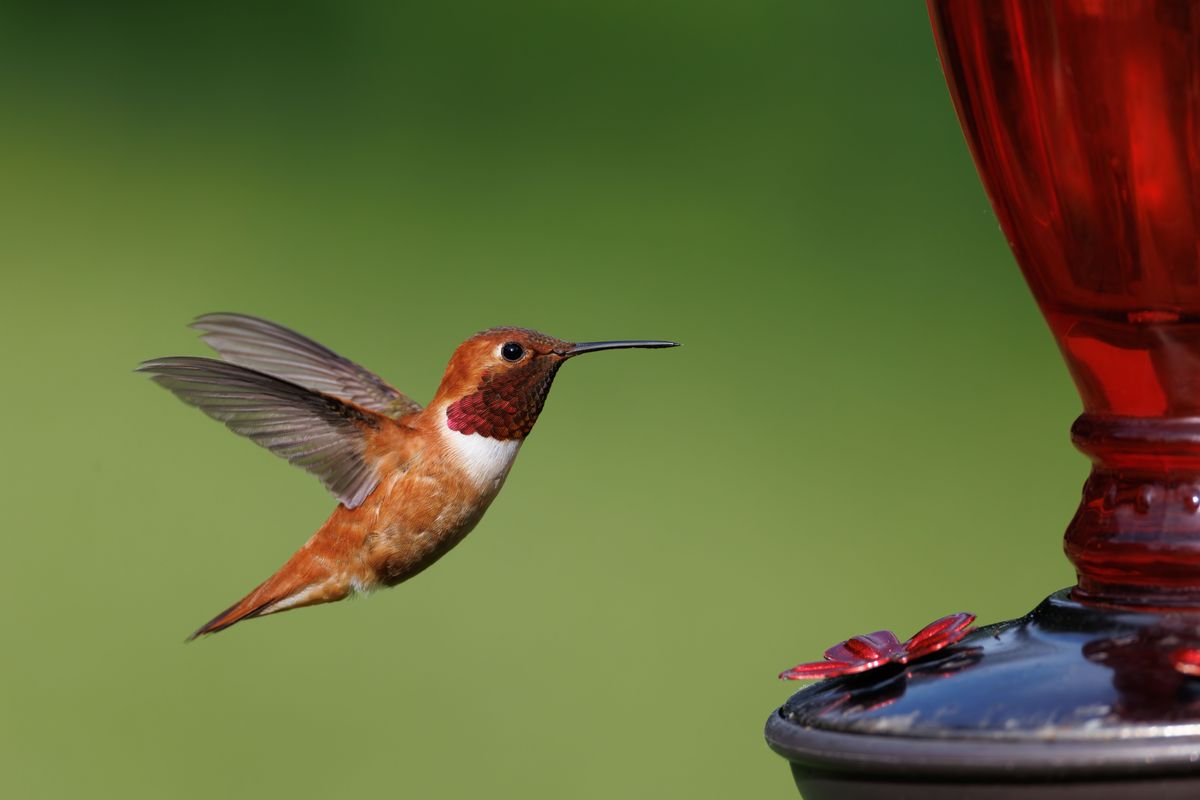
Photo by Veronika Andrews on Pexels
- Color Matters Most: Eliminate yellow accents. Red ports leverage avian tetrachromatic vision while keeping insects uninterested.
- Mind Thermal Expansion: In hand-blown glass reservoirs, expanding afternoon air pushes nectar upward. Leaving 1/2 inch of headspace prevents dripping.
- Use One-Way Silicone Valves: Internal flexible Nectar Guards block short insect mouthparts without impeding long hummingbird beaks.
- Keep It Clean: Sticky sugar residue on port rims neutralizes color defenses by attracting pests via smell. Wash bases weekly.
Daily & Seasonal Bee Guard Inspection Checklist
- [ ] Inspect port flowers to ensure zero yellow plastic or painted components remain.
- [ ] Check that nectar fill line sits at least 1/2 inch below the inner port valve.
- [ ] Ensure hand-blown glass reservoir is tightly threaded into the metal base seal to prevent thermal leaks.
- [ ] Wash flexible silicone bee guards in warm soapy water weekly to prevent sticky residue buildup.
- [ ] Confirm solar lid is clean and clear so night lighting functions without attracting nocturnal moths.
Mistakes That Secretly Invite Bees to Your Nectar Ports
Avoid these four widespread practices that inadvertently turn your hummingbird feeder into an insect magnet:
Continue Building a Pest-Free Garden Oasis
Explore additional guides to optimize your yard for wild birds while repelling garden pests:
- Beat the Summer Crawlers: Learn how built-in ant moats and water barriers prevent crawling insects from reaching sugar ports.
- Hot Weather Nectar Care: Master proper summer sugar-to-water ratios and shaded placement strategies to keep nectar fresh.
- Hand-Blown Glass Maintenance: Step-by-step instructions for deep-cleaning handcrafted glass bottles without scratching decorative art surfaces.
Frequently Asked Questions: Bee Guards, Port Colors, and Maintenance
Get expert answers to common questions regarding insect exclusion, solar lighting safety, and glass feeder care.