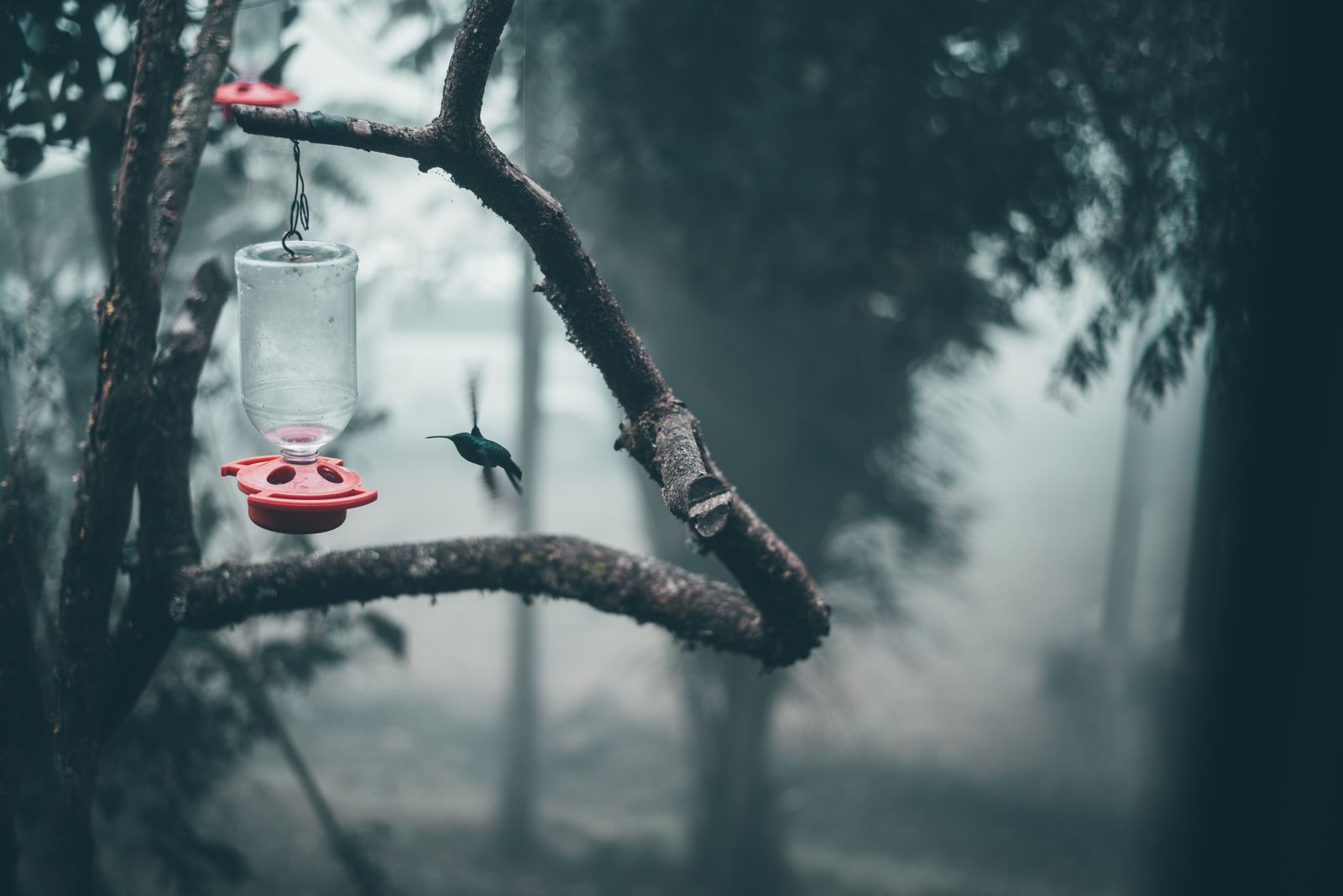
Best Hummingbird Feeder to Keep Bees Away: 2024 Design Comparison
The best hummingbird feeder to keep bees away is a non-drip, hand-blown glass feeder or deep saucer design with recessed red ports and zero yellow accents. Keeping nectar at least 1.1 inches below the opening exceeds a bee’s 7mm proboscis reach while letting long hummingbird tongues drink freely.
Bee-Proof Feeder Architecture & Feature Comparison
| Evaluation Criteria | LUJII Hand-Blown Solar Glass | Standard Saucer Feeder | Inverted Plastic Bottle |
| --- | --- | --- | --- |
| Nectar Depth Clearance | 1.25 inches (Exceeds bee reach) | 1.10 inches (Exceeds bee reach) | 0.25 inches (Bee reachable) |
| Leak Prevention Mechanism | Sealed base with vacuum gasket | Open top reservoir (No vacuum) | Snap-fit base (Prone to sun heat leaks) |
| Visual Color Attractant | Vibrant hand-blown red/multicolor glass | Solid red plastic disc | Bright yellow floral plastic inserts |
| Night Visibility & Decor | Solar RGB LED illumination (8 hrs) | None | None |
| Fluid Capacity & Refill | 32 fl. oz. see-through glass | 12–16 fl. oz. opaque pan | 16–24 fl. oz. cloudy plastic |
Comparing how different feeder architectures prevent bee swarms, stop drips, and maintain garden aesthetics.
Pros & Cons of Primary Bee Deterrent Features
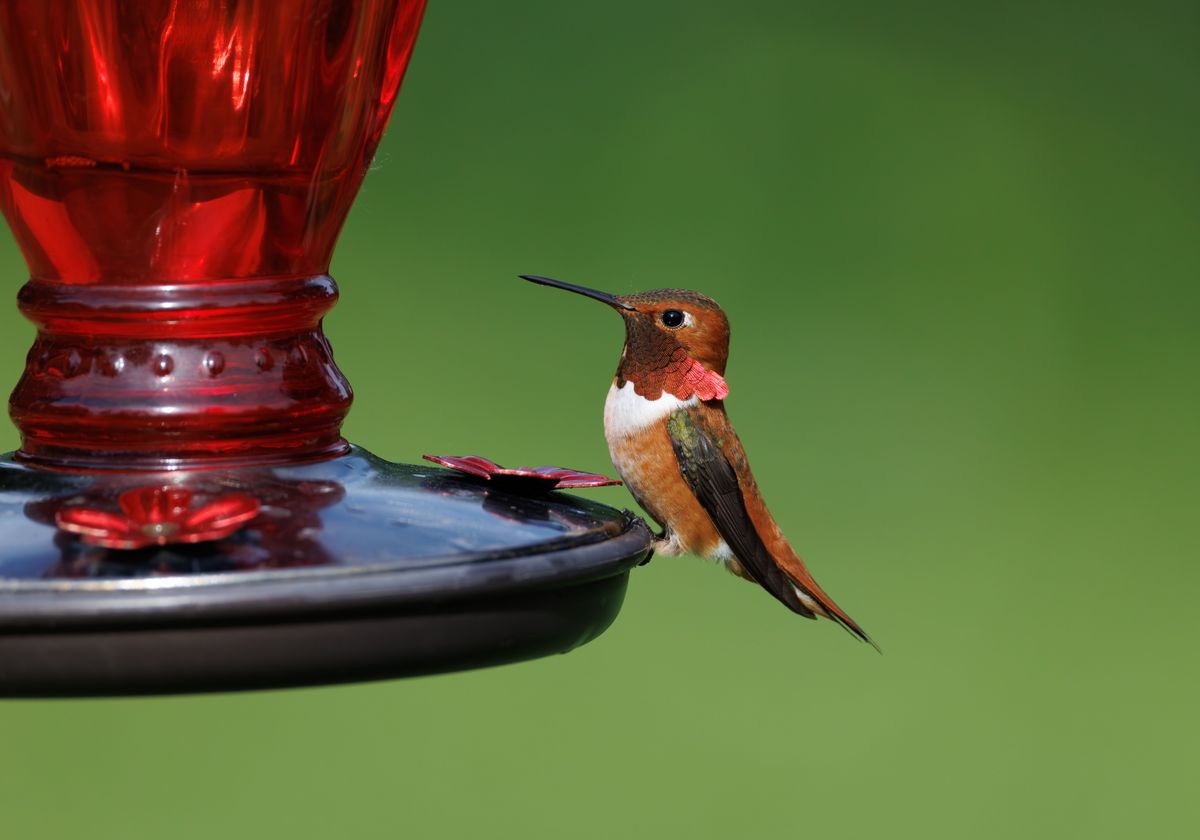
Photo by Veronika Andrews on Pexels
Pros
- Recessed deep ports physically block 5–7mm bee proboscises
- Sealed metal bases prevent nectar expansion drips in summer heat
- All-red visual accents attract hummingbirds without yellow beacon cues
- Hand-blown glass maintains clear nectar level visibility
- Deep ports require narrow port-cleaning brushes for maintenance
- Heavy-gauge glass requires sturdy hanging branches or heavy-duty hooks
Top Recommendation: Slender Hand-Blown Glass with Sealed Base
For maximum garden beauty and total bee exclusion, the LUJII Solar Hand-Blown Glass Hummingbird Feeder combines a leak-proof anti-rust metal base with deep port clearance and 32 oz capacity.
Troubleshooting Matrix: Why Bees Are Still Swarming Your Feeder
| Observed Symptom | Root Cause | Immediate Fix Action |
| --- | --- | --- |
| Bees clustering under base seam | Thermal expansion causing micro-drips from bottle threads | Move feeder to shade and tighten bottom gasket seal. |
| Yellowjackets crawling inside ports | Yellow floral rings acting as visual nectar beacons | Remove yellow plastic inserts or replace with red ports. |
| Insects landing directly on nectar surface | Nectar level filled too high near port surface | Lower fill level to maintain >1.1 inch air gap. |
| Bees swarming during 90°F+ afternoons | Fermenting 3:1 sugar mix releasing strong scents | Switch strictly to 4:1 refined sugar ratio and wash daily. |
If bees or wasps are invading your current feeder, match the observed symptom to the immediate fix below.
6 Critical Mistakes That Invite Bees and Yellowjackets
Avoid these common errors that attract unwelcome stingers to your backyard feeder.
Bee-Proof Feeder Architecture Decision Flow
- Are yellowjackets or bees actively swarming your yard? → Yes: Check port geometry and color.. No: Select based on visual style and solar lighting features.
- Does your current feeder have yellow accents or floral rings? → Yes: Replace yellow ports immediately or upgrade to an all-red glass design.. No: Evaluate leak points and port depth clearance.
- Does the feeder drip when ambient temperatures exceed 85°F? → Yes: Upgrade to a leak-proof hand-blown glass feeder with a vacuum seal base or a saucer feeder.. No: Ensure liquid clearance remains at least 1.1 inches below the outer port rim.
Frequently Asked Questions About Bee-Proof Feeding
Answers to common reader questions about insect optics, nectar chemistry, and feeder care.
Key Takeaways: Bee Exclusion Rules
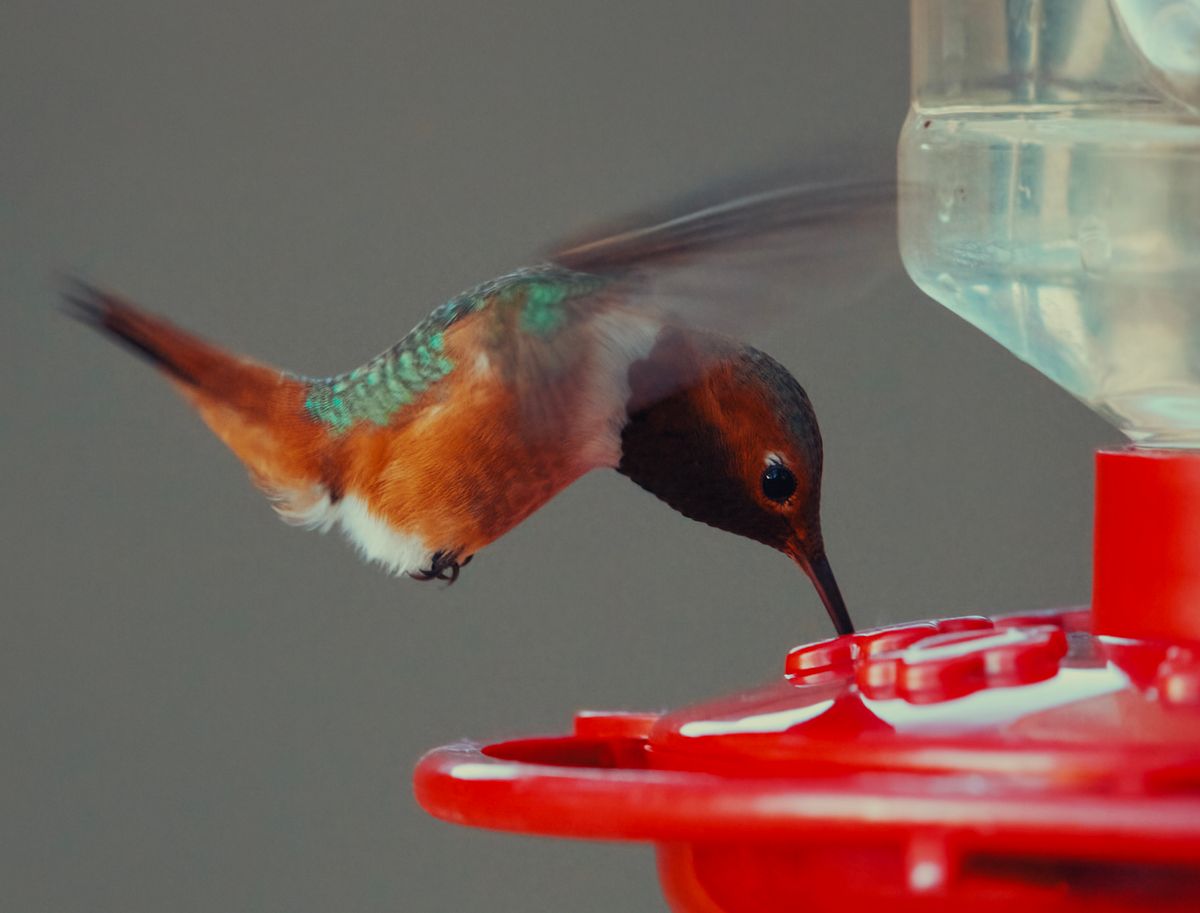
Summary of crucial facts for maintaining a bee-free hummingbird sanctuary.
Decision Support: Match Your Garden Setup to the Right Feeder
To eliminate bees permanently, choose a non-drip feeder with recessed red ports that maintains at least 1.1 inches of port depth while preventing thermal expansion leaks.
Best choice for
- Recessed-port hand-blown glass feeder or saucer feeder — Keeps liquid nectar far beyond the 5–7mm reach of a bee's mouthparts.
- LUJII Slender Hand-Blown Solar Glass Feeder — Slender reservoir and precision metal gasket base prevent liquid sloshing and vacuum leaks.
- Inverted plastic bottle feeders with snap-fit bases that flex in hot sun.
- Feeders featuring yellow floral port inserts or exposed yellow paint.
- Shallow port designs where nectar rests flush with the exterior opening.
- Flexible Silicone Nectar Guard Valves — Self-sealing membranes that fit onto existing ports, opening only under hummingbird bill pressure.
Real-World Backyard Scenarios: Beating Late-Summer Wasp Invasions
95°F mid-summer heat causing plastic feeder base to drip and attract yellowjacket swarms. — Switched to a heavy hand-blown glass feeder with a rubber-sealed anti-rust metal base and relocated it to afternoon shade. Leaks stopped immediately, and yellowjackets departed within 24 hours.
Bees swarming bright yellow port flowers on an inverted reservoir. — Replaced yellow inserts with simple red ports and lowered nectar mix strength back to 4:1 ratio. Bees lost interest while Ruby-throated Hummingbirds returned immediately.
How backyard birders successfully solved persistent pest issues.
Understanding why certain feeder designs succeed where others fail comes down to two factors: insect physiology and visual optics.
Anatomical Reach: Bill vs. Proboscis
A honeybee or yellowjacket relies on a short proboscis measuring roughly 5 to 7 millimeters (0.2 to 0.27 inches) in length. Conversely, a hummingbird possesses an elongated bill (15 to 25 millimeters) combined with an extendable, bifurcated tongue that reaches twice the bill length. When a feeder maintains a port clearance depth of 1.1 inches (28 millimeters) or greater between the outer opening and the liquid line, hummingbirds sip effortlessly while bees are physically blocked from touching the nectar.Visual Spectrum: Why Yellow Drives Bees Wild
Insects and birds perceive light differently. Bees have photoreceptors tuned to ultraviolet, blue, and yellow light (peak sensitivity at 580nm). To a foraging worker bee, bright yellow plastic ports act like glowing beacons. Hummingbirds, on the other hand, possess specialized retinal cones that detect deep red wavelengths. Choosing feeders crafted with rich hand-blown red glass and red feeding ports signals hummingbirds while remaining visually neutral to bees.Thermal Vacuum Stability & Leak Prevention
Inverted bottle feeders operate on atmospheric vacuum pressure. When direct sunlight heats air trapped in a thin plastic bottle, the expanding air forces liquid out through the ports. Hand-blown glass reservoirs, like those crafted by LUJII at 2,300 degrees Fahrenheit, feature thick, insulating walls and precision-sealed metal bases. This stability prevents thermal expansion drips, keeping the outside of the feeder completely dry and unappealing to sugar-seeking wasps.Featured Leak-Proof Solar Hummingbird Feeders
Discover handcrafted glass feeders designed for pest-free bird watching.
Next Steps to Reclaim Your Backyard Hummingbird Haven
Your decision: Determine if your current bee issue is caused by nectar leaks, yellow port accents, or high fluid levels.
Do this next: Inspect your feeder for leaks, replace yellow port accents with red, and ensure port clearance depth is at least 1.1 inches.
Related resource: Explore our complete garden setup recommendations for pest-free birding.
Upgrade to the LUJII Hand-Blown Glass Solar Hummingbird Feeder for a leak-proof, bee-free garden centerpiece.
Take action today to eliminate bees and welcome hummingbirds back to your garden.