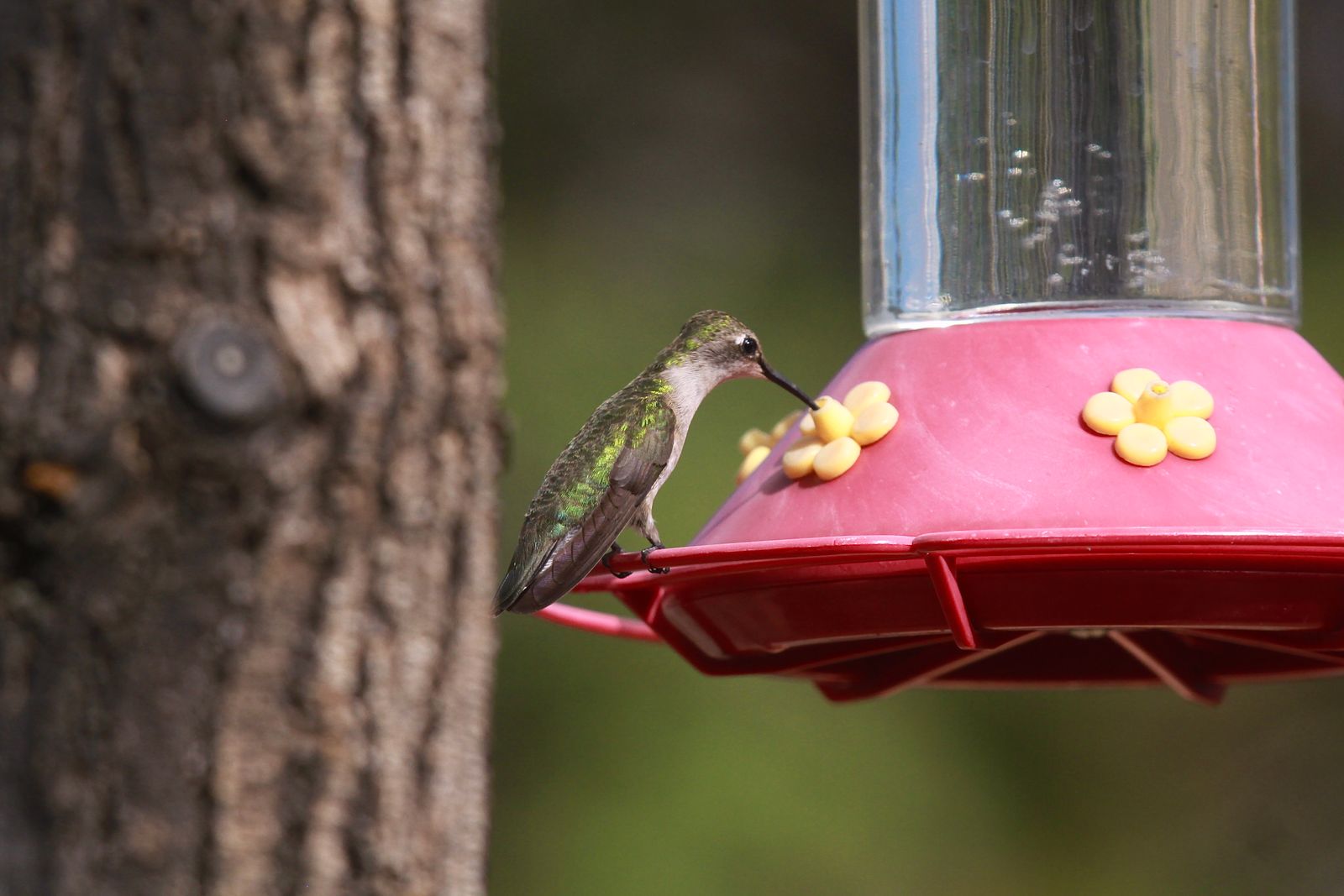
Beat the Summer Crawlers: Protecting Glass Hummingbird Feeders During Heatwaves
During a heat wave, a hummingbird feeder needs two things: fresh nectar changed far more often than usual, and a water-only ant moat above it. Heat accelerates fermentation and mold in sugar water, and it simultaneously drives ants, wasps, and bees to hunt for liquid sugar, so the same weather creates both problems at once. Shade during the hottest hours solves more of it than any product.
What heat actually does to nectar
Sugar water is a growth medium. In cool weather it stays drinkable for several days; in high heat it can begin fermenting within a day, and mold can take hold not long after. The visible signs are cloudiness, stringy strands, tiny bubbles rising without any bird touching the feeder, and a sour smell when you pour it out.
Spoiled nectar is not just unappetizing — it is a genuine health risk to birds, and fermentation produces gas that pushes liquid out through the ports, which is why heat waves also produce a wave of complaints about dripping feeders. A see-through glass reservoir is a real advantage here, because you can read cloudiness at a glance from a distance instead of discovering it during a refill.
How often to change nectar in hot weather
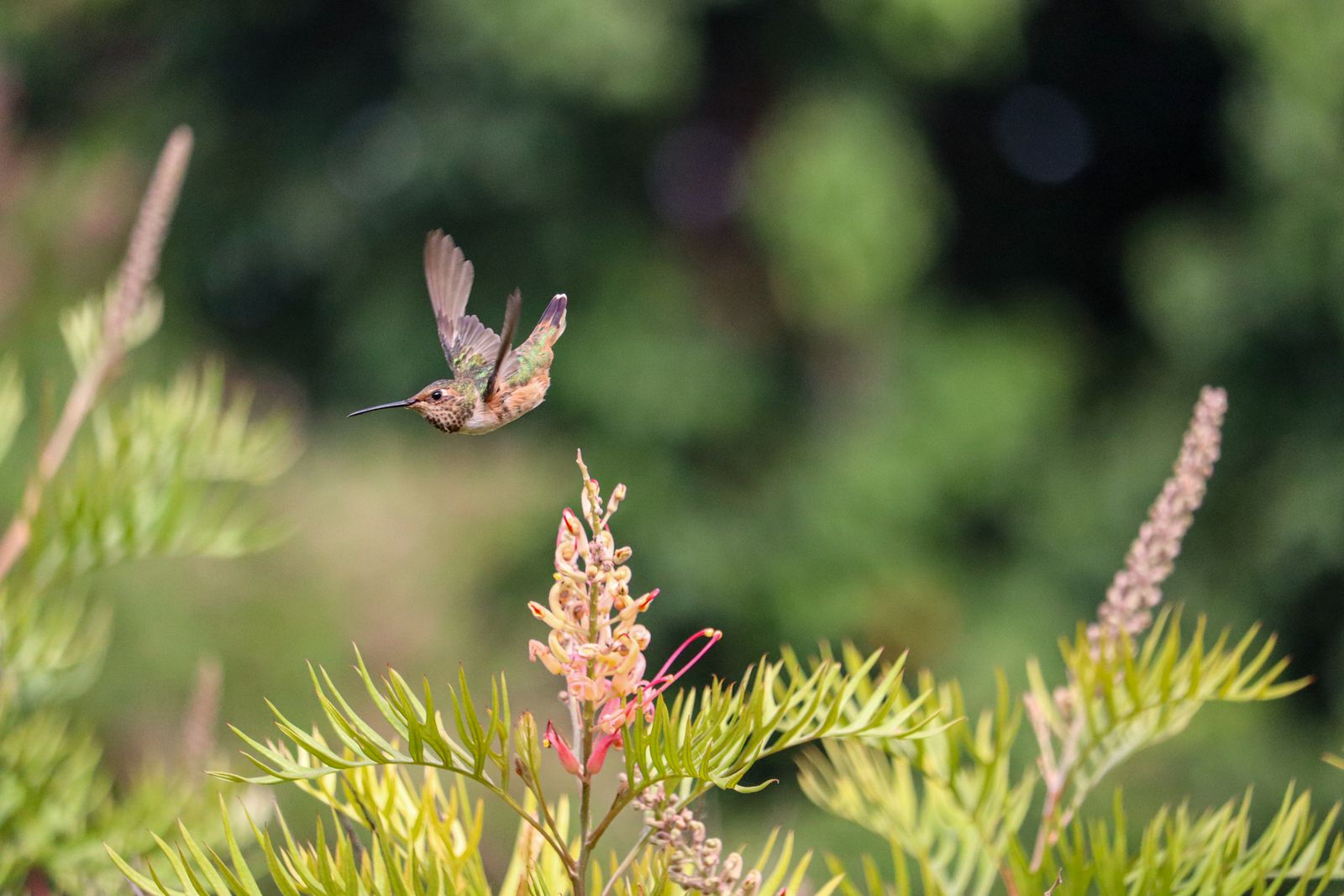
Photo by Ant Armada on Pexels
| Daytime high | Change nectar | Notes | |---|---|---| | Below 70°F | Every 4 to 5 days | Scrub at every change regardless of interval | | 70–80°F | Every 3 days | Move the feeder out of direct afternoon sun | | 80–90°F | Every other day | Fill less so nothing sits unused | | Above 90°F | Every day | Change in the evening so the batch is fresh for the morning rush |
Two habits make a short schedule painless. First, mix nectar in advance — one part plain white sugar to four parts water, fully dissolved, no red dye, no honey, no brown sugar — and keep the extra in the refrigerator. Second, fill less. A 32 fl.oz reservoir gives you plenty of headroom to run half full through a hot week, and nectar the birds actually finish never gets the chance to spoil.
Ants: the moat works, the trail is the problem
The single effective ant defense is a water-only moat hung above the feeder. Ants cannot cross open water, so a small reservoir of plain water between the hook and the feeder ends the invasion outright. Fill it with plain water only. Never oil, cooking spray, or petroleum jelly — those coat feathers and can be fatal to the birds you are feeding.
What defeats a moat is a second route. Ants follow chemical trails, and they will find any path that skips the water:
Wasps, bees, and hornets in a heat wave
Late summer heat and drought push wasps and bees toward any reliable sugar and water source, which is why a feeder that was untroubled in June becomes a wasp magnet in August. The goal is to make the feeder less accessible to them without making it less accessible to birds.
- Keep the exterior dry. Insects find spilled nectar on the outside long before they work at the ports.
- Reduce the fill level. Lower nectar means less pressure at the port and a smaller meniscus for a short-tongued insect to reach.
- Fix drips first. A dripping feeder is the strongest wasp attractant in a yard, so a leak in hot weather is urgent.
- Move the feeder. Relocating even 10 to 15 feet often breaks the pattern for wasps while hummingbirds relocate with the feeder easily.
- Provide plain water elsewhere. A shallow dish or dripper nearby gives thirsty insects a target that is not the nectar.
- Never spray insecticide on or near a feeder. Anything that kills a wasp at the port is going into a hummingbird's food.
Keeping the glass cool without losing the solar charge
The competing needs are real: the plastic solar cap wants unshaded daylight so the RGB lights can run for up to 8 hours after a full recharge, while the nectar underneath wants shade. During a heat wave, nectar wins.
Morning sun with afternoon shade is the best compromise. The cap gets its charge during the cooler half of the day, and the reservoir is protected during the hours when spoilage accelerates fastest. Practical spots include the east side of a house, under a high open branch, or beneath a pergola edge where the top still sees sky. If the only sunny spot is a brutal west-facing wall, accept a shorter light run in exchange for nectar that lasts.
The cap itself is built to shield the nectar from sunlight, rain, and snow, which helps, but no cover overcomes hours of direct 95-degree afternoon sun. Placement does the heavy lifting.
A heat-wave routine
What not to do in hot weather
Do not stretch the change interval because the feeder still looks half full — volume is not freshness. Do not top off old nectar with new; that just seeds the fresh batch. Do not use hot-weather shortcuts like extra sugar to "preserve" the mix, since a stronger ratio is harder on birds and no more stable. And do not skip the scrub between fills, because biofilm inside a reservoir reinfects every batch that follows.
For the material side of surviving repeated hot-cold cycles and daily handling, the comparison of hand-blown glass and plastic feeders covers what tends to give out first.
FAQ
Can I put ice in the nectar during a heat wave? It is unnecessary and it dilutes the mix. Shade plus a shorter change interval achieves the same goal without changing the ratio the birds rely on.
Do hummingbirds need extra water in extreme heat? They get most of their fluid from nectar, but they do bathe and appreciate moving water. A shallow dish, mister, or dripper nearby is genuinely useful in a drought and helps keep insects off the feeder.
Why are there suddenly bubbles in the reservoir? Rising bubbles with no bird feeding usually mean fermentation has started. Empty it, scrub the glass, and refill with a fresh batch immediately.
Should I take the feeder down during a heat wave? No. Birds need reliable food most when conditions are hard. Keep it up, fill it less, and change it more often.
A practical next step
Set a recurring evening reminder for the length of the hot spell — empty, scrub, refill, wipe, top up the moat. Doing it at dusk means the birds meet a fresh batch at first light, when traffic is heaviest. If you want the yard offering more than one food source through a hot summer, the piece on live nectar plants beside glass solar feeders covers plantings that hold up in heat.
Cover photo by Jennelope 🩷 on Pexels.