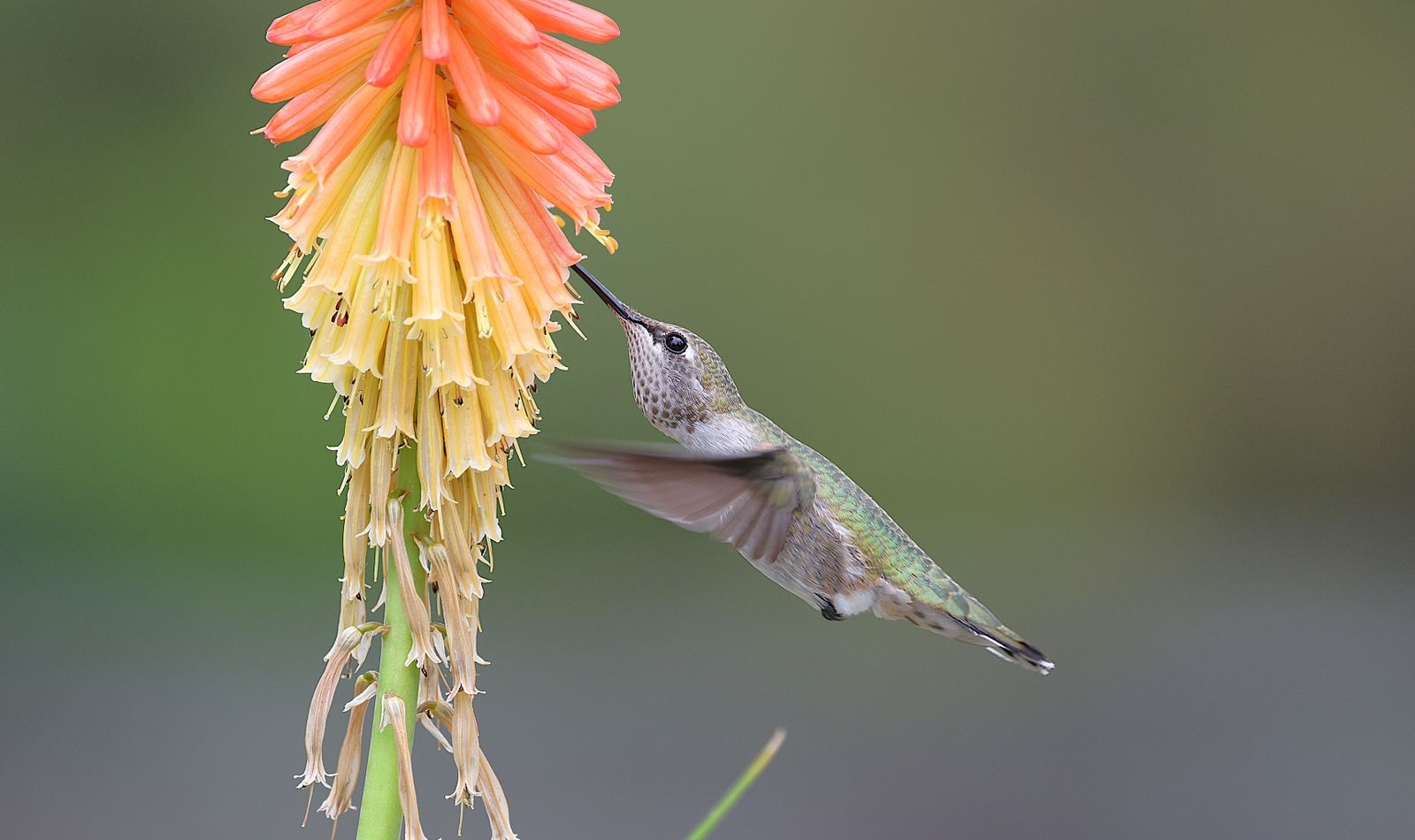
How to Keep Bees Away from Hummingbird Feeder (Humane & Safe)
To keep bees away from your hummingbird feeder, eliminate nectar drips by switching to a leak-proof feeder, install flexible rubber Nectar Guard membranes, and temporarily adjust your nectar ratio to 5:1 water-to-sugar. Relocating the feeder 10 to 15 feet away into a shady spot breaks the bees' visual navigation path while hummingbirds quickly relocate their favorite feeding station.
Insect Infestation Diagnostic Flowchart
- Are insects landing directly on feeding ports or hovering near the base? → Yes: Check if nectar is leaking or seeping from the base threads.. No: Insects may be attracted to nearby bright yellow garden decor or outdoor trash..
- Is the feeder base or outer glass sticky with nectar drips? → Yes: Clean reservoir immediately, inspect rubber seals, and move feeder to full shade to prevent thermal expansion leaks.. No: Insects are reaching fluid inside ports; install rubber Nectar Guard membranes or switch to recessed deep ports..
- Are yellowjackets or paper wasps aggressively chasing hummingbirds away? → Yes: Reduce nectar ratio to 5:1 (less sweet) for 3-5 days and relocate feeder 15 feet away into dense shade.. No: Honeybees are likely foraging; install an ant moat and physical bee guards to block short mouthparts..
Troubleshooting Matrix: Insect Behavior vs. Recommended Fix
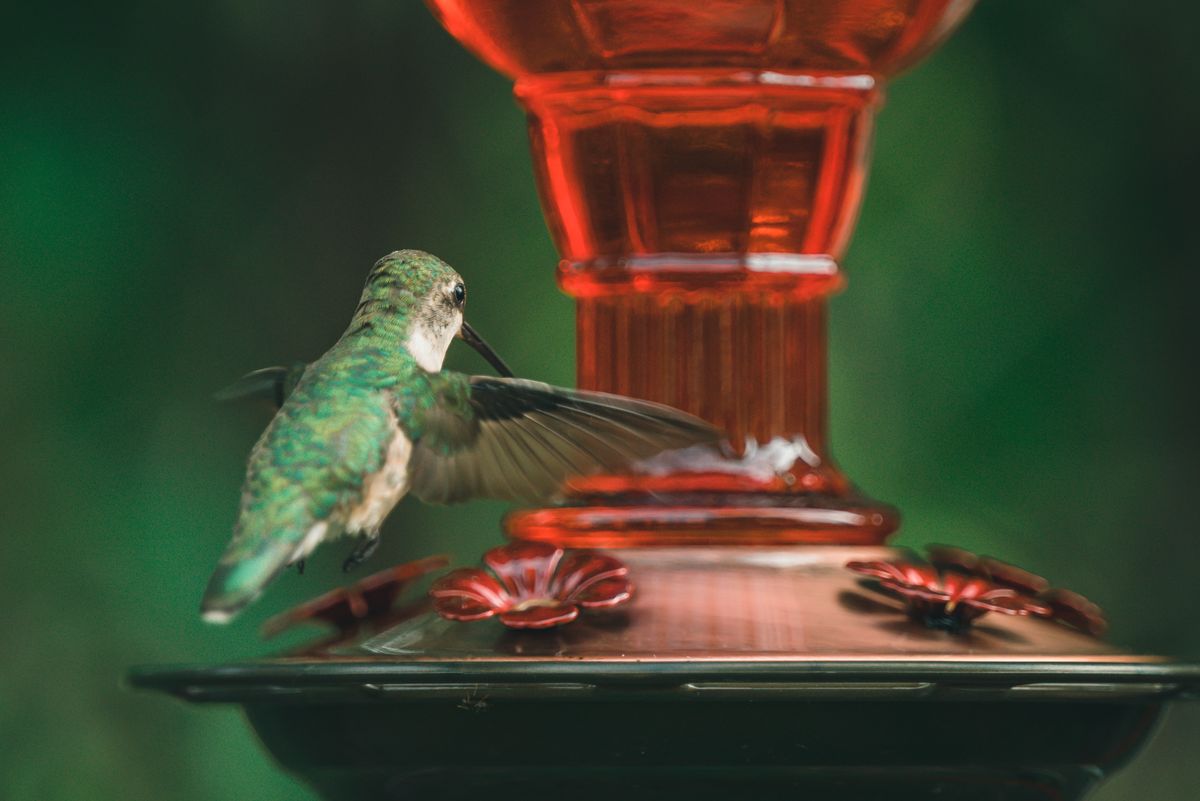
| Observed Scenario | Primary Insect Involved | Root Cause | Humane Correction Strategy |
| --- | --- | --- | --- |
| Swarming around ports during hot mid-afternoon sun | Honeybees (Apis mellifera) | Sun warms nectar, causing air expansion inside reservoir that pushes nectar out ports | Move feeder to continuous shade and upgrade to a heavy hand-blown glass reservoir with a sealed metal base. |
| Aggressively crawling around port rims and chasing birds | Yellowjackets & Paper Wasps | Nectar concentration is overly rich (1:3 or higher) or ports have yellow decorative accents | Dilute nectar to 5:1 water-to-sugar, remove yellow accents, and install flexible rubber port valves. |
| Clustering on hanger wire and top cap | Scout Bees & Foragers | Sticky residue spilled during refill process left on exterior surfaces | Wipe down entire exterior with white vinegar and warm water after refilling; ensure threads are dry. |
| Insects lingering after dusk around feeder body | Moths or Night Flying Insects | Bright solar LED illumination radiating into surrounding foliage | Ensure solar lighting glows softly downward; diurnal bees and wasps sleep at night and will not be attracted. |
Identify the insect behavior occurring in your garden to implement targeted, non-harmful solutions.
Expert Insights: Feeder Mechanics & Nectar Physics
A primary reason hummingbird feeders leak is thermal expansion. When direct sunlight heats the air pocket inside a glass or plastic bottle feeder, the expanding gas pressurizes the nectar chamber and forces liquid out through the ports.
Hand-blown glass reservoirs with high structural density resist ambient temperature spikes much better than thin plastic. Combined with an anti-rust metal base engineered with a silicone gasket seal, vacuum pressure remains intact, keeping the exterior dry. Because honeybees and wasps cannot hover effective distances like hummingbirds, keeping port rims bone-dry cuts off 90% of insect visitation within 48 hours.
Decision Tree: Selecting the Best Deterrent for Your Setup
- Does your feeder currently hang in direct sunlight for more than 2 hours daily? → Yes: Relocate to a shaded branch or porch beam. Direct sun accelerates nectar spoilage and causes liquid-expelling thermal leaks.. No: Proceed to evaluate feeder port structure.
- Are the feeding ports flush with the nectar reservoir surface? → Yes: Upgrade to a feeder with recessed ports elevated at least 1.5 inches above fluid levels or install slip-on rubber Nectar Guard membranes.. No: Check current nectar recipe concentrations.
- Is your nectar recipe sweeter than the standard 4:1 water-to-sugar ratio? → Yes: Dilute mixture to 5:1 (5 parts water, 1 part refined white sugar). Hummingbirds will still feed eagerly, but lower sugar scent deters bees.. No: Perform a comprehensive clean and install an overhead ant moat to block secondary scent trails.
Essential Takeaways for Bee-Free Feeding
Keep these core principles in mind when managing insects around your hummingbird stations:
Evaluating Bee Deterrent Solutions: What Works & What to Avoid
To stop bees and yellowjackets permanently, eliminate liquid drips with a high-capacity, precision-sealed hand-blown glass feeder, relocate the feeder into shade, and use flexible rubber Nectar Guard membranes.
Best choice for
- Sealed leak-proof metal base with hand-blown glass reservoir — Handcrafted thick glass isolates liquid from swift thermal shifts, and precision metal threads keep the vacuum seal tight.
- Rubber Nectar Guard membranes or deep recessed port design — Hummingbirds easily extend their 1.5-inch tongues through flexible valves, whereas short insect mouthparts cannot reach nectar.
- Temporary 15-foot relocation to full shade — Bees use strict visual and solar navigation; moving the feeder breaks their scout orientation while hummingbirds search out and find the new location.
- Applying PAM, cooking oil, or petroleum jelly to feeder ports (coats feathers, preventing preening and insulation)
- Adding essential oils like peppermint or eucalyptus to nectar (toxic to avian respiratory systems)
- Using red food dye or bright yellow plastic flower port inserts (yellow strongly attracts bees)
Recommended Solution: LUJII Solar-Powered Hand-Blown Glass Hummingbird Feeder
When combating persistent bees, hardware quality makes all the difference. The LUJII Solar-Powered Hummingbird Feeder combines functional leak-proofing with breathtaking garden aesthetics.
- Hand-Blown Glass Artistry: Crafted at 2,300°F by master artisans, each thick glass reservoir provides thermal insulation that minimizes liquid expansion leaks.
- Leak-Proof Metal Base: Features an anti-rust coated metal base with a tight silicone gasket seal, ensuring outer surfaces remain completely dry and unappealing to scout bees.
- 32 fl. oz. Capacity: Translucent, rich color patterns allow effortless monitoring of fluid levels so you never overfill past port safety lines.
- Solar RGB Lighting: Integrated solar cap charges by day and lights up automatically at night for up to 8 hours. Because diurnal bees and wasps sleep at night, nighttime LED displays do not attract daytime pests.
- All-Weather Durability: Built with a protective top cap shielding against rain and direct sun, keeping nectar fresh and cool.
Comparison: Bee Guard Barrier Methods
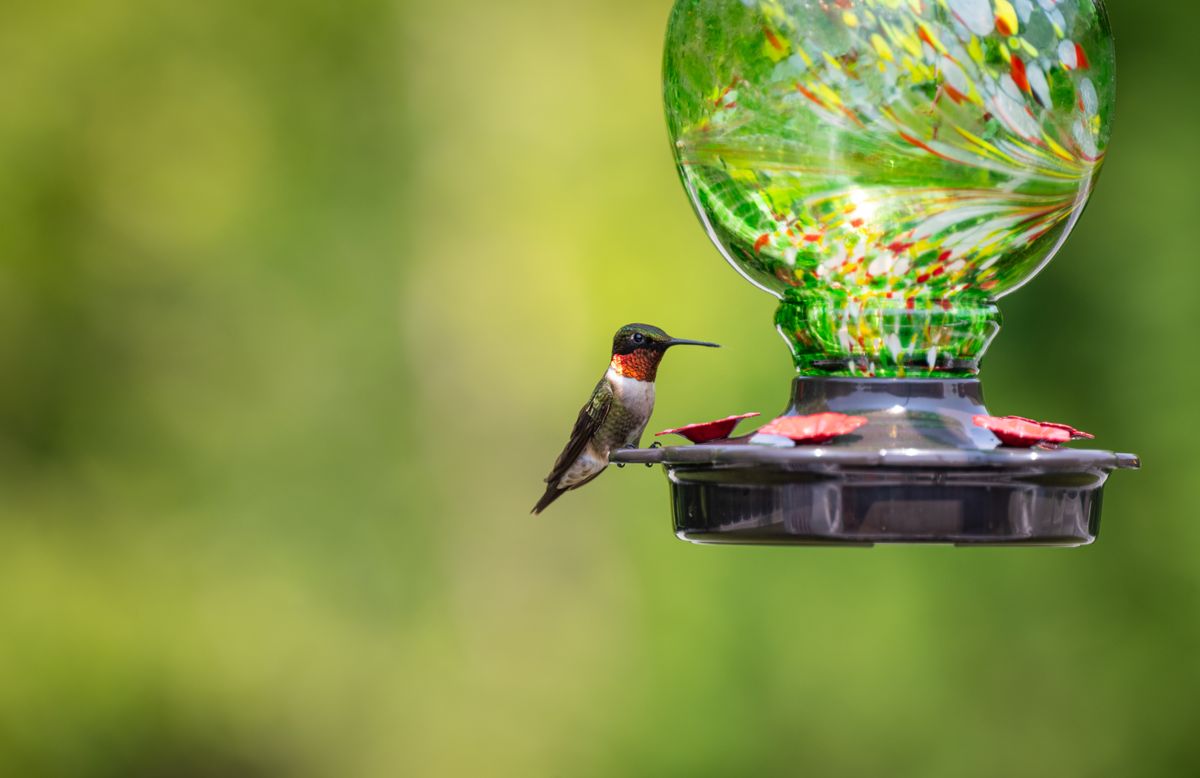
| Guard Type / Design | Port Access Depth | Drip Prevention Rating | Ease of Cleaning | Bird Safety Profile |
| --- | --- | --- | --- | --- |
| Flexible Rubber Nectar Guards | Extends dry barrier by 0.5 - 1.0 inches | High (Self-sealing center slit) | Moderate (Requires small brush clean) | Excellent (Soft silicone will not scratch beaks) |
| Recessed Deep-Port Basin (LUJII Style) | Integrated 1.25+ inch separation | Very High (Sealed metal thread vacuum) | High (Wide-mouth base disassemble) | Superior (Natural feeding angle, zero mechanical friction) |
| Plastic Snap-On Mesh Cages | 0.25 inch exterior grid offset | Low (Does not stop liquid seepage) | Low (Traps sugar residue in crevices) | Fair (Can accumulate sticky mold if neglected) |
| Saucer-Style Bottom Reservoirs | 1.0 - 1.5 inches above liquid line | High (Gravity prevents dripping) | High (Open bowl layout) | Good (Requires frequent washing in summer heat) |
Compare popular physical barrier designs to see how they perform in real garden scenarios.
5 Safe Steps to Eliminate Bees from Your Feeder
Follow this step-by-step procedure to clear your garden of unwanted insects while keeping hummingbirds safe and nourished.
Dangerous Hacks to Avoid: Myths That Harm Hummingbirds
Internet forums often suggest quick insect fixes that are catastrophic for wild birds. Avoid these dangerous practices at all costs:
Frequently Asked Questions About Bees and Solar Hummingbird Feeders
Get answers to common questions about keeping your solar feeder insect-free and safe.
Action Plan: Reclaim Your Garden Haven
Your decision: Determine whether your insect invasion is caused by thermal nectar leaks, exposed shallow ports, or direct sun placement.
Do this next: Clean your feeder thoroughly, replace worn gaskets, move the unit 15 feet into continuous shade, and switch to a leak-proof hand-blown glass feeder with a precision metal base.
Related resource: Explore our guide on hanging placement strategies and ant moat installation for comprehensive pest protection.
Upgrade your yard with a handcrafted LUJII Solar-Powered Hummingbird Feeder featuring a 32 oz heavy glass body, leak-proof metal base, and ambient RGB solar night lights.
Take these concrete steps today to restore peace to your backyard bird sanctuary.
Explore Related Feeder Protection Guides
Provide internal links to ant protection, weatherproofing, ant moats, and hot weather nectar management.
Cover photo by Veronika Andrews on Pexels.