How Fast Does Hummingbird Nectar Spoil in Hot Weather?
Sugar water spoils faster than most people expect, and heat is the variable that matters most. In mild spring weather a feeder can typically go several days between changes; in a hot spell it needs changing every day or two, and in direct afternoon sun on a hot day it can start to turn within a single day. The safe rule is to work from temperature rather than from a fixed weekly habit, and to change it early whenever you are unsure.
Why does hot weather spoil nectar so quickly?
Because warm sugar water is an ideal growth medium. Yeasts and bacteria multiply faster as temperature rises, and fermentation produces the cloudiness, film, and sour smell that tell you a batch has gone. Warmth also encourages mold at the ports, where residue collects and dries.
Two things make a feeder hotter than the air around it. Direct sun on the reservoir heats the liquid well past the shade temperature, and hard surfaces nearby — concrete patios, brick walls, glass doors, metal railings — radiate additional heat into the space. A feeder in full afternoon sun above a concrete patio is in a considerably harsher environment than one in dappled shade over a lawn, even on the same day.
This is why guidance based on "once a week" fails in summer. The interval has to move with conditions.
How often should nectar be changed at different temperatures?
The commonly recommended intervals look roughly like this. Treat them as ceilings, not targets — changing sooner is never wrong.
| Conditions | Commonly recommended interval | Notes | |---|---|---| | Cool spring or fall weather | Every four to five days | Still needs a regular schedule, not indefinite | | Warm, mild days | Every two to three days | The default for most of the season | | Hot weather | Every one to two days | Shorten further if the feeder gets afternoon sun | | Very hot weather | Daily | The interval where most spoilage complaints originate | | Feeder in direct afternoon sun | One step shorter than the band above | Sun on the reservoir is the biggest single accelerator | | Feeder over concrete, brick, or decking | One step shorter | Radiant heat from hard surfaces adds up |
If your feeder sits in full sun on a hot patio, you are effectively in the daily band regardless of what the thermometer reads in the shade.
What are the signs nectar has already gone bad?
Trust your eyes and nose before the calendar. Any one of these means dump, wash, and refill:
- Cloudiness. Fresh nectar is clear. A milky or hazy look is fermentation.
- Floating specks or strands. Dark flecks or stringy material indicate mold or debris.
- Black or dark spots at the ports or inside the reservoir. Mold takes hold at residue points first.
- A sour or alcoholic smell. Fermented sugar water smells distinctly wrong.
- A film on the surface or a slick feel inside. Biofilm has started.
- Birds stopping abruptly. Hummingbirds reject spoiled nectar. A feeder that goes quiet while looking full is a strong hint.
How do you slow spoilage without changing the nectar recipe?
The recipe should not change — one part plain white sugar to four parts water, no red dye, no honey, no brown sugar, no additives of any kind. There is nothing safe to add that extends its life. What you can change is the environment and the volume.
Does a shaded solar feeder still work?
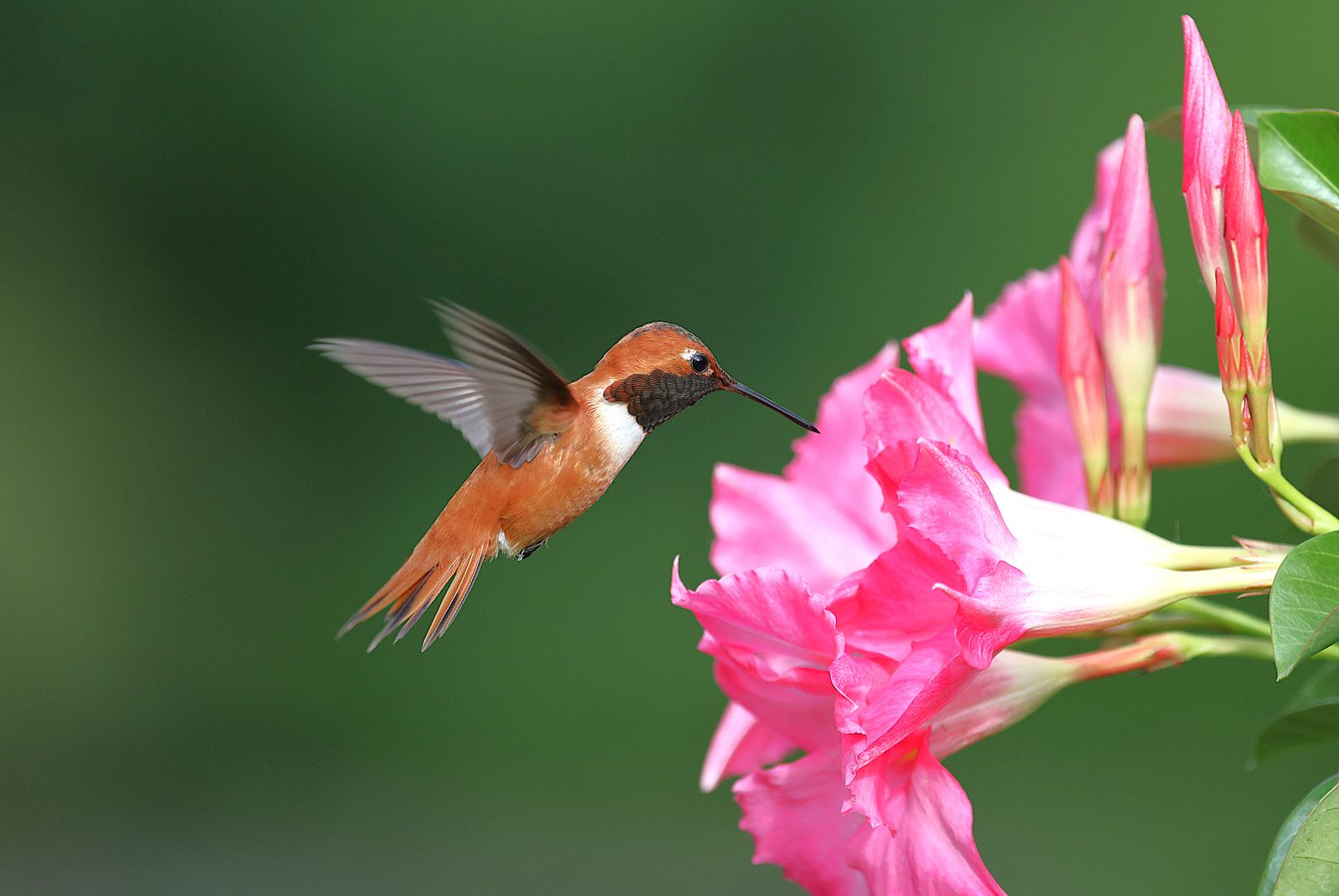
Photo by Veronika Andrews on Pexels
Mostly, with a tradeoff to understand. A solar feeder charges from daylight on its cap, and a spot with several hours of direct morning sun will generally charge while sparing the reservoir the worst of the afternoon heat. Deep, all-day shade is the position that leaves you with no evening lighting.
A protective solar cap also does real work in hot, changeable weather by shielding the top of the reservoir from sun and rain, which helps keep the nectar in better condition than a fully exposed opening would. It does not, however, replace changing the nectar on schedule. No cover of any kind makes stale nectar safe.
If you are deciding between materials for a hot-climate yard, note that a hand-blown glass reservoir is easy to inspect and stands up to repeated hot-water washing, which matters when you are cleaning every day or two rather than weekly. The glass and plastic comparison covers the tradeoffs in detail.
Does a hot climate change how many feeders you need?
Often yes, but smaller ones. Two modestly filled feeders in different parts of the yard beat one large feeder filled to the top: both get emptied faster, both get changed more often, and the birds get a second option if one goes stale. It also spreads out territorial pressure, which tends to rise as birds compete for a limited food source in hot weather.
A planted layer helps too, since flowers supply nectar that never needs a maintenance schedule. The balance between the two approaches is covered in this comparison of live nectar plants and glass solar feeders.
FAQ
Can I top up rather than replace? No. Adding fresh nectar to old nectar in an unwashed reservoir starts the new batch already contaminated. Empty, wash, refill.
Is refrigerated nectar safe to use straight from the fridge? Yes. Birds are unbothered by cool nectar, and in hot weather a cold fill buys a little extra time before it reaches ambient temperature.
Does the sugar concentration affect spoilage? Stick with one part sugar to four parts water. A stronger mix does not usefully preserve anything and moves away from the standard ratio, and a weaker one gives birds less of what they came for.
What if the feeder is still full at the end of the interval? Change it anyway and reduce the fill volume next time. Time and temperature, not consumption, determine when a batch is done.
A practical next step
Check where your feeder sits between two and five in the afternoon. If it is in direct sun or hanging over concrete, move it to a spot with morning sun and afternoon shade, cut your fill volume roughly in half, and mix a larger batch to keep in the refrigerator so daily changes take under a minute.
Cover photo by Veronika Andrews on Pexels.