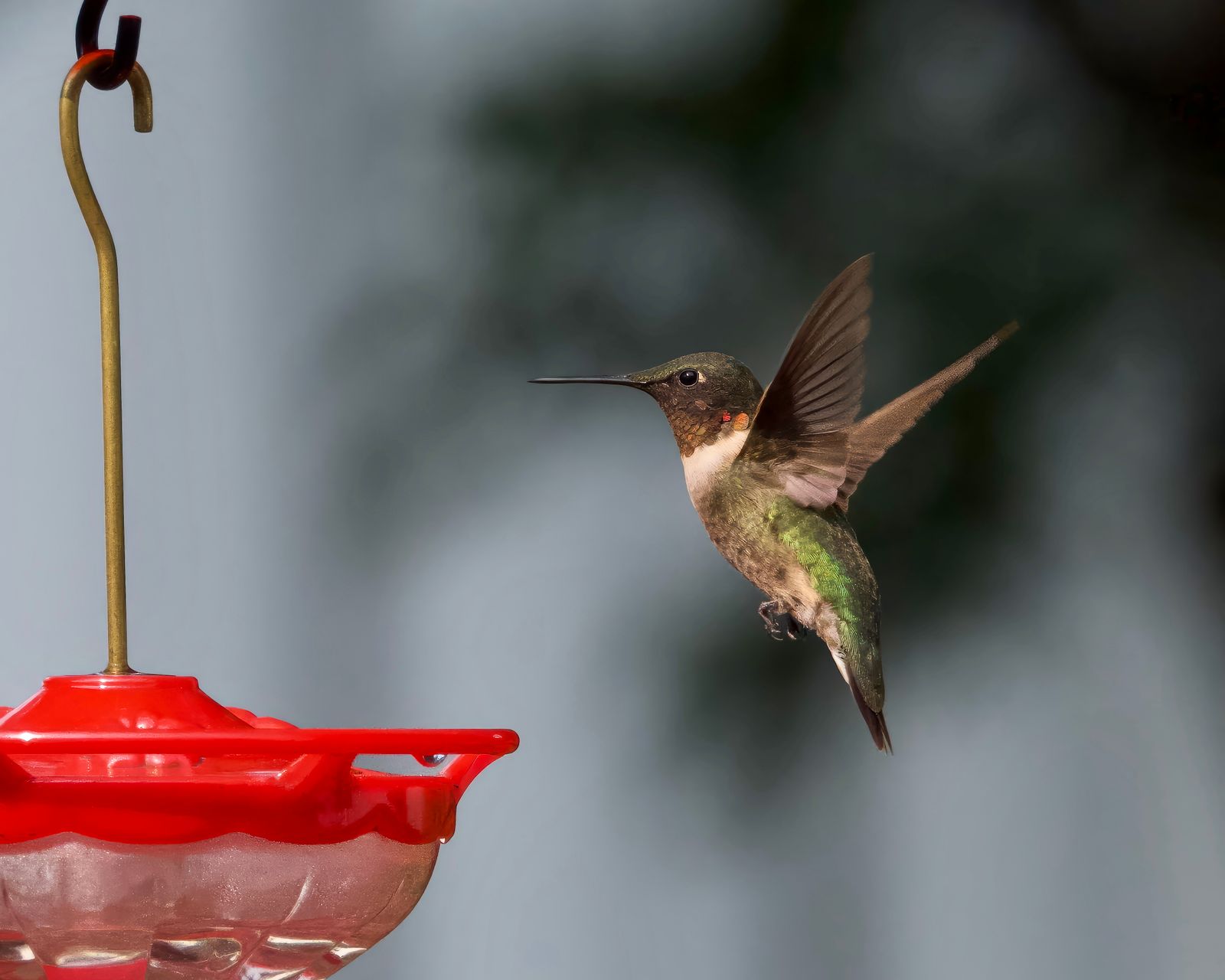
Glass vs. Plastic Hummingbird Feeder Durability: Weather & Season Guide
Hand-blown glass hummingbird feeders with anti-rust metal bases offer vastly superior weather durability compared to plastic models. Thick handcrafted glass is completely immune to solar UV photolysis, yellowing, and micro-scratch bacterial contamination. While high-impact plastic resists ground drops, heavy glass provides essential mass stability against wind-driven tipping and keeps nectar fresh across all four seasons.
Glass vs. Plastic Weather Resilience Matrix
| Durability Metric | Thick Hand-Blown Glass | Standard Thin Glass | Polycarbonate / PET Plastic |
| --- | --- | --- | --- |
| UV Sun Resistance | 100% Immune (No yellowing or hazing) | 100% Immune (No color alteration) | Degrades (Yellows, clouds, becomes brittle) |
| Surface Micro-Scratching | Impervious (Vitreous surface stays smooth) | Impervious to standard brush bristles | High vulnerability (Harbors mold spores) |
| Wind Mass Stability | High (Heavy 32 oz weight stops swaying) | Moderate (Lighter glass weight) | Low (Swings violently; drips easily) |
| Thermal Shock Threshold | High resilience (Handcrafted at 2,300°F) | Moderate (Vulnerable to sudden ice/heat) | High impact flexibility; low heat stability |
| Nectar Safety & Leaching | Zero chemical leaching under intense heat | Zero chemical leaching | Potential plasticizer leaching in heat |
| Average Backyard Lifespan | 10+ Years with basic seasonal care | 3–5 Years (Vulnerable to minor bumps) | 1–2 Seasons before clouding & cracking |
Compare how handcrafted glass, thin glass, and plastic polymers respond to sunlight, wind storms, moisture, and temperature fluctuations.
Pros and Cons: Hand-Blown Glass vs. Molded Plastic
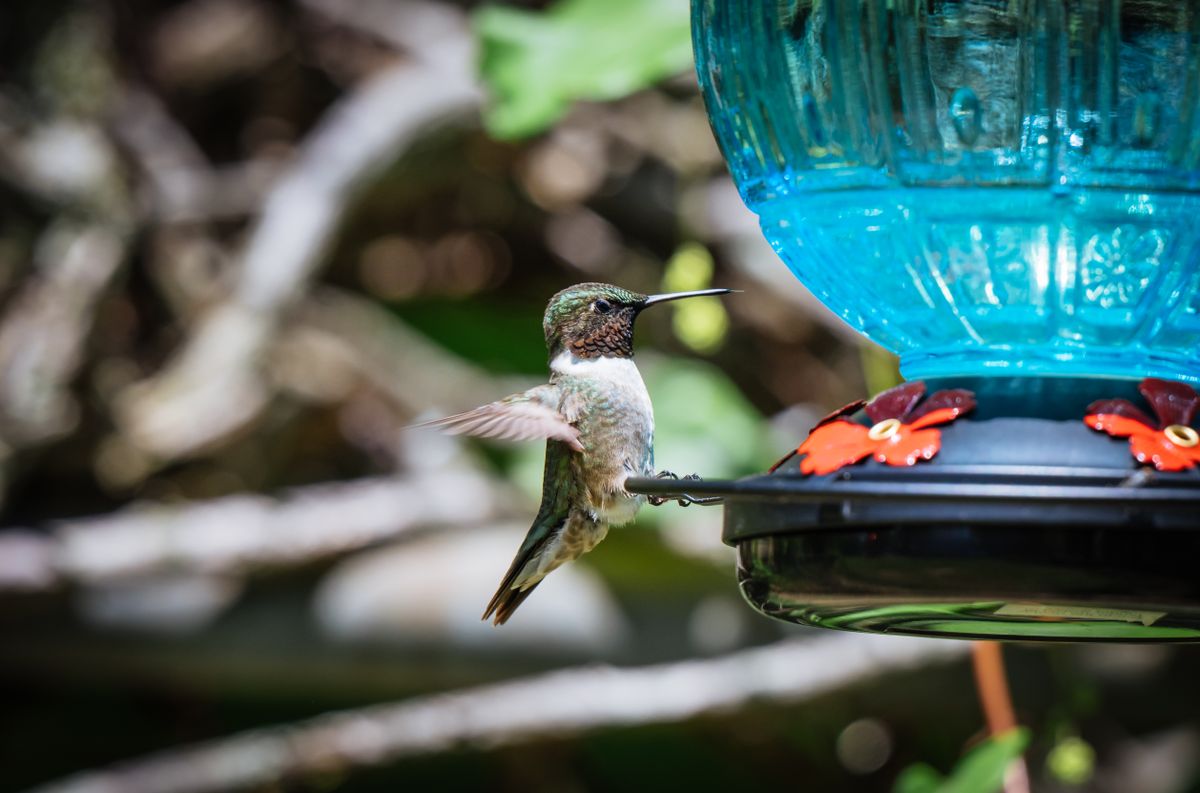
Pros
- Hand-blown glass never degrades or clouds under relentless solar UV rays.
- Non-porous glass surfaces prevent scrub-brush micro-scratches that trap bacterial mold.
- Substantial mass anchors the feeder during severe spring windstorms and summer rain.
- Thick translucent glass provides effortlessly clear viewing of nectar levels.
- Elevates backyard aesthetic with unique handcrafted artistry and rich colored pigments.
- Glass can crack if dropped onto concrete or hard stone patio surfaces.
- Requires solid metal hanging hardware rather than flimsy adhesive hooks.
- Expanding ice inside an uninsulated reservoir can crack glass if left out during hard winter freezes.
Our Recommendation: The All-Weather Backyard Choice
For bird lovers seeking long-term weather durability, vibrant garden aesthetic, and maximum nectar safety, we strongly recommend a thick hand-blown glass feeder featuring an anti-rust metal base.
The LUJII Solar-Powered Hummingbird Feeder pairs 2,300°F handcrafted artisan glass with a protective weather-sealed solar top cap and powder-coated metal perches. It delivers 32 fl. oz of leak-proof nectar capacity while illuminating your yard for up to 8 hours each night with magical RGB LED lights.
Expert Weatherproofing Tip: Preventing Thermal Shock
Glass is an exceptionally stable material, but rapid thermal shifts can cause stress fractures. During early spring and late autumn, never refill a cold glass reservoir with warm or boiling nectar straight from the stove. Allow your sugar syrup to cool completely to room temperature before pouring. Conversely, when cleaning in winter, avoid rinsing cold glass under scalding hot water. Matching liquid temperature to glass ambient temperature preserves your artisan feeder for decades.
Common Seasonal Care Mistakes That Ruin Feeders
Avoid these frequent mistakes to ensure your feeder survives the harsh elements year-round.
Feeder Material Selection Flowchart
- Does your feeder location receive over 4 hours of direct sun daily? → Yes: Glass is essential to prevent UV clouding, photolysis brittleness, and chemical leaching.. No: Proceed to wind exposure check.
- Is your garden subject to strong wind gusts or rain storms? → Yes: Choose heavy hand-blown glass with a metal base for wind-anchoring mass.. No: Lightweight plastic or standard glass may suffice if protected from falling.
- Are you seeking vibrant night illumination and handcrafted garden decor? → Yes: Select an illuminated hand-blown glass solar feeder like the LUJII 32 oz model.. No: Select a basic utility glass feeder with rust-resistant metal components.
Frequently Asked Questions About Feeder Durability
Answers to the most common questions regarding outdoor environmental stress, freezing conditions, and material safety.
Key Takeaways: Weather Resilience at a Glance
Summary points for quick reference on feeder material selection:
Technical Specification Matrix: Material Degradation Factors
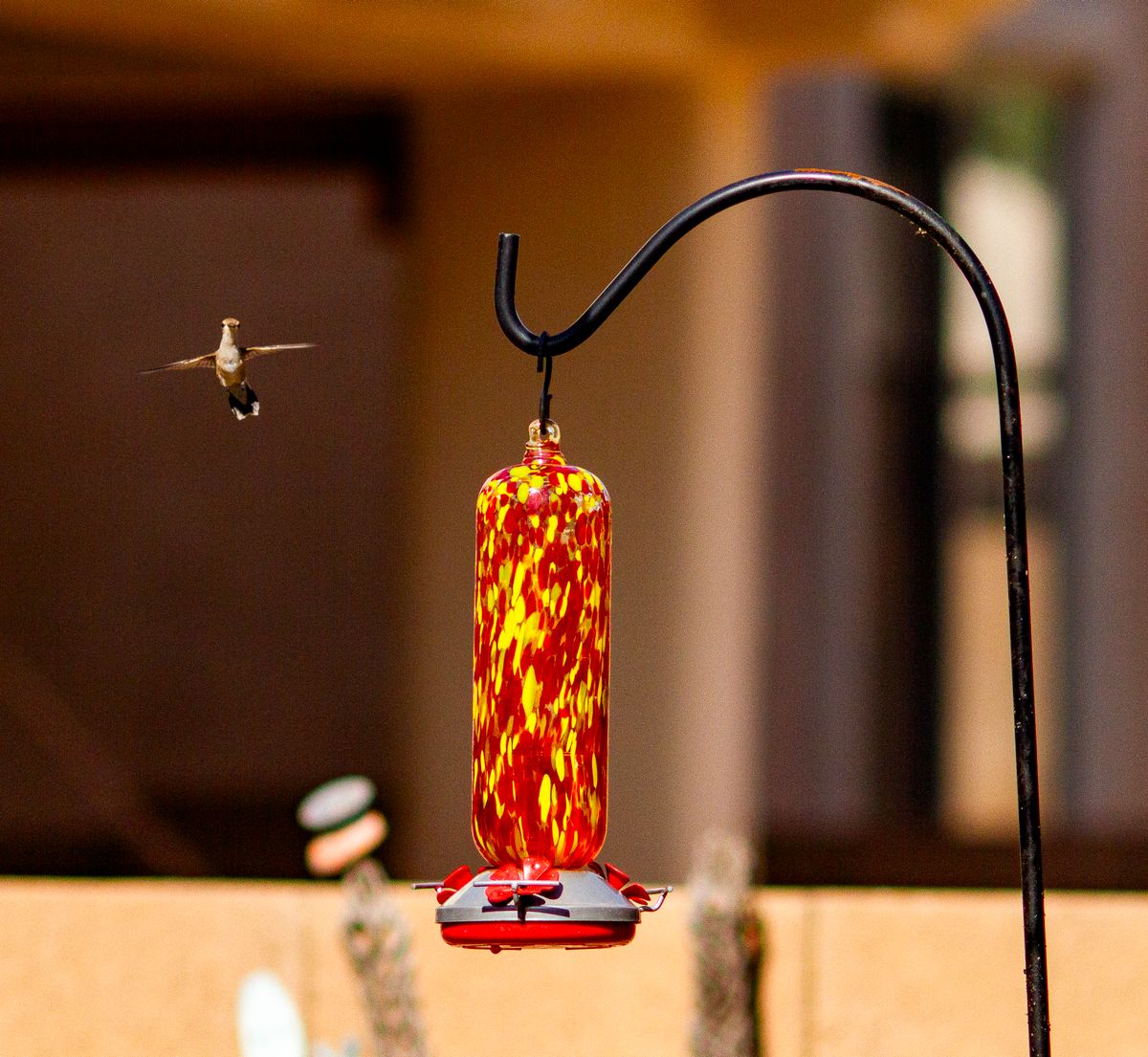
Photo by Jon Champaigne on Pexels
| Physical Property | Hand-Blown Silicate Glass | Polycarbonate Polymer (Plastic) |
| --- | --- | --- |
| Chemical Stability | Inert; zero reaction with acidic nectar or cleaning solutions | Susceptible to plasticizer migration when heated past 90°F |
| UV Absorption Threshold | Reflects/transmits UV without molecular chain breakdown | Absorbs UV-A and UV-B, initiating free-radical photolysis |
| Mohs Hardness Rating | 5.5 – 6.0 (Highly scratch resistant against abrasives) | 2.0 – 3.0 (Easily scratched by dust, sand, or nylon brushes) |
| Specific Mass / Density | ~2.5 g/cm³ (Provides anti-sway ballasting weight) | ~1.2 g/cm³ (Lightweight; easily displaced by wind) |
| Base Housing Component | Powder-coated anti-rust alloy metal base | Molded snap-fit plastic base (Prone to cross-threading) |
A scientific examination of physical properties that dictate outdoor performance over time.
Decision Support Framework: Climate & Setup Scenarios
Choose thick hand-blown glass with sealed metal bases for hot sunny regions and windy open yards. Reserve plastic feeders only for temporary budget setups in fully shaded, wind-sheltered patios.
Best choice for
- Hand-Blown Glass with Solar Cap — Glass prevents sunlight-induced clouding and maintains structural integrity despite 100°F+ heat.
- 32 oz Heavy Glass with Anti-Rust Metal Base — Substantial mass prevents wind tipping, while anti-rust coating prevents salt/moisture corrosion.
- Hanging directly over unpadded stone patios where heavy swinging branches could knock feeders down during severe ice storms.
- Standard Molded Glass with Plastic Base — Lower cost than hand-blown glass, but plastic base threads wear out and leak over time.
Real-World Climate Stress Scenarios
Scenario 1: Intense Arizona Summer Heat Wave (105°F, Direct Sunlight) — Plastic feeders absorb solar radiation, softening the reservoir and accelerating nectar fermentation into toxic alcohol within 24 hours. Hand-blown glass reflects excess thermal radiation, remains structurally inert, and protects nectar clarity.
Scenario 2: Florida Spring Thunderstorm (40 mph Wind Gusts & Heavy Downpours) — Lightweight plastic feeders swing violently, spilling liquid sugar across your porch and attracting ants. A 32 oz heavy hand-blown glass feeder acts as its own stabilizer, keeping perches level and preventing leaks through its silicone-sealed metal base.
Scenario 3: Midwest Late-Autumn Unexpected Overnight Freeze (28°F) — While hummingbirds migrate south, early freezes test feeder strength. Plastic becomes brittle and cracks along seam lines. Glass handles cold air comfortably, provided nectar is brought indoors before complete ice expansion occurs.
How different materials hold up under three challenging North American weather events.
Understanding why hummingbird feeder materials react so differently to outdoor exposure requires looking at basic material chemistry.
Solar Radiation and UV Photolysis
Plastics are synthetic polymer chains held together by chemical bonds. When exposed to sunlight, intense ultraviolet (UV) photons break these chemical chains—a process known as photolysis. Over a single summer, photolysis causes clear plastic reservoirs to turn yellow, turn hazy, and develop internal micro-fractures. In contrast, handcrafted glass is formed at 2,300°F from natural silica sand, sodas, and lime. Its crystalline vitreous structure is completely immune to solar UV energy, retaining 100% translucent clarity year after year.The Micro-Scratch Mold Trap
Cleaning your feeder is vital for hummingbird health. However, washing plastic with standard kitchen sponges or brushes creates microscopic surface scratches. These tiny fissures become ideal breeding grounds for Candida yeast and fungal mold spores that cannot be rinsed out. Hand-blown glass possesses a non-porous surface rating 6.0 on the Mohs hardness scale. It withstands frequent scrubbing without scratching, keeping nectar pure and disease-free.Mass, Aerodynamics, and Spill Prevention
Wind resilience is often overlooked. A 32 fl. oz glass reservoir filled with nectar weighs over 3 pounds. This substantial mass lowers the feeder's center of gravity. Paired with a precision-machined, anti-rust metal base, glass feeders resist swinging during stormy weather. Lightweight plastic feeders twist and tip under minor 15 mph gusts, dropping nectar onto the ground below.Featured All-Weather Solar Glass Hummingbird Feeder
The ultimate fusion of heritage glassmaking, modern solar technology, and multi-season resilience.
Next Steps for Your All-Weather Bird Sanctuary
Your decision: Choose thick hand-blown glass with anti-rust metal components for permanent, multi-season weather resilience and maximum nectar safety.
Do this next: Select a sheltered hanging location away from severe swinging branches, and use an anti-rust metal S-hook with a weather baffle.
- Read next: Summer Storm Protection: Weatherproofing Your Glass Solar Hummingbird Feeder Setup
- Read next: How to Clean and Maintain Your Hand-Blown Solar Hummingbird Feeder
Check out the LUJII 32 oz Solar-Powered Hand-Blown Glass Hummingbird Feeder with anti-rust metal base at https://solarhummingbirdfeeder.com.
Ready to upgrade your garden with a durable, beautiful feeder built to withstand the elements?