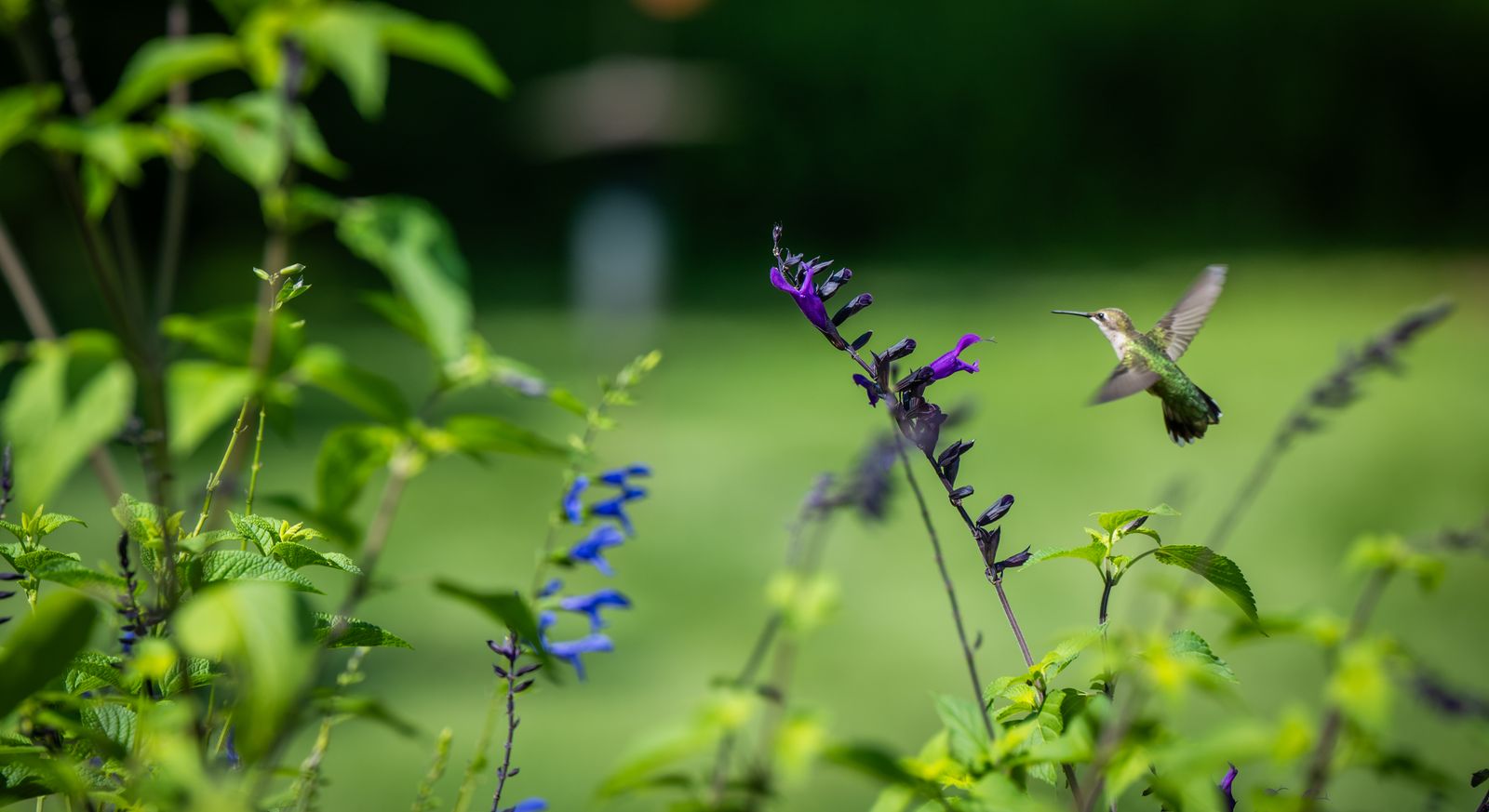
Do Hummingbirds Feed at Night? Twilight Behavior & Solar Feeders
Are those mysterious fluttering shadows hovering around your illuminated solar feeder at 10:00 PM actually hummingbirds? No, hummingbirds do not feed in complete darkness.
Hummingbirds lack nocturnal vision and enter an extreme energy-saving hibernation state called torpor overnight. Hovering visitors observed at feeders after full dark are almost always Sphinx moths or nectar bats. However, hummingbirds frequently feed during late twilight (crepuscular hyperphagia) right before entering torpor.
Hummingbird Light Sensitivity & Metabolic State Matrix
| Time Period | Ambient Light (Lux) | Metabolic State | Feeder Interaction | Visual & Navigation System |
| --- | --- | --- | --- | --- |
| Daylight (Dawn to Dusk) | 1,000 - 100,000 Lux | Active Foraging (Heart rate: 500-1,200 bpm) | Frequent visits every 10-15 minutes | Full Tetrachromatic Vision (UV + RGB active) |
| Twilight / Dusk | 1 - 100 Lux | Crepuscular Hyperphagia (Massive calorie intake) | Frantic, continuous feeding at ports | Diminishing Cone Photoreceptors (Low contrast) |
| Night / Darkness | < 0.1 Lux | Nocturnal Torpor (Body temp drops to 65°F) | Zero feeder visits (Birds are immobile) | Inoperative Vision (Incapable of dark flight) |
This matrix illustrates how ambient light levels dictate hummingbird physiology, visual capacity, and feeder interaction throughout a 24-hour day.
Hummingbird 24-Hour Metabolic & Light Cycle
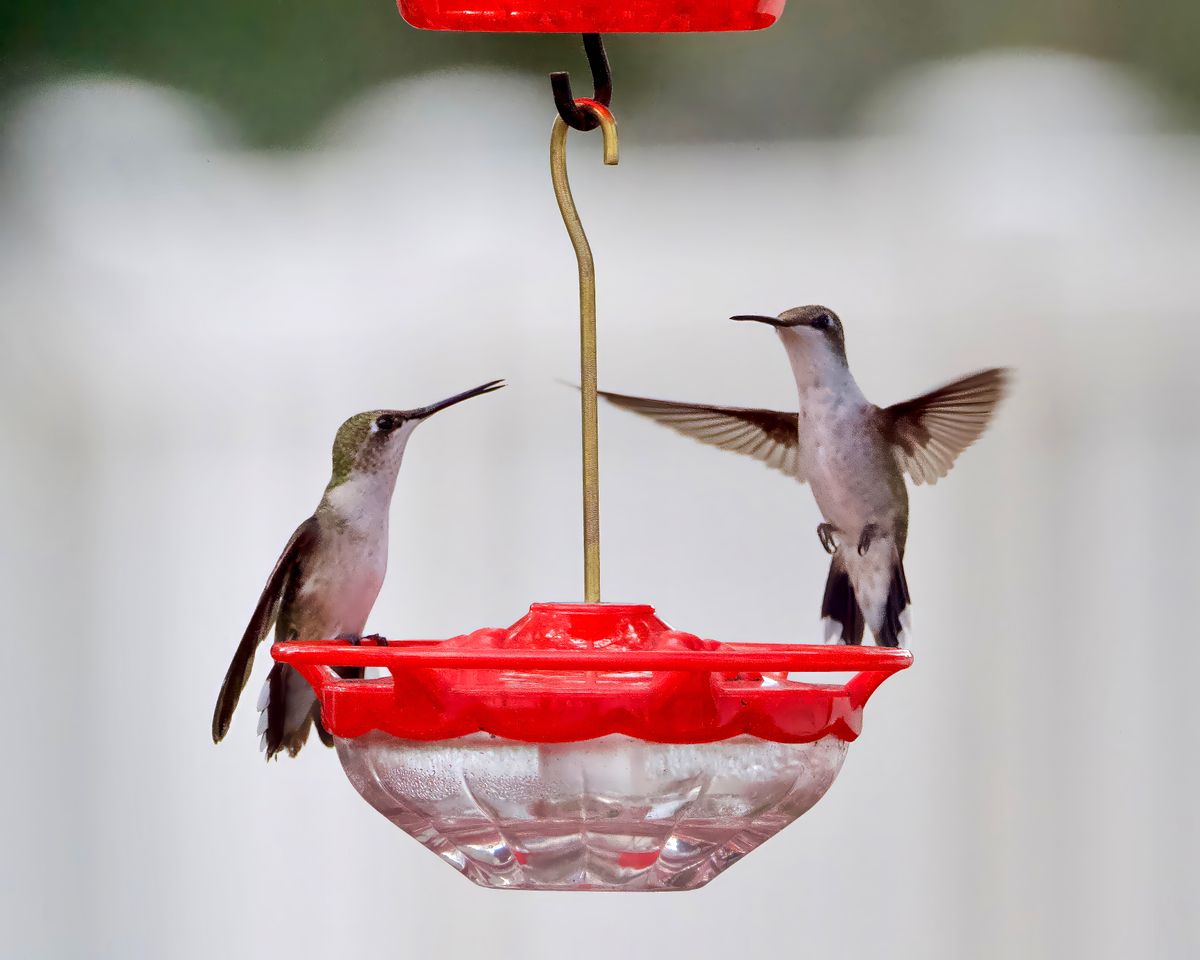
Photo by A. G. Rosales on Pexels
The diagram below illustrates how solar light levels regulate hummingbird metabolism, driving intensive dusk feeding before triggering nighttime metabolic shutdown.
Safe Solar Feeder Placement Guidelines
To enjoy ambient twilight illumination without disrupting sleeping hummingbirds, follow these placement rules:
- Maintain Distance from Roosting Cover: Hang solar feeders at least 10 to 15 feet away from dense shrubs, conifers, or thick ivy where hummingbirds sleep.
- Choose Diffused Soft Illumination: Opt for solar feeders featuring hand-blown, semi-translucent glass reservoirs that soften LED output rather than directing harsh downward spotlights.
- Verify Base Seal Integrity: Ensure your illuminated feeder uses an anti-rust metal base with leak-proof silicone gaskets to prevent overnight sugar drips that attract raccoons or rodents.
Ornithologist Insight on Ambient Artificial Light
Avian eyes possess four types of cone photoreceptors that excel in daylight but perform poorly in pitch darkness. Decorative solar LEDs emitting soft ambient light (<5 lumens) do not produce enough brightness to blind hummingbirds or pull them out of deep torpor when placed outside their immediate roosting branch.
Initial Garden Assessment Steps
Your decision: Determine if your illuminated feeder setup is safe for roosting birds while enjoying dusk feeding activity.
Do this next: Position your solar feeder at least 10-15 feet away from dense roosting trees so soft LED lighting accents your garden without shining directly into sleeping sanctuaries.
Related resource: Explore our guide on keeping nighttime pests away from garden nectar stations.
Check out the LUJII Solar-Powered Hand-Blown Glass Feeder for safe, beautifully diffused ambient twilight illumination.
Before setting up an illuminated garden, verify your feeder location and lighting characteristics.
Frequently Asked Questions About Nighttime Feeder Behavior
Clear, science-backed answers to common questions about nocturnal feeder activity and solar lighting.
Key Takeaways: Night Feeding Myths vs. Facts
- Hummingbirds Do Not Fly in the Dark: Their eyesight requires daylight or bright twilight to navigate and locate nectar ports.
- Night Hoverers are Invertebrates or Bats: Creatures hovering at feeders after 9:00 PM are almost exclusively Sphinx moths (Hummingbird Clearwing) or nectar bats.
- Late Dusk Feeding is Essential: Hummingbirds drink aggressively during twilight to build glucose reserves needed to survive overnight torpor.
- Solar LEDs are Safe When Placed Correctly: Soft ambient solar lights accent garden decor safely if kept 10+ feet away from roosting foliage.
Evaluating Illuminated Feeders for Nocturnal Safety
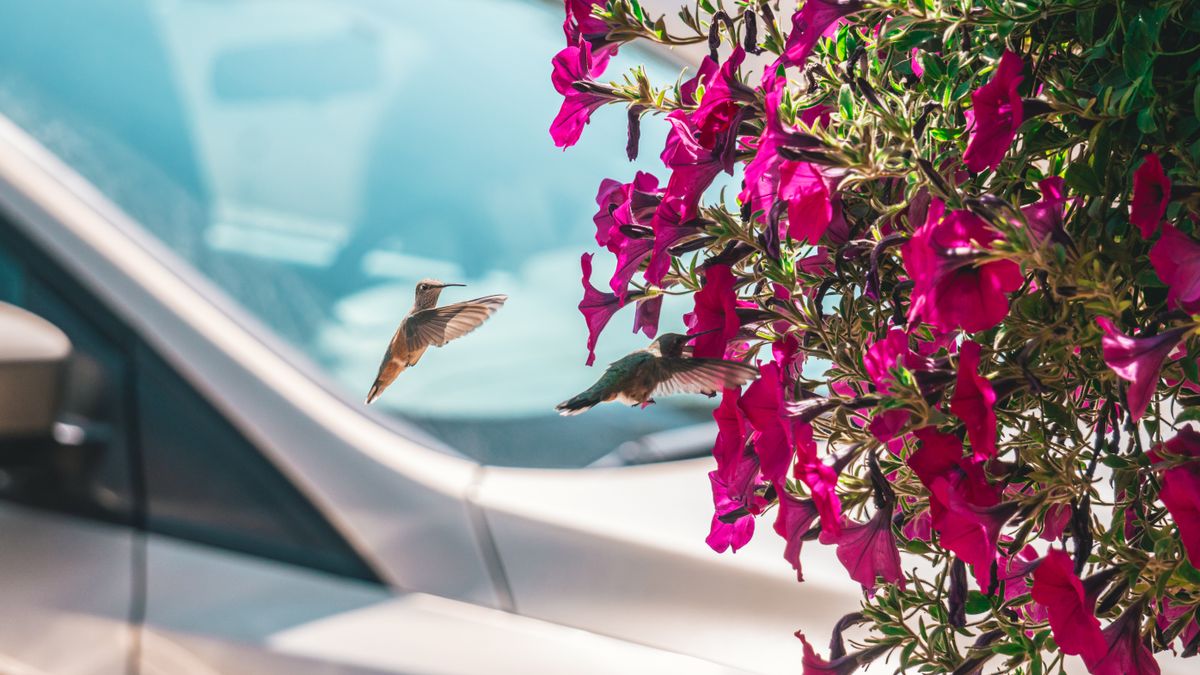
Photo by Chait Goli on Pexels
Solar illuminated feeders provide beautiful twilight garden accenting without harming birds if placed away from dense roosting trees.
Best choice for
- Soft Solar RGB Ambient Lighted Glass Feeders — Captures late crepuscular feeding while providing safe, low-lumen garden accenting after dark.
- Hanging high-lumen spotlights directly into dense roosting shrubs where hummingbirds sleep.
- Leaving unshielded lights on inside hummingbird nesting foliage during breeding season.
- Standard Non-Illuminated Hand-Blown Glass Feeder — Best if garden has existing bright landscape floodlighting that cannot be dimmed.
To understand why hummingbirds do not feed at night, we must examine their remarkable evolutionary adaptation: torpor.
The Physiology of Torpor
During the daytime, a hummingbird's heart beats between 500 and 1,200 times per minute, maintaining an internal body temperature around 104°F (40°C). Because their metabolism is among the highest of any vertebrate on Earth, hummingbirds must consume their weight in nectar daily to avoid starvation.When darkness falls, foraging becomes visually impossible. To survive 8 to 10 hours without food, hummingbirds enter torpor—a state of profound metabolic hypothermia. During torpor:
- Body Temperature Drops: Internal temperature falls from 104°F down to match ambient air temperature, dropping as low as 65°F (18°C).
- Heart Rate Plummets: Heart rate drops from over 600 beats per minute to fewer than 50 beats per minute.
- Oxygen Consumption Decreases: Metabolic rate decreases by up to 95%, allowing the bird to conserve vital glucose stores.
Crepuscular Hyperphagia: The Dusk Feeding Frenzy
Many birdwatchers observe intense activity around solar-powered feeders right as the sun sets. This is not night feeding, but crepuscular hyperphagia—a rapid-fire feeding frenzy during late twilight.As daylight fades, hummingbirds top off their digestive crops with high-energy sucrose. Solar feeders equipped with soft LED elements illuminate the hand-blown glass reservoir during these twilight minutes, helping birds locate feeding ports during the critical final 30 minutes before total darkness.
Nighttime Feeder Visitors Visual Identification Matrix
| Diagnostic Criteria | Hummingbird (Crepuscular Only) | Sphinx Moth (Nocturnal) | Nectar Bat (Nocturnal) |
| --- | --- | --- | --- |
| Active Hours | Dawn through late twilight (Never full darkness) | Full darkness (8:30 PM to 4:00 AM) | Pitch darkness (10:00 PM to 3:00 AM) |
| Physical Features | Feathers, needle-like bill, sleek head, no antennae | Furred body, large feathery or clubbed antennae | Furred body, leathery wings, visible ears |
| Flight Sound | Rapid whirring or buzzing hum from wing beats | Virtually silent or soft low-frequency flutter | Silent, swooping flight paths |
| Eye Reflection under LED | Zero eye shine in ambient light | Bright yellow, amber, or orange eye shine | Reddish or pinkish eye shine under direct light |
| Feeding Behavior | Hovers steadily, inserts beak into port, chirps | Hovers with extended proboscis, unbothered by light | Laps nectar while making quick, erratic flybys |
If you observe a creature hovering around your solar feeder after dark, compare its physical and behavioral traits against this diagnostic guide.
Failure Modes: Common Garden Lighting Mistakes That Harm Birds
Improper feeder lighting setups can create hazards for wildlife or cause frustration for garden owners. Here are the primary failure modes to avoid:
Explore Related Hummingbird Care Resources
Expand your knowledge of twilight garden care and bird safety with these reference topics:
- Nighttime Garden Safety for Roosting Hummingbirds: Autumn Twilight Feeding Tips
- Twilight Nectar Care: Does Nighttime Solar Light Affect Nectar Freshness?
- How to Keep Nocturnal Predators Away From Your Solar Lighted Feeder
- Hot Weather Nectar Ratios: Keeping Sugar Water Fresh in Summer
Featured Solar Lighted Feeder for Safe Twilight Viewing
If you want to enjoy evening garden lighting while supporting local hummingbirds, consider the LUJII Solar-Powered Hummingbird Feeder.
- Hand-Blown Glass Art: Crafted at 2,300 degrees Fahrenheit, each 32 fl.oz translucent reservoir diffuses light evenly without harsh glare.
- Soft RGB LED Illumination: Automatically charges in sunlight and lights up at night for up to 8 hours, illuminating twilight dusk feeds safely.
- Leak-Proof Metal Base: Features an anti-rust coated metal base with tight silicone seals to keep nectar contained and prevent overnight pest attraction.
- All-Weather Shield: The solar cap protects nectar from rain and snow, ensuring long-lasting durability.
Next Steps for Your Twilight Garden
Your decision: Determine if your illuminated feeder setup is safe for roosting birds while enjoying dusk feeding activity.
Do this next: Position your solar feeder at least 10-15 feet away from dense roosting trees so soft LED lighting accents your garden without shining directly into sleeping sanctuaries.
Related resource: Explore our full guide on keeping nighttime predators away from solar feeders.
Check out the LUJII Solar-Powered Hand-Blown Glass Feeder for safe, beautifully diffused ambient twilight illumination.
Take these actions to optimize your garden for evening birdwatching and safe nighttime roosting.
Cover photo by Chris F on Pexels.