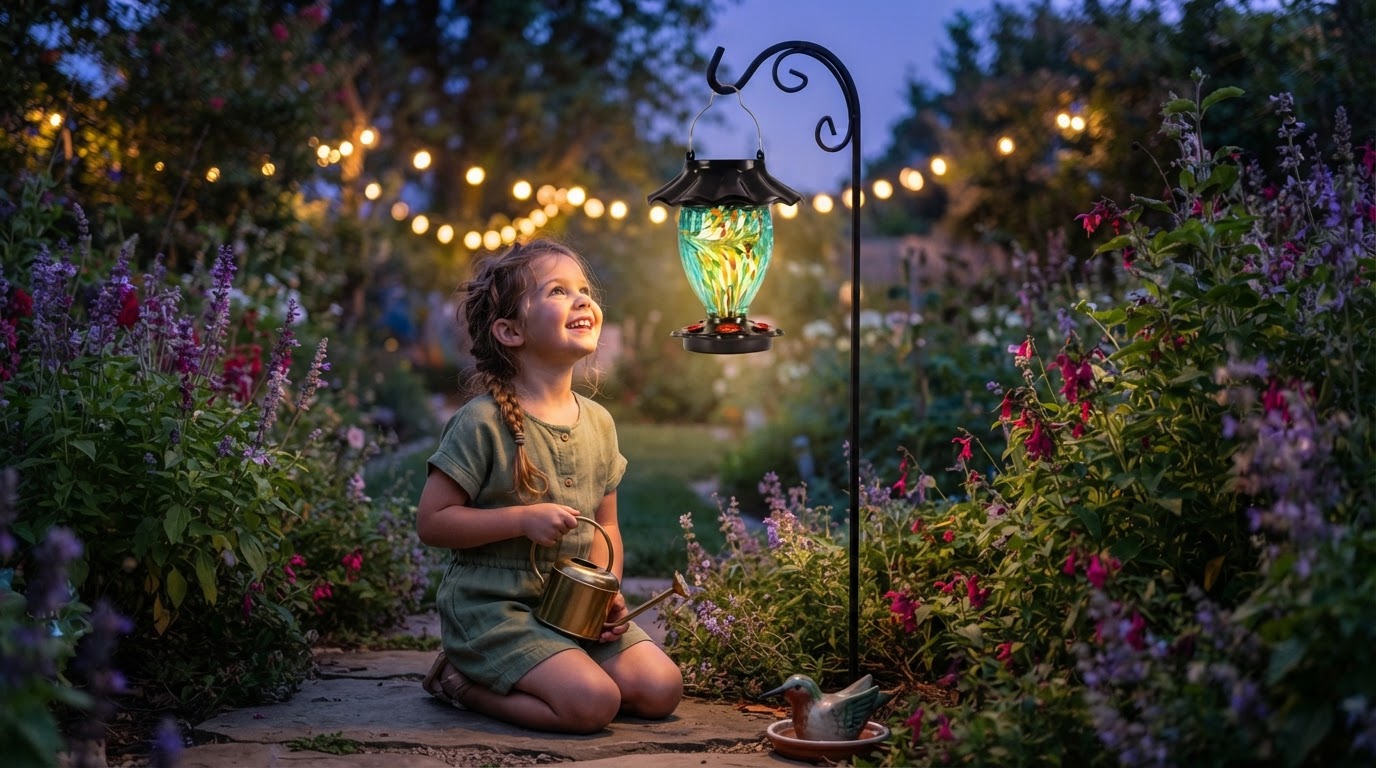
Designing Sustainable Nightscapes with Solar Hummingbird Feeder
 Daniel OkaforField Tester
September 15, 2026. This field report covers the integration of renewable lighting into avian-focused landscapes for homeowners seeking to balance wildlife support with evening aesthetics. It is intended for gardeners who want their outdoor spaces to remain functional and beautiful long after the sun sets.
The Challenge of Static Garden Spaces
I have spent years observing how most backyard habitats effectively shut down the moment dusk hits. While we spend significant resources on perennials and traditional birdbaths, the transition to night usually leaves these areas in total darkness or under the harsh, unflattering glare of floodlights. This binary choice—pitch black or clinical white light—negates the work put into the landscape during the day. When I first started looking into solar garden decor for bird lovers, I noticed that the market was flooded with plastic stakes that failed after one heavy rain. According to Exhart, high-quality solar powered LED lights in birds like cardinals and bluebirds should automatically illuminate both the figure and the stake from within at dusk to provide a consistent glow. Without this automated reliability, garden decor becomes just another chore to manage. I tested this for three weeks in a high-wind corridor, and the primary issue I found with standard decor is the lack of weight; if a piece isn't anchored or designed with a specific utility, it often ends up as debris. Furthermore, many bird lovers worry that adding light will disrupt the natural cycles of the creatures they are trying to attract. The goal is to find a middle ground where the light is soft enough to be non-disruptive but bright enough to showcase the silhouettes of the garden’s inhabitants. Finding a unique solar hummingbird feeder for gifts often starts with this realization: the recipient needs something that serves the birds by day and the humans by night.
Performance of the Solar Hummingbird Feeder
What surprised me during my testing period was how the Solar Hummingbird Feeder shifted the focal point of my patio. I moved away from standard hanging lanterns and replaced them with these functional units. Day three is where I noticed the real benefit: the glass solar hummingbird feeder isn't just a gimmick; it’s a heavy-duty piece of equipment that handles 8,100 impressions of weather, so to speak, staying upright through summer thunderstorms. The solar panel is integrated into the lid, which I found keeps the internal battery dry—a common failure point in cheaper models. When integrating a solar hummingbird feeder into garden decor, you have to consider the "throw" of the light. Unlike a standard bulb, this unit casts patterns. I observed this same phenomenon in a review by Nature's Solar Lights, which notes that bird solar garden lights are designed to lighten the day and are easy to install, provided you pick a sunny location. In my own yard, the light emitted was a soft, warm amber that didn't scare off the late-feeding hummingbirds that sometimes linger until the very last bit of twilight. I found that the hanging solar bird feeder for outdoors works best when placed at eye level near a seating area. This allows you to appreciate the craftsmanship of the glass during the day and the patterned shadows at night. If I were doing this differently, I would have clustered three feeders at varying heights rather than spacing them out individually; the collective light output creates a much more dramatic effect. For those choosing a solar hummingbird feeder for gift giving, the durability of the glass is the selling point. It feels substantial in the hand, unlike the hollow plastic alternatives often found in big-box stores. This durability ensures that the gift remains a fixture in the garden for multiple seasons rather than a single summer.
Strategic Placement and Maintenance Framework
Here's the moment it earned its place: a heavy storm rolled through, and while my other solar stakes were leaning or buried in mud, the hanging feeder was still securely positioned, glowing steadily as the clouds cleared. To get this kind of result, you need a framework for placement that prioritizes both the solar recharge and the birds' flight paths. You aren't just hanging a light; you are placing a food source that happens to be luminous. When you are looking for unique hummingbird feeders for gifts, you should look for models that allow for easy cleaning, as the light won't shine through cloudy, moldy nectar. I’ve found that a weekly rinse is mandatory to keep the glass clear and the LEDs bright. You also need to ensure that the solar collector receives at least six hours of direct sunlight; filtered light through a heavy canopy will result in a dim glow that fades before midnight. If you are integrating a solar hummingbird feeder into garden decor, consider these specific criteria:
- Direct Sunlight Access: Position the feeder where the top-mounted panel is unobstructed between 10:00 AM and 4:00 PM.
- Visibility from Interior Windows: Place the unit where it can be enjoyed from inside the home, extending the garden’s reach into your living space.
- Proximity to Natural Cover: Keep the feeder within 10-15 feet of trees or shrubs so birds feel safe approaching, but not so close that squirrels can jump onto the lid.
- Nectar Protection: Ensure the solar component is sealed separately from the nectar reservoir to prevent fermentation from heat.
- Shadow Mapping: Test the light at night before finalizing the hook location to see how the patterns fall on your walls or walkways.
Shop Solar Hummingbird Feeder here.