Integrating a Solar Hummingbird Feeder Into Garden Decor
 Jordan HaleStaff Writer
September 9, 2026. This exploration details how light-integrated feeding stations serve as dual-purpose landscape elements. It is written for homeowners seeking to blend avian conservation with sophisticated backyard aesthetics.
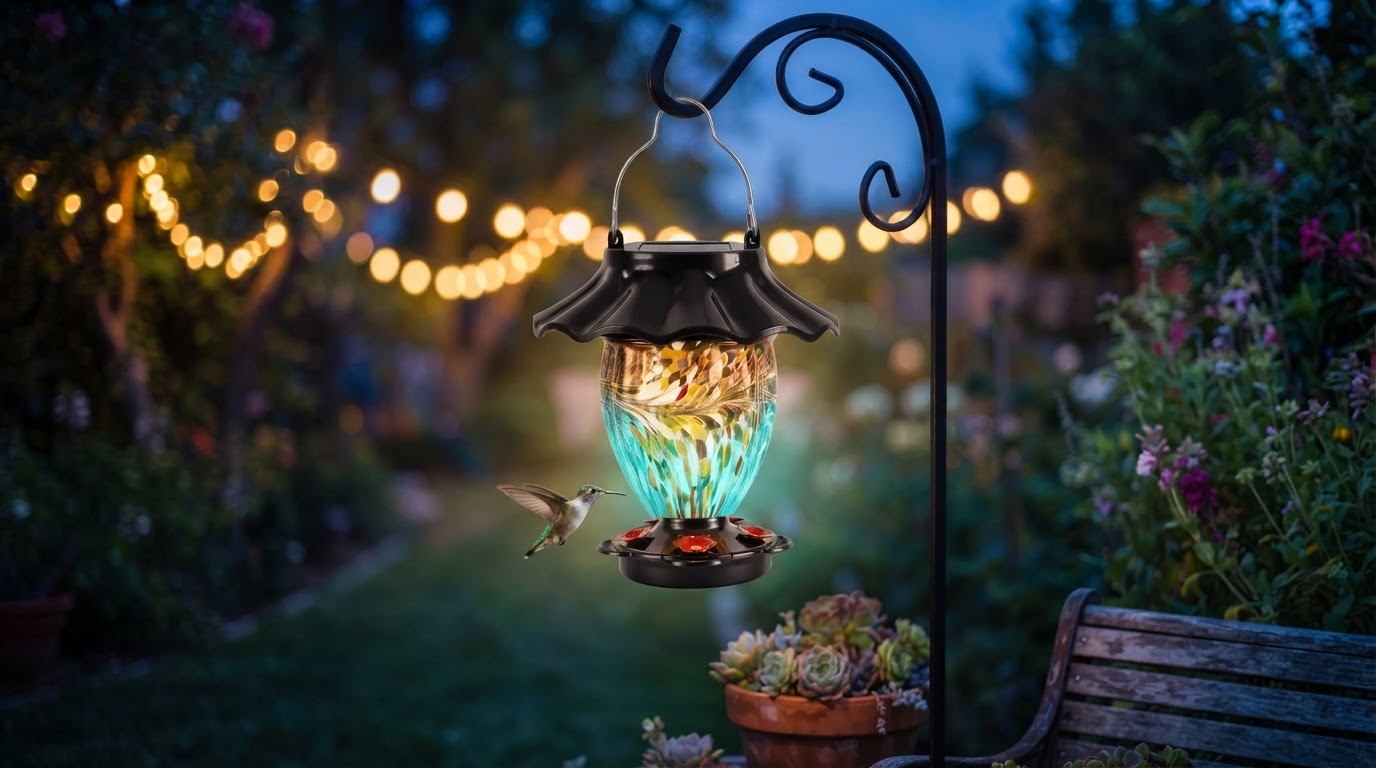
I remember the first evening I sat on the porch as the sun dipped below the treeline, watching the shadows stretch across my flowerbeds. The garden usually went dark at that hour, the vibrant reds of the bee balm and salvias fading into a muddy gray. Then, the center of the yard began to glow. The first thing I noticed was the way the hand-blown glass caught the dying light, refracting it into a soft, amber warmth that felt more like a quiet candle than a piece of hardware. According to Earl May Garden Centers, these solar-powered LED units are designed to run for up to 8 hours per charge, ensuring that the transition from a bustling bird sanctuary to a peaceful evening retreat is seamless. For many of us, the garden is a place of labor during the day, but it becomes a place of reflection at night. The challenge has always been how to maintain visual interest after the hummingbirds have gone to sleep. Standard plastic feeders often look like utilitarian clutter when the birds aren't present. By contrast, a glass solar hummingbird feeder acts as a sculptural anchor, providing a focal point that justifies its space in the garden 24 hours a day. Whether you are looking for unique hummingbird feeders for gifts or searching for a way to brighten a dark corner of the patio, the shift toward decorative, light-emitting bird hardware reflects a broader trend in outdoor living where every object must perform multiple roles.
Photo by Chris F on Pexels
The Solar Hummingbird Feeder addresses the specific aesthetic needs of a modern garden by focusing on texture and light diffusion rather than just raw utility. I keep coming back to the weight of the hand-blown glass; it feels substantial in the hand, far removed from the flimsy, sun-bleached plastic reservoirs of the past. The internal LED is positioned to illuminate the liquid and the glass patterns from within, turning the nectar itself into a glowing orb. In my own space, I’ve found that placing these units near seating areas creates an intimate atmosphere that mimics high-end solar garden decor for bird lovers. The technical specs provided by manufacturers like LUJII highlight the importance of leak-resistant designs and weather-hardy finishes, which are essential when a piece is meant to be a permanent fixture in your landscape design. It turns out that the visual appeal isn't just for the humans; the reflective surfaces of the glass can help attract the attention of passing scouts during the day. When selecting a piece for your collection, considering how the light interacts with the surrounding foliage is key. If you are browsing for unique solar hummingbird feeders for gifts, you’ll notice that the embossed textures mentioned in Hobby Lobby product descriptions—such as wavy or hammered glass—are designed specifically to scatter the LED light, preventing a harsh glare and instead creating a dappled effect on nearby leaves. This integration of light and glass transforms the feeder from a mere tool into a piece of functional art that complements a well-tended flowerbed.
Selecting the right placement for your solar hummingbird feeder requires a balance between the biological needs of the birds and the charging requirements of the solar cell. Somewhere around week two of testing my own setup, I realized that a feeder placed in deep shade for the birds' comfort wouldn't glow at night. The solution is finding that 'sweet spot' of dappled sunlight or using a shepherd's hook in an open area that still offers nearby perching branches for the birds to rest. As you refine your garden layout, use this decision framework to ensure your decor remains both beautiful and functional:
- Verify the glass quality: Opt for thick, hand-blown glass with embossed textures to ensure durability and superior light diffusion.
- Check the solar capacity: Ensure the unit provides at least 6 to 8 hours of illumination to last through the evening.
- Prioritize easy maintenance: Look for designs that feature removable bases or wide-mouth bottles, as noted in the DesGully Solar Hummingbird Feeder Review for ensuring long-term cleanliness.
- Assess the color palette: Choose deep reds or purples to naturally attract hummingbirds without relying solely on tinted nectar.
- Evaluate the hanging hardware: Ensure the hook or chain is powder-coated or stainless to prevent rust streaks on your patio stones.
- Coordinate with existing themes: Select a finish that matches your other solar garden decor for bird lovers to create a cohesive visual narrative.
Shop Solar Hummingbird Feeder here.