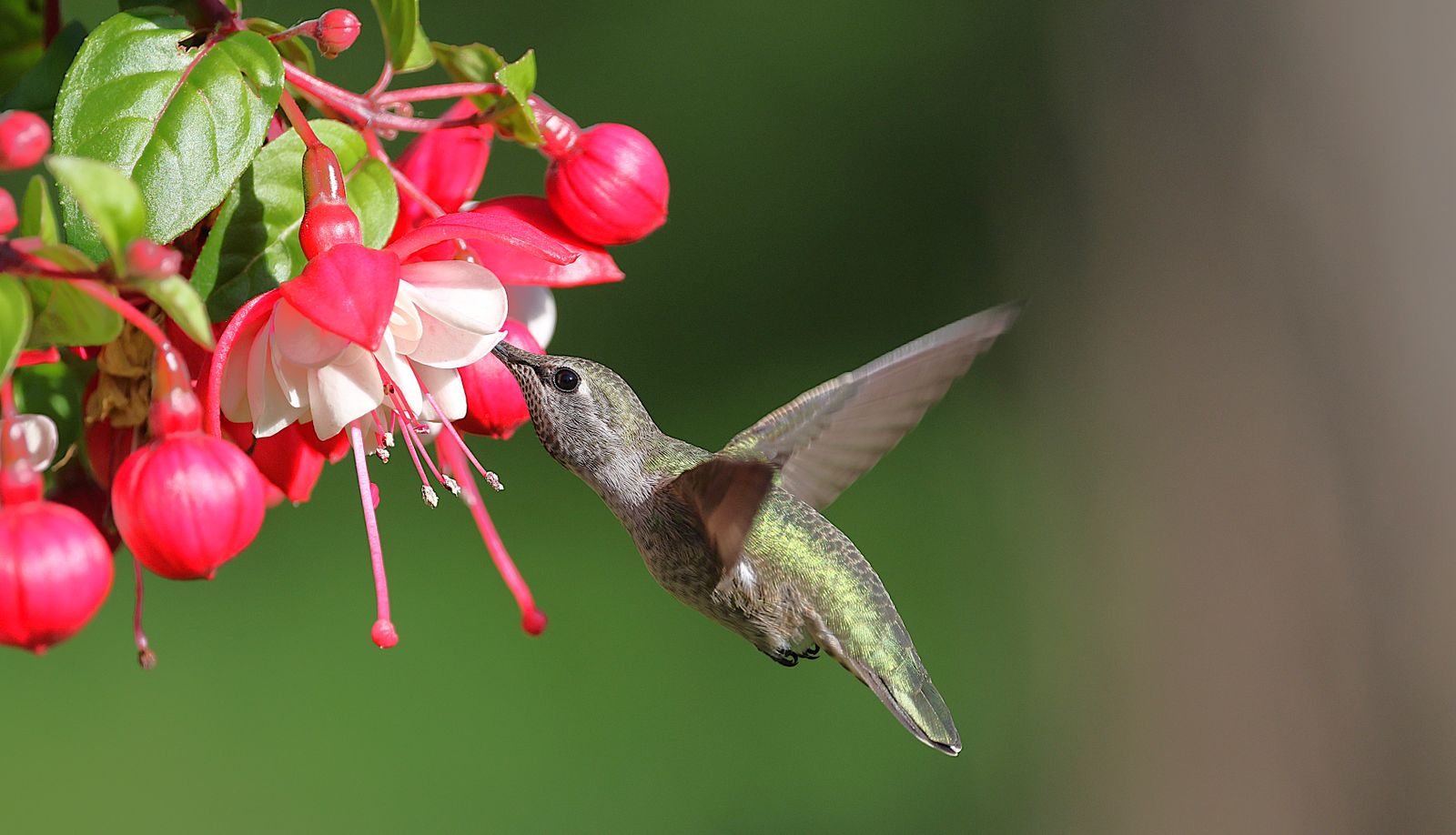
How to Attract Your First Hummingbird to a Brand-New Yard
Getting the first hummingbird into a yard that has never had one takes three things: a feeder they can physically see from a distance, fresh nectar in the correct one-to-four ratio, and patience measured in weeks rather than days. Most new setups fail not because the yard is wrong but because the feeder was hung in a spot with no visibility, or was given up on after five quiet days. The birds have to find you first, and finding you is a matter of flight paths and sightlines.
How long does it take for the first hummingbird to show up?
Plan on anywhere from a few days to a few weeks, and longer if you hang your first feeder in the middle of the season rather than before birds arrive in your area. Hummingbirds work established routes. A bird that already has a reliable circuit of flowers and feeders has no reason to detour until something new enters its field of view.
Two factors shorten the wait more than anything else. The first is timing: a feeder that is already up and full when migrants arrive gets discovered during the period when birds are actively searching for new food. The second is visibility, which is entirely under your control and is where most new yards go wrong.
If several weeks pass with no visitors at all, the answer is almost never the nectar recipe. It is placement, or it is that your yard is genuinely outside the local flight corridor and needs a stronger visual signal.
Where should a first feeder hang to get noticed?
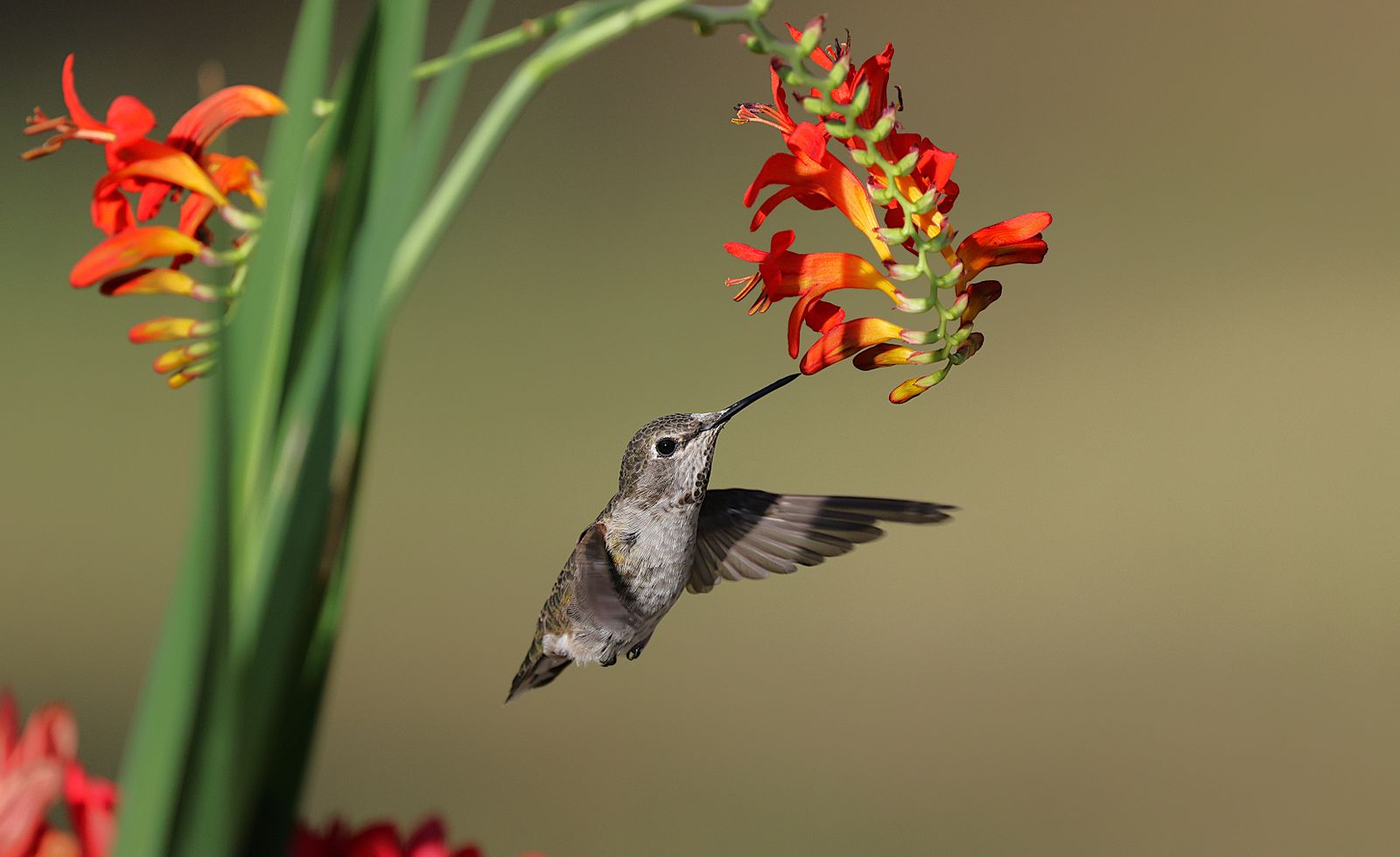
Photo by Veronika Andrews on Pexels
Put it in the open, high, and against a plain background. A hummingbird scanning for food is looking for a small, distinct, colored object; hedges, dense tree canopy, and busy fence lines swallow that signal. The best first-season position is usually at the edge of open space — over a lawn, at the corner of a patio, or along the sunniest side of the house — rather than tucked into a border where it looks tidiest to you.
Three placement rules that matter for discovery:
- Open sky above and one clear approach. Birds want to come in without threading through branches.
- A perch within about ten to fifteen feet. A nearby twig or thin branch gives a new bird somewhere to sit and assess the feeder before committing, and it is often where you will see the first visitor rather than at the feeder itself.
- Visible from at least two directions. A feeder on a wall is seen from one side. A feeder on a hook or hanging from an eave overhang is seen from many.
What nectar should a new feeder be filled with?
Use one part plain white sugar to four parts water, and nothing else. Stir until fully dissolved. This is the standard recommendation and it is also the cheapest option, so there is no reason to complicate it.
What to avoid, and why:
- Red dye. It adds no nutritional value and the color needs to be on the feeder, not in the liquid.
- Honey. It ferments quickly and can grow harmful mold.
- Brown sugar, raw sugar, or molasses. These contain compounds that plain white table sugar does not, and they are not appropriate for hummingbirds.
- Artificial sweeteners. These provide none of the calories the birds are actually visiting for.
A week-by-week plan for a brand-new yard
Feeder placement compared
Photo by Adrien Stachowiak on Pexels
| Position | Discovery speed | Bird comfort | Notes | |---|---|---|---| | Open lawn edge on a hook | Fast | Good with a perch nearby | Best first-season default | | Under a deep eave | Slow | Very good | Sheltered, but hidden from most approaches | | Inside a dense border | Slow | Good | Tidy-looking, poor visibility | | Deck railing area | Moderate | Fair | Foot traffic can make new birds wary | | Full-shade tree canopy | Slow | Good | No sun for a solar cap to charge from |
Should you plant flowers instead of hanging a feeder?
Both work, and together they work better than either alone. Flowers give a yard natural credibility and keep birds present through the day, while a feeder provides a fixed, reliable, high-visibility point that a bird can learn. For a new yard, the feeder usually gets you the first sighting faster because it is a stronger visual signal and does not need a season to establish. The relative strengths of each approach are covered in more detail in this comparison of live nectar plants and glass solar feeders.
Material matters mainly for how long the feeder keeps looking good and how easy it is to keep clean. If you are still choosing, the practical differences are laid out in this look at hand-blown glass versus plastic feeders.
FAQ
Does a new feeder need to be cleaned before the first bird arrives? Yes. Rinse it before the first fill, and keep the regular cleaning schedule going even while no birds are visiting. Nectar spoils on its own timetable regardless of whether anything has drunk from it.
Will one hummingbird bring others? Often, indirectly. Other birds notice a bird feeding and investigate. That said, a single dominant visitor may also chase newcomers off, which is normal and is easier to manage by adding a second feeder out of sight of the first.
Is it too late in the season to start? It is rarely too late. Late-season feeders catch birds moving through on migration, and a feeder that is already established will be found much faster the following year.
Do the lights on a solar feeder help attract birds? Not directly, since hummingbirds feed in daylight and settle at dusk. Lighting is for your enjoyment of the garden after dark; daytime visibility of the feeder body is what does the attracting.
A practical next step
Walk your yard at midday and find the most exposed spot with a few hours of direct sun and a thin branch within about fifteen feet. Hang the feeder there with a small batch of one-to-four nectar, mark your calendar to refresh it, and leave it alone for two full weeks before you judge whether the location works.
Cover photo by Veronika Andrews on Pexels.